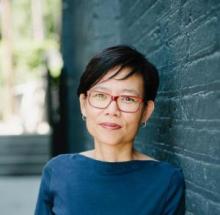
Lisa Sun-Hee Park
· ProfessorUniversity of California, Santa Barbara · Asian American Studies
Active 1996–2025
About
Lisa Sun-Hee Park is a professor in the Department of Asian American Studies at the University of California, Santa Barbara. She holds a Ph.D. in Sociology from Northwestern University and specializes in Asian American Studies, immigration and welfare policy, health care access, race, class, and gender, urban theory, feminist theory and methods, and environmental justice. Her interdisciplinary research focuses on the politics of migration, race, and social policy, examining how immigrants and communities of color are both excluded from and included in social citizenship, and how these processes are interconnected. Her notable publications include books such as 'Entitled To Nothing: The Struggle for Immigrant Health Care in the Age of Welfare Reform,' which investigates the impact of federal policies on Latina and Asian immigrant women’s health care access, and 'The Slums of Aspen,' a case study on environmental initiatives and anti-immigrant rhetoric. She is currently working on projects related to health care access for low-income immigrants post-Affordable Care Act, particularly in the U.S.-Mexico Border States, and on unionization efforts of Home Care Workers in Minnesota. Additionally, she serves as an editor for the 'Asian American Experience' book series at the University of Illinois Press and is a member of the Social Problems editorial board.
Research topics
- Sociology
- Computer Science
- Gender studies
- Computer Security
- Political Science
- Geography
- Criminology
- Library science
- Environmental science
- Cartography
- Media studies
- Law
- Psychology
- Psychoanalysis
- Management
- Economic geography
- Forestry
Selected publications
University of Arizona Press eBooks · 2025-03-18
book-chapterSenior authorNew York University Press eBooks · 2024-05-16
paratext1st authorCorrespondingNew York University Press eBooks · 2024-04-10 · 2 citations
book1st authorCorrespondingReveals the presence of an informal system of valuable support and care for marginalized migrants The United States’ health care system not only consists of a formal safety net, but also an informal and disjointed network of organizations that offer basic care to millions of migrants. This “Third Net” provides free or low-cost health care for the undocumented, low-income, and uninsured migrants who are excluded from the formal system. This groundbreaking study sheds light on the existence of the Third Net and its implications for the overall inequalities in the US health care system. The Third Net is made up of diverse providers with varying levels of service, organizational culture, and mission. These providers operate in unconventional settings, such as mobile clinics on wheels; pop-up clinics in repurposed spaces; and unlicensed, makeshift clinics run by health activists. Despite their unassuming appearances, these clinics are vital resources for marginalized populations that often go unnoticed by the general public, revealing the shortcomings of our formal health care system. By examining these alternative health care spaces, the authors expose the inequities entrenched in the broader health care system and urge a reevaluation of it entirely in order to address these injustices.
New York University Press eBooks · 2024-02-16
book1st authorCorrespondingReveals the presence of an informal system of valuable support and care for marginalized migrants The United States’ health care system not only consists of a formal safety net, but also an informal and disjointed network of organizations that offer basic care to millions of migrants. This “Third Net” provides free or low-cost health care for the undocumented, low-income, and uninsured migrants who are excluded from the formal system. This groundbreaking study sheds light on the existence of the Third Net and its implications for the overall inequalities in the US health care system. The Third Net is made up of diverse providers with varying levels of service, organizational culture, and mission. These providers operate in unconventional settings, such as mobile clinics on wheels; pop-up clinics in repurposed spaces; and unlicensed, makeshift clinics run by health activists. Despite their unassuming appearances, these clinics are vital resources for marginalized populations that often go unnoticed by the general public, revealing the shortcomings of our formal health care system. By examining these alternative health care spaces, the authors expose the inequities entrenched in the broader health care system and urge a reevaluation of it entirely in order to address these injustices.
New York University Press eBooks · 2024-05-16
book-chapterOpen access1st authorCorrespondingworkers and trafficking survivors alike.[FOSTA] has had a devastating impact on already marginalized and vulnerable communities.-Brief filed by Decriminalize Sex Work et al., in constitutional challenge to FOSTA (2022) FOSTA's . . .censorial effect has resulted in the removal [from online platforms] of speech created by LGBTQ+ people and discussions of sexuality and gender identity.This is the continuation of a long history of the silencing and oppression of LGBTQ+ people through vague and overbroad laws.-Brief filed by Transgender Law Center, in constitutional challenge to FOSTA (2022) PEN Amer i ca's recent statement on banned books and the two constitutional challenges to FOSTA by Decriminalize Sex Work 1 and the Transgender Law Center 2 illustrate the enduring nature of the prob lems that Defending Pornography chronicled.Today, measures censoring sexual expression continue to abound from across the ideological spectrum, not only violating free speech rights but also undermining the health and safety of women, LGBTQ+ people, young people, and others who are the avowed beneficiaries of such censorship.Alas, Wendy Kaminer's prediction that Defending Pornography " will always be timely" has proven prescient.In this new preface, I will flag its major themes and trace their resonance throughout the three decades since I wrote it, noting some of the multifarious, ideologically diverse attacks on sexual expression that have prevailed when each reissue went to press (1994, 1999, and 2023).
Introduction to the Second Edition
New York University Press eBooks · 2024-05-16
book-chapterOpen access1st authorCorrespondingDespite our essentially unbroken string of victories in challenging cybercensorship laws at all levels of government, politicians continue to advocate and enact these laws."Cyberporn" continues to serve as a popular scapegoat for a host of societal prob lems, such as the tragic school shooting incidents, and for an ideologically diverse array of cultural critics.Thus, the unholy alliance between the "Religious Right" and "radical feminists," described in this book, continues concerning cyberspace.The cybercensorship laws all have sought to expand the bound aries of the sexually oriented expression that the Supreme Court has deemed unprotected in traditional media-notably, obscenity, child pornography, and sexual solicitation of a minor.To the extent that these laws simply have extended to cyberspace the limits on protected expression that the Supreme Court has upheld for print media, the ACLU has not challenged them.Rather, we have challenged the cybercensorship laws only to the extent that they also have sought to criminalize vague, broad categories of sexual expression that would be perfectly lawfulindeed, constitutionally protected-in print.For example, the CDA would have criminalized all expression that might be deemed "indecent" or "patently offensive" in any community, no matter how valuable that expression might be.As Defending Pornography explains, the sole category of sexually oriented expression that the Supreme Court has held to be beyond the First Amendment pale only because of the (allegedly) offensive nature of its content* is obscenity, and that category has been relatively limited, thanks in substantial measure to the Court's requirement that it lack any serious literary, artistic, political, or scientific value, as determined by national standards. 7In short, no matter how offensive a judge or jury may deem certain material under local community standards, it will still be constitutionally protected so long as it has serious value according to national standards.Therefore, people in any part of the United States cannot be reduced to seeing only what is deemed acceptable in every other part of the country.If the cybercensors had their way, this approach would be turned on its head, and the global medium *In contrast, other sexually oriented expression may be regulated because of actual or threatened physical harm it causes-for example, the exploitation or abuse of a minor in producing child pornography or soliciting sexual contact.
CHAPTER 3 The Fatally Flawed Feminist Antipornography Laws
New York University Press eBooks · 2024-05-16
book-chapter1st authorCorrespondingJournal of Asian American Studies · 2023-10-01
articleSenior authorIntroduction Simi Kang (bio) and Lisa Sun-Hee Park (bio) A note from the editors: The contents of this issue are inevitably shaped by the editors' engagements with these fields. As two people approaching this work with significant privileges as well as specific experiences of marginalization based on our education, relationship to communities, and personal identities, we know that our subject positions contribute to how we assembled and framed the work you find here. We also recognize that this special issue addresses a limited scope of environmental injustices and responses thereto. We know that many voices are missing and go unacknowledged, particularly those of frontlines communities. We hope that in recognizing these gaps and omissions, we can encourage you, our readers, to view the materials with this context in mind and, further, can nudge others to foster more accessible platforms for highlighting practitioner expertise at the intersections of environmental justice work and Asian American studies. It is therefore our hope that you will see these pages as a place to continue your engagement with environmental justice work and that this issue offers some tools for you in the work to come. [End Page 303] the worldbriefly sees usonly afterthe eyeof a stormsees us –Craig Santos Perez, "Disaster Haiku, after cyclone winston" after typhoon yutu after hurricane maria after …," in Habitat Threshold1 This special issue on 'Environmental Entanglements in Asian America' brings together central frameworks within Asian Americanist, Pacific Islander, and Indigenous critiques to bear on our understanding of the environment and environmentalism. Each of the articles brings together complex analytical and experiential threads—be they multi-species, trans- and intranational, ancestral and intergenerational, polytemporal, and post/colonial—that bind us and yet have largely been ignored or denied. Refusing these linkages prevents us from seeing how solidarities might be configured not merely around an allegiance to a species, identity, or nation, but also through shared and often vexed histories of extraction, access, movement, suppression, scarcity, privilege, abundance, and erasure. Organizers and scholars of the global majority have advanced communitycentered work on environmental in/justice for generations. However, bringing those modes of resistance and inquiry into the discipline of Asian American studies is a relatively recent project. While we recognize that we are writing at an important moment of expansion in this area, the goal of this issue is not to predetermine a bordered subfield called Asian American and Pacific Islander environmental justice studies. Rather, we wish to "write to you from the middle of something"2 by highlighting five contributions to this critical conversation. Recognizing our "from-the-middle-ness," we argue that "the call for environmental justice is part of a broader call to revisit our covenant to the world, our relationships to it, and our responsibilities to one another."3 We began writing this introduction in the days following four SCOTUS rulings4 that emphasized the United States' continued investment in protecting whiteness and wealth. As the Supreme Court rejected the Navajo Nation's request for a federal assessment of its water needs, the continent experienced the deadliest heat wave in history and wildfire smoke exceeded borders, making the air unsafe for all beings across Canada and the northern US.5 While SCOTUS wrote opinions against Black, Latinx, and Indigenous youth,6 hundreds of refugees of Pakistan's 2022 floods perished at the hands of smugglers and [End Page 304] Greece's coast guard in the Mediterranean. That small business owners were reassured they could discriminate against queer and trans people as Biden greenlit the construction of the Mountain Valley Pipeline through Appalachia says a great deal about whose lives matter to the state. These actions are deeply political, particularly when interrogated through the lens of environmental justice, which is a Black, Indigenous, and POC-driven movement that "affirms the sacredness of Mother Earth, ecological unity and the interdependence of all species, and the right to be free from ecological destruction."7 To achieve environmental justice, we must see our personal, communal, ecosystem-level, and cultural health as intimately interdependent with our larger communities, which always includes racialized folks, more-than-human beings, and the lands and waters we all rely on...
Journal of Asian American Studies · 2023-03-01
article1st authorCorrespondingEditors' Preface Lisa Sun-Hee Park and Diane C. Fujino The Journal of Asian American Studies (JAAS) began publication in 1998 as the official publication of the Association for Asian American Studies. With the current issue, we are now commemorating the journal's twenty-fifth anniversary and to mark this significant moment, we invited distinguished scholars to comment on what they view as important intellectual developments in Asian American Studies. We had intended these "reflections of the field" essays to provide a focused and timely critique on a given topic that coincides with their own area of research. In their respective essays, Moon-Ho Jung, Professor and the Harry Bridges Endowed Chair in Labor Studies in the History Department at the University of Washington, and Martin Manalansan IV, Professor and the Beverly & Richard Fink Professor in Liberal Arts in the American Studies Department at the University of Minnesota, did just this and more. Moon-Ho Jung begins with an arresting vignette–lasting a few minutes at most–of an interaction between Arundhati Roy and Howard Zinn that occurred in 2003, after the US invasion of Iraq. This fleeting interaction sets the stage for Jung's incisive critique of nationalism and its persistent existence in articulations of Asian American history. Like some of the most significant contributions in Asian American studies, Jung takes a seemingly minute exchange and analytically pulls out a meaningful assertation that lies beneath–that the narrative of "immigrant America" is a nationalistic, sanitizing process that reinforces US empire. Martin Manalansan, takes a different but equally powerful approach in his essay. Following his own (disjointed) career trajectory, Manalansan outlines the experience of exceptionalism and isolation that results from the ways in which Asian American studies and LGBTQ studies have each worked to institutionalize their respective fields. Ever the optimist, Manalansan concludes his essay by providing an analytical key to creating a more expansive, fluid, and [End Page v] coalitional future–it is in fact something we already know as foundational to the beginnings of both Asian American studies and LGBTQ studies. He writes that we need to get back to "street knowledge;" grounded in the "realities of injustices, oppressions, and violence that compel us to act and move beyond institutionalized arrangements and scripted futures." To round out the commemorative section of this issue, Donna Doan Anderson took on the challenge of articulating a history of JAAS. Editorial Assistant for JAAS and graduate student in history and Asian American studies at UC Santa Barbara, Anderson contacted past editors of JAAS and sorted through data accumulated over the past twenty-five years to provide a snapshot of the journal and its reflection of the many shifts and tensions in the field. Anderson astutely notes that JAAS exists to "grapple with the field's growing pains" and, while the journal has successfully developed into an important academic resource (top 10 percent of journals viewed on Project MUSE!), questions remain about the costs of institutionalization and the current purpose of Asian American studies. As Editors of JAAS, we view these pressing, difficult concerns as central to the continued relevance of the journal itself. It is why JAAS exists. The next section of this issue is devoted to two research articles. The first is an important contribution by Na-Rae Kim, which focuses on the shifting cultural, legal, and political uses of North Koreans in the US imaginary. Bringing together theoretical critiques of war, militarization, humanitarianism, and critical refugee studies, Kim analyzes memoirs by a North Korean defector and a Korean American journalist about their experiences in North Korea, both published in 2015. Kim argues that 2015 was a pivotal year in which North Korean refugees became assimilable; culminating in 2018, when Donald Trump (who won the presidency based largely on anti-immigration politics) featured Ji Seong-ho, a North Korean defector, as an "American hero" in his State of the Union address. Kim's fascinating interdisciplinary study thoughtfully and engagingly explains how such an incongruent event came to pass. She shows also that the narrative structure of both memoirs are familiar constructions, with deep roots in both US and global literary traditions. Kim summarizes her analysis by reinforcing a foundational lesson in...
Journal of Asian American Studies · 2022-06-01
articleSenior authorEditors' Preface Diane C. Fujino and Lisa Sun-Hee Park This special issue of the Journal of Asian American Studies presents a wide range of scholars raising critical questions about the work of Asian American studies. The guest editors, Cathy J. Schlund-Vials, Lily Anne Y. Welty Tamai, and Paul Spickard, invited scholars to wrestle with the inter/discipline of the field at the fortieth anniversary of the founding of the Association for Asian American Studies in 1979. Several of the essays began as presentations at the 2018 AAAS, and all had drafts completed before the pandemic. COVID-19 disrupted this special issue, as it did all our personal, professional, and collective lives. Many authors revised their essays in 2021, revisiting their ideas through the lens of the urgencies of the global health pandemic as well as the intensified focus on anti-Asian racism and antiblack state violence. The seventeen scholars in this special issue interrogate—from different disciplines, methods, and perspectives—the work of Asian American studies, not as a static field, but as one responsive to scholarly theorizing and to interventions and changes in the material and discursive society in which we are embedded. The essays vary widely. But taken as a whole, this issue makes explicit and implicit inquiries about the kinds of questions that frame Asian American studies and what this then obscures. They wonder whether the original goals of the field—with its focus on, as the guest editors note, "communities, partnerships with activism, solidarity with other communities of color, and defense against racism and gender and class oppression"—ought to be the primary mechanisms animating the field, or in what ways these ideas have shifted and towards what new formations. This is not to suggest that there is a disavowal of the original goals of the field. In fact, many authors suggest that the ideas and critiques and activist struggles that established the field either remain or, having shifted away, are now being revisited. While some might assume that Asian American studies [End Page v] is "designed for the advancement of Asian-raced people," it is, as Kandice Chuh states, "a way of bringing to bear the critique of power as the energizing force of the field." Her essay invites us to re-evaluate the meanings of what we think we understand about the field and its interrogations of power. Several of the essays work to critique and expand the field, and, perhaps seemingly paradoxically, some "newer" ideas actually reactivate ideas permeating the field's founding. Yê´n Lê Espiritu, in her article in this issue, looks at the ways critical refugee studies demands the global study of race, imperialism, and war, beyond the domestic landscape of what some consider Asian American studies. Lisa Yoneyama invites the field to consider how transpacific critique, as well as Native Pacific Islander studies and Southeast Asian studies, shapes Asian American studies. Josephine Nock-Hee Park, borrowing from Roderick Ferguson, asks what it means when we replace redistribution power with representational frameworks. She uses her own experiences at the university to critique narratives of success and to explore what is gained and what is lost through institutionalization. Naoko Shibusawa similarly uses compelling examples from her own experiences in various campus struggles to offer reflections on solidarity. She delves into the tensions swirling today among people centering antiblackness and Afro-pessimism to the exclusion of other kinds of racisms. Her musing on the specific and nuanced ways in which anti-Asian racism manifests (as a "sucker-punch" in her formulation) reminds us of Mitsuye Yamada's widely circulated essay, "Invisibility is an Unnatural Disaster." Jean-Paul R. Contreras deGuzman, and Douglass Ishii in a separate essay, share candid reflections on the life of contingent labor in the university and what is being asked of a field that claims to center critiques of power and work for transformative justice. We are proud to have redesigned the journal's cover to feature artwork, and view the cover's visual image as evocation of the themes in this issue. The artist, Cece Carpio, identifies as an Asian American, Filipina Indigenous immigrant who specializes in creating public art locally, nationally, and internationally. Her...
Frequent coauthors
- 18 shared
David N. Pellow
University of California, Santa Barbara
- 6 shared
Diane C. Fujino
- 6 shared
Anthony M. Jimenez
- 6 shared
Erin Hoekstra
- 2 shared
Wenjie Liao
Rochester Institute of Technology
- 2 shared
Kim Ebert
North Carolina State University
- 1 shared
Richard Madsen
University of California, San Diego
- 1 shared
Simi Kang
Awards & honors
- Outstanding Book Award. American Sociological Association, E…
- Outstanding Book Award. American Sociological Association, A…
- Resume-aware match score
- Save to shortlist
- AI-drafted outreach
See your match with Lisa Sun-Hee Park
PhdFit ranks faculty by your research interests, methods, and publications — grounded in their actual work, not templates.
- Free to start
- No credit card
- 30-second signup