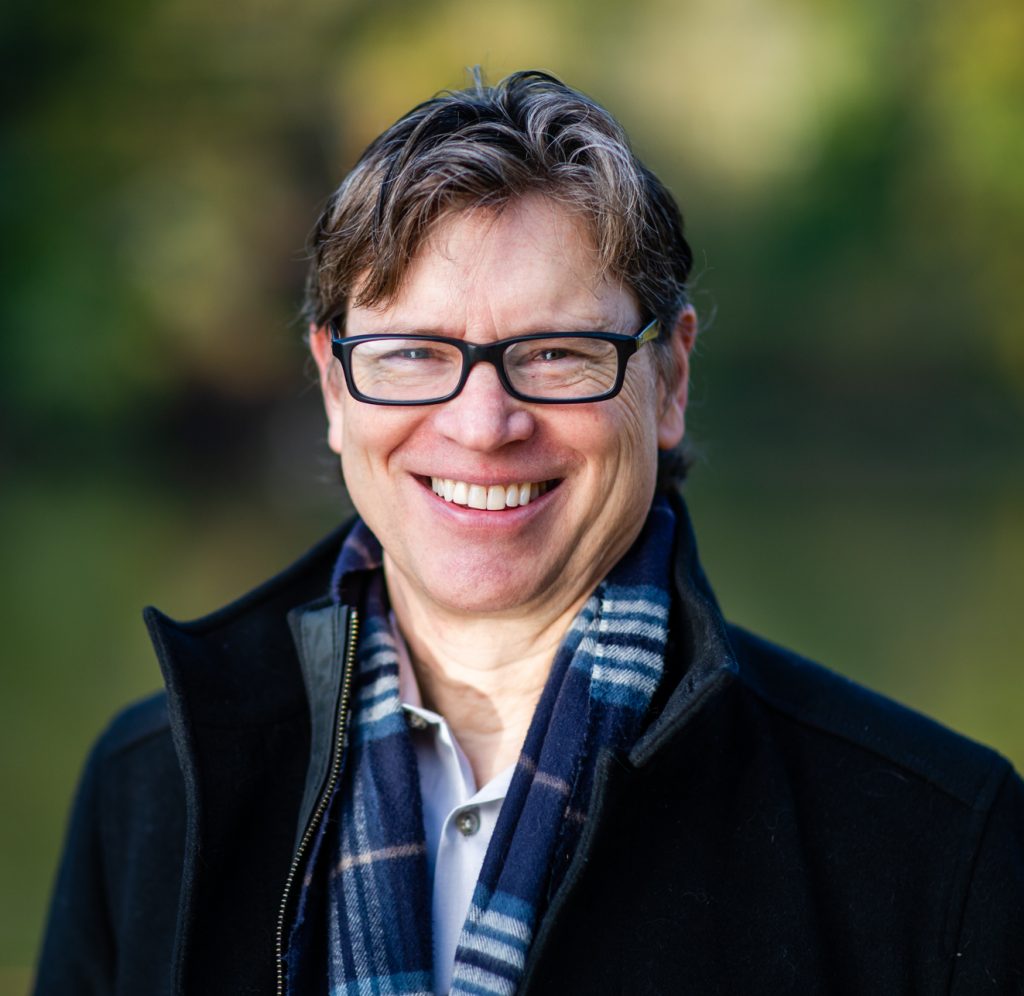
Stanley Grant
· Nick Prillaman Professor and Director OWMLVerifiedVirginia Tech · Civil and Environmental Engineering
Active 1918–2026
About
Stanley Grant is a Professor of Civil and Environmental Engineering at Virginia Tech and serves as the Director of the Occoquan Watershed Monitoring Lab (OWML) in Northern Virginia. His research focuses on pollutant fate and transport through aquatic systems, with particular interest in water supply and water quality, environmental fate and transport modeling, and coupled human-natural systems. Professor Grant and his team have been awarded a $3.6 million NSF-funded Growing Convergence Research grant to study novel approaches for managing inland freshwater salinization.
Research topics
- Computer Science
- Geography
- Water resource management
- Environmental science
- Ecology
- Environmental planning
- Biology
- Soil science
- Economic growth
- Business
- Geochemistry
- Finance
- Economics
- Engineering
- Geology
- Geotechnical engineering
Selected publications
Communications Earth & Environment · 2026-01-05 · 2 citations
articleOpen access1st authorCorrespondingFreshwater salinization is an emerging and largely unregulated threat to drinking water security. We identify three dominant, seasonally distinct sources of rising sodium in a drinking water supply serving 1 million people: (1) road deicers, which elevate reservoir sodium in winter, with detectable impacts at watershed impervious cover as low as 3%; (2) reclaimed water, which increases sodium during summer low flows when dilution is minimal; and (3) the drinking water treatment plant (DWTP), which adds NaOH to neutralize acidity from coagulation and in-reservoir microbial processes. In this social-ecological-technological system (SETS), salinization is tied to population growth, impervious cover, sodium-rich waste streams, nitrogen management, reservoir biogeochemistry, and DWTP operations. Framing drinking water salinization as a SETS challenge integrates behavioral and biophysical drivers with engineering and governance responses, providing a framework for adaptation in One Water systems. Long-term monitoring reveals that rising sodium concentrations in a large One Water drinking water supply arise from road salts, reclaimed water, and treatment chemicals, highlighting freshwater salinization as a socio-ecological-technological challenge.
From PFAS source attribution to collaborative management in a One Water system
Research Square · 2026-03-18
preprintOpen access1st authorCorrespondingMinerva · 2026-05-21
articleOpen accessSenior authorAbstract We used Social Network Analysis (SNA) and self-reported measures of transdisciplinary orientation to uncover the types of collaborative communities, broker, and integrator roles that emerged in a large convergence research team and examined how these communities and roles correspond to team members’ network positions and orientations. We modeled an undirected, weighted collaboration network using twenty team members’ levels and frequencies of collaboration with peers and contextualized the network patterns with open-ended responses on team dynamics. We overlaid community detection and node-level metrics (degree, betweenness centrality, clustering coefficient) with team members’ disciplinary backgrounds, cross-disciplinary ties, and transdisciplinary orientation. We identified three collaborative communities: a leadership core of experienced integrators , mentor-mentee pairs, and domain anchors who provide technical expertise. Broker ( major brokers, information carriers, satellite collaborators ) and integrator ( cross-cluster, hidden, within-cluster, narrow ) role classification revealed that boundary spanning depends on the interplay of personal orientation, opportunity, and project context. Influence was distributed beyond formal leadership, boundary spanning was not determined by seniority, and subgroup expertise and between-group reach reinforced each other. We outline practical applications of SNA for the evaluation and design of scientific teams that aim for knowledge integration across disciplinary boundaries.
VTechWorks (Virginia Tech) · 2026-01-01
articleSenior authorA major barrier to preventing per- and polyfluoroalkyl substances (PFAS) from entering drinking water supplies is identifying and quantifying their upstream sources, particularly in One Water systems that integrate diverse water inputs. Here we combine high-frequency measurements with mass-balance analysis to quantify PFAS and major-ion loading to the Occoquan Reservoir, a drinkingwater supply serving one million people in Northern Virginia, USA. Mass-balance analysis at the confluence of watershed inflows and treated wastewater inputs reveals seasonally varying contributions from domestic wastewater, watershed runoff, and a single significant industrial user (SIU) of the sanitary sewer system. A one-month, system-scale diversion of SIU effluent confirms this source attribution for several short-chain PFAS and major ions, with concentration deficits closely matching withheld mass. These results demonstrate that traditional mass-balance approaches can inform collaborative management of PFAS contamination in One Water systems.
Ecological Engineering · 2026-05-12
articleOpen accessTransit time modeling framework for predicting freshwater salinization in urban catchments
Water Research · 2026-03-04
articleOpen accesswhen normalized by the 20,000 people living in the watershed. In winter months, higher infiltration routes a large fraction of snowmelt and deicers into shallow subsurface pathways, enhancing vadose-zone and interflow contributions to stream salinity. Limited subsurface storage capacity and seasonal hydrologic turnover flush excess chloride from the vadose zone and groundwater during subsequent summer storms. By linking climate-driven deicer inputs, hydrologic connectivity, and stream water age, the framework provides a transferable basis for diagnosing and managing freshwater salinization in urban watersheds.
Collaborative Solutions to Inland Freshwater Salinization
Research Square · 2025-05-22
preprintOpen access1st authorCorrespondingTransit times link pollution sources to drinking water quality in a “One Water” system
Water Research · 2025-09-27 · 5 citations
articleOpen accessCorrespondingInnovative approaches are needed to manage chronic and emerging water quality challenges in communities that rely on treated wastewater and urban stormwater as sources of raw water for drinking water treatment, or “One Water” systems. When amended to account explicitly for upstream versus distributed inflow to the reservoir, we show that unsteady transit time theory links pollution sources to water quality in the Occoquan Reservoir (Virginia, USA), one of the largest and oldest One Water systems in the United States. Using 11 years of hydrologic and water quality data, the model identified distinct sources and transformation rates for reactive (nitrate) and relatively non-reactive (sodium, chloride) solutes. High predictive skill was achieved with a strikingly small number of parameters: two for sodium and chloride (one for the upstream storage selection function, one for solute input from distributed sources; Nash–Sutcliffe Efficiency (NSE) = 0.65 and 0.76) and two additional for nitrate (capturing seasonal denitrification linked to summer stratification and hypolimnetic processes; NSE = 0.55). The simplicity of unsteady transit time theory supports rigorous parameter estimation (Bayesian Markov Chain Monte Carlo) and model structure evaluation (Bayesian Information Criterion). It also opens the door to real-time interactive simulations with stakeholders, supporting collaborative solutions to cascading water quality challenges. • Transit time theory describes the fate and transport of pollutants in a drinking water reservoir. • Upstream sources are described by a shifted-uniform storage selection function. • Distributed sources are described by a uniform storage selection function. • Water quality at the drinking water intake is accurately predicted with few model parameters. • Transit time theory supports real-time water quality simulations for collaborative One Water management.
Global Environmental Change Advances · 2025-09-01 · 1 citations
articleOpen accessFreshwater salinization is an emerging challenge that threatens ecosystem health and drinking water security. Coordinated action is necessary to address this challenge, but is often hampered by fragmented management of water subsystems that does not consider the feedback loops between them. This study uses surveys, interviews, and fuzzy cognitive maps (mental models that capture important system concepts and relationships) to characterize stakeholder perceptions of feedback loops between water subsystems and their implications for salt management. We use Virginia’s Occoquan Reservoir, a salinizing “One Water” system where wastewater, drinking water, and stormwater are coupled and the need for integrated management is great, as a test case, focusing on (1) the prevalence of feedback loops in stakeholder mental models of salinization, (2) the existence of decision rules - feedback loops that bridge social and natural subsystems and constitute potential levers for managing salt, and (3) the extent to which aggregating multiple mental models generates “wiser” decision rules. Our results suggest that while stakeholders perceive relatively few feedback loops and decision rules individually, collectively they resolve a dynamic and interconnected system. Aggregating multiple perspectives revealed over 450 decision rules, not all of which made sense to individuals. Sense-making depended more on the content of decision rules than their length or dynamics. Stormwater subsystems were absent from all decision rules, highlighting a gap in systems understanding that could hinder effective management. Creating opportunities for cross-agency communication and shared learning could help bridge such gaps, supporting collective governance in One Water systems like the Occoquan. • Social-ecological feedback loops capture decision rules for managing salinization. • Decision rules are rarely recognized by individuals but emerge in aggregate. • Not all decision rules make sense, reflecting misspecified processes and bias. • Emergent rules bridge wastewater and drinking water subsystems, but omit stormwater. • Cross-agency communication/learning is needed to support collective salt management.
Toward a universal model of hyporheic exchange and nutrient cycling in streams
2025-03-15
preprintOpen accessTransformation and removal of dissolved nutrients and pollutants in streams strongly depends on microbial processes in streambed sediments. The contact between these solutes and microbial communities is mediated by the physical transport from the bulk stream to, and through, the streambed, a process broadly referred to as hyporheic exchange. Even though multiple physical and biological processes influence the rate of hyporheic exchange, we here show that many hyporheic exchange mechanisms can be represented simply as a one‐dimensional diffusion process, where the diffusion coefficient decays exponentially with depth into the streambed. This framework is applied to a classic study of nitrate removal in 72 headwater streams across the United States, showing how the interplay among land‐use, stream physics, and stream biology collectively influence nutrient transformation in streambeds. The proposed modeling framework can help the upscaling of hyporheic exchange and promote better understanding of its role for processing and removal of contaminants in streams.
Recent grants
Planning Grant: Engineering Research Center for the Global Environment Nutrient Network (GEN-2)
NSF · $100k · 2018–2021
CAREER: The Coagulation and Gravitational Settling of Particles in Aqueous Environments
NSF · $300k · 1995–2001
NSF · $2.0M · 2020–2026
PIRE: Low Energy Options for Making Water from Wastewater
NSF · $4.9M · 2012–2018
Frequent coauthors
- 163 shared
Megan A. Rippy
Waters (United States)
- 72 shared
Sujay S. Kaushal
Earth System Science Interdisciplinary Center
- 53 shared
Shantanu V. Bhide
- 49 shared
Jong Ho Ahn
- 46 shared
Brett F. Sanders
Irvine University
- 45 shared
Sunny C. Jiang
- 44 shared
J. D. Gomez‐Velez
Oak Ridge National Laboratory
- 44 shared
Emily A. Parker
Centre for Sustainable Healthcare
Labs
Occoquan Watershed Monitoring Lab (OWML)PI
Education
- 1991
PhD, Environmental Engineering Science
California Institute of Technology
- 1985
Geology with Distinction, Geology
Stanford University
Awards & honors
- NSF-funded Growing Convergence Research grant
- Resume-aware match score
- Save to shortlist
- AI-drafted outreach
See your match with Stanley Grant
PhdFit ranks faculty by your research interests, methods, and publications — grounded in their actual work, not templates.
- Free to start
- No credit card
- 30-second signup