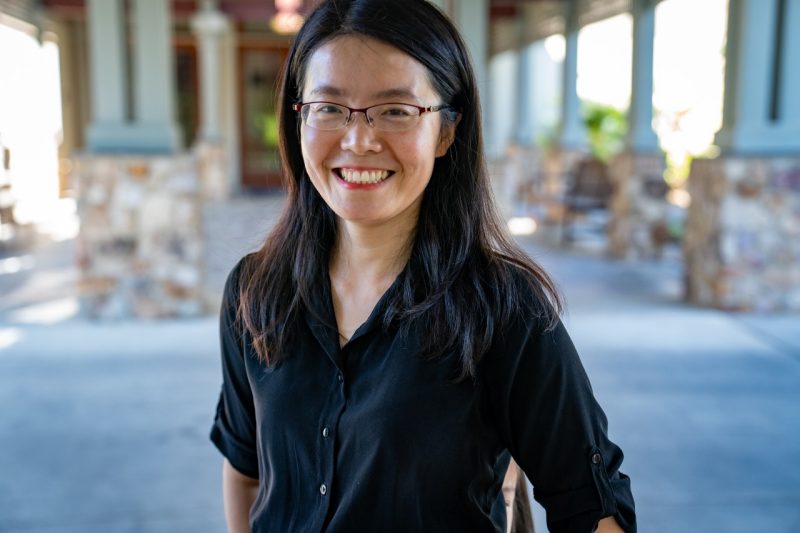
Siwei Cao
· Assistant ProfessorVerifiedVirginia Tech · Computer Science
Active 1993–2026
About
Siwei Cao is a faculty member in the Department of Computer Science at Virginia Tech, located in Torgersen Hall RM 2220B, Blacksburg, VA. His research interests include computational thermodynamics, kinetics, and computer science education. He holds a Ph.D. in materials science and engineering from The Ohio State University, obtained in 2013, a master's degree in physics from Miami University, Ohio, earned in 2008, and a bachelor's degree in physics from Beijing Jiaotong University, China, completed in 2006. His professional background combines expertise in materials science, physics, and computer science, contributing to his focus on computational methods and educational initiatives within computer science.
Research topics
- Biology
- Botany
- Microbiology
- Genetics
- Chemistry
- Stereochemistry
- Organic chemistry
- Biochemistry
Selected publications
Study on Secondary Metabolites of Marine-Derived Fungus <i>Cladosporium</i> sp. MDCW-211
Chinese Journal of Organic Chemistry · 2026-01-01
articleSenior authorVernonolide A, a Sesquiterpene Lactone with a Unique Carbon Skeleton from <i>Vernonia cinerea</i>
Organic Letters · 2025-01-11 · 2 citations
articleA novel sesquiterpene lactone derivative, vernonolide A (1), featuring an unprecedented carbon skeleton, along with its plausible biosynthetic precursor, vercinolide I (2), and eight known sesquiterpene lactones (3–10) were isolated and characterized from the whole plants of Vernonia cinerea (L.). The structures of 1 and 2 were elucidated using nuclear magnetic resonance spectroscopic analysis and calculated and experimental electronic circular dichroism spectra. A plausible biosynthetic pathway for 1 was proposed. Notably, compounds 8 and 10 exhibited significant inhibitory effects on tumor necrosis factor-α-induced nuclear factor-κB activity, with IC50 values of 0.95 and 5.57 μM, respectively.
Potent antiproliferative dimeric biaryl-cyclohexapeptides from Lentzea flaviverrucosa
Phytochemistry Letters · 2025-10-01
article1st authorCorrespondingPharmaceuticals · 2025-09-18
articleOpen accessSenior authorCorrespondingBackground/Objectives: Neurotransmitters such as dopamine and serotonin are critical regulators of mood, cognition, and neuronal homeostasis. This study aimed to evaluate the neuropharmacological potential of Hawaiian plants by investigating their ability to modulate the expression of tyrosine hydroxylase (TH) and tryptophan hydroxylase (TPH), key enzymes in neurotransmitter biosynthesis. Methods: A total of 108 aqueous and methanolic extracts of Hawaiian plants were screened for cytotoxicity against PC-12 and Neuro-2A cells using the MTT assay. Fifty-six non-toxic extracts were selected and further analyzed for TH and TPH expression via quantitative real-time PCR (qPCR). Results: Several extracts significantly upregulated TH and TPH expression without inducing cytotoxicity. Extracts derived from Morinda citrifolia, Pipturus albidus, and Hedychium coronarium showed the most notable activity, suggesting their potential to enhance dopaminergic and serotonergic pathways. Conclusions: The findings highlight the promise of native Hawaiian flora as sources of neuroactive compounds that may support neuroprotection and regeneration. These results provide a foundation for in vivo studies and further exploration of novel neurotherapeutic agents.
Optimization of pitavastatin calcium and ezetimibe combination tablet using full factorial design
Tropical Journal of Pharmaceutical Research · 2025-04-04
articleOpen accessPurpose: To identify the optimized region of formulation using quality by design for pitavastatin calcium (PTV) and ezetimibe (EZE) immediate-release fixed-dose combination tablets Methods: Hardness, friability, disintegration time, content, content uniformity, and dissolution rate were critical quality attributes (CQAs). Through the initial risk assessment, microcrystalline cellulose (MCC), sodium starch glycolate (SSG), the amount of water in the wet granulation part, and the main compression force were identified to affect the CQAs, and a full factorial design of the experiment (DoE) was applied. Results: Parameters in all the batches were significantly influenced based on the analysis of variance (p < 0.05). MCC affected content (p = 0.0002), content uniformity (p = 0.0002), and dissolution rate (p = 0.0131) while SSG affected friability (p = 0.0004), disintegration time (p < 0.0001), and dissolution rates (pH 4.5 for pravastatin: p = 0.0227, 0.5 % SLS (pH 4.5) for ezetimibe: p < 0.0001, and 0.5 % SLS (pH 6.8) for ezetimibe: p = 0.0434, respectively). The amount of water in wet granulation part and main compression were the main factors affecting hardness (p = 0.0143) and disintegration time (p = 0.0005). Optimized ranges included MCC (10 – 18 %), SSG (7.86 – 15 %), amount of water in the wet granulation part (38 – 43.52 %), and main compression (954 – 1133 kgf). Conclusion: The optimized region ranges of MCC, SSG, compression force, and the amount of water in the wet granulation for manufacturing process development have been successfully achieved by the design of experiments (DoE) approach.
Tablet Compression Optimization of Ivabradine Sustained-Release Tablet Using Full Factorial Design
Indian Journal of Pharmaceutical Education and Research · 2024-06-21 · 1 citations
articleOpen accessAim This study aimed to qualitatively identify the ranges of the factors involved in the tablet compression process for ivabradine Sustained Release (SR) tablets. Materials and Methods A full factorial design of experiments study was used to identify three factors (pre- and main-compression force and paddle rotation time) involved in the compression process of ivabradine SR tablets. For robust tableting, three responses (content uniformity, friability, and dissolution) were evaluated as critical quality attributes via analysis of variance using Design Expert software. Results The main compression force significantly influenced dissolution (1 hr, p <0.0001; 3 hr, p <0.0001; and 8 hr, p=0.0002). Precompression and paddle rotation time slightly influenced friability (p=0.0510) and content uniformity (p=0.0968). These results showed that paddle rotation time (0.27-1.37 sec), pre-compression (1.5 kN), and main compression (7.7-9.2 kN) influenced the tablet compression process of the optimal ivabradine SR tablet. Conclusion In summary, robust ranges of three factors for tableting were successfully evaluated. It can be concluded that the ranges of tablet compression leading to high quality (low friability and content uniformity, and optimal dissolution) for tableting were successfully observed by the DoE approach.
Penilumamide, a novel SIRT1 activator, protects UVB-induced photodamages in HaCaT cells
Journal of Toxicology and Environmental Health · 2024-08-06 · 4 citations
articleOpen accessCorresponding). In addition, pretreatment with penilumamide significantly reduced the expression levels of pro-inflammatory cytokines, interleukin (IL)-6, IL-8, and IL-10 and phosphorylation of nuclear factor-kB (NF-kB). These results indicate that penilumamide protects HaCaT cells from UVB-induced inflammation. Taken together data demonstrate that penilumamide exerted protective effects against UVB-induced ROS generation in HaCaT cells. Therefore, penilumamide may be considered to be used as a new SIRT1 activator to protect human keratinocyte against UVB-induced damage.
Cytotoxic Compounds from Marine Fungi: Sources, Structures, and Bioactivity
Marine Drugs · 2024-01-28 · 19 citations
articleOpen accessSenior authorCorrespondingMarine fungi, such as species from the Penicillium and Aspergillus genera, are prolific producers of a diversity of natural products with cytotoxic properties. These fungi have been successfully isolated and identified from various marine sources, including sponges, coral, algae, mangroves, sediment, and seawater. The cytotoxic compounds derived from marine fungi can be categorized into five distinct classes: polyketides, peptides, terpenoids and sterols, hybrids, and other miscellaneous compounds. Notably, the pre-eminent group among these compounds comprises polyketides, accounting for 307 out of 642 identified compounds. Particularly, within this collection, 23 out of the 642 compounds exhibit remarkable cytotoxic potency, with IC50 values measured at the nanomolar (nM) or nanogram per milliliter (ng/mL) levels. This review elucidates the originating fungal strains, the sources of isolation, chemical structures, and the noteworthy antitumor activity of the 642 novel natural products isolated from marine fungi. The scope of this review encompasses the period from 1991 to 2023.
Toxicology in Vitro · 2024-12-31 · 5 citations
articleCorrespondingPlants · 2023-08-12 · 2 citations
reviewOpen accessCorrespondingpredominates. Farmed māmaki is becoming increasingly popular in Hawaii and the United States. Māmaki teas (such as bottled Shaka tea) are the dominant product. Historically, māmaki has been utilized for its medicinal properties, promoting well-being and good health through consuming tea made from its leaves, ingesting its fruit, and incorporating it into ointments. Māmaki holds cultural significance among Native Hawaiians and is widely used in ethnic medicine, having been incorporated into traditional practices for centuries. However, the scientific mechanisms behind its effects remain unclear. This review consolidates current knowledge of māmaki, shedding light on its potential therapeutic properties, physical properties, nutritional and mineral composition, and active phytochemicals. We also highlight recent research advances in māmaki's antibacterial, anti-viral, chemopreventive, anti-inflammatory, and antioxidant activities. Additionally, we discuss future prospects in this field.
Frequent coauthors
- 299 shared
Chun‐Shun Li
University of Hawaii at Hilo
- 178 shared
James Turkson
Cedars-Sinai Medical Center
- 145 shared
Jon Clardy
Harvard University
- 121 shared
Giselle Tamayo‐Castillo
Universidad de Costa Rica
- 106 shared
Baojun Yang
China National Rice Research Institute
- 97 shared
David G. I. Kingston
Virginia Tech
- 83 shared
Avi Raveh
Tel Aviv University
- 83 shared
Pamela J. Schultz
University of Michigan–Ann Arbor
- Resume-aware match score
- Save to shortlist
- AI-drafted outreach
See your match with Siwei Cao
PhdFit ranks faculty by your research interests, methods, and publications — grounded in their actual work, not templates.
- Free to start
- No credit card
- 30-second signup