Lena F. Kourkoutis
· Assistant ProfessorVerifiedCornell University · Anatomy and Structural Biology
Active 2002–2026
About
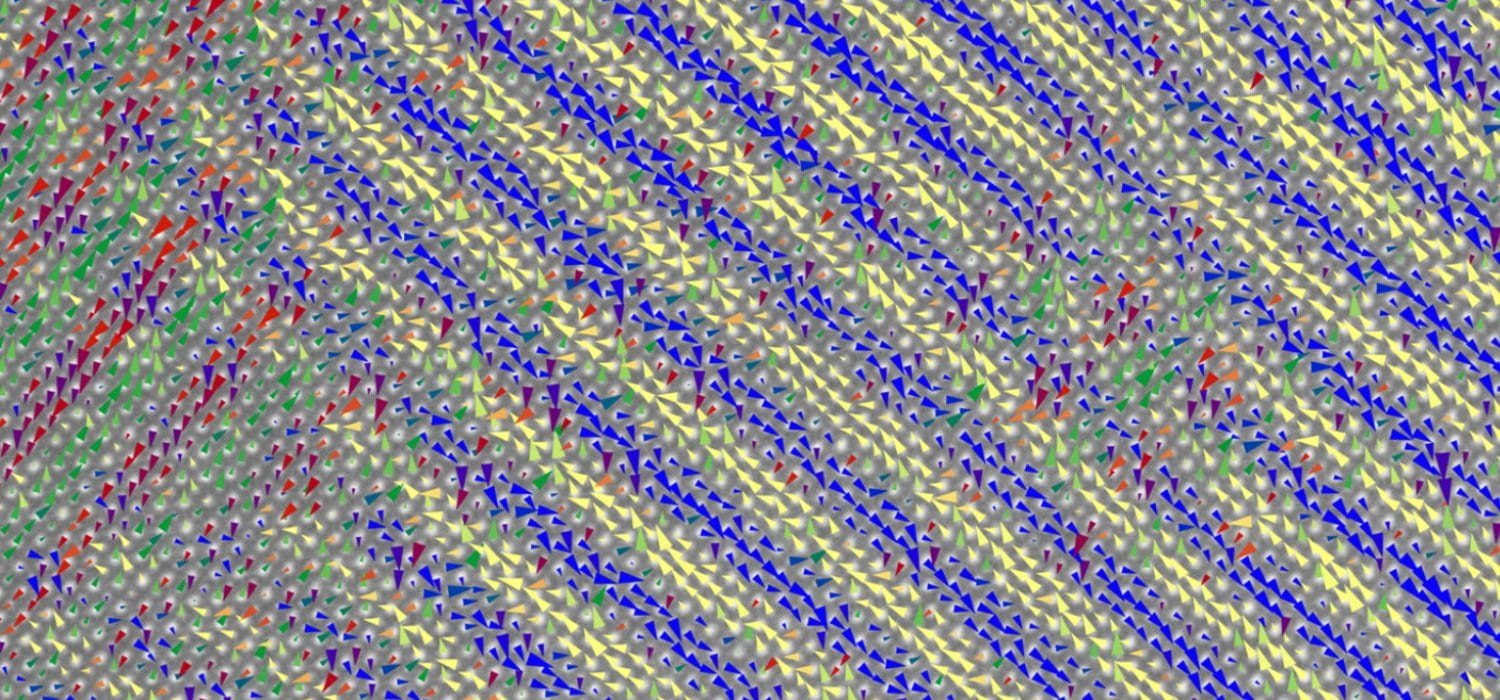
Lena F. Kourkoutis was a professor and a member of the Kourkoutis Electron Microscopy Group at Cornell University. Her research focused on developing and applying novel electron microscopy techniques to advance the fundamental understanding of materials and devices. Central to her work was the use of the scanning transmission electron microscope (STEM), which allowed her to probe structural, chemical, and electronic properties at the atomic scale. Her group’s efforts spanned various research areas including electron microscopy methods, quantum materials, energy materials and devices, nanomaterials, and cellular architecture. She contributed significantly to the field by leveraging advanced microscopy tools to explore the structure, chemistry, and function of complex materials.
Research topics
- Materials science
- Chemistry
- Physics
- Crystallography
- Nanotechnology
- Condensed matter physics
- Metallurgy
- Chemical physics
- Organic chemistry
- Chemical engineering
- Nuclear magnetic resonance
- Mineralogy
- Environmental chemistry
- Physical chemistry
- Inorganic chemistry
- Optics
- Optoelectronics
- Composite material
Selected publications
Superconducting phase diagram of multi-layer square-planar nickelates
ArXiv.org · 2026-01-01
articleOpen accessThe discovery of superconductivity in square-planar nickelates has offered a rich materials platform to explore the origins of cuprate-like superconductivity. Experimental investigations however have largely been limited to the infinite-layer $R$NiO$_2$ ($R$=rare-earth) nickelates. Here, we construct a phase diagram of multi-layer square-planar Nd$_{n+1}$Ni$_n$O$_{2n+2}$ compounds and discover signatures of superconductivity for $n$ = 4 - 8. Upon decreasing the dimensionality $n$, the superconducting anisotropy evolves due to 4$f$ electron effects, and electronic structure characteristics approach cuprate-like behavior. Magnetic fluctuations persist from within the superconducting regime and into the over-doped, non-superconducting regime. Remarkably, the superconducting regime overlaps with that of chemically-doped infinite-layer nickelates, demonstrating underlying commonalities and distinct differences across varying structural realizations of square-planar nickelates. Our work establishes this layered template for creating new nickel-based superconductors.
Superconducting phase diagram of multi-layer square-planar nickelates
arXiv (Cornell University) · 2026-02-22
preprintOpen accessThe discovery of superconductivity in square-planar nickelates has offered a rich materials platform to explore the origins of cuprate-like superconductivity. Experimental investigations however have largely been limited to the infinite-layer $R$NiO$_2$ ($R$=rare-earth) nickelates. Here, we construct a phase diagram of multi-layer square-planar Nd$_{n+1}$Ni$_n$O$_{2n+2}$ compounds and discover signatures of superconductivity for $n$ = 4 - 8. Upon decreasing the dimensionality $n$, the superconducting anisotropy evolves due to 4$f$ electron effects, and electronic structure characteristics approach cuprate-like behavior. Magnetic fluctuations persist from within the superconducting regime and into the over-doped, non-superconducting regime. Remarkably, the superconducting regime overlaps with that of chemically-doped infinite-layer nickelates, demonstrating underlying commonalities and distinct differences across varying structural realizations of square-planar nickelates. Our work establishes this layered template for creating new nickel-based superconductors.
Atomic-Scale Tracking of Topological Defect Motion and Incommensurate Charge Order Melting
Physical Review X · 2025-01-15 · 4 citations
articleOpen accessSenior authorCharge order pervades the phase diagrams of quantum materials where it competes with superconducting and magnetic phases, hosts electronic phase transitions and topological defects, and couples to the lattice generating intricate structural distortions. Incommensurate charge order is readily stabilized in manganese oxides, where it is associated with anomalous electronic and magnetic properties, but its nanoscale structural inhomogeneity complicates precise characterization and understanding of its relationship with competing phases. Leveraging atomic-resolution variable-temperature cryogenic scanning transmission electron microscopy, we characterize the thermal evolution of charge order as it transforms from its ground state in a model manganite system. We find that mobile networks of discommensurations and dislocations generate phase inhomogeneity and induce global incommensurability in an otherwise lattice-locked modulation. Driving the order to melt at high temperatures, the discommensuration density grows, and regions of order locally decouple from the lattice periodicity.
Nature Methods · 2025-09-23 · 8 citations
articleOpen accessSenior authorCryogenic electron microscopy is a powerful tool in structural biology. In thick specimens, challenges arise as an exponentially larger fraction of the transmitted electrons lose energy from inelastic scattering and can no longer be properly focused as a result of chromatic aberrations in the post-specimen optics. Rather than filtering out the inelastic scattering at the price of reducing potential signal, as is done in energy-filtered transmission electron microscopy, we show how a dose-efficient and unfiltered image can be rapidly obtained using tilt-corrected bright-field scanning transmission electron microscopy data collected on a pixelated detector. Enhanced contrast and a 3-5× improvement in dose efficiency are observed for two-dimensional images of intact bacterial cells and large organelles using tilt-corrected bright-field scanning transmission electron microscopy compared to energy-filtered transmission electron microscopy for thicknesses beyond 500 nm. As a proof of concept for the technique's performance in structural determination, we present a single-particle analysis map at sub-nanometer resolution for a highly symmetric virus-like particle determined from 789 particles.
Physical Review Letters · 2025-11-14 · 1 citations
articleCommon belief is that the large band shifts observed in incommensurate misfit compounds, e.g., (LaSe)_{1.14}(NbSe_{2})_{2}, are due to interlayer charge transfer. By contrast, our analysis, based on both angle-resolved photoemission spectroscopy (ARPES) measurements and a specialized ab initio framework employing only quantities well defined in incommensurate materials, demonstrates that the large band shifts instead reflect changes in valence band hybridization and interlayer bonding. The strong alignment of our ab initio predictions and ARPES measurements confirms our understanding of the incommensurate electronic structure and charge transfer.
Physical Review X · 2025-05-12 · 12 citations
articleOpen accessWe report evidence for superconductivity with onset temperatures up to 11 K in thin films of the infinite-layer nickelate parent compound <a:math xmlns:a="http://www.w3.org/1998/Math/MathML" display="inline"><a:mrow><a:msub><a:mrow><a:mi>NdNiO</a:mi></a:mrow><a:mrow><a:mn>2</a:mn></a:mrow></a:msub></a:mrow></a:math>. A combination of oxide molecular beam epitaxy and atomic hydrogen reduction yields samples with high crystallinity and low residual resistivities, a substantial fraction of which exhibit superconducting transitions. We survey a large series of samples with a variety of techniques, including electrical transport, scanning transmission electron microscopy, x-ray absorption spectroscopy, and resonant inelastic x-ray scattering, to investigate the possible origins of superconductivity. We propose that superconductivity could be intrinsic to the undoped infinite-layer nickelates but suppressed by disorder due to a possibly sign-changing order parameter, a finding which would necessitate a reconsideration of the nickelate phase diagram. Another possible hypothesis is that the parent materials can be hole doped from randomly dispersed apical oxygen atoms, which would suggest an alternative pathway for achieving superconductivity.
Nature Synthesis · 2025-01-10 · 21 citations
articleOpen accessACS Nano · 2025-05-26 · 2 citations
articleSenior authorAlkaline anion exchange membrane (AAEM) fuel cells offer a cost-effective alternative to proton exchange membrane (PEM) fuel cells by eliminating the need for expensive precious metal catalysts. In both PEMs and AAEMs, semicrystalline polymers are a common choice, as the crystalline domains can act as mechanical reinforcements that limit swelling and promote mechanical durability in the material. However, spatially resolved characterization of crystalline organization in ion exchange membranes beyond ensemble-averaged X-ray scattering is underrepresented, likely in part due to ionization damage limitations in soft materials. Here, we resolve the nanometer-size crystallites in semicrystalline ion exchange membranes by applying cryogenic four-dimensional scanning transmission electron microscopy (cryo-4D-STEM) along with data-processing algorithms designed to optimize signals at a low dose to minimize radiation damage. We investigate the effects of synthesis components, including molecular weight and thermal treatment, on a model system of AAEMs in comparison to Nafion, the most commonly used and commercially successful PEM today. We find that excess water uptake in polymer membranes, a property directly associated with weak mechanical durability and with possible negative impacts on ion conductivity, can be reduced by over 30% by varying the polymer's crystalline morphology through changes in synthesis parameters such as molecular weight and thermal history. Our results indicate that this improvement is correlated with smaller crystalline domains with a more homogeneous distribution. More broadly, these results demonstrate how the crystalline architecture of polymer membranes can be tuned through their chemistry and thermal treatment in order to improve their conductivity and durability for commercial fuel cell performance.
Micron · 2025-09-30
articleOpen accessSenior authorThe expansion of spectroscopic mapping by STEM-EELS to cryogenic temperatures opens the door to new experiments across many fields including materials physics, biological systems, and solid-liquid interfaces. Such experiments, however, often face signal limitations due to sample sensitivity or acquisition time. Compared to traditional indirect detection systems such as charge coupled devices (CCDs), direct electron detectors (DEDs) offer improved detective quantum efficiency, narrower point spread function, and superior signal to noise ratio. Here, the performance of a Gatan K2 Summit DED is compared to a Gatan UltraScan 1000 CCD for use in signal-limited EELS experiments. Due to improved point spread function of the DED, energy resolution remains comparable to the CCD at 5 times lower dispersion, providing simultaneous access to a much broader total energy range. Furthermore, the benefits of DED enable a variety of low-signal experiments, including rapid atomic-resolution mapping of minor and high energy edges. For low per-pixel dwell time, elemental maps acquired by direct detection show increased atomic column contrast compared to those acquired with the CCD with lower acquisition dead time. Taking advantage of these performance improvements and the rapid per frame readout time, we demonstrate EELS atomic-resolution elemental mapping at cryogenic temperatures.
Physical review. B./Physical review. B · 2025-04-22 · 3 citations
articleOpen accessThe authors present here a resonant inelastic x-ray scattering study of magnetic and electronic excitations in the layered Ruddlesden-Popper nickelates Nd${}_{n+1}$Ni${}_{n}$O${}_{3n+1}$. As the number of layers increases, holes are doped into ligand sites and magnetic excitations soften modestly--an effect attributed to competing influences of hole doping and enhanced interlayer exchange. These findings highlight structural tuning as an effective route to manipulate electronic and magnetic properties, establishing a promising platform for unconventional superconductivity.
Recent grants
NSF · $550k · 2017–2023
NSF · $2.7M · 2014–2016
Frequent coauthors
- 187 shared
David A. Muller
Cornell University
- 158 shared
Darrell G. Schlom
Leibniz Institute for Crystal Growth
- 129 shared
Berit H. Goodge
- 106 shared
Harold Y. Hwang
Stanford University
- 82 shared
Robert Hovden
University of Michigan–Ann Arbor
- 63 shared
Ismail El Baggari
- 57 shared
Julia A. Mundy
Harvard University
- 46 shared
Michael J. Zachman
Oak Ridge National Laboratory
Labs
- Resume-aware match score
- Save to shortlist
- AI-drafted outreach
See your match with Lena F. Kourkoutis
PhdFit ranks faculty by your research interests, methods, and publications — grounded in their actual work, not templates.
- Free to start
- No credit card
- 30-second signup