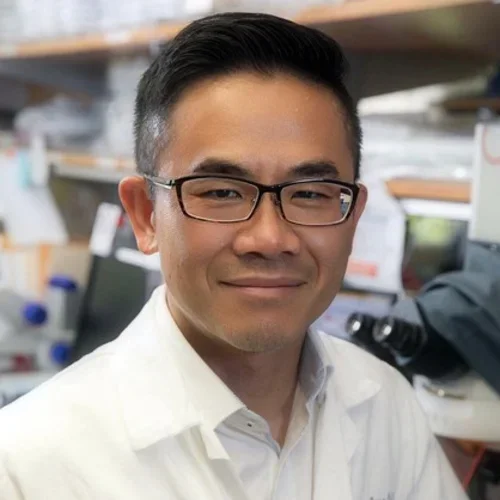
Hsian-Rong Tseng
VerifiedUniversity of California, Los Angeles · Pharmacology and Pharmaceutical Sciences
Active 1996–2026
About
Dr. Hsian-Rong (HR) Tseng joined the faculty of the David Geffen School of Medicine at UCLA in 2003. He is currently a Professor of Molecular & Medical Pharmacology, with joint memberships in the California NanoSystems Institute, Crump Institute for Molecular Imaging, and Jonsson Comprehensive Cancer Center on the UCLA campus. His research interest falls in developing nanotechnology-enabled diagnostic and therapeutic solutions for cancer and genetic diseases.
Research topics
- Computer Science
- Information Retrieval
- Data Mining
- Medicine
- Cancer research
- Internal medicine
- Biology
- Oncology
- Chromatography
- Database
- Chemistry
- Genetics
- Biochemistry
- Cell biology
- Pathology
Selected publications
Computational frameworks for enhanced extracellular vesicle biomarker discovery
Experimental & Molecular Medicine · 2026-01-14 · 4 citations
articleOpen accessExtracellular vesicles (EVs) are emerging as promising noninvasive biomarkers, yet their clinical translation faces substantial hurdles, primarily due to the challenge of identifying assay-compatible markers. Here, in this Review, we outline sophisticated computational frameworks, particularly leveraging artificial intelligence, to bridge this gap. We detail the integration of diverse data resources, including disease-specific omics, EV, protein localization, tissue-specific, drug, model system and immune databases. This Review comprehensively describes computational selection strategies, from rule-based sequential filtering to advanced machine learning for data fusion and deep learning for multi-omics integration. Crucially, it discusses the refinement of biomarker candidates using artificial-intelligence-driven predictions of protein structure and physicochemical properties, ensuring compatibility with existing assay systems. By systematically evaluating biomarkers for predictive performance, biological plausibility and clinical utility, this framework aims to accelerate the transition of EV research from discovery to clinical application, thereby enhancing precision medicine.
Advanced Healthcare Materials · 2026-02-22
articleOpen accessCorrespondingABSTRACT Ewing Sarcoma (ES) is a rare but aggressive malignancy of bone tissue in adolescents and young adults, where early detection of progression and real‐time treatment monitoring remain unmet clinical needs. Tumor extracellular vesicles (EVs) carry surface markers and nucleic acid cargo that can serve as minimally invasive biomarkers, but single‐marker EV assays often lack specificity, and colocalized‐marker approaches may suffer from low sensitivity. Here, we report the ES EV Capture–Release–Capture (CaReCa) assay, a two‐step enrichment strategy that combines desthiobiotin (DTB)‐mediated capture/release of CD99 + EVs with click chemistry‐mediated recapture of CD99 + /B7‐H3 + EVs, introducing molecular specificity to suppress background signals. To overcome limited yield from EVs with colocalized markers, we incorporated RT‐digital PCR quantification of encapsulated ACTB mRNA, a stable housekeeping transcript, as a sensitive proxy for EV abundance. Using only 100 µL of plasma, the ES EV CaReCa assay distinguished ES patients ( n = 20) from healthy donors ( n = 20) with an AUROC of 0.98. Longitudinal analysis further demonstrated that dynamic changes in the assay readouts paralleled disease progression and treatment response, consistent with PET/CT findings. Together, these results establish CaReCa as a sensitive, specific, and scalable liquid biopsy platform with translational potential for noninvasive monitoring of ES patients.
Journal of Clinical Oncology · 2025-05-28
articlee17038 Background: Circulating tumor cells (CTCs) with a very-small-nuclear (vsn) phenotype (i.e., vsnCTCs) in prostate cancer (PCa) represent a distinct subset of CTCs characterized by nuclei smaller than 8.5 μm. Our previous studies established a link between vsnCTCs and the presence of visceral metastasis. Emerging evidence suggests that the reduction of emerin (EMD), a nuclear envelope protein, contributes to PCa metastasis and is associated with nuclear shape instability. This study aims to validate vsnCTCs as a biomarker in metastatic castration-resistant prostate cancer (mCRPC) and investigate the correlation between EMD expression and the vsnCTC phenotype. Methods: CTCs were isolated from 93 mCRPC patients using the NanoVelcro CTC assay and categorized as either vsnCTC-positive (vsnCTC+) or vsnCTC-negative (vsnCTC-). We compared overall survival (OS) and progression-free survival (PFS) between these two groups. In vitro experiments were conducted using PCa cell lines (C4-2B, 22Rv1, and DU145) with EMD knockdown via siRNA or shRNA to study its impact on cellular phenotypes. Additionally, we measured EMD expression and nuclear size in abiraterone- and enzalutamide-resistant (Abi-R/Enza-R) C4-2B cells. Results: vsnCTC+ patients had significantly worse OS and PFS compared to vsnCTC- patients. Multivariate analysis revealed that vsnCTC+ status was independently associated with poorer OS and PFS. EMD expression was markedly reduced in CTCs from vsnCTC+ patients compared to vsnCTC- patients, with a significant positive correlation between EMD expression and CTC nuclear size. EMD knockdown in PCa cells resulted in smaller nuclei, enhanced invasion, and the upregulation of genes associated with neuronal de-differentiation (e.g., SOX2, CHGA, MYCN, and AURKA). Additionally, C4-2B Abi-R/Enza-R cells had significantly smaller nuclei and lower EMD expression, consistent with our clinical observation of the vsnCTCs association with ARSI resistance. These resistant cells also demonstrated elevated expression of neuronal de-differentiation genes. Conclusions: The presence of vsnCTCs represents a novel hallmark of an aggressive subtype of mCRPC, closely linked to EMD dysregulation and neuroendocrine differentiation. These findings highlight the potential of vsnCTCs and associated biological changes as a predictive biomarker. Our findings underscore the importance of EMD in the progression and therapeutic resistance of advanced PCa.
2025-05-15
preprintOpen access<div>AbstractPurpose:<p>Circulating tumor cells (CTC) with a very-small-nuclear phenotype (vsnCTC) in prostate cancer are characterized by nuclei smaller than 8.5 μm. Our previous studies established an association between vsnCTCs and visceral metastasis. Reduction of emerin (EMD), a nuclear envelope protein, contributes to prostate cancer metastasis and nuclear shape instability. In this study, we investigated the correlation between EMD expression and the vsnCTC phenotype and its clinical impact.</p>Experimental Design:<p>We analyzed CTCs from 93 patients with metastatic castration-resistant prostate cancer and categorized them as either vsnCTC+ or vsnCTC− and compared overall survival and progression-free survival. C4-2B, 22Rv1, and DU145 with EMD knockdown were developed and characterized by nuclear size and gene expression by gene set enrichment analysis. Abiraterone- and enzalutamide-resistant C4-2B cells were also characterized by nuclear size and EMD expression.</p>Results:<p>Patients who were vsnCTC+ had significantly worse overall survival and progression-free survival compared with patients who were vsnCTC−. EMD expression was markedly reduced in CTCs from patients who were vsnCTC+ compared with patients who were vsnCTC−, with a significant positive correlation between EMD expression and CTC nuclear size. EMD knockdown in prostate cancer cells resulted in smaller nuclei, enhanced invasion, and the upregulation of genes associated with lineage plasticity. Additionally, abiraterone- and enzalutamide-resistant C4-2B cells had smaller nuclei and lower EMD expression. vsnCTC+ cells also showed enhanced platinum sensitivity.</p>Conclusions:<p>The presence of vsnCTCs represents a novel hallmark of an aggressive subtype of metastatic castration-resistant prostate cancer closely linked to EMD loss and lineage plasticity. These findings highlight the importance of EMD dysregulation in the vsn phenotype, disease progression, and therapeutic resistance in patients with prostate cancer.</p></div>
2025-05-15
preprintOpen access<p>Supplemental Figure 3. P-spline curve comparing CTC number and hazard ratio for overall survival.</p>
2025-05-15
preprintOpen access<p>Supplemental Figure 2. vsnCTCs are associated with poorer clinical outcomes in advanced prostate cancer.</p>
2025-05-15
preprintOpen access<p>Supplemental Table 3. All subsequent treatments after vsnCTC assessment.</p>
Advanced Science · 2025-06-01
articleOpen accessEarly PancrEatic cancEr DEtEctionNa Sun, Hsian-Rong Tseng, Yazhen Zhu, and colleagues have developed a simple, noninvasive test for early pancreatic cancer detection.Their approach uses click chemistry to capture extracellular vesicles (EVs) released by cancer cells.Once isolated, these cancer EVs are analyzed with a standard PCR machine to measure their mRNA content, providing a promising biomarker for pancreatic cancer.More details can be found in article number 2414982.
2025-05-15
preprintOpen access<p>Supplemental Table 2. Univariate and multivariable Cox regression analyses.</p>
International Journal of Radiation Oncology*Biology*Physics · 2025-09-01
article
Recent grants
Non-Invasive Prenatal Diagnostics Based on Circulating Trophoblasts
NIH · $4.0M · 2019–2025
NIH · $2.0M · 2018
NIH · $2.0M · 2023–2028
NIH · $400k · 2014
NIH · $362k · 2012
Frequent coauthors
- 258 shared
Yazhen Zhu
California NanoSystems Institute
- 216 shared
Shuang Hou
Chinese Academy of Sciences
- 184 shared
Mitch A. Garcia
- 177 shared
Edwin M. Posadas
Cedars-Sinai Medical Center
- 158 shared
J. Fraser Stoddart
UNSW Sydney
- 154 shared
Wei‐Yu Lin
Kaohsiung Medical University
- 136 shared
Kuan‐Ju Chen
- 127 shared
Ken‐ichiro Kamei
Kyoto University
Labs
Hsian-Rong Tseng LabPI
Education
- 1997
PhD, Chemistry
National Taiwan University
- Resume-aware match score
- Save to shortlist
- AI-drafted outreach
See your match with Hsian-Rong Tseng
PhdFit ranks faculty by your research interests, methods, and publications — grounded in their actual work, not templates.
- Free to start
- No credit card
- 30-second signup