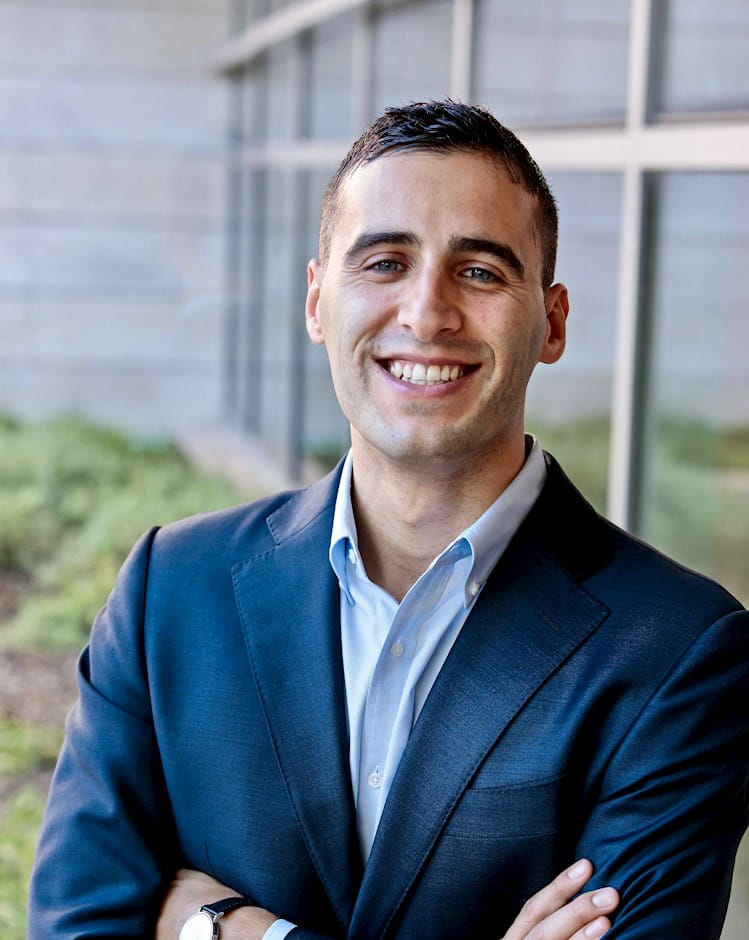
Emanuele Colonnelli
· Joseph L. Gidwitz Professor of Finance and EntrepreneurshipUniversity of Chicago · Finance
Active 2015–2025
About
Emanuele Colonnelli is a professor of finance and entrepreneurship at the University of Chicago Booth School of Business. His research focuses on the intersection of finance, entrepreneurship, and development economics, with a particular interest in the role of financial institutions in promoting economic growth and reducing poverty in developing countries.
Research topics
- Political Science
- Economics
- Market economy
- Management
- Geography
- Law
- Business
- Economic geography
- Economy
Selected publications
American Economic Review · 2025-09-30 · 4 citations
article1st authorCorrespondingWe study how individual political views shape firm behavior and labor market outcomes using new microdata from Brazil. We first show that business owners are considerably more likely to employ copartisan workers. This phenomenon is in part driven by the overlapping of political and social networks. Multiple tests—surveys, event studies, analyses of wage premia and promotions within the firm, and a field experiment—further highlight how business owners’ political preferences directly influence firms’ employment decisions. A channel of political discrimination appears more relevant than one of political quid pro quo between firms and politicians. (JEL C93, D22, D72, J23, M51, O17, Z13)
ESG is the Most Polarizing Nonwage Amenity: Evidence from a Field Experiment in Brazil
AEA Papers and Proceedings · 2025-05-01 · 1 citations
article1st authorCorrespondingWe examine job seekers' heterogeneous preferences for nonwage amenities, with a focus on environmental, social, and governance (ESG) practices, using an incentivized field experiment in Brazil. Our findings reveal that ESG is the most polarizing nonwage amenity across multiple sociodemographic groups, with the strongest preferences observed among highly educated, White, and politically liberal individuals (Colonnelli et al. 2025). While women report a stronger preference for work-from-home policies, all other nonwage amenities exhibit minimal variation across sociodemographic groups. Our findings highlight the critical role of corporate values in shaping economic outcomes within an increasingly polarized society.
ESG is the Most Polarizing Nonwage Amenity: Evidence from a Field Experiment in Brazil
SSRN Electronic Journal · 2025-01-01
articleOpen access1st authorCorrespondingESG Is The Most Polarizing Nonwage Amenity: Evidence from a Field Experiment in Brazil
National Bureau of Economic Research · 2025-02-01 · 1 citations
reportOpen access1st authorCorrespondingWe examine job-seekers' heterogeneous preferences for nonwage amenities, with a focus on environmental, social, and governance (ESG) practices, using an incentivized field experiment in Brazil.Our findings reveal that ESG is the most polarizing nonwage amenity across multiple sociodemographic groups, with the strongest preferences observed among highly educated, white, and politically liberal individuals (Colonnelli et al., 2025).While women report a stronger preference for work-from-home policies, all other nonwage amenities exhibit minimal variation across sociodemographic groups.Our findings highlight the critical role of corporate values in shaping economic outcomes within an increasingly polarized society.
National Bureau of Economic Research · 2024-02-01 · 2 citations
reportOpen access1st authorCorrespondingWe study whether information frictions and corruption perceptions deter firms from doing business with the government.We conduct two nationwide randomized controlled trials (RCTs) in collaboration with the national public procurement supervisory and anti-corruption agency in Uganda.The first RCT aims to increase firms' information on available procurement opportunities, which is limited due to the lack of a centralized e-procurement system.We provide firms with direct and timely access to information about government tenders over a twoyear period.The second RCT focuses on firms' perceptions about the integrity of public entities, which we experimentally show are key drivers of firms' participation in procurement.We provide firms with access to structured information on other firms' perceptions and on anticorruption audits.We find that increasing information on available procurement opportunities alone does not increase firm participation in public procurement.However, changing firms' perceptions about the integrity of public entities increases firms' total number of bids and total government contracts won.Based on our findings, our partner agency implemented several measures to further restore firms' trust in public entities.Overall, our findings point to the limits of transparency reforms that aim to increase competition in public procurement without accounting for firms' perceptions about government corruption and inefficiency.
Global Private Capital Investors
AEA Randomized Controlled Trials · 2024-10-14
dataset1st authorCorrespondingDoes Corporate Transparency Matter? Evidence from Uganda
AEA Randomized Controlled Trials · 2024-04-19
dataset1st authorCorrespondingDoes Corporate Transparency Matter? Evidence from Uganda
AEA Randomized Controlled Trials · 2024-04-19
dataset1st authorCorrespondingAEA Randomized Controlled Trials · 2024-11-15 · 4 citations
dataset1st authorCorrespondingDoes Corporate Transparency Matter? Evidence from Uganda
AEA Randomized Controlled Trials · 2024-04-19
dataset1st authorCorresponding
Frequent coauthors
- 56 shared
Mounu Prem
Einaudi Institute for Economics and Finance
- 44 shared
Margarita Tsoutsoura
- 40 shared
Jacopo Ponticelli
- 40 shared
Spyridon Lagaras
University of Pittsburgh
- 36 shared
Shai Bernstein
- 26 shared
Benjamin Charles Iverson
Brigham Young University
- 12 shared
Davide Malacrino
- 12 shared
Ernest Liu
Princeton University
Education
- 2018
Ph.D.
Stanford University
Awards & honors
- 2023 Carlo Alberto Medal
- Resume-aware match score
- Save to shortlist
- AI-drafted outreach
See your match with Emanuele Colonnelli
PhdFit ranks faculty by your research interests, methods, and publications — grounded in their actual work, not templates.
- Free to start
- No credit card
- 30-second signup