David R. Nelson
· David R. NelsonVerifiedHarvard University · Applied Physics
Active 1974–2024
About
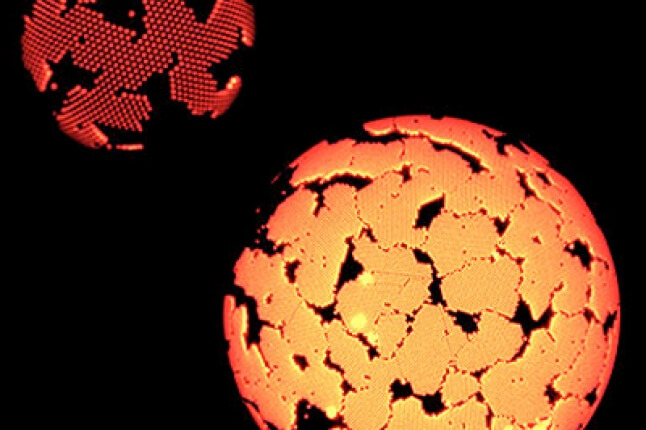
David R. Nelson is the Arthur K. Solomon Professor of Biophysics and Professor of Physics and Applied Physics at Harvard University. His primary teaching area is Applied Physics. His research areas include Applied Mathematics, Active Matter, Modeling of Physical and Biological Phenomena and Systems, and Biomaterials. His work involves studying how curved surfaces dramatically alter the shape of crystals, which has implications for coatings, drug delivery systems, and understanding how viruses assemble.
Research topics
- Physics
- Condensed matter physics
- Materials science
- Biology
- Geology
Selected publications
A field-deployable, fast, sensitive hydrogen analyzer
2024-01-01
articleOpen access1st authorCorrespondingVibrations and transitions across barrier of strained nanoribbons at finite temperature
Physical Review Materials · 2024-01-09 · 5 citations
articleOpen accessThermalized crystalline sheets, such as graphene liberated from a substrate, are driven by height fluctuations. The authors study the nonlinear dynamics of doubly-clamped nanoribbons as prototypical graphene resonators. Such ribbons exhibit a thermalized version of Euler buckling, with both up and down local minima. Treating the ribbon as a Brownian particle confined to a double-well potential, they determine transition rates across the two wells and oscillations inside a given well via molecular dynamics simulations. The dynamical behavior found is very different from Arrhenius behavior. The rate-controlling exponential factor depends only on the geometry, as opposed to the temperature, providing a new pathway for the experimental control of thermalized two-dimensional metamaterials.
Quantifying leaks with a field-deployable, fast, sensitive hydrogen instrument
2024-03-09
preprintOpen accessSenior authorAccurate quantification of leaks associated with hydrogen transport and storage infrastructure is vital to evaluate the environmental benefit associated with the transition from fossil fuels to hydrogen as an energy source. Understanding the locations and magnitudes of leaks is critical in efforts to mitigate the indirect climate impact of transitioning to a hydrogen economy. Quantification of hydrogen leaks requires a field-deployable, fast, sensitive measurement technology which, until recently, has not existed. We have developed a novel inlet system which couples to an Aerodyne tunable infrared laser direct absorption spectrometer (TILDAS) to measure hydrogen with
Fisher Renormalization and Fisher Reminiscences
WORLD SCIENTIFIC eBooks · 2024-08-01
book-chapter1st authorCorrespondingLiquid Crystal Ground States on Cones with Anti-Twist Boundary Conditions
arXiv (Cornell University) · 2024-12-04
preprintOpen accessSenior authorGeometry and topology play a fundamental role in determining pattern formation on 2D surfaces in condensed matter physics. For example, local positive Gaussian curvature of a 2D surface attracts positive topological defects in a liquid crystal phase confined to the curved surface while repelling negative topological defects. Although the cone geometry is flat on the flanks, the concentrated Gaussian curvature at the cone apex geometrically frustrates liquid crystal orientational fields arbitrarily far away. The apex acts as an unquantized pseudo-defect interacting with the topological defects on the flank. By exploiting the conformal mapping methods of F. Vafa et al., we explore a simple theoretical framework to understand the ground states of liquid crystals with $p$-fold rotational symmetry on cones, and uncover important finite size effects for the ground states with boundary conditions that confine both plus and minus defects to the cone flanks. By combining the theory and simulations, we present new results for liquid crystal ground states on cones with anti-twist boundary conditions at the cone base, which enforce a total topological charge of $-1$. We find that additional quantized negative defects are created on the flank as the cone apex becomes sharper via a defect unbinding process, such that an equivalent number of quantized positive defects become trapped at the apex, thus partially screening the apex charge, whose magnitude is a continuous function of cone angle.
Aquaculture · 2024-01-24 · 9 citations
articleAquaculture Fish and Fisheries · 2023-04-28 · 8 citations
articleOpen accessAbstract Larval eastern oysters ( Crassostrea virginica ) grown in shellfish hatcheries are susceptible to bacterial diseases, particularly vibriosis. Probiotics are microbes that confer health benefits to the host and have been identified as promising tools to manage diseases in aquaculture. The marine bacterium Phaeobacter inhibens S4 (S4) protects larval eastern oysters against challenge with the bacterial pathogen Vibrio coralliilyticus RE22 (RE22). A concentrated liquid formulation of probiont S4 that maintained high cell viability after long‐term storage was developed for commercial use in shellfish hatcheries. The safety and efficacy of the formulation were tested in six different trials in two hatcheries. The S4 formulation was added to C. virginica larvae culture tanks daily at 10 4 colony forming units (CFU)/mL from Day 1 post fertilisation until Day 6, 12 or 14, depending on the trial. Treatment of larvae in the hatchery with the S4 formulation did not significantly affect the survival and growth of the larvae. Formulated probiont S4 treatment in the hatchery led to a significant increase in relative percent survival (RPS) when larvae were subsequently challenged with the pathogen RE22 (10 5 CFU/mL) for 24 h in a laboratory challenge as compared to probiotic‐untreated RE22‐challenged larvae (RPS increase of 46%–74%, p < 0.05). These results suggest that this novel S4 formulation is a safe, easy‐to‐use and effective tool in preventing larval losses due to vibriosis in hatcheries.
Active topological defect absorption by a curvature singularity
Journal of Physics Condensed Matter · 2023-07-05 · 5 citations
articleOpen accessAbstract We leverage the Born–Oppenheimer approximation to present a general description of topological defects dynamics in p -atic materials on curved surfaces. Focusing on the case of an active nematic, we find that activity induces a geometric contribution to the motility of the <mml:math xmlns:mml="http://www.w3.org/1998/Math/MathML" overflow="scroll"><mml:mo>+</mml:mo><mml:mn>1</mml:mn><mml:mrow><mml:mo>/</mml:mo></mml:mrow><mml:mn>2</mml:mn></mml:math> defect. Moreover, in the case of a cone, the simplest example of a geometry with curvature singularity, we find that the motility depends on the deficit angle of the cone and changes sign when the deficit angle is greater than π , leading to the change in active behavior from contractile (extensile) to extensile (contractile) behavior. Using our analytical framework, we then identify for positively charged defects the basin of attraction to the cone apex and present closed-form predictions for defect trajectories near the apex. The analytical results are quantitatively corroborated against full numerical simulations, with excellent agreement when the capture radius is small compared to the cone size.
Microbiology Resource Announcements · 2023-01-19 · 3 citations
articleOpen accessSenior authorCorrespondingHere, we announce the draft genome sequence of Vibrio parahaemolyticus strain PSU5579, isolated from a shrimp hatchery in southern Thailand during an outbreak of acute hepatopancreatic necrosis disease (AHPND). The genome contains 44 contigs with a sequence length of 5,229,426 bp, 4,861 coding sequences, and a G+C content of 45.3%.
Defects in Amorphous Materials
Dislocations in solids · 2023-03-06
book-chapter1st authorCorrespondingOrder in supercooled liquids and metallic glasses is related to a regular icosahedral “crystal” consisting of 120 particles inscribed on the surface of a four-dimensional sphere. We show how this idea leads naturally to a defect description of liquids and metallic glasses. Frustration in tetrahedral particle packings forces disclination lines into the medium in a way reminiscent of Abrikosov flux lines in a type-II superconductor. The defect density is determined by an isotropic curvature mismatch, and the resulting singular lines run in all directions. The Frank-Kasper phases of transition-metal alloys are ordered networks of these lines, which, when disordered, provide an appealing model for the structure and statistical mechanics of metallic glasses.
Recent grants
DMREF/Collaborative Research: Graphene Based Origami and Kirigami Metamaterials
NSF · $360k · 2014–2019
Theoretical Problems in Soft Matter and Quantitative Biology
NSF · $405k · 2010–2013
NIH · $24.4M · 2014
Theoretical Problems in Soft Matter and Quantitative Biology
NSF · $405k · 2013–2016
Theoretical Problems in Soft Matter and Quantitative Biology
NSF · $405k · 2016–2020
Frequent coauthors
- 43 shared
Andrew W. Murray
Harvard University
- 37 shared
Wladyslaw Altermann
- 30 shared
Marta Gomez‐Chiarri
- 29 shared
Yariv Kafri
- 28 shared
Gary H. Wikfors
Rogers (United States)
- 24 shared
Kirill S. Korolev
Boston University
- 24 shared
David Rowley
University of Rhode Island
- 22 shared
Federico Toschi
Eindhoven University of Technology
Education
- 1982
Postdoctoral Fellow, Microbiology and Immunology
University of California Berkeley
- 1979
Ph.D., Microbiology
University of California Los Angeles
- 1974
M.S., Bacteriology
University of Wisconsin Madison
- 1972
A.B., Bacteriology
University of California Los Angeles
- Resume-aware match score
- Save to shortlist
- AI-drafted outreach
See your match with David R. Nelson
PhdFit ranks faculty by your research interests, methods, and publications — grounded in their actual work, not templates.
- Free to start
- No credit card
- 30-second signup