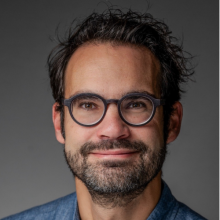
Rafael J.P. Schmitt
· Assistant ProfessorVerifiedUniversity of California, Santa Barbara · Environmental Science and Management
Active 1974–2026
About
Rafael J.P. Schmitt is an assistant professor at UC Santa Barbara’s Environmental Studies Program. His research concerns the interconnections between river systems and societies, with a particular focus on sustainable water infrastructure and the Water-Energy-Food-Ecosystem Nexus. Rafael leverages his background in hydrology, fluvial geomorphology, water resources engineering, and information technology to develop novel and interdisciplinary approaches to pressing environmental challenges. His work emphasizes understanding river processes, from sediment transport to biodiversity and water quality, and applying models to solve environmental issues such as climate adaptation, natural hazards, and the impacts of human activities on rivers. He has authored nearly 40 peer-reviewed papers and has worked extensively with multi-lateral organizations, governments, and non-profit organizations to ensure his research is decision-relevant. Rafael holds a B.Sc. in Environmental Science, an M.Sc. in Environmental Engineering from ETH Zurich, and a Ph.D. in Information Technology from Politecnico di Milano. His research lab, the Schmitt Lab for River System Science and Sustainability (RS3), focuses on developing models to understand river functions and management, including sediment transport, biodiversity, and water quality, and on addressing environmental challenges through innovative modeling and strategic planning.
Research topics
- Oceanography
- Geology
- Environmental science
- Geography
- Computer Science
- Ecology
- Artificial Intelligence
- Biology
- Marine engineering
- Chemistry
- Remote sensing
- Cartography
- Fishery
- Engineering
Selected publications
Open MIND · 2026-01-01
datasetOpen accessNutrients are an important driver of coral reef community dynamics. To quantify the influence of nutrient enrichment on the growth and survival of macroalgae recruits, we conducted an in-situ nutrient enrichment experiment and collected data on the size and survivorship of the brown macroalga Turbinaria ornata recruits grown in these common garden cages at 11 time points over 33 days in 2019. Additionally we measured key demographic traits of Turbinaria, including size, toughness, and reproductive investment, as well as measures of time-integrated nutrient conditions, for 3 size classes at 10 sites along the North Shore of Moorea, French Polynesia in 2020.
Ecosphere · 2026-05-01
articleOpen accessAbstract Ecosystems around the world have experienced shifts in community state as a result of anthropogenic activities that alter important ecological feedbacks. On coral reefs, transitions to a state where fleshy macroalgae are a major space holder have often been associated with the loss of top‐down control, which frequently has been attributed to overharvesting of herbivorous fishes. However, nutrients could also facilitate the proliferation of macroalgae, but evidence for the role of this mechanism in state shifts on coral reefs is inconsistent. Here, we combine a common garden nutrient enrichment experiment with surveys of algal traits to assess potential mechanisms by which nutrient subsidies could trigger and/or maintain a regime shift to abundant macroalgae on reefs. We explored how nutrients influenced individual performance at three life stages of the frondose brown alga Turbinaria ornata , which is often a dominant fleshy macroalga on coral reefs throughout the Indo‐Pacific. Our enrichment experiment revealed that nutrients greatly increased growth and survival rates of young Turbinaria recruits during this brief life stage when they are most vulnerable to herbivory. For the juvenile stage, we found strong correlations between nutrient availability and the expression of physical defenses that deter herbivory. Additionally, reproductive investment by adults in natural populations was positively correlated with nutrient availability. Taken together, our findings provide several mechanisms by which nutrients could facilitate a persistent shift from coral to fleshy macroalgae by allowing more vulnerable recruit and juvenile life stages to escape herbivore control and by enhancing the reproductive output of adults that produce germlings that recruit locally. These results lend novel insights into bottom‐up mechanisms by which increases in nutrients can bolster the establishment and subsequent replenishment of populations of fleshy macroalgae, which can inform management strategies for conserving or restoring coral reefs.
Patterns and implications of spatial covariation in herbivore functions on resilience of coral reefs
Scientific Reports · 2025-01-07 · 8 citations
articleOpen accessSenior authorPersistent shifts to undesired ecological states, such as shifts from coral to macroalgae, are becoming more common. This highlights the need to understand processes that can help restore affected ecosystems. Herbivory on coral reefs is widely recognized as a key interaction that can keep macroalgae from outcompeting coral. Most attention has been on the role 'grazing' herbivores play in preventing the establishment of macroalgae, while less research has focused on the role of 'browsers' in extirpating macroalgae. Here we explored patterns, environmental correlates and state shift consequences of spatial co-variation in grazing and browsing functions of herbivorous fishes. Grazing and browsing rates were not highly correlated across 20 lagoon sites in Moorea, French Polynesia, but did cluster into 3 (of 4) combinations of high and low consumption rates (no site had low grazing but high browsing). Consumption rates were not correlated with grazer or browser fish biomass, but both were predicted by specific environmental variables. Experiments revealed that reversibility of a macroalgal state shift was strongly related to spatial variation in browsing intensity. Our findings provide insights and simple diagnostic tools regarding heterogeneity in top-down forcing that influences the vulnerability to and reversibility of shifts to macroalgae on coral reefs.
Nitrogen enrichment determines coral mortality during a marine heatwave
Marine Pollution Bulletin · 2025-09-30 · 1 citations
articleScientific Reports · 2025-10-23
articleOpen accessOn tropical reefs, environmental conditions and biological interactions are fundamental drivers of the spatial distribution of corals, which in turn influences community attributes and ecosystem rate processes. Here we focus on a major habitat-providing species of coral, the thicket-forming staghorn Acropora pulchra, in Moorea, French Polynesia, to explore environmental attributes that shape its local distribution. At the island scale, A. pulchra decreased in abundance with increasing distance from the shoreline and was inversely related to nitrogen enrichment. To investigate growth-predation risk tradeoffs, we quantified growth and corallivory rates across major abiotic (nutrients, sedimentation) and biotic (corallivorous fish biomass) gradients. At 20 sites divided between fringing reef and mid-lagoon habitats, we quantified colony growth of transplanted A. pulchra fragments (nubbins) that were either exposed or protected from predators after 83 days. Nubbins protected from corallivores grew more in the mid-lagoon than on the fringing reef, whereas mid-lagoon nubbins exposed to predators only achieved 30% of the growth of exposed fringing reef nubbins. These findings suggest that a growth-predation risk tradeoff exists for A. pulchra, with predation a major constraint on the local distribution of A. pulchra thickets that hinders the ability of staghorn to proliferate further offshore from the fringing reef.
Global Change Biology · 2024-09-01 · 17 citations
articleOpen accessSenior authorEcosystem responses to disturbance depend on the nature of the perturbation and the ecological legacies left behind, making it critical to understand how climate-driven changes in disturbance regimes modify resilience properties of ecosystems. For coral reefs, recent increases in severe marine heat waves now co-occur with powerful storms, the historic agent of disturbance. While storms kill coral and remove their skeletons, heat waves bleach and kill corals but leave their skeletons intact. Here, we explored how the material legacy of dead coral skeletons modifies two key ecological processes that underpin coral reef resilience: the ability of herbivores to control macroalgae (spatial competitors of corals), and the replenishment of new coral colonies. Our findings, grounded by a major bleaching event at our long-term study locale, revealed that the presence of structurally complex dead skeletons reduced grazing on turf algae by ~80%. For macroalgae, browsing was reduced by >40% on less preferred (unpalatable) taxa, but only by ~10% on more preferred taxa. This enabled unpalatable macroalgae to reach ~45% cover in 2 years. By contrast, herbivores prevented macroalgae from becoming established on adjacent reefs that lacked skeletons. Manipulation of unpalatable macroalgae revealed that the cover reached after 1 year (~20%) reduced recruitment of corals by 50%. The effect of skeletons on juvenile coral growth was contingent on the timing of settlement relative to the disturbance. If corals settled directly after bleaching (before macroalgae colonized), dead skeletons enhanced colony growth by 34%, but this benefit was lost if corals colonized dead skeletons a year after the disturbance once macroalgae had proliferated. These findings underscore how a material legacy from a changing disturbance regime can alter ecosystem resilience properties by disrupting key trophic and competitive interactions that shape post-disturbance community dynamics.
Modeling the effects of selectively fishing key functional groups of herbivores on coral resilience
Ecosphere · 2024-01-01 · 17 citations
articleOpen accessAbstract Mounting evidence suggests that fishing can be a major driver of coral‐to‐macroalgae regime shifts on tropical reefs. In many small‐scale coral reef fisheries, fishers target herbivorous fishes, which can weaken coral resilience via reduced herbivory on macroalgae that then outcompete corals. Previous models that explored the effects of harvesting herbivores revealed hysteresis in the herbivory–benthic state relationship that results in bistability of coral‐ and macroalgae‐dominated states over some levels of fishing pressure, which has been supported by empirical evidence. However, past models have not accounted for the functional differences among herbivores or how fisher selectivity for different herbivore functional groups may alter the benthic dynamics and resilience. Here, we use a dynamic model that links differential fishing on two key herbivore functional groups to the outcome of competitive dynamics between coral and macroalgae. We show that reef state depends not only on the level of fishing but also on the types of herbivores targeted by fishers. Selectively fishing browsing herbivores that are capable of consuming mature macroalgae (e.g., unicornfish) increases precariousness of the coral state by moving the system close to the coral‐to‐macroalgae tipping point. By contrast, selectively harvesting grazing herbivores that are only capable of preventing macroalgae from becoming established (e.g., parrotfishes) can increase catch yields substantially more before the tipping point is reached. However, this lower precariousness with increasing fishing effort comes at the cost of increasing the range of fishing effort over which coral and macroalgae are bistable; increasing hysteresis makes a regime shift triggered by a disturbance more difficult or impractical to reverse. Our results suggest that management strategies for small‐scale coral reef fisheries should consider how functional differences among harvested herbivores coupled with fisher selectivity influence benthic dynamics in light of the trade‐off between tipping point precariousness and coral recovery dynamics following large disturbances.
Research Square · 2024-12-04
preprintOpen accessSenior authorLivelihood diversity and fishing skill during COVID-19 lockdowns in French Polynesia
Frontiers in Marine Science · 2024-12-06 · 1 citations
articleOpen accessSenior authorSmall-scale fisheries provide seafood for billions of people and are one of the largest employers in many coastal communities. Those households engaged in these fisheries who maintain diverse income sources are generally thought to be better prepared to cope with social or ecological perturbations such as the crises presented by the COVID-19 pandemic. One outcome of the COVID-19 crisis was the collapse of international tourism after many nations instituted strict border controls to slow the virus’s spread, severely impacting coastal communities that depend on tourism-related employment. This research assessed the effects of COVID-19-induced collapse of tourism on small-scale coral reef fishers and households in Moorea, French Polynesia. Ninety-five households were surveyed about their livelihoods, fishing, demographics, and income-generating occupations before and after the lockdown. Shifts in fish biomass were evaluated using time series data collected through underwater visual surveys, and roadside fish vendors were surveyed to assess fish sales. Results showed that after tourism employment evaporated more Moorea households began fishing to boost their incomes and food security. However, the increase in fishing pressure showed no appreciable decline in the biomass of fishable species. The households responsible for the increased fishing activities were those who were working in the tourism economy prior to the pandemic and subsequently lost their jobs. Households that combined fishing with construction or other stable sectors showed greater abilities to cope, while those combining fishing with tourism were heavily impacted. Importantly, results showed that those households devoted solely to fishing managed the crisis adeptly due to their superior fishing skills and ecological knowledge. This pattern suggests that not all forms of household livelihood diversification confer equal advantages and that resource-dependent households are not necessarily intrinsically less resilient. More generally, it is argued that we should be cautious when promoting livelihood diversification as a blanket solution to decrease household vulnerability, and that ecological knowledge diversity is underappreciated.
Ecology · 2023-02-18 · 18 citations
articleOpen accessStanding dead structures of habitat-forming organisms (e.g., dead trees, coral skeletons, oyster shells) killed by a disturbance are material legacies that can affect ecosystem recovery processes. Many ecosystems are subject to different types of disturbance that either remove biogenic structures or leave them intact. Here we used a mathematical model to quantify how the resilience of coral reef ecosystems may be differentially affected following structure-removing and structure-retaining disturbance events, focusing in particular on the potential for regime shifts from coral to macroalgae. We found that dead coral skeletons could substantially diminish coral resilience if they provided macroalgae refuge from herbivory, a key feedback associated with the recovery of coral populations. Our model shows that the material legacy of dead skeletons broadens the range of herbivore biomass over which coral and macroalgae states are bistable. Hence, material legacies can alter resilience by modifying the underlying relationship between a system driver (herbivory) and a state variable (coral cover).
Recent grants
NSF · $700k · 2000–2007
LTER: MCR IIB: Long-Term Dynamics of a Coral Reef Ecosystem
NSF · $4.6M · 2012–2018
LTER: Long-Term Dynamics of a Coral Reef Ecosystem
NSF · $5.9M · 2004–2012
LTER: MCR III: Long-Term Dynamics of a Coral Reef Ecosystem
NSF · $7.2M · 2016–2024
LTER: MCR II - Long-Term Dynamics of a Coral Reef Ecosystem
NSF · $2.2M · 2010–2014
Frequent coauthors
- 139 shared
Sally J. Holbrook
University of California, Santa Barbara
- 42 shared
Andrew J. Brooks
University of California, Santa Barbara
- 24 shared
Craig W. Osenberg
University of Georgia
- 19 shared
James L. Hench
Duke University
- 18 shared
Antoine Collin
École Pratique des Hautes Études
- 17 shared
Serge Planes
Université de Perpignan
- 17 shared
Thomas C. Adam
University of California, Santa Barbara
- 15 shared
Andrew Rassweiler
Florida State University
Labs
The Schmitt Lab for River System Science and Sustainability (RS3)PI
Education
- 1979
Ph.D., Biology
UCLA Life Sciences
- 1975
M.S., Marine Sciences
University of the Pacific
- 1972
B.A., Ecology & Evolutionary Biology
University of Colorado Boulder
- Resume-aware match score
- Save to shortlist
- AI-drafted outreach
See your match with Rafael J.P. Schmitt
PhdFit ranks faculty by your research interests, methods, and publications — grounded in their actual work, not templates.
- Free to start
- No credit card
- 30-second signup