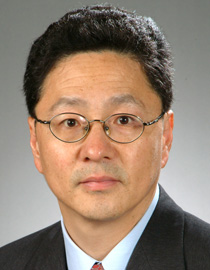
Dr. Joseph M.H. Kim
· Director, Ocean Systems Simulation & Control Laboratory Professor, Department of Ocean EngineeringVerifiedTexas A&M University · Ocean Engineering
Active 1999–2026
About
Dr. Moo-Hyun Kim is a Professor in the Department of Ocean Engineering at Texas A&M University and holds the Wofford Cain Chair and the position of Director of the Ocean System Simulation and Control Lab. His educational background includes a Ph.D. from the Massachusetts Institute of Technology obtained in 1988, along with a Master's and Bachelor's degree from Seoul National University earned in 1983 and 1981, respectively. His research interests encompass a broad range of topics related to offshore and ocean engineering, including floating offshore wind turbines, nonlinear dynamics of offshore platforms, wave mechanics, and free-surface flows. He also specializes in numerical wave tank simulations, LNG tank sloshing, computational fluid dynamics, and ocean renewable energy such as wind, current, and wave energy conversion. Additionally, his work involves hydroelasticity of very large floating structures, interaction of waves with porous or flexible membranes, smart offshore platforms with active control, and the interaction of waves with ice, offshore platforms, and vessels. Dr. Kim has been recognized for his contributions to the field with several awards and honors, including being elected as a Fellow of the American Society of Civil Engineers and the Society of Naval Architects and Marine Engineers in 2017, and receiving the Dean of Engineering Excellence Award the same year.
Research topics
- Physics
- Political Science
- Particle physics
- Nuclear physics
- Computer Science
- Database
- Quantum mechanics
- Astronomy
Selected publications
Primordial Black Hole Hotspots Beyond Flat Spacetime
arXiv (Cornell University) · 2026-05-08
preprintOpen access1st authorCorrespondingLight primordial black holes heat the surrounding plasma via Hawking radiation, forming localized hotspots whose temperature may far exceed that of the cosmological background. Previous studies of hotspot formation and cooling have treated the subsequent energy transport in flat spacetime, thereby neglecting the expansion of the Universe. We formulate the diffusion equation governing the hotspot evolution, in an expanding universe, and clarify the regime in which the formalism is valid. We find that hotspot formation is robust against cosmological expansion. We show that the critical distance scale, where Hubble expansion overtakes diffusion, coincides with the decoupling radius introduced in earlier work, and the temperature profile $T\propto r^{-7/11}$ essentially remains unchanged. However, the cooling stage is substantially modified. We find that the plateau temperature of a cooling hotspot initially undergoes a rapid drop and then follows $T_{\rm plt} \propto t^{-11/15}$, steeper than the flat-spacetime scaling $t^{-7/15}$. This scaling cannot be obtained by simply redshifting the flat-spacetime solution, because expansion also suppresses diffusive transport. As a consequence, all hotspots disappear within a finite time, as opposed to the flat-spacetime prediction of everlasting hotspots in part of the parameter space.
Primordial Black Hole Hotspots Beyond Flat Spacetime
ArXiv.org · 2026-05-08
articleOpen access1st authorCorrespondingLight primordial black holes heat the surrounding plasma via Hawking radiation, forming localized hotspots whose temperature may far exceed that of the cosmological background. Previous studies of hotspot formation and cooling have treated the subsequent energy transport in flat spacetime, thereby neglecting the expansion of the Universe. We formulate the diffusion equation governing the hotspot evolution, in an expanding universe, and clarify the regime in which the formalism is valid. We find that hotspot formation is robust against cosmological expansion. We show that the critical distance scale, where Hubble expansion overtakes diffusion, coincides with the decoupling radius introduced in earlier work, and the temperature profile $T\propto r^{-7/11}$ essentially remains unchanged. However, the cooling stage is substantially modified. We find that the plateau temperature of a cooling hotspot initially undergoes a rapid drop and then follows $T_{\rm plt} \propto t^{-11/15}$, steeper than the flat-spacetime scaling $t^{-7/15}$. This scaling cannot be obtained by simply redshifting the flat-spacetime solution, because expansion also suppresses diffusive transport. As a consequence, all hotspots disappear within a finite time, as opposed to the flat-spacetime prediction of everlasting hotspots in part of the parameter space.
ArXiv.org · 2025-04-03
preprintOpen accessDAMSA (DArk Messenger Searches at an Accelerator) experiment is a table-top scale, extremely-short-baseline experiment designed to probe dark-sector particles (DSPs) that serve as portals between the visible sector and the hidden dark-matter sector. These particles, such as axion-like particles (ALPs), can decay into two photons or electron-positron pairs. DAMSA is specifically optimized to explore regions of parameter space that are inaccessible to past and current experiments, by operating at ultra-short baselines and employing high-resolution calorimetry, precision timing, and precision tracking in a magnetic field with suppression of beam-related neutron backgrounds. The experiment can be integrated into facilities, such as CERN's Beam-Dump-Facility (BDF), operating concurrently with the SHiP experiment, and provides complementary sensitivity in the MeV to GeV mass range. DAMSA represents a cost-effective and timely opportunity to expand CERN's discovery potential in dark-sector physics. It exemplifies how innovative, small-scale experiments can effectively complement large-scale experiments, taking advantage of existing and future infrastructure.
Addendum to “Testing meson portal dark sector solutions to the MiniBooNE anomaly at CCM”
Physical review. D/Physical review. D. · 2025-02-27 · 2 citations
articleOpen accessIn Aguilar-Arevalo [], we explored various effective field theories that could explain the MiniBooNE excess involving long-lived particles produced from charged meson decays and the sensitivity of the Coherent CAPTAIN Mills experiment to these models. In this addendum, we extend the analysis to project sensitivity of upcoming MicroBooNE data to the long-lived particle models considered in the previous work. We find that a dedicated MicroBooNE analysis of the single photon final state with longer exposure and improved signal efficiency will be sensitive to these new physics explanations of the MiniBooNE excess, and could rule them out with a null observation at the 95% confidence level.
Journal of Physics G Nuclear and Particle Physics · 2025-01-24 · 12 citations
articleOpen accessAbstract Maximizing the discovery potential of increasingly precise neutrino experiments will require an improved theoretical understanding of neutrino-nucleus cross sections over a wide range of energies. Low-energy interactions are needed to reconstruct the energies of astrophysical neutrinos from supernovae bursts and search for new physics using increasingly precise measurement of coherent elastic neutrino scattering. Higher-energy interactions involve a variety of reaction mechanisms including quasi-elastic scattering, resonance production, and deep inelastic scattering that must all be included to reliably predict cross sections for energies relevant to DUNE and other accelerator neutrino experiments. Refined nuclear interaction models in these energy regimes will also be valuable for other applications, such as measurements of reactor, solar, and atmospheric neutrinos. This manuscript discusses the theoretical status, challenges, required resources, and path forward for achieving precise predictions of neutrino-nucleus scattering and emphasizes the need for a coordinated theoretical effort involved lattice QCD, nuclear effective theories, phenomenological models of the transition region, and event generators.
Direct detection of fast-moving low-mass dark matter
Physical review. D/Physical review. D. · 2025-11-06 · 1 citations
articleOpen accessWe examine the signals produced by dark-matter interactions with electrons, which play a crucial role in direct detection experiments employing heavy target materials, particularly in many well-motivated sub-GeV dark-matter scenarios. When the momentum transfer to target electrons is comparable to or exceeds their binding energy, atomic effects related to electron ionization become essential for accurately determining signal rates—especially in the case of fast-moving dark matter. In this paper, we revisit and extend the atomic ionization formalism, systematically comparing different approaches used to formulate the ionization form factor and identifying their respective domains of validity. As practical applications, we explore detection prospects in xenon target experiments. To illustrate our findings, we consider a specific scenario involving boosted dark matter, which often leads to high-momentum electron recoils. Our analysis demonstrates that the choice of formalism can significantly influence the interpretation of experimental data, depending on the regions of parameter space.
Proposal to use LHC general-purpose detectors in “beam-dump” measurements for long-lived particles
Physics Letters B · 2025-01-09 · 1 citations
articleOpen accessCorrespondingWe propose a novel scheme for performing a beam-dump-like experiment with the general-purpose detectors (ATLAS and CMS) at the LHC. Collisions of high-energy protons result in jets containing a number of energetic hadrons and electromagnetic objects that are essentially “dumped” to hadronic and electromagnetic calorimeters, respectively, and induce the production of secondary hadrons, electrons, and photons in calorimetric showers. We envision a situation where new physics particles are produced by the interactions of these secondary particles inside the calorimeters. For proof of principles, we consider the axion-like particles (ALPs) produced via the Primakoff process in the presence of their interaction with photons at CMS. We argue that the drift tube chambers and the ME0 module of the muon system can serve as detectors to record the photons from the ALP decay, demonstrating that assuming the background level can be controlled as discussed in this work, the resulting sensitivity reach is competitive due to their close proximity to the signal source points. We further show that the LHC does not suffer from a barrier, dubbed beam-dump “ceiling”, that typical beam-dump experiments hardly surpass. This gives the LHC great potential to explore a wide range of parameter space. This analysis can be extended to investigate various types of light mediators with couplings to the Standard Model leptons and quarks.
Direct Detection of Mechanism-Agnostic Fast-Moving Dark Matter
ArXiv.org · 2025-11-05
preprintOpen accessWe present a comprehensive framework for interpreting electron recoil signals induced by fast-moving dark matter (DM), applicable across a wide range of theoretically motivated models. Amid both null results in conventional weakly interacting massive particle searches and growing interest in alternative DM scenarios, we focus on (semi-)relativistic DM components that can arise from mechanisms such as DM annihilation, decay, or cosmic-ray acceleration. These boosted DM candidates produce distinct experimental signatures that differ qualitatively from non-relativistic DM, necessitating a dedicated treatment. Our framework incorporates relativistic kinematics and atomic effects through ionization form factors, enabling accurate predictions of differential cross sections in both low- and high-energy regimes. We demonstrate how atomic effects become negligible at high recoil energies, validating the free-electron approximation in specific parameter regions. Furthermore, we highlight the complementarity between low-threshold direct detection experiments and high-threshold neutrino observatories in probing fast-moving DM across broad kinematic domains. This formalism provides a robust and model-independent foundation for interpreting current and future searches for relativistic DM.
Physical review. D/Physical review. D. · 2025-05-06 · 4 citations
articleOpen accessWe present the result of a search for inelastic boosted dark matter using the data corresponding to an exposure of <a:math xmlns:a="http://www.w3.org/1998/Math/MathML" display="inline"><a:mrow><a:mn>0.13</a:mn><a:mtext> </a:mtext><a:mtext> </a:mtext><a:mi>kton</a:mi><a:mo>·</a:mo><a:mi>year</a:mi></a:mrow></a:math>, collected by the ICARUS T-600 detector during its 2012–2013 operational period at the INFN Gran Sasso Underground National Laboratory. The benchmark boosted dark matter model features a multiparticle dark sector with a <c:math xmlns:c="http://www.w3.org/1998/Math/MathML" display="inline"><c:mrow><c:msup><c:mrow><c:mi mathvariant="normal">U</c:mi><c:mo stretchy="false">(</c:mo><c:mn>1</c:mn><c:mo stretchy="false">)</c:mo></c:mrow><c:mrow><c:mo>′</c:mo></c:mrow></c:msup></c:mrow></c:math> gauge boson, the dark photon. The kinetic mixing of the dark photon with the Standard Model photon allows for a portal between the dark sector and the visible sector. The inelastic boosted dark matter interaction occurs when a dark matter particle inelastically scatters with an electron in the ICARUS detector, producing an outgoing, heavier dark sector state which subsequently decays back down to the dark matter particle, emitting a dark photon. The dark photon subsequently couples to a Standard Model photon through kinetic mixing. The Standard Model photon then converts to an electron-positron pair in the detector. This interaction process provides a distinct experimental signature that consists of a recoil electron from the primary interaction and an associated electron-positron pair from the secondary vertex. After analyzing 4,134 triggered events, the search results in zero observed events. Exclusion limits are set in the dark photon mass and coupling (<h:math xmlns:h="http://www.w3.org/1998/Math/MathML" display="inline"><h:msub><h:mi>m</h:mi><h:mi>X</h:mi></h:msub><h:mo>,</h:mo><h:mi>ε</h:mi></h:math>) parameter space for several selected optimal boosted dark matter mass sets and cover previously unexplored parameter space.
New laboratory constraints on neutrinophilic mediators
Physics Letters B · 2025-07-28 · 9 citations
articleOpen accessNeutrinophilic mediators are well-motivated messenger particles that can probe some of the least known sectors of fundamental physics involving nonstandard interactions of neutrinos with themselves and potentially with dark matter. In particular, light mediators coupling to the active neutrinos will induce new decay modes of the Standard Model mesons (e.g., π±,K±→ℓ±+ν(−)+ϕ), charged leptons (e.g., τ±→π±+ν(−)+ϕ), and gauge bosons (e.g., Z→ν+ν¯+ϕ). A common lore is that these decays suffer from infrared divergences in the limit of the vanishing mediator mass, i.e., mϕ→0. Here, we show that including the 1-loop contributions of these mediators to the standard 2-body decays (e.g., π±,K±→ℓ±+ν(−), etc.), the infrared divergence from the 3-body decay cancels out exactly by virtue of the Kinoshita–Lee–Nauenberg theorem. Including these cancellation effects, we then update the existing laboratory constraints on neutrinophilic scalar mediators, thereby extending the limits far beyond the decaying parent particle mass and excluding a wider range of parameter space. These new “physical” limits derived here have significant implications for the future detection prospects of nonstandard neutrino (self-)interactions.
Frequent coauthors
- 84 shared
Bhaskar Dutta
AstraZeneca (United States)
- 68 shared
Seodong Shin
- 47 shared
A. Thompson
Texas A&M University
- 47 shared
Jong-Chul Park
Queens College, CUNY
- 36 shared
Kaustubh Agashe
- 34 shared
Kuver Sinha
- 30 shared
Roberto Franceschini
Istituto Nazionale di Fisica Nucleare, Sezione di Roma Tre
- 30 shared
Jean-François Fortin
Education
- 2013
Ph.D, Physics
University of Maryland
Awards & honors
- 2017 Elected as Fellow, American Society of Civil Engineers
- 2017 Elected as Fellow, Society of Naval Architects and Mari…
- 2017 Dean of Engineering Excellence Award
- 2015 WBCC Faculty Fellow Award
- 2014 Key-note speaker at Korea-America Offshore Engineers As…
- Resume-aware match score
- Save to shortlist
- AI-drafted outreach
See your match with Dr. Joseph M.H. Kim
PhdFit ranks faculty by your research interests, methods, and publications — grounded in their actual work, not templates.
- Free to start
- No credit card
- 30-second signup