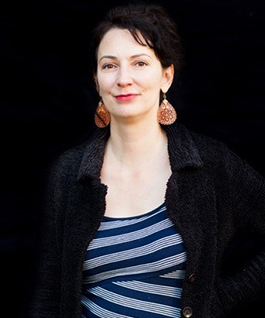
Kimberly Jannarone
· Professor in the Practice of Dramaturgy and Dramatic Criticism and Associate Chair, Dramaturgy and Dramatic Criticism ProgramYale University · Dramaturgy and Dramatic Criticism
Active 2001–2026
About
Kimberly Jannarone is a Professor in the Practice of Dramaturgy and Dramatic Criticism and serves as the Associate Chair of the Dramaturgy and Dramatic Criticism Program at the David Geffen School of Drama. Her role involves engaging in dramaturgical work and critical analysis within the field of drama and theater. The biography does not provide additional details about her research focus, background, or key contributions.
Research topics
- Computer Science
- Mechanical engineering
- Geography
- Mathematics
- Engineering
- Environmental science
- Meteorology
- Physics
Selected publications
The long reach of the Roman Salute
Theatre Research International · 2026-01-02
article1st authorCorrespondingUniversity of Michigan Press eBooks · 2024-10-16
book1st authorCorresponding<I>Mass Performance: Systems and Citizens</I> examines mass performance systems from the first major festival of the French Revolution through the democratic and socialist movements of the nationalizing nineteenth and twentieth centuries in Europe, to totalitarian communist and socialist regimes in the twentieth century, ending with contemporary North Korea. While other scholars have studied specific mass performances, this study synthesizes the phenomenon across centuries and countries, focusing on its systemization. Modern nations defining or redefining their identities not only organized mass performances, but also planned to make those performances a permanent component of nationhood. Kimberly Jannarone reveals that mass performance systems, from synchronized gymnastics to choreographed rallies, encapsulate ideals and debates within emerging nations about the relationship of citizens to each other and to their leaders, playing a generative and reflective role in the culture and politics of the modern era. <I>Mass Performance </I>analyzes the specifics of performance choreography and design, the organizational planning and thinking behind the systems, the material circumstances of each system's emergence, and the broader intellectual milieu in which they developed. <BR /><BR /> Although not a comprehensive study of such events, Jannarone's analysis of the selected mass performance systems yields new theoretical perspectives on these phenomena, a central focus of her study being how political leaders find ways to create a physically coordinated mass body politic, even during times of hardship and war. By interpreting and historicizing mass assemblies of bodies, this study analyzes the choreographies and organizations that brought thousands of people together as an ensemble and kept them together in meaning-making motion.
TDR volume 67 issue 2 Cover and Front matter
TDR/The Drama Review · 2023
- Computer Science
- Computer Science
- Environmental science
An abstract is not available for this content so a preview has been provided. As you have access to this content, a full PDF is available via the ‘Save PDF’ action button.
Presence, 2019–2022: Introduction
TDR/The Drama Review · 2022-12-01 · 1 citations
articleOpen access1st authorCorrespondingOur understanding of “presence” has made an epochal shift in the past three years. The field of performance studies—never settled, always in flux—is shifting as well on this topic, as what we study expands digitally, contracts physically, embraces new paradigms, and unlooses others. While it is impossible to fix an exact time when attitudes about something as ineffable yet entirely real as presence changed permanently, this issue touches down on several key moments.
2020-07-21
book-chapter1st authorCorrespondingThis epilogue raises questions inspired by the previous chapters that will hopefully promote further scholarly investigations of the performing, competitive body in its social and political contexts. My focus is on physical co-presence and its role in the modern era. What can we learn about contemporary society’s ideological stance on the physical body through the analysis of sporting performances? What are the stakes of considering sports and physical culture in terms of performance in the current historical moment, in post-industrial nations, in increasingly digital societies that embrace communication via invisible waves, screens, and speakers? What is the role of sporting performance when the post-industrial world is lurching between the field and the screen, between organic and the algorithmic?
Theatre Journal · 2019-01-01
article1st authorCorrespondingMass Gymnastics: A Playlist Kimberly Jannarone (bio) My essay in Theatre Journal’s March 2019 issue analyzes gymnastic displays of nineteenth- and twentieth-century Czechoslovaks and Germans through the lens of mass performance. The essay argues that gymnastic training and performance techniques parallel shifts in the socio-political conception of the people in the age of mass politics. I demonstrate how small groups of dispersed people seeking unity through synchronized movement end up forming units of power ultimately adopted and adapted by totalitarian political leaders. The essay draws on research for my upcoming book, Mass Performance: Systems and Citizens. The book creates a category of thought for mass performance, which I define as a thousand or more people performing the same activity at the same time. I focus on how the power of synchronized mass movement has been recognized and systematized by ruling powers in the era of nationalization. German and Czechoslovak gymnastic movements, called the Turners and the Sokols, respectively, serve as paradigmatic examples of a vast modern phenomenon that, while largely forgotten today, was wildly popular from the early nineteenth to the mid-twentieth centuries. Thousands of citizens would train for months or years to perform physical and vocal actions together, in synchrony, on a field for sequences that lasted an average of twenty minutes. The following images and videos provide further contexts for the mass gymnastics craze, and hopefully help to convey—however distantly and inadequately—their contagious dynamism. [End Page E-1] 1. German Mass Gymnastics, 1811–1945 LINKS: https://www.youtube.com/watch?v=PVM6voEWKiw https://www.youtube.com/watch?v=g7u5Knj5Uj4 https://www.vintag.es/2013/01/1938-reich-party-congress-third-reichs.html Click for larger view View full resolution National Socialist Gymnastic Festival. Stuttgart, 1933. Germany developed mass gymnastics from Jahn’s Turnverein (1811) on through the National Socialist displays of the 1930s and 40s. Looked at alongside images of mass gymnastic displays such as those of the Sokols, the lines of influence are clear, in both technique and type. One distinct feature of mass performance in totalitarian regimes is the focus on a single leader appreciating the performance, something not emphasized in pre-totalitarian displays of Czechoslovak or Turner mass gymnastics. [End Page E-2] 2. Sokol Slets in Czechoslovakia, 1882–1948 LINK: https://www.youtube.com/watch?v=ylDm0C-iHqo Click for larger view View full resolution Sokol Slet. Masaryk Stadium. Prague, 1938 Sokol Slets (mass displays) contained many different elements, including parades, dances, performances of regional dances, and, of course, mass gymnastic routines. A certain inexactness of movement and playfulness among the performers can be seen in videos of Sokols, qualities that disappear in the later communist-led Spartakiads. [End Page E-3] 3. Mass Gymnastics in the Soviet Union, c.1928–91 LINK: https://www.youtube.com/watch?v=MSZ2RW4etFA Click for larger view View full resolution Collage of footage from a mass physical culture display, Leningrad, c.1948. Mass gymnastics spread to the Soviet Union, first inspired by the Czechoslovak gymnastics, then adopted into the Soviet Union’s own mass performance system. In this footage, Stalin and Beria can be seen watching the display. [End Page E-4] 4. Spartakiads in communist Czechoslovakia, 1955–90 LINK: https://www.youtube.com/watch?v=wrwmFNK9tLg Click for larger view View full resolution Six thousand girls and boys perform in a sequence at the Spartakiad. Strahov Stadium, Prague, 1955. Spartakiads developed challenging routines for children, which became a staple of all subsequent mass gymnastic performances. [End Page E-5] LINK: https://www.youtube.com/watch?v=KCK1wpg8ao8 Click for larger view View full resolution The “Fireworks” sequence of the communist Spartakiad, 1980. Strahov Stadium. Prague, 1980. Thousands of young men throw themselves from the top of human pyramids, so that, from the stands, their combined leaps resemble the dynamic and dangerous bursts of a fireworks display. This sequence was in fact perilous, and confidential reports detailing that year’s injuries (concussions, broken bones, spinal fractures, damage to inner ears) circulated among officials after the Spartakiad. [End Page E-6] 5. Mass Performance in North Korea LINK: https://www.youtube.com/watch?v=qd3H9X-Yl2k Click for larger view View full...
Confederation and Control: Mass Gymnastics and the Czech and German Bodies Politic
Theatre Journal · 2019-01-01 · 2 citations
article1st authorCorrespondingThis essay analyzes gymnastic displays of nineteenth- and twentieth-century Czechs and Germans through the lens of mass performance. Modern gymnastics arose, first in Germany then across Europe, within the context of widespread social and political fragmentation in the nineteenth century. The essay argues that gymnastic training and performance techniques parallel shifts in the sociopolitical conception of the people in the age of mass politics. This evolution—from voluntary consolidation of individuals to centralized control of populations, from numerous persons to a uniform mass—took embodied form in the development of mass performance techniques. German and Czech gymnastic movements, the Turners and the Sokols, serve as paradigmatic examples of a vast modern phenomenon that, while largely forgotten today, was wildly popular from the early nineteenth to the mid-twentieth centuries. Mass gymnastics represents one attempt to stabilize unstable social or national identities, part of an emerging discourse about equality, national identity, and the body politic.
2018-09-10
book-chapter1st authorCorrespondingAntonin Artaud was a French writer and theatre-maker of the early twentieth century. His work includes manifestos, correspondence, poetry, criticism, drama, film acting, and theatre directing. His impassioned writing combines impulses of historical avant-garde movements and the apocalyptic atmosphere of the interwar era. His legacy in the world of arts and letters is that of a visionary: his creative output, largely unedited, is scattered across genres but unified by a set of themes, obsessions, and impulses, such as the split between ‘real’ life and social life and the need for violence to regenerate civilization. Born in Marseilles in 1896, Artaud spent much of the First World War in a sanatorium, where he developed a life-long addiction to opiates. He moved to Paris in 1923, working in theatre there for the next thirteen years with major experimental directors including Georges Pitoëff and Charles Dullin and acting in films directed by Carl Dreyer, Abel Gance, and Fritz Lang. Suffering setbacks in his financial and artistic life, he travelled to Mexico in 1936 to participate in the peyote rituals of the Tarahumara Indians. His mental health, never strong, deteriorated quickly around this time. He spent from 1937 to 1946 in asylums. When he was transferred to a clinic near Paris in 1946, he was greeted with enthusiasm by artists who had read his work while he was confined.
Choreographing Freedom: Mass Performance in the Festivals of the French Revolution
TDR/The Drama Review · 2017-05-30 · 3 citations
article1st authorCorrespondingThe French Revolution generated four large-scale festivals in Paris from 1790 to 1794. The festival project housed a foundational and ultimately insurmountable tension: liberty was to be established through a manipulation of people’s natural free will by means of their leaders’ methodical organization. How do you orchestrate fraternal attachment without imprisoning the participants in new rules? How do you, in short, choreograph freedom?
Firmin Gémier, The Forgotten Avant-Garde Populist
Palgrave Macmillan US eBooks · 2016-01-01
book-chapter1st authorCorresponding"Neglect alone would be sufficient excuse for writing about Firmin Gémier," wrote Raymond Pentzell in a short article for TDR in 1967 (p. 113). Almost half a century later, Pentzell's statement still holds true: this is only the third chapter dedicated to Gémier to appear in English since then.1 Such neglect seems unthinkable, given Gémier's astounding career, which began on the margins of established theater, moved to the center with national success, and then, once Gémier died, slipped back into the margins of history.KeywordsTicket PricePopular TheaterTheater ArtistActing StyleSurrealist MovementThese keywords were added by machine and not by the authors. This process is experimental and the keywords may be updated as the learning algorithm improves.
Frequent coauthors
- 86 shared
Elise Morrison
- 85 shared
Fawzia Afzal‐Khan
- 85 shared
Deavere Smith
Sanford Broadway Medical Center
- 85 shared
Catie Cuan
Tisch Hospital
- 85 shared
Sara Brady
New York University Press
- 85 shared
Rabih Mroué
- 85 shared
Amelia Jones
- 85 shared
Fred Moten
Labs
Dramaturgy and Dramatic CriticismPI
- Resume-aware match score
- Save to shortlist
- AI-drafted outreach
See your match with Kimberly Jannarone
PhdFit ranks faculty by your research interests, methods, and publications — grounded in their actual work, not templates.
- Free to start
- No credit card
- 30-second signup