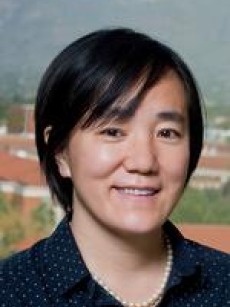
Hao Zhang
VerifiedUniversity of Arizona · Mathematics
Active 2004–2024
Research topics
- Artificial Intelligence
- Computer Science
- Data Mining
- Machine Learning
- Biology
- Bioinformatics
- Database
- Medicine
- Gastroenterology
- Internal medicine
- Data science
Selected publications
Journal of Clinical Investigation · 2021 · 99 citations
- Medicine
- Internal medicine
- Gastroenterology
There is an urgent need to identify the cellular and molecular mechanisms responsible for severe COVID-19 that results in death. We initially performed both untargeted and targeted lipidomics as well as focused biochemical analyses of 127 plasma samples and found elevated metabolites associated with secreted phospholipase A2 (sPLA2) activity and mitochondrial dysfunction in patients with severe COVID-19. Deceased COVID-19 patients had higher levels of circulating, catalytically active sPLA2 group IIA (sPLA2-IIA), with a median value that was 9.6-fold higher than that for patients with mild disease and 5.0-fold higher than the median value for survivors of severe COVID-19. Elevated sPLA2-IIA levels paralleled several indices of COVID-19 disease severity (e.g., kidney dysfunction, hypoxia, multiple organ dysfunction). A decision tree generated by machine learning identified sPLA2-IIA levels as a central node in the stratification of patients who died from COVID-19. Random forest analysis and least absolute shrinkage and selection operator-based (LASSO-based) regression analysis additionally identified sPLA2-IIA and blood urea nitrogen (BUN) as the key variables among 80 clinical indices in predicting COVID-19 mortality. The combined PLA-BUN index performed significantly better than did either one alone. An independent cohort (n = 154) confirmed higher plasma sPLA2-IIA levels in deceased patients compared with levels in plasma from patients with severe or mild COVID-19, with the PLA-BUN index-based decision tree satisfactorily stratifying patients with mild, severe, or fatal COVID-19. With clinically tested inhibitors available, this study identifies sPLA2-IIA as a therapeutic target to reduce COVID-19 mortality.
On fusion methods for knowledge discovery from multi-omics datasets
Computational and Structural Biotechnology Journal · 2020 · 33 citations
- Computer Science
- Data Mining
- Computer Science
Recent years have witnessed the tendency of measuring a biological sample on multiple omics scales for a comprehensive understanding of how biological activities on varying levels are perturbed by genetic variants, environments, and their interactions. This new trend raises substantial challenges to data integration and fusion, of which the latter is a specific type of integration that applies a uniform method in a scalable manner, to solve biological problems which the multi-omics measurements target. Fusion-based analysis has advanced rapidly in the past decade, thanks to application drivers and theoretical breakthroughs in mathematics, statistics, and computer science. We will briefly address these methods from methodological and mathematical perspectives and categorize them into three types of approaches: data fusion (a narrowed definition as compared to the general data fusion concept), model fusion, and mixed fusion. We will demonstrate at least one typical example in each specific category to exemplify the characteristics, principles, and applications of the methods in general, as well as discuss the gaps and potential issues for future studies.
Recent grants
Nonparametric Variable Selection in Smoothing Spline ANOVA Models
NSF · $125k · 2004–2008
NSF · $400k · 2007–2013
TRIPODS: UA-TRIPODS - Building Theoretical Foundations for Data Sciences
NSF · $1.4M · 2017–2022
NSF · $485k · 2022–2026
ABI Innovation: Gini-based methodologies to enhance network-scale transcriptome analysis in plants
NSF · $399k · 2013–2016
Frequent coauthors
- 28 shared
Yichao Wu
- 23 shared
Wenbin Lu
Hunan Agricultural University
- 15 shared
Yufeng Liu
- 13 shared
W DˈSouza
University of Mary
- 12 shared
Ning Hao
East China Jiaotong University
- 12 shared
Yves A. Lussier
University of Utah
- 12 shared
Seung Jun Shin
- 12 shared
Ernest Fokoué
Rochester Institute of Technology
- Resume-aware match score
- Save to shortlist
- AI-drafted outreach
See your match with Hao Zhang
PhdFit ranks faculty by your research interests, methods, and publications — grounded in their actual work, not templates.
- Free to start
- No credit card
- 30-second signup