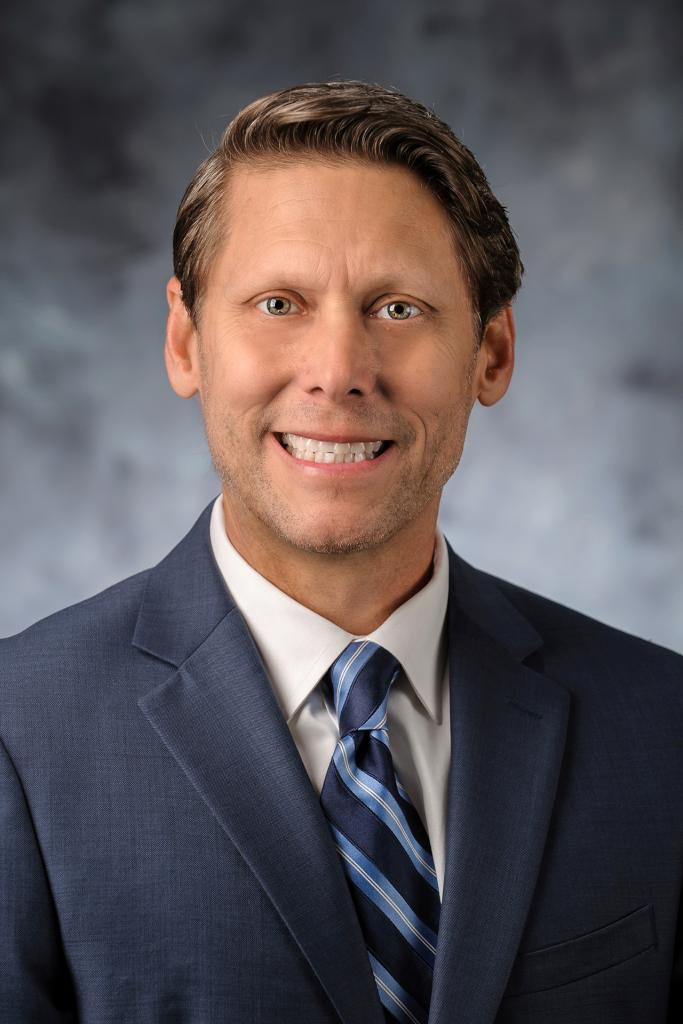
Shane Jimerson
· Professor, Director of Academic Program DevelopmentVerifiedUniversity of California, Santa Barbara · Counseling, Clinical, and School Psychology
Active 1997–2026
Research topics
- Political Science
- Sociology
- Psychology
- Law
- Public relations
- Social psychology
- Medicine
- Gender studies
- Pedagogy
- Computer Science
- Virology
- Geography
- Criminology
Selected publications
Secondary School Students’ Engagement in Learning Activities: Validation of a Short Scale
Education Sciences · 2026-02-09
articleOpen accessStudent engagement is a multidimensional construct strongly associated with learning outcomes and academic success. However, its measurement remains challenging, as existing instruments often conflate engagement in learning activities with engagement in the school community. In addition, brief measures are scarce despite their increasing value, and most available instruments do not incorporate agentic engagement. Assessing student engagement in learning activities is, therefore, crucial for monitoring academic progress, identifying students at risk of dropping out, and predicting academic success. This study aimed to validate the 12-item Secondary School Student Engagement in Learning Activities: Short Scale, adapted from a higher education measure, which focuses solely on student engagement in learning activities and comprises four dimensions: cognitive, affective, behavioral, and agentic engagement. The validation study involved 566 students, 61.7% from middle school and 38.3% from high school. Confirmatory factor analysis supported the four-factor structure that was found in the original scale. Subsequent analyses also demonstrated the scale’s reliability, convergent, discriminant, concurrent, and predictive validity, and measurement invariance. The study discusses the benefits and implications of utilizing this measure, offering a promising tool for evaluating student engagement and learning outcomes in secondary student populations.
2025-12-02
otherSenior authorSchool Psychology Review · 2025-07-04 · 3 citations
articleSenior authorUNC Libraries · 2025-05-03
articleOpen accessTwo years later, the COVID-19 pandemic continues to impact children, families, and schools around the world. COVID-19 spread, cases, vaccinations, hospitalizations, and deaths persist. Educational professionals around the world continue to adapt and adjust to the ongoing configurations of in-person, distance/remote, and hybrid instructional context. This third series of articles in this special topic section of School Psychology Review further informs innovations and adaptations in research, training, and practice relevant to the field of school psychology during the COVID-19 pandemic. This introduction describes the ongoing impacts on children, schools, and communities around the world, offers reflections on recent scholarship focused on the COVID-19 pandemic and school psychology, and also shares a synthesis from the next seven articles featured in this second edition of the special topic section focused on adaptations and new directions for the field of school psychology. Impact Statement The continuing COVID-19 pandemic has resulted in numerous complications and onging challenges in he fields of education and school psychology around the world. . R Contemporary scholarship informs innovations and adaptations that will benefits school psychologists and other education professionals within and beyond the COVID-19 syndemic. The recent research identifies the persistent deleterious impacts on parents and children, and also provides valuable information regarding the use of telehealth to support students and families.
School Psychology Review · 2025-11-02
articleSenior author2025-12-02
otherSenior authorAdvancing the Science and Practice of Mindfulness to Support Mental Health in Schools
2025-12-02
book-chapterAbstract This chapter provides background information and justification regarding why this edited volume focuses on using mindfulness for promoting mental health in schools. First, the more general case for integrating mental health supports into schools is discussed. Following, the nature and context of mindfulness practices are introduced, with a focus on why mindfulness practices may be especially useful for promoting mental health in schools. After the logic for using mindfulness to support mental health in schools is established, readers are provided with an orientation to the chapters that follow in the remainder of this book. Finally, this chapter closes by raising a few critical issues related to using mindfulness practices in schools.
School Psychology International · 2025-01-17 · 2 citations
articleThis study investigated the underlying mechanism between bullying victimization and depressive symptoms via social trust cross-sectionally and longitudinally among 4,548 early adolescents at T1 and 4,484 adolescents at T2 from rural areas in Guizhou, China. Correlational data showed that all forms of bullying victimization at T1 showed negative correlations with in-group trust at T1 and T2 and generalized trust and depressive symptoms at T1. Both forms of trust were negatively associated with depressive symptoms at both time points. Results of structural equation modeling revealed a significant cross-sectional relationship between T1 bullying victimization and T1 depressive symptoms and that T1 bullying victimization was indirectly related to T1 depressive symptoms through both in-group and generalized social trust at T1. Thus, among students who reported experiencing more bullying, there was a lower level of trust in familiar people and authorities, which mediated their reports of depression. However, social trust did not explain the nonsignificant longitudinal relationship between bullying victimization at T1 and depressive symptoms at T2, potentially due to the lack of control of confounding variables. One implication is the importance of immediate intervention to counteract the tendency to overgeneralize bullying victimization to overall social trust. This study contributes to an empirical understanding of the underlying mechanism between bullying victimization and psychopathology symptoms among early adolescents in rural China.
UNC Libraries · 2025-04-11
articleOpen accessThe intentional and sustained actions to advance diversity, equity, and inclusion (DEI) in school psychology science and scholarship, will have reciprocal and dynamic influences on graduate preparation and practice. Herein, the School Psychology Review leadership team provides reflections on several of our intentional efforts, to date, to advocate for and advance DEI in school psychology scholarship, and the associated implications for graduate preparation and practice. Contemporary actions of the School Psychology Review leadership team have included; (a) establishing commitments to advocating for and advancing DEI as the foundation of our scholarship; (b) diversifying journal leadership and editorial board members to reflect the diverse student body school psychologists serve; (c) preparing future diverse journal leadership through mentored editorial fellowship programs, and a student editorial board with members from diverse backgrounds; (d) featuring special topics relevant to further understanding and supporting diverse and minoritized children, youth, families, and school communities; (e) providing professional-development opportunities and resources; (f) implementation of Open Science opportunities in the journal, (g) implementing triple anonymous peer review to reduce bias, and (h) implementing a journal action plan focused on advancing DEI. Collectively these efforts are aimed to influence positive change in advancing and sustaining DEI efforts in school psychology science, scholarship, graduate preparation and practice.
School Psychology Review · 2025-05-04 · 2 citations
articleSenior author
Frequent coauthors
- 38 shared
Amanda B. Nickerson
- 25 shared
Stephen E. Brock
- 19 shared
Tyler L. Renshaw
Utah State University
- 16 shared
Shelley R. Hart
- 15 shared
Huijun Li
Capital Medical University
- 14 shared
Lara McKinley
- 13 shared
Kelly‐Ann Allen
Monash University
- 13 shared
Matthew K. Burns
University of Florida
- Resume-aware match score
- Save to shortlist
- AI-drafted outreach
See your match with Shane Jimerson
PhdFit ranks faculty by your research interests, methods, and publications — grounded in their actual work, not templates.
- Free to start
- No credit card
- 30-second signup