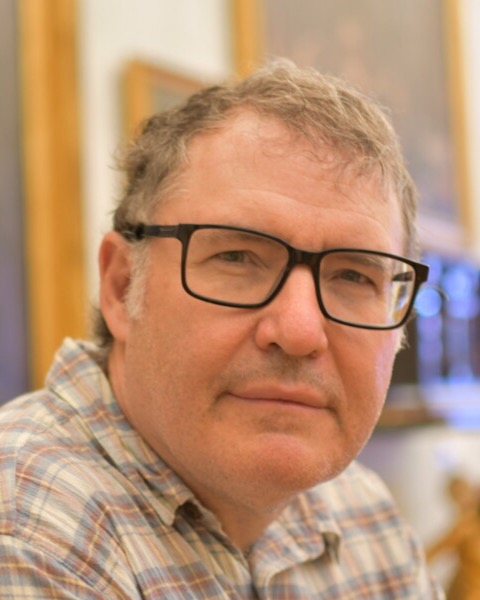
Benjamin Claude Brower
· Associate ProfessorUniversity of Texas at Austin · History
Active 1999–2025
Research topics
- Political Science
- History
- Sociology
- Law
- Art
- Ancient history
- Archaeology
- Epistemology
- Criminology
- Philosophy
Selected publications
Columbia University Press eBooks · 2025-11-14
book1st authorCorrespondingFrench colonization dismantled Algerian names. Under the occupation that began in 1830, not only were Algerian towns and streets renamed in honor of French figures, but personal names were forced to follow French conventions and norms. Colonial authorities simplified and transformed Algerian names to suit their administrative and legal purposes, crudely transcribing and transliterating Arabic and Berber. They imposed a two-part name and surname model that stripped away the extended family ties and social context inherent to precolonial naming practices. This groundbreaking history of personal names in nineteenth-century Algeria sheds new light on the symbolic violence of renaming and the relationship between language and colonialism. Benjamin Claude Brower traces the changes Algerians’ personal names suffered during the colonial era and the consequences for individuals and society. France’s imposition of new names, he argues, destabilized Algerians’ sense of self and place in the community, distorted local identities, and compromised institutions such as the family. Drawing on previously unstudied records, Brower examines different northwestern African naming traditions and how colonialism changed them. With the aid of literary and critical theory, he develops new insights into the name and its relationship to power and subjectivity. A rigorous theoretical and historical account of symbolic violence, The Colonization of Names unveils many unseen forms of harm under colonial rule.
:<i>French Colonialism: From the Ancien Régime to the Present</i>
The Journal of Modern History · 2025-06-01
article1st authorCorrespondingSouth Central Review · 2025-03-01
article1st authorCorrespondingAbstract: Violence can produce crises in language, reducing victims to silence or, more generally, compromising words’ capacity to signify correctly. This article examines the 1967 efforts of a Belgian grammarian, Maurice Grevisse, to repair the word “massacre” in aftermath of the Holocaust and the violence of decolonization. Grevisse stands as perhaps the most influential specialist of the French-language in the twentieth century, authoring multiple editions of a key grammar reference. He took these skills to the word “massacre,” interrogating the word’s proper use in the mid twentieth century. The article surveys Grevisse’s findings, and then it uses them to reflect on current mass violence, particularly that inflicted on Palestinians and the crises of language it has provoked.
Algerian Personal Names and the Colonial État Civil , 1850–1900
Cornell University Press eBooks · 2023
1st authorCorresponding- History
- Art
- Ancient history
This chapter discusses the interplay between Algerian personal names and the colonial état civil. Lawmakers and administrators recognized the power of the état civil to bring individual Algerian Muslims into the state's legal and administrative records. The chapter focuses on the period when names underwent a significant transformation, yielding a personal name that some Algerians today call an onomacide. It showcases how the new patronym names provided by the French served as a way to assert power or even a primary form of symbolic violence. However, Algerians recognized as much, calling their new patronyms by a neologism, either naqma or naqwa, which today refers both to the family name and to an ID card.
3. Algerian Personal Names and the Colonial État Civil, 1850–1900
Cornell University Press eBooks · 2023
1st authorCorresponding- Political Science
- History
- Political Science
Genealogies of Modern Violence: Arendt and Imperialism in Africa, 1830–1914
Cambridge University Press eBooks · 2020
1st authorCorresponding- Sociology
- Political Science
- Epistemology
This chapter interrogates Hannah Arendt's The Origins of Totalitarianism (1951) to better understand the violence of European imperialism in Africa and its impact on later developments, including the Holocaust. It argues that most readers have failed to properly understand Arendt's own views of temporality and causation in popular appropriations such as the so-called "boomerang thesis." Instead, the insights of African historiography and critical theory are used to propose a new reading of Arendt that reveals the contingency and counterintuitive turns of modern violence.
An Isthmus of Modern Thought: Islam and Psychoanalysis in North Africa and the Middle East
Modern Intellectual History · 2020-03-31
article1st authorCorrespondingOn three occasions the Qur'an mentions what it calls barzakh , an enigmatic word that denotes a partition such as that found between fresh and sea water, good and evil, faith and knowledge, even this world and the next. Nimble thinkers have made good use of the in-betweenness of barzakh . Its divisions make possible distinctions and provide form. And yet, just as it divides, the barzakh also connects. In fact, the word is often rendered in English as “isthmus,” which shows up its usefulness for thinking about difference in a way that does not presuppose stark oppositions, on the one hand, nor conflation and indistinction, on the other. The twelfth-century philosopher Ibn ‘Arabi used barzakh to describe that which separates/unites the created and the Creator, making it a key concept within his theory of the unity of existence. Building upon these insights, modern readers have found this concept useful to negotiate contemporary questions of self and other, questions that became particularly important in the colonial and postcolonial eras. For example, the late Algerian novelist Mohammed Dib used barzakh to signify his personal struggles to think across North (Europe) and South (North Africa), French and Arabic. Likewise, the Moroccan scholar Taieb Belghazi has mobilized barzakh to rethink the Mediterranean Sea as a heterogenous space that joins and “disjoins” lands, languages, and people. Barzakh also names an important new publishing house in Algiers and its concept frames the editors’ work producing titles in which questions of (post)colonialism and of cultural liminality figure prominently.
Regroupment Camps and Shantytowns in Late-Colonial Algeria
L Année du Maghreb · 2019-01-01 · 2 citations
articleOpen access1st authorCorrespondingThis paper examines how the French state responded to the crisis of sovereignty it faced in late-colonial Algeria by confining Algerian civilians in regroupment camps, as well as by the way that it approached people living in the shantytowns of Algiers. It concludes that although different modalities of power distinguished the regroupment camps from the shantytowns, that both sought to neutralize the political agency of Algerians.
French Studies · 2019-07-18
article1st authorCorrespondingThis engaging book re-examines the first century of Algeria’s colonial era (1830 – c. 1914), framing its engagement through the insights of settler colonial studies. This emerging field focuses on colonies planned for landed settlement by outsiders with policies typified by the ‘logic of elimination’ (Patrick Wolfe), or the notion that the lands needed by settlers required the expulsion or extermination of local people. While the settler approach has attracted scholars from around the world, few have taken up its questions for the French empire, and this book represents a rare French-language contribution to the field. Settler studies allow Hosni Kitouni to seek different perspectives to understand colonialism in Algeria, ultimately arguing that it tied itself singularly to realizing the economic and demographic success of European settlers. This conclusion makes less pressing older debates about this period that centred on shifts between civilian and military governance, along with something of an obsessional interest in untangling the internal personality struggles within the French administration, which tended to reduce colonial policy to a lutte des clans. Even as his book brings Algeria into new fields, Kitouni reconnects with earlier Algerian historiographic traditions represented by scholars such as Mostefa Lacheraf, who wrote searing accounts of French colonialism in the decades after independence. Indeed, I would place Kitouni’s effort to use history to ‘nous réapproprier notre part d’Humanité’ (p. 19) alongside Assia Djebar’s work in her canonical novel L’Amour, la fantasia to ‘reconstitue[r], à mon tour, cette nuit’ ((Paris: J.-C. Lattès, 1985), p. 84). Kitouni divides the book into four parts. The first part begins with the settlement and elimination discourses of the 1830s. Part Two addresses military practices in the 1830s to 1871, which he calls ‘par le feu et par la faim’, an ironic retake of General Bugeaud’s famous saying that colonization proceeded ‘par l’épée et par la charrue’. The book ends in an examination of land transfers (Part Three) and tax policy (Part Four). Here Kitouni shows how racialized law extracted Algerians’ wealth and labour to build white settler society. Specialists may feel they know this era well enough from other accounts; however, Kitouni makes important new contributions. His account of the mass asphyxiations in the Dahra mountains, the most infamous atrocity of Algeria’s nineteenth century, is the most detailed and complete to date, and it includes several new sources. His case studies of land confiscation and the punitive responses to forest fires also stand out. Kitouni uses his work in the little-explored archives housed in Constantine to give a fine-grained illustration of the way that the state expropriated Algerian property. Writing this process from the Algerian perspective, Kitouni brings out the Kafkaesque dimensions of the land transfer, as well as the response of Algerians to the loss of their property, including an 1883 petition to the French president. This is Kitouni’s second book, following La Kabylie orientale dans l’histoire (Paris: L’Harmattan, 2013), and he comes to history after a career in documentary filmmaking. This latest book is soundly researched, heartfelt, and engaged. Along with its contributions of interest to historians, Kitouni’s project to use history to reclaim the colonial past will interest readers of decolonization, postcolonial studies, and decolonial thinking.
Revue des mondes musulmans et de la Méditerranée · 2018-01-01
articleOpen access1st authorCorrespondingChiffoleau’s work represents the most important French-language book published to date among a resurgence of international interest in the pilgrimage to Mecca. This interest is manifest both in the public sphere with special museum exhibitions in Europe and the Middle East, as well as in the work of scholars. Young historians of European empires writing in English such as Eileen Kane (Russian Hajj: Empire and the Pilgrimage to Mecca, Cornell University Press, 2015) and John Slight (The Britis...
Frequent coauthors
- 3 shared
Eric Tagliacozzo
- 1 shared
Asma Sayeed
- 1 shared
Saud al-Sarhan
- 1 shared
Sylvia Chiffoleau
- 1 shared
Fareeha Khan
Willamette University
- 1 shared
Travis Zadeh
- 1 shared
Shawkat M. Toorawa
- 1 shared
Gary R. Bunt
- Resume-aware match score
- Save to shortlist
- AI-drafted outreach
See your match with Benjamin Claude Brower
PhdFit ranks faculty by your research interests, methods, and publications — grounded in their actual work, not templates.
- Free to start
- No credit card
- 30-second signup