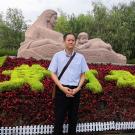
Sheldon Lu 魯曉鵬
· Distinguished Professor of Comparative LiteratureUniversity of California, Davis · Comparative Literature
Active 1993–2026
About
Sheldon Lu 魯曉鵬 is a Distinguished Professor of Comparative Literature at the University of California, Davis, where he joined the faculty in 2002. His academic background includes a B.A. in Comparative Literature from the University of Wisconsin, Madison, and both an M.A. and Ph.D. in Comparative Literature from Indiana University, Bloomington, completed in 1990. His research, scholarship, and teaching intersect across literary studies, visual studies, film studies, China studies, and cultural theory. Lu has held teaching positions at the University of Illinois at Urbana-Champaign, Indiana University at Bloomington, the University of Pittsburgh, and Beijing Normal University, and was a Fulbright scholar in Kyiv, Ukraine. He has served as Chair of the Department of Comparative Literature, Director of the Graduate Program in Comparative Literature, and Founding Co-Director of the Film Studies Program at UC Davis. His work includes authoring and editing approximately 15 books in English and Chinese, with writings published in numerous academic journals and anthologies. His research emphasizes Chinese cinema and visual culture, modern Chinese literature, and cultural theory, contributing significantly to these fields through monographs, edited volumes, and journal articles.
Research topics
- Computer Science
- Political Science
- Sociology
- Aesthetics
- Law
- Art
- Gender studies
- Visual arts
- History
- Media studies
Selected publications
Asia Pacific Translation and Intercultural Studies · 2026-02-20
article1st authorCorrespondingCinematic Guerrillas: Propaganda, Projectionists, and Audiences in Socialist China
The Journal of Asian Studies · 2025-08-01
article1st authorCorrespondingComparative Literature and China
2025-08-29
bookSenior authorMapping and Contesting the Notion of Sinophone: The Coming of Age of Global Chinese Literature
2025-05-26
book-chapter1st authorCorresponding<p xmlns:xsi="http://www.w3.org/2001/XMLSchema-instance" class="first" dir="auto" id="d7459591e122">The chapter explores the theme of coming of age in so-called Sinophone literature at several levels. It looks at the development, maturation, and coming of age of global Chinese-language literature as a concept, a practice, and a field of research. It examines and contests the academic field that purports to study such Chinese-language literature under the rubric of “Sinophone.” This self-positioning and framing of global Chinese literary studies within a postcolonial Western structure of knowledge deserves close interrogation. The chapter analyses specific examples of coming-of-age narratives from the global Chinese-language literature. The literary texts illustrate as well as question preconceived theoretical perimeters of what Sinophone literature might be. Special attention is given to diasporic transnational coming-of-age narratives, short stories, and the Bildungsroman.
Journal of World Literature · 2024-05-15
articleSenior authorThe Early Modern Period, Dream of the Red Chamber, and World Literature
Journal of World Literature · 2024-05-15
article1st authorCorrespondingAbstract This essay lies at the intersection of several fields: the study of the novel, world literature, early modern studies, and global modernity. It analyzes the representation of the outside world in the Chinese novel Dream of the Red Chamber (aka The Story of the Stone ) from the 18th century. There exist frequent appearances of foreign objects as well as glimpses of China’s trade with the West in the novel, and yet the literary work maintains a China-centered worldview. The essay situates the novel in the context of nascent world literature at that time and intervenes in the field of East-West comparative literature in the early modern period. The encounter with foreign objects and material culture is a shocking and exciting discovery as described in vivid details in this novel. Yet, China’s ambivalent attitude toward introducing and embracing foreign culture results in the belated emergence of world literature on its soil.
Trailblazing Scholar, Brilliant Critic
Chinese Literature and Thought Today · 2023
1st authorCorresponding- Computer Science
- Computer Science
- History
This essay is an assessment of and a tribute to Yingjin Zhang's manifold academic achievements. He has made tremendous contributions to multiple fields: film studies, modern Chinese literature, comparative literature, urban studies, media studies, Republican China studies, as well as other related areas of inquiry. His scholarly impact has been enormous. The essay focuses on two aspects of his scholarship: First, his leading position in the establishment, institutionalization, and internationalization of academic fields like Chinese cinema studies, modern Chinese literary studies, and Chinese comparative literature. Second, his vital role as an influential, astute theorist in rethinking the theoretical parameters and critical tools of the aforementioned disciplines. While he was shaping and reshaping academic fields through producing monumental books, he was keenly aware of the permeable disciplinary boundaries of ever-changing critical terrains. Just as he was establishing Chinese literature and cinema, transnational studies, comparative literature, and world literature, he was at the same time re-examining and reflecting on the feasibility of these terms in a new critical context. A brave, open-minded, self-reflexive spirit is characteristic of his scholarship as a whole. He did not take an entity for granted, but cross-examined and redefined it according to changing historical and social circumstances.
Prism · 2022-03-01
articleOpen accessSenior authorAbstract This article adopts Mikhail Bakhtin's conception of the chronotope to analyze the 2015 film Laopaoer 老炮兒 (Mr. Six), directed by Guan Hu 管虎 and starring Feng Xiaogang 馮小剛, exploring its representation and reconfiguration of the real as well as the imagined time-spaces of Beijing. Revolving around generational conflicts against the grain of a globalized and gentrified Beijing, Mr. Six creates a strong nostalgic appeal and laments the withering of mores from the past. The film not only attends to the physiognomic remapping of contemporary Beijing but also incorporates topographical imaginaries from the culture of the martial arts. By invoking hybrid sites of memory, Guan Hu mobilizes cultural legacies associated with Beijing and creates a palimpsestic urban chronotope. Furthermore, this article compares Mr. Six to its literary and filmic predecessors, probing its insights and oversights in restoring cultural memories and in capturing the zeitgeist of contemporary China. With gaps and conflicts on textual, contextual, and intertextual levels calling into question the efficacy of Mr. Six's exposé of China's social stratification and urban gentrification, the stories in, of, and around Mr. Six reiterate the coordination between cultural elites and consumer culture.
Telling Details: Chinese Fiction, World Literature by Jiwei Xiao
Rocky Mountain review/The Rocky Mountain review · 2022-03-01
article1st authorCorrespondingReviewed by: Telling Details: Chinese Fiction, World Literature by Jiwei Xiao Sheldon Hsiao-peng Lu Jiwei Xiao. Telling Details: Chinese Fiction, World Literature. Routledge, 2022. 212 p. Jiwei Xiao's monograph, a new addition to Routledge's "Literary Criticism and Cultural Theory" series, is a fruitful exploration of the novel in Chinese and an insightful study of Chinese literature as part of world literature. More specifically, it analyzes the importance of "detail" 細節 (xijie) in fictional narrative. Xiao calls this narrative tradition "xijie xiaoshuo" 細節小說 (novel of details), which originated in China in the late 16th century during the Ming Dynasty. The detail in such a narrative work does not play conventional supporting roles to the plot. Such a text "shifts the weight of the narrative from storytelling to scene-making, intricately pivoting away from plot and didacticism towards a new, aesthetically dynamic form. It continues to evolve, to exert a deep influence on Chinese fiction writing and literary imagination in modern and contemporary times" (1). Sensory experiences of seeing, feeling, and experiencing are key elements of these works. Telling Details starts with an Introduction and then effectively divides into two parts. Part One: Detail and Difference, is a theoretical, historical, and comparative study of the aesthetics of xijie xiaoshuo. Part Two: Fiction of Details, comprises six chapters. Each chapter tackles one important Chinese novel or Chinese author: (1) the late Ming novel Jin Ping Mei (The Plum in the Golden Vase); (2) the writings (essays) of late Ming writer Zhang Dai; (3) Han Bangquing's late 19th century novel The Sing-song Girls of Shanghai; (4) Eileen Chang from the 20th century; (5) Shen Congwen from the 20th century; and (6) contemporary writer Jia Pingwa's novels. Overall, Xiao's choice of primary texts and writers is judicious and well made. She offers penetrating, provocative analyses of details in the texts she examines, mostly narrative works. One exception is Zhang Dai, who writes essays rather than narrative fiction. Xiao's discussion of details in his writings is interesting and informative. However, it is not clear why a full chapter is devoted to an essayist in a book on the "novel of details." Although the volume studies Chinese narrative from the [End Page 156] early modern period to the present time, it also makes a more general contribution to relevant scholarship in comparative and world literatures. It makes numerous comparisons between the East and the West, discussing the similarities and differences in ideas and literary conventions among world cultures such as China, Japan, and Europe, and weighing in on ideas of influential Western scholars, such as Erich Auerbach, Roland Barthes, and Fredric Jameson for their relevance to the Chinese literary tradition. Details alone do not account for the emergence of the modern novel. Numerous examples of world literature are full of abundant descriptive details, such as the shield of Achilles in Book 18 of Homer's Iliad, or the elevated Chinese genre of rhapsody 賦 (fu) which gives exhaustive descriptions of objects, animals, and capital cities. Xiao is prescient in pointing out the treatment of the quotidian, the everyday, and the humble, and the mixture of the high and the low in the evolution of realist poetics. This is an illuminating study in many ways, but there are areas that could improve and might need more clarification. It is one thing to analyze the significance of "detail" (xijie) in the modern novel. It is another thing to establish a literary convention called "xijie xiaoshuo" in China. Xiao writes: "I use a familiar but fuzzy Chinese term, xijie xiaoshuo" (1); "Xijie xiaoshuo is less a fictional genre than a literary phenomenon" (2); and "Xijie xiaoshuo has been used as a loose term to refer to any detail-rich novel. It has never been taken seriously in literary criticism" (35). The author does not point to or cite any original Chinese usage, discussion, or scholarship surrounding the notion of xijie xiaoshuo. When, where, and how does the term first appear? The reader has no idea how this phrase has been defined and used over the years before witnessing the radical adoption of such a term in this English-language publication. If...
Contemporary Chinese Cinema and Visual Culture: Envisioning the Nation
2021-07-15
book1st authorCorresponding
Frequent coauthors
- 4 shared
Emilie Yueh-yu Yeh
- 2 shared
May M. Wang
- 2 shared
Jason McGrath
- 2 shared
Chris Berry
- 1 shared
Martin Montgomery
University of Macau
- 1 shared
Jungwha Lee
Kyungpook National University
- 1 shared
Vivian Yang Qiuwei
- 1 shared
Karen Thornber
Harvard University Press
Awards & honors
- Honourable Mention for Best Monograph at the British Associa…
- Choice's Award of "Outstanding Academic Title of 2005"
- Resume-aware match score
- Save to shortlist
- AI-drafted outreach
See your match with Sheldon Lu 魯曉鵬
PhdFit ranks faculty by your research interests, methods, and publications — grounded in their actual work, not templates.
- Free to start
- No credit card
- 30-second signup