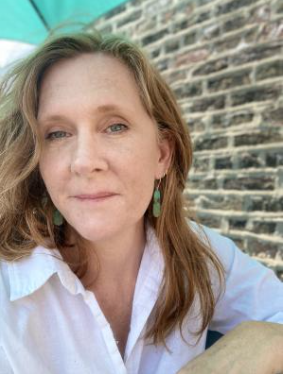
Shannon Lee Dawdy
VerifiedUniversity of Chicago · Geography
Active 1978–2026
About
Shannon Lee Dawdy is a Professor Emerita of Anthropology and of Social Sciences in the College at the University of Chicago. She earned her PhD from the University of Michigan in 2003. Her research combines archival, ethnographic, and archaeological methods, primarily in the U.S. and Gulf of Mexico. Dawdy is especially interested in how landscapes and material objects mediate human relationships and how shared cultural experiences influence perceptions of time, including past, present, and future. Her topical focus includes death, disaster, sensuality, and the histories of colonialism and capitalism, with a particular interest in piracy. Dawdy has written extensively on New Orleans, exploring its French colonial past and its relationship to old things before and after Katrina. More recently, she has turned an archaeological lens on contemporary life, including rapid changes in death practices in the U.S. and the concept of deep future archives and doomsday practices. She has received support from notable institutions such as the MacArthur Foundation, the National Science Foundation, and the National Endowment for the Humanities. In 2025, she took early retirement to focus on writing and expanding the Future Café initiative to other campuses.
Research topics
- History
- Sociology
- Geography
- Archaeology
- Art
Selected publications
Refubium (Universitätsbibliothek der Freien Universität Berlin) · 2026-01-01
articleOpen access1st authorCorrespondingAccording to the National Monument Audit (Monument Lab 2025), the United States is home to at least 15,758 war memorials. In contrast, only 1,221 sites are associated with peace. War memorials are sponsored by federal, state, and local agencies, as well as privately-funded ones in cemeteries, city parks, and traffic circles from organi-zations as diverse as the Daughters of the Confederacy, the National Park Service, the Alpha Delta Phi fraternity and the Vietnam Veterans of Oregon. Many of the peace memorials, which represent a little over 2% of the total recorded in the audit, could have just as easily ended up in the war column. They often do double duty – memorial-izing dead soldiers or victims of Hiroshima, Nagasaki, or the Holocaust in order to make a negative plea for peace.
Contemporary Doomsday Devices and the Undoing of End-Times
2025-04-01
book-chapter1st authorCorrespondingIn the early 21st century, doomsday devices have been cropping up all over – clocks, vaults, and art projects oriented towards a deep and possibly post-human time. What are these devices doing? Why are they proliferating now? And how does planning for the ultimate undoing shape our present? The first part of my argument is that they are materializations of a grand narrative running through Judeo-Christian thought, now migrating to seemingly secular forms. The second is that they are politically prophylactic. In fact, they are attempts to prevent the very predictions they materialize. Imagining the undoing of a world is the first step towards saving it. Counter-intuitively, doomsdayism in its most active forms turns out to be a hopeful practice.
2025-04-01
bookSenior author2025-04-01
book-chapterSenior authorIn this introduction to the volume, the editors offer a rationale for the topic of undoing, arguing that, as a theme, it has significant contemporary and philosophical relevance, although it has lacked any sustained or focused theoretical discussion within archaeology or the humanities more broadly. We highlight five key themes running through the chapters that draw out what theorizing undoing can entail. These themes include the visibility of undoing, both materially and temporally; the creative dynamic of undoing and doing; the possibilities of reversing undoing and its symmetries with doing; the power of undoing and who or what is implicated in it; and finally, the relation of undoing to knowledge-making practices and the extent to which we, as scholars, are observers or agents of undoing.
Studia Philosophica Wratislaviensia · 2024-07-10
articleOpen accessSenior authorIn this paper, two anthropologists explore what it means to “co-wonder” as an ethnographic and philosophical method, exemplifying what this might mean through an open-ended dialogue about a subject they hold in common—the study of death. As the “last wonder,” death brings home how the puzzle of our embodiment is both the source and the means for human speculation at its farthest limits.
Science Advances · 2024-04-03 · 9 citations
articleOpen access) rats on human society are well documented-including the spread of disease, broad-scale environmental destruction, and billions spent annually on animal control-little is known about their ecology and behavior in urban areas due to the challenges of studying animals in city environments. We use isotopic and ZooMS analysis of archaeological (1550s-1900 CE) rat remains from eastern North America to provide a large-scale framework for species arrival, interspecific competition, and dietary ecology. Brown rats arrived earlier than expected and rapidly outcompeted black rats in coastal urban areas. This replacement happened despite evidence that the two species occupy different trophic positions. Findings include the earliest molecularly confirmed brown rat in the Americas and show a deep ecological structure to how rats exploit human-structured areas, with implications for understanding urban zoonosis, rat management, and ecosystem planning as well as broader themes of rat dispersal, phylogeny, evolutionary ecology, and climate impacts.
Towards a political ecology of piracy in the Age of Sail
World Archaeology · 2024-01-01 · 1 citations
article1st authorCorrespondingAnthropology & Humanism · 2023-07-05
articleOpen access1st authorCorrespondingSummary This piece is part of a special section of “hundreds” for Kathleen Stewart.
Chapter 9. Mound-Building and the Politics of Disaster Debris
Berghahn Books · 2022-09-27
book-chapter1st authorCorrespondingChapter 10. The Wounded Landscape
University of Pennsylvania Press eBooks · 2022-08-10
book-chapter1st authorCorresponding
Frequent coauthors
- 9 shared
Alexandra Hartnett
Barnard College
- 8 shared
Eric R. A. N. Smith
- 8 shared
Brian Larkin
- 8 shared
André Béteille
- 2 shared
Barnet Pavão-Zuckerman
University of Maryland, College Park
- 2 shared
Suzanne M. Spencer‐Wood
Oakland University
- 2 shared
L. Antonio Curet
- 2 shared
Bonnie L. Gums
Awards & honors
- Support from the MacArthur Foundation
- Support from the National Science Foundation
- Support from the National Endowment for the Humanities
- Support from the ACLS
- Finalist for PROSE Award in Cultural Anthropology and Sociol…
- Resume-aware match score
- Save to shortlist
- AI-drafted outreach
See your match with Shannon Lee Dawdy
PhdFit ranks faculty by your research interests, methods, and publications — grounded in their actual work, not templates.
- Free to start
- No credit card
- 30-second signup