Paul Olsen
VerifiedColumbia University · American Language Program
Active 1948–2026
About
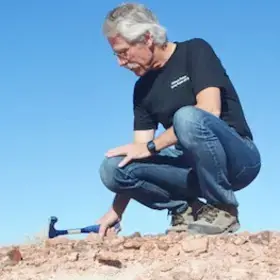
Professor Paul Olsen is the Arthur D. Storke Memorial Professor of Earth and Environmental Sciences in the Department of Earth and Environmental Sciences at Columbia University’s Lamont–Doherty Earth Observatory. His research encompasses the evolution of continental ecosystems, focusing on their biological and physical components, and the pattern, causes, and effects of climate change on geological time scales. He is particularly interested in mass extinctions and the influence of evolutionary innovations on global biogeochemical cycles. Professor Olsen has engaged in multidisciplinary projects including drilling over 20,000 feet of core from Triassic lake deposits in New Jersey to study planetary orbit influences on Earth's climate, analyzing the great mass extinction 200 million years ago that set the stage for the dominance of dinosaurs, and conducting excavations at major fossil vertebrate sites across North America, China, and Morocco. His approach involves utilizing various techniques to understand ancient Earth's biological and physical systems, involving disciplines such as structural geology, palynology, geochemistry, geophysics, and paleontology. He received his B.A. in Geology with honors and his M.Phil. and Ph.D. in Biology from Yale University, with his doctoral thesis focusing on the evolution of lake ecosystems. He was a Miller Postdoctoral Fellow in Basic Research at UC Berkeley from 1983 to 1984. Professor Olsen also serves as a research associate at the Carnegie Museum of Natural History, the American Museum of Natural History, and the Virginia Natural History Museum, from which he received the Thomas Jefferson Medal for Outstanding Contributions to Natural Science in 2015. He was elected to the National Academy of Sciences in 2008.
Research topics
- Paleontology
- Geology
- Engineering
- Oceanography
- Earth science
- Geochemistry
Selected publications
2026-03-12
article1st authorCorresponding<p dir="ltr">Triassic–Jurassic great lakes of the Hartford Rift Basin.</p>
2026-03-12
article1st authorCorresponding<p dir="ltr">Triassic–Jurassic great lakes of the Hartford Rift Basin.</p>
Bulletin of the Peabody Museum of Natural History · 2026-04-24 · 1 citations
articleOpen access1st authorCorrespondingTriassic-Jurassic Lagerstätten in eastern North America record biotic and environmental changes that set the stage for the era of dinosaurian ecological dominance that lasted 136 million years. This paper describes the morphologic, systematic, stratigraphic, temporal, and environmental context of these extraordinary fossil assemblages within strata of the vast, paleotropical eastern North American Newark Supergroup. Formed during the initial rifting of the supercontinent of Pangea, these mostly lacustrine and fluvial deposits combine a super-abundance of tetrapod footprints, particularly those of dinosaurs, with a physical stratigraphy that reflects orbitally paced climate cyclicity, which in turn provides a high-resolution stratigraphy for most of the record. Some Newarkian footprint Lagerstätten are exceptional, displaying detailed scale patterns, associated body impressions, and, plausibly, feather homologues. These strata contain other Lagerstätten that yield superbly preserved insects, fishes, and reptiles. More conventional assemblages of skeletal remains, tracks, fishes, and plants also abound. Most Lagerstätten and other assemblages occur in sedimentary cycles that reflect the expansion and contraction of perennial lakes in monsoonal climates. Newark Supergroup faunal and floral assemblages, and the strata they come from, document consequential events during the early Mesozoic, most notably those surrounding the continental end-Triassic mass extinction and the ensuing Jurassic recovery.
A Giant Arctic Continent During the Early Mesozoic: its Climatic, Eustatic, and Biotic Implications
2026-03-14
articleOpen access1st authorCorrespondingDiscovery of abundant lake ice-rafted debris (L‑IRD) coeval with dinosaurs in continental strata of the Late Triassic to middle Jurassic of northwestern China (Junggar Basin) led to reevaluation of paleolatitude for that region (1). The basin was inferred to lie north of the Arctic Circle during the Late Triassic/Early Jurassic, along with much of Northeast Asia, consistent with paleomagnetic reference frame data (2–4). Similarities in facies transitions through the Triassic and Jurassic in both the North and South China blocks, together with recent paleomagnetic interpretations, suggest amalgamation with the Siberian plate by the Late Triassic (5, 6), implying a giant Early Mesozoic Arctic continent dwarfing present-day Antarctica.The L‑IRD shows that the southern margin of the Arctic had freezing winters despite high pCO₂, consistent with climate models (7), and the outsized Arctic continent would have had an enhanced continental climate with even colder winters. With lowlands freezing in winter in the southern Arctic, there were presumably significant mountain glaciers, perhaps even a small ice cap, as a background condition, consistent with glacioeustatic Triassic–Jurassic sea-level fluctuations (8).The end-Triassic sea-level drop stands out in particular: a ∼10⁵‑year event on a multimillion-year rise, broadly coincident with the end-Triassic mass extinction (ETE) (9). This sea-level drop is coincident with the onset of the Central Atlantic Magmatic Province (CAMP), but modeling suggests that CAMP-related uplift would have had relatively local effects (10). An increase in glacial ice triggered by CAMP volcanic winters provides a possible mechanism (11). Perhaps enhanced via ice–albedo feedback and a consequent increase in Earth System sensitivity to polar orbital forcing, ice-sheet growth may have triggered a recently identified ~400 kyr switch in tropical orbital pacing from expected precession dominance to obliquity dominance and back (12), a temporary transition resembling the onset of the “40 kyr world” at the mid-Miocene transition, plausibly caused by growth of the Antarctic Ice Sheet to near-modern size (13).This giant Arctic continent may have primed the Earth System to switch from a hothouse to a transient icehouse world during CAMP volcanic winters, causing an abrupt sea-level drop. The same cold perturbations may also have driven the extinction of all large non-insulated land animals, paving the way for dinosaur ecological dominance, as these insulated reptiles were already living in the freezing Arctic beforehand.1) Olsen et al. 2022. Sci. Adv. 8, eabo6342; 2) Marcilly et al. 2021. http://www.earthdynamics.org/climate/exposed_land.zip; 3) van Hinsbergen et al. 2014. paleolatitude.org; 4) Leonard et al. 2025. Commun. Earth Environ. 6, 508. 5) Yi et al. 2023. Earth Planet. Sci. Lett. 118143; 6) Olsen et al. 2024. Geol. Soc. Lond. Spec. Publ. 538, SP538–2023–2089; 7) Landwehrs et al. 2022. Proc. Natl. Acad. Sci. 119, e2203818119; 8) Wang et al. 2022. Glob. Planet. Change 208, 103706; 9) Fox et al. 2020. Proc. Natl. Acad. Sci.; 10) Austermann et al. 2015. EGU Gen. Assem. Abstr. 3073; 11) Schoene. 2010. Geology 38, 387–390; 12) Olsen et al. 2024. AGU24, Abstr. V22A-05; 13) Westerhold et al. 2020. Science 369, 1383.
Detox or Die: Controversial Social Media Post Plagues Vermont Restaurant Owner
2025-01-01
book1st authorCorrespondingInjecting Ethics into MD Cosmetics
2025-01-01
book1st authorCorresponding2025-01-01
articleBulletin of the Peabody Museum of Natural History · 2025-10-16 · 2 citations
articleSenior authorA half-century of investigations in deep-lake and littoral facies have produced a wealth of fossils, illuminating the trophic structure of the latest Triassic and Early Jurassic rift ecosystems in the Hartford and Deerfield Basins (Connecticut and Massachusetts, USA). Fossil assemblages include representatives of all fundamental levels of the food chain: bacteria, algae, plants, mollusks, crustaceans, insects, fishes, and tetrapods. The superabundance of large theropod dinosaur footprints in near-shore lake environments, as exemplified at Dinosaur State Park, Rocky Hill, Connecticut, and the rarity of herbivore tracks in the same facies suggest that the aquatic food web was critically important to apex dinosaurian carnivores. We clarify the stratigraphy and elucidate the monsoonal expansion and contraction of perennial lakes at Dinosaur State Park, highlighting the importance of microbial mats that blanketed trackway surfaces. At basin scale, we document the facies-dependent distribution of large carnivorous dinosaur tracks (Eubrontes) in lake-margin strata. In contrast, large herbivorous dinosaur tracks (Otozoum) primarily occur in fluvial facies, more proximal to upland environments. The rarity of herbivorous tetrapod footprints in lake-margin environments may indicate that herbivores lived in dry-land, upland habitats, spent most of their time foraging along streams and rivers, or intentionally avoided lake shores frequented by large carnivores. Large theropods were opportunistic apex predators in littoral habitats, with a diet of fishes and the smaller tetrapods that also frequented lake margins. Rather than tearing through coniferous forests displaying a fierce raptorial lifestyle, as typically portrayed, the large carnivores of the Triassic-Jurassic circum-Atlantic rift valleys likely spent most of their days at the beach, fishing.
Proceedings of the National Academy of Sciences · 2025-01-09
articleOpen access1st authorCorrespondingProceedings of the National Academy of Sciences · 2025-06-30 · 3 citations
articleOpen accessCorrespondingSolar system gravitational interactions are embedded in Earth’s record of climate, providing a way to bypass the 60 Myr limit imposed by chaos. Presently with a 2.4 Myr period, the Mars–Earth beat cycle of orbital perihelion frequencies is particularly sensitive to chaotic diffusion, potentially varying by more than a million years. Early Mesozoic (252 to 145 Ma) strata provide some constraints on this cycle, with evidence of a swing through most of the solution space from 1.8 Myr at 210 Ma to 2.5 Myr at 190 Ma and back to 1.6 Myr at 180 Ma. However, only the 1.8 Myr cycle is corroborated by geochronologic data and the 1.6 Myr period is disputed. Here, we show that variations in land-plant-dominated stable carbon isotopic ratios (δ 13 C org ) from the lacustrine, paleo-high-latitude Sangonghe Formation (Junggar Basin, northwestern China), reveal at least three 1.6 Myr Mars–Earth beat cycles centered at 183 Ma, tracking atmospheric CO 2 isotopic composition in Earth’s exchangeable carbon reservoirs. Furthermore, the middle cycle includes the famous Jenkyns Event, expressed here by poleward migration of cheirolepidaceous conifers driven by CO 2 warming from the Karoo-Ferrar large igneous province (LIP). Our data do not, however, support major, LIP-triggered input of isotopically light carbon and instead support CO 2 amplification of local processes via warming and ecosystem change. Although requiring additional independent geochronological support, Sangonghe data help provide empirical constraints for filtering orbital solutions, tightening initial conditions, and testing gravitational models, as well as showing how extrinsic cyclical processes interact with a tectonic event, the Karoo-Ferrar LIP.
Recent grants
NSF · $445k · 2013–2018
30 Million Year Record of the Evolution of a Continental Rift: The Early Mesozoic Newark Basin
NSF · $2.4M · 1990–1994
NSF · $76k · 2008–2010
NSF · $29k · 2007–2009
Frequent coauthors
- 272 shared
Dennis V. Kent
Columbia University
- 115 shared
Jessica H. Whiteside
San Diego State University
- 89 shared
Sean Kinney
- 64 shared
Hans‐Dieter Sues
National Museum of Natural History
- 61 shared
Christopher J. Lepre
Bowling Green State University
- 49 shared
Jingeng Sha
Nanjing Institute of Geology and Paleontology
- 49 shared
Clara Chang
Lamont-Doherty Earth Observatory
- 44 shared
Yanan Fang
Nanjing Institute of Geology and Paleontology
Awards & honors
- Thomas Jefferson Medal for Outstanding Contributions to Natu…
- Resume-aware match score
- Save to shortlist
- AI-drafted outreach
See your match with Paul Olsen
PhdFit ranks faculty by your research interests, methods, and publications — grounded in their actual work, not templates.
- Free to start
- No credit card
- 30-second signup