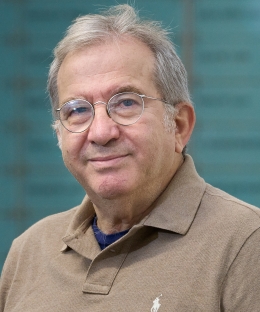
Petros C. Mavroidis
Columbia University · Columbia Law School
Active 1992–2026
About
Petros C. Mavroidis is the Edwin B. Parker Professor of Foreign & Comparative Law at Columbia Law School, where he has been a faculty member since 2003. His educational background includes a Dr. Iuris from the University of Heidelberg, an LL.M. from the University of California at Berkeley, a Master’s from U.L.B. Brussels, and an LL.B. from the University of Thessaloniki. His areas of study encompass International and Comparative Law, Litigation, and Dispute Resolution, with a particular focus on World Trade Organization (WTO) law. Mavroidis has served as a member of the WTO legal affairs division and has been a legal adviser to the WTO since 1996. He was the chief co-rapporteur for the American Law Institute study “Principles of International Trade: The WTO” in 2013. His scholarly work includes authoring ten books and numerous peer-reviewed articles and book chapters. His notable publications include “The Regulation of International Trade,” which won the 2017 Certificate of Merit in International Law from the American Society of International Law, and other works analyzing WTO agreements, dispute settlement, and interpretation of WTO law. He is actively involved in various academic and professional organizations, including the Center on Global Governance at Columbia, the American Law Institute, the American Arbitration Association, and the Bruegel think tank. Mavroidis’s research focuses on international trade law, WTO dispute settlement, and the interpretation of WTO law, contributing significantly to the understanding and reform of global trade legal frameworks.
Research topics
- Political Science
- Law
- Business
- Economics
- International trade
- Market economy
- Political economy
- History
- Economy
- International economics
- Finance
- Law and economics
Selected publications
The Governance of UEFA Competitions and its Consequences for Competitive Balance in National Leagues
SSRN Electronic Journal · 2026-01-01
preprintOpen accessSenior authorEdward Elgar Publishing Limited eBooks · 2026-03-20
book-chapter1st authorCorrespondingAn Uncommon Mind: Frieder Roessler's Legacy
World Trade Review · 2025-07-01
article1st authorCorresponding‘U-huh’. This is what I recall being Frieder's routine reaction whenever he was exposed to an argument. He rejected nothing, but at the same time he agreed to nothing right away. He needed his time to process, and would reach his conclusions only at a later stage. He applied this standard to his own, spontaneous thinking which might have sounded entirely convincing to me when we were working together, but not to him. ‘Let us think this issue through’ – a literal translation of the German‘durchdenken’ – he would say to me when we on occasion spoke together.
Cambridge University Press eBooks · 2025-05-01
book-chapter1st authorCorrespondingAccounts concerning the world trading system usually start the debate from the negotiation of the GATT. Trade integration before the First World War, though, had been quite remarkable, and the study of this era enriches our understanding of modern institutions in at least two ways. First, a number of GATT provisions had already been shaped during discussions following the advent of the League of Nations. Second, trade integration before the First World War did not manage to put a brake on belligerent behaviour, putting to rest the old Montesquieuan idea of doux commerce. Recent developments (like the invasion of Ukraine by Russia) can be analysed in this context, so that the world trading community can better grasp the limits of trade integration, and its impact on international relations.
No Way Out? The WTO in the Whirlwind of Trump II Trade Policy
Journal of World Trade · 2025-08-11
article1st authorCorrespondingThe World Trade Organization (WTO) relevance has eviscerated in recent years. The question raised nowadays in policy circles is whether the ascent of Donald J. Trump to the US Presidency will be the coup de grâce for the multilateral edifice. What seemed unthinkable in the mid-nineties when the WTO saw the light of day is more than a distinct possibility right now. The proximate causes are easy to identify but the ultimate causes are heterogenous and diverse. Disentangling them in an effort to apportion the blame is a quixotic, thankless indeed test. But it is a necessary exercise in the quest for solutions. While solutions pass through an effective address of the ultimate causes, the WTO must first navigate through the unchartered territory that proximate causes have presented it with. The multilateral system deserves to be saved not simply for making gains from trade possible in the last eighty years or so, but crucially because it provides the only genuine interface across a swath of (regulatory) policies around the world. Crumbling down of the WTO could have important negative external effects as far as (necessary) world-wide cooperation in other areas, such as the fight to avert climate change, is concerned.
World Trade Review · 2025-05-13
erratumOpen accessSenior authorPlurilateral Agreements, Multilateralism and Economic Development
The Journal of World Investment & Trade · 2025-01-03 · 3 citations
articleOpen accessSenior authorAbstract Plurilateral agreements among sub-sets of economies have a long history within the multilateral trading system. Plurilaterals may appear superficially less attractive than a set of non-discriminatory multilateral rules that apply to all WTO members but may, both in theory and in practice, be better suited to accommodate diversity across countries in the desire and ability to regulate certain aspects of economic activity. As long as such differences between countries do not lead to discrimination or encroachment on other countries’ rights under WTO rules, it is potentially beneficial for the trading system to permit groups of countries to pursue regulatory cooperation, even if other countries do not wish to follow suit. The alternatives to greater accommodation of plurilateral cooperation in the WTO are more preferential (discriminatory) trade agreements and club-based initiatives outside the WTO. Both options are arguably worse for non-participating developing countries than incorporating open, transparent plurilateral agreements into the WTO. Opponents of plurilateral initiatives operating under WTO auspices run the risk of inducing further erosion of the multilateral trading system.
Reciprocal Tariffs in the Quest for Balanced Trade: A Zero-Sum Game for the WTO
Revue québécoise de droit international · 2025-01-01
articleOpen access1st authorCorrespondingOn April 2, 2025, President Trump announced “reciprocal tariffs” under the Fair and Reciprocal Plan , presented as a tool of trade justice to reduce deficits and restore balance. Duties were calculated on the basis of import and export volumes, later replaced by a flat 10% tariff for most partners and 25% on cars, with China facing the harshest treatment. The administration justified these measures as a way to cut trade deficits, combat drug trafficking, relocate production, finance social policies, and improve trade terms. The article argues, however, that tariffs are a blunt and ineffective instrument. Trade deficits are largely driven by United States fiscal imbalances, not foreign tariffs or other trade practices. Tariffs cannot replace border enforcement against trafficking, nor substitute for subsidies in industries. They are equally unrealistic as a tool for financing social policies. Moreover, costs are passed on to Unites States consumers and disrupt global value chains, harming United States industries themselves. Legally, the new tariffs breach US WTO commitments, violating bound duty levels and non-discrimination rules. Their effects extend beyond the Unites States: retaliation from partners like China, uncertainty in global markets, and discriminatory “deals” undermine the WTO system. Far from restoring reciprocity, these tariffs represent a unilateral assault on multilateral trade rules.
Settlement Quality in Adversarial and Inquisitorial Systems
SSRN Electronic Journal · 2025-01-01
preprintOpen accessLitigating National Security in the WTO Era
2025-01-01
other1st authorCorrespondingFrom one dispute between 1948 and 1994, there have now been 14 requests for a panel establishment (based on the General Agreement on Tariffs and Trade (GATT), Article XXI – the exception for national security) during the World Trade Organization (WTO) era (1995–now). The majority of them ended up in the issuance of a panel report, all of which were issued after 5 April 2019. As the WTO Appellate Body has been dysfunctional as of November 2019, no appellate report has been issued. Appeals have been lodged, but as there is no Appellate Body to entertain them, they were lodged ‘into the void’, thus depriving the panel reports of any legal significance. The panel reports constitute only the tip of the iceberg. There are dozens of notifications, and a high number of specific trade concerns have been raised before WTO bodies. A likely explanatory variable is that, unlike the GATT (which was established by the winners of WWII, who, with minor exceptions, were like-minded players, initially at least), the WTO has been a global institution ab initio. 80Swayed by the spirit of a unipolar world, it gradually encompassed heterogeneous players. Frictions between them, like the Ukraine-Russia conflict, were translated into trade frictions as well. Geopolitics, as Hoekman et al have argued, have had a lot to do with the observed phenomenon.
Frequent coauthors
- 171 shared
Henrik Horn
- 158 shared
Bernard Hoekman
Centre for Economic Policy Research
- 47 shared
Kyle Bagwell
Stanford University
- 41 shared
André Sapir
- 35 shared
Gene M. Grossman
Princeton University
- 33 shared
Damien Neven
Graduate Institute of International and Development Studies
- 29 shared
David Palmeter
Sidley Austin
- 28 shared
Thomas J. Schoenbaum
University of Washington
Awards & honors
- The Regulation of International Trade won the 2017 Certifica…
- Resume-aware match score
- Save to shortlist
- AI-drafted outreach
See your match with Petros C. Mavroidis
PhdFit ranks faculty by your research interests, methods, and publications — grounded in their actual work, not templates.
- Free to start
- No credit card
- 30-second signup