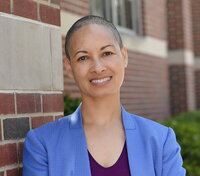
Paolo Gardoni
· ProfessorVerifiedUniversity of Illinois Urbana-Champaign · African Studies
Active 1997–2026
About
Paolo Gardoni is a professor affiliated with the Center for African Studies at the University of Illinois. He holds the Alfredo H. Ang Family Chair in Civil and Environmental Engineering and is also a professor in the departments of Civil and Environmental Engineering, Industrial and Enterprise Systems Engineering, and Biomedical and Translational Sciences. His research focuses on probabilistic seismic risk and vulnerability assessment, spatiotemporal storm surge modeling, machine learning-driven probabilistic frameworks for uncertainty quantification, and the evaluation of infrastructure resilience. Gardoni has contributed to the development of frameworks and models that address seismic risk, storm surge, radiation shielding, and infrastructure interdependence, demonstrating a broad expertise in engineering risk assessment and resilience analysis.
Research topics
- Computer Science
- Computer Security
- Engineering
- Political Science
- Risk analysis (engineering)
- Artificial Intelligence
- Data Mining
- Mathematics
- Sociology
- Economics
- Machine Learning
- Statistics
- Business
- Systems engineering
- Management science
- Forensic engineering
- Applied mathematics
- Construction engineering
- Psychology
- Geography
- Mathematical optimization
- Environmental resource management
- Operations research
- Knowledge management
Selected publications
Engineering Applications of Artificial Intelligence · 2026-04-09
articleOperationalizing Smart One Water: Collaborative solutions
Cambridge Prisms Water · 2026-01-01
articleOpen accessAbstract A stakeholder structured engagement process at the Sustainable Water Infrastructure Management (SWIM) conference and workshop was held in December 2024. The participants identified critical current and future issues facing the water sector that are synthesized in this paper. In particular, they highlighted issues of water systems’ vulnerability and lack of resilience to hazards and stressors; inequities associated with water scarcity; and water quality problems – all affected by natural or man-made influences. The Smart One Water (S1W) vision was the baseline for the SWIM 2024 conference. This paper expands the S1W vision with a synthesis of the conference discussions about S1W-related fundamental concepts, practices and implementation barriers. It includes initial recommendations – based on a digital, data-focused, stakeholder-driven approach – with expert representatives of the public and private water supply sectors, academia, government and policymakers tasked to generate real-world adaptable ideas and practical solutions. Specifically, S1W envisions a future where water management and governance silos are eliminated to provide the necessary collaboration to enable efficient, resilient, affordable and equitable water access capable of adapting to a changing environment. This would be a future where communities govern collaboratively through integrated decision-making on policy, management and funding of natural and engineered water systems at the river basin scale.
Computers & Structures · 2026-02-09
articleProbabilistic Engineering Mechanics · 2026-03-23
articleSenior authorAustralian Journal of Maritime & Ocean Affairs · 2025-04-03 · 5 citations
articleSenior authorhttps://doi.org/10.1080/18366503.2025.2485786
Computer Methods in Applied Mechanics and Engineering · 2025-03-18 · 8 citations
articleInternational Journal of Prognostics and Health Management · 2025-11-11 · 1 citations
articleOpen accessSenior authorPrognostics and maintenance decision-making rely heavily on accurate and reliable measurements derived from sensors. However, sensor degradation introduces measurement uncertainties that compromise the precision of fault detection, remaining useful life estimation, and overall maintenance strategies. This paper provides a comprehensive review of the multifaceted impacts of sensor degradation on measurement uncertainty and its subsequent influence on prognostics and maintenance. The paper synthesizes various sensor degradation mechanisms and existing modelling techniques, emphasizing the growing research focus on developing accurate degradation models. The review also provides an in-depth analysis of how sensor degradation affects measurement uncertainty, exploring both qualitative and quantitative impacts through various modelling approaches and tools. Furthermore, this review examines the implications of this uncertainty on prognostics and maintenance decision-making methodologies, showcasing current mitigation methods and models. Finally, the review identifies key challenges and research gaps, outlining promising directions for future research in sensor degradation and its impact on prognostics and maintenance. By addressing these critical issues, this paper contributes to the advancement of more reliable, adaptive, and efficient Prognostics and Health Management (PHM) systems across various industrial and technological domains.
Applied Soft Computing · 2025-06-02 · 24 citations
articleSenior authorCambridge Prisms Water · 2025-01-01
articleOpen accessAbstract Access to clean and reliable water is critically important for health, well-being, and economic development. The natural, built, and social systems – which interact with each other and comprise the water system-of-systems – are threatened by intensifying hazards and stressors like crumbling infrastructure, floods, droughts, storms, wildfires, sea level rise, population growth, cyber threats, and pollution. Marginalized communities, including disadvantaged and rural communities and Tribal nations with insufficient access to clean water or regenerative sources of water, are often the most impacted. Responses to these issues are hampered by fragmented and uncoordinated governance and management. A multi-stakeholder structured engagement process at the SWIM conference and workshop held in December 2023 identified the most critical current and future issues facing the water sector and what needs to change to find solutions. This paper synthesized these issues. Highlighted issues were the vulnerability and lack of resilience of water systems to hazards and stressors, inequities associated with water scarcity, and water quality problems – all affected by climate change, land-use change, and socio-economic changes. The Smart One Water (S1W) vision provided an important context for the conference. This paper expands the S1W vision with a synthesis of discussions about S1W-related fundamental concepts, practices, and implementation barriers.
Probabilistic model for predicting instantaneous structural deterioration due to earthquakes
Structure and Infrastructure Engineering · 2025-09-18
articleSenior authorDue to the relatively short duration of earthquakes, most studies simplify their impact on structures by considering the total effect of each event rather than modelling the instantaneous accumulation of damage during the event itself. This approach may underestimate performance degradation, as incremental damage occurring during the shock can lead to an immediate reduction in capacity. Furthermore, most structures experience multiple earthquakes throughout their service life, and aftershocks can significantly compromise structures already weakened by prior seismic events. A framework that directly incorporates time history effects into system performance predictions would enable a more accurate assessment of structural response to future seismic events and would synergize with available methods to generate realistic mainshock-aftershock sequences. This work uses recently proposed formulations based on Stochastic Differential Equations (SDEs) to analyse the instantaneous damage accumulation within sequences of earthquakes. Models are calibrated based on Finite Element Analyses, resulting in physics-based, probabilistic surrogate models, which can reproduce similar results and associated uncertainties) in a fraction of the time. Finally, the proposed method is integrated within a reliability-based formulation to obtain time-varying fragility curves for an example structure before a shock, during a shock, and after a realistic aftershock sequence.
Recent grants
Frequent coauthors
- 57 shared
David Trejo
Oregon State University
- 54 shared
Colleen Murphy
University of Illinois Urbana-Champaign
- 35 shared
Mary Beth D. Hueste
- 33 shared
Zhixiong Li
Opole University of Technology
- 31 shared
Armin Tabandeh
University of Illinois Urbana-Champaign
- 29 shared
Stefan Hurlebaus
Texas A&M University
- 29 shared
Kenneth F. Reinschmidt
College Station Medical Center
- 28 shared
Radhakrishna G. Pillai
Indian Institute of Technology Madras
- Resume-aware match score
- Save to shortlist
- AI-drafted outreach
See your match with Paolo Gardoni
PhdFit ranks faculty by your research interests, methods, and publications — grounded in their actual work, not templates.
- Free to start
- No credit card
- 30-second signup