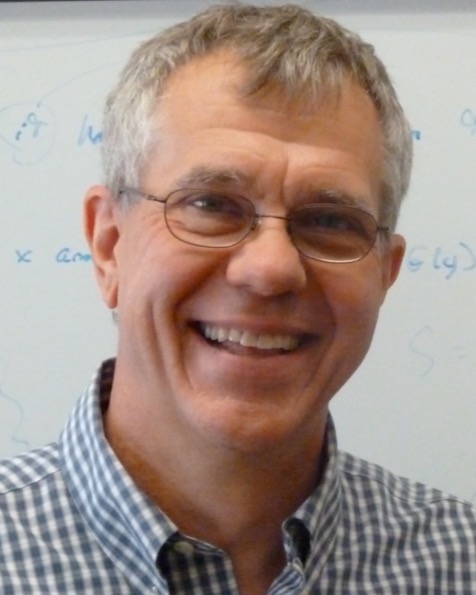
Daniel A Bonevac
· Professor, PhilosophyVerifiedUniversity of Texas at Austin · Philosophy
Active 1982–2025
About
Daniel A Bonevac is a Professor of Philosophy at the University of Texas at Austin, within the College of Liberal Arts. His academic interests include Philosophical Logic, Metaphysics, Ethics, Non-Western Philosophy, and Christian Philosophy. As a faculty member, he contributes to the department through teaching and research in these areas, engaging with fundamental questions in philosophy and exploring diverse philosophical traditions. His work encompasses a broad range of topics within philosophy, emphasizing logical analysis, metaphysical inquiry, ethical theory, and the study of non-Western and Christian philosophical perspectives.
Research topics
- Philosophy
- Epistemology
- Political Science
- History
- Business
- Law
- Psychology
- Physics
- Theology
- Art history
- Advertising
- Astrobiology
Selected publications
American Philosophical Quarterly · 2025-12-12
article1st authorCorrespondingAbstract Nicholas Rescher contends that the world is unfathomable: that facts outrun language and thought, that the world is complex and determinate while thought and language are relatively simple and indeterminate; and that inquiry is methodologically idealist, employing coherence as a criterion of truth, while presupposing metaphysical realism. These theses emerge from an appealing view of our sensory, conceptual, and cognitive faculties as modeling the world through a process of successive idealization, approximation, and abstraction.
Rowman & Littlefield Publishers eBooks · 2023-01-01
book-chapter1st authorCorrespondingRowman & Littlefield Publishers eBooks · 2023-01-01
book-chapterOpen access1st authorCorrespondingRowman & Littlefield Publishers eBooks · 2023-01-01
book-chapter1st authorCorrespondingRowman & Littlefield Publishers eBooks · 2023-01-01
book-chapter1st authorCorrespondingRoutledge eBooks · 2023 · 1 citations
1st authorCorresponding- Philosophy
- Epistemology
- Astrobiology
Immanuel Kant's Critique of Pure Reason was to transform the philosophical world, at once bringing the Enlightenment to its highest intellectual development and establishing a new set of problems that would dominate philosophy in the nineteenth century and beyond. The Critique's central character is “Human reason,” which, Kant begins his first edition's preface by noting, has this peculiar fate that in one species of its knowledge it is burdened by questions which, as prescribed by the very nature of reason itself, it is not able to ignore, but which, as transcending all its powers, it is also not able to answer. Like many rationalists, Kant understands himself as working within the Platonic tradition. The central problems he attacks and his solutions to them stem directly from that tradition. To understand Kant's Copernican revolution, therefore, people must consider the framework in which his thought is embedded.
Rowman & Littlefield Publishers eBooks · 2023-01-01
book-chapter1st authorCorrespondingRowman & Littlefield Publishers eBooks · 2023-01-01
book-chapterOpen access1st authorCorrespondingHistorical Dictionary of Ethics
Rowman & Littlefield Publishers eBooks · 2023-01-01 · 1 citations
book1st authorCorrespondingEthics, the practical part of philosophy, tries to answer three questions central to human life: What kind of person should I be? What should I do? How should I decide? It defines, describes, and explains the important terms, concepts, theories, and thinkers from all areas and eras of the history of ethics: from ‘Abba Mika’el to Zhuangzi, from the Abilene Paradox to Zen Buddhism, including such central figures as Aristotle, Hegel, Kant, and Plato as well as lesser-known thinkers such as Clarke, Fichte, Meinong, and Xenophon. It covers Western and non-Western traditions, and presents detailed treatments of ancient and medieval ethics, including discussions of each of Plato’s dialogues that concerns ethical topics. It covers both analytic and continental approaches to contemporary moral thinking. <italic>Historical Dictionary of Ethics, Second Edition</italic> contains a chronology, an introduction, and an extensive bibliography. The dictionary section has more than 600 cross-referenced entries on the important terms, concepts, theories, and thinkers from all areas and eras of the history of ethics. This book is an excellent resource for students, researchers, and anyone wanting to know more about ethics.
Historical Dictionary of Ethics
Rowman & Littlefield eBooks · 2023-01-01
book1st authorCorresponding<JATS1:p>Ethics, the practical part of philosophy, tries to answer three questions central to human life: What kind of person should I be? What should I do? How should I decide? It defines, describes, and explains the important terms, concepts, theories, and thinkers from all areas and eras of the history of ethics: from ‘Abba Mika’el to Zhuangzi, from the Abilene Paradox to Zen Buddhism, including such central figures as Aristotle, Hegel, Kant, and Plato as well as lesser-known thinkers such as Clarke, Fichte, Meinong, and Xenophon. It covers Western and non-Western traditions, and presents detailed treatments of ancient and medieval ethics, including discussions of each of Plato’s dialogues that concerns ethical topics. It covers both analytic and continental approaches to contemporary moral thinking.</JATS1:p> <JATS1:p>Historical Dictionary of Ethics, Second Editioncontains a chronology, an introduction, and an extensive bibliography. The dictionary section has more than 600 cross-referenced entries on the important terms, concepts, theories, and thinkers from all areas and eras of the history of ethics. This book is an excellent resource for students, researchers, and anyone wanting to know more about ethics.</JATS1:p>
Frequent coauthors
- 15 shared
Nicholas Asher
- 6 shared
Lynn Rew
The University of Texas at Austin
- 6 shared
Michael Mackert
The University of Texas at Austin
- 4 shared
Elias E. Savellos
- 3 shared
Josh Dever
The University of Texas at Austin
- 3 shared
Stephen Phillips
- 3 shared
Robert C. Koons
The University of Texas at Austin
- 2 shared
T. K. Seung
Education
- 1980
MA, PhD, Philosophy
University of Pittsburgh
- Resume-aware match score
- Save to shortlist
- AI-drafted outreach
See your match with Daniel A Bonevac
PhdFit ranks faculty by your research interests, methods, and publications — grounded in their actual work, not templates.
- Free to start
- No credit card
- 30-second signup