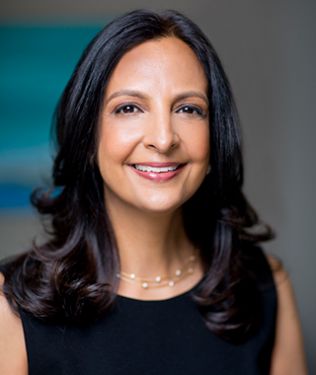
Rainu Kaushal
· Senior Associate Dean of Health Data ScienceVerifiedCornell University · Public Health
Active 1913–2024
Research topics
- Computer Science
- Medicine
- Political Science
- Internal medicine
- Intensive care medicine
- Physics
- Data science
- Algorithm
- Engineering
- Business
- Electrical engineering
- Pediatrics
- Marketing
- Psychiatry
Selected publications
Data-driven identification of post-acute SARS-CoV-2 infection subphenotypes
Nature Medicine · 2022 · 190 citations
Senior authorCorresponding- Medicine
- Internal medicine
- Intensive care medicine
The post-acute sequelae of SARS-CoV-2 infection (PASC) refers to a broad spectrum of symptoms and signs that are persistent, exacerbated or newly incident in the period after acute SARS-CoV-2 infection. Most studies have examined these conditions individually without providing evidence on co-occurring conditions. In this study, we leveraged the electronic health record data of two large cohorts, INSIGHT and OneFlorida+, from the national Patient-Centered Clinical Research Network. We created a development cohort from INSIGHT and a validation cohort from OneFlorida+ including 20,881 and 13,724 patients, respectively, who were SARS-CoV-2 infected, and we investigated their newly incident diagnoses 30-180 days after a documented SARS-CoV-2 infection. Through machine learning analysis of over 137 symptoms and conditions, we identified four reproducible PASC subphenotypes, dominated by cardiac and renal (including 33.75% and 25.43% of the patients in the development and validation cohorts); respiratory, sleep and anxiety (32.75% and 38.48%); musculoskeletal and nervous system (23.37% and 23.35%); and digestive and respiratory system (10.14% and 12.74%) sequelae. These subphenotypes were associated with distinct patient demographics, underlying conditions before SARS-CoV-2 infection and acute infection phase severity. Our study provides insights into the heterogeneity of PASC and may inform stratified decision-making in the management of PASC conditions.
The All of Us Research Program: Data quality, utility, and diversity
Patterns · 2022 · 321 citations
- Computer Science
- Political Science
- Data science
Research Program seeks to engage at least one million diverse participants to advance precision medicine and improve human health. We describe here the cloud-based Researcher Workbench that uses a data passport model to democratize access to analytical tools and participant information including survey, physical measurement, and electronic health record (EHR) data. We also present validation study findings for several common complex diseases to demonstrate use of this novel platform in 315,000 participants, 78% of whom are from groups historically underrepresented in biomedical research, including 49% self-reporting non-White races. Replication findings include medication usage pattern differences by race in depression and type 2 diabetes, validation of known cancer associations with smoking, and calculation of cardiovascular risk scores by reported race effects. The cloud-based Researcher Workbench represents an important advance in enabling secure access for a broad range of researchers to this large resource and analytical tools.
Comparative Effectiveness of Aspirin Dosing in Cardiovascular Disease
New England Journal of Medicine · 2021 · 298 citations
- Medicine
- Intensive care medicine
- Internal medicine
BACKGROUND: The appropriate dose of aspirin to lower the risk of death, myocardial infarction, and stroke and to minimize major bleeding in patients with established atherosclerotic cardiovascular disease is a subject of controversy. METHODS: Using an open-label, pragmatic design, we randomly assigned patients with established atherosclerotic cardiovascular disease to a strategy of 81 mg or 325 mg of aspirin per day. The primary effectiveness outcome was a composite of death from any cause, hospitalization for myocardial infarction, or hospitalization for stroke, assessed in a time-to-event analysis. The primary safety outcome was hospitalization for major bleeding, also assessed in a time-to-event analysis. RESULTS: A total of 15,076 patients were followed for a median of 26.2 months (interquartile range [IQR], 19.0 to 34.9). Before randomization, 13,537 (96.0% of those with available information on previous aspirin use) were already taking aspirin, and 85.3% of these patients were previously taking 81 mg of daily aspirin. Death, hospitalization for myocardial infarction, or hospitalization for stroke occurred in 590 patients (estimated percentage, 7.28%) in the 81-mg group and 569 patients (estimated percentage, 7.51%) in the 325-mg group (hazard ratio, 1.02; 95% confidence interval [CI], 0.91 to 1.14). Hospitalization for major bleeding occurred in 53 patients (estimated percentage, 0.63%) in the 81-mg group and 44 patients (estimated percentage, 0.60%) in the 325-mg group (hazard ratio, 1.18; 95% CI, 0.79 to 1.77). Patients assigned to 325 mg had a higher incidence of dose switching than those assigned to 81 mg (41.6% vs. 7.1%) and fewer median days of exposure to the assigned dose (434 days [IQR, 139 to 737] vs. 650 days [IQR, 415 to 922]). CONCLUSIONS: In this pragmatic trial involving patients with established cardiovascular disease, there was substantial dose switching to 81 mg of daily aspirin and no significant differences in cardiovascular events or major bleeding between patients assigned to 81 mg and those assigned to 325 mg of aspirin daily. (Funded by the Patient-Centered Outcomes Research Institute; ADAPTABLE ClinicalTrials.gov number, NCT02697916.).
PCORnet® 2020: current state, accomplishments, and future directions
Journal of Clinical Epidemiology · 2020 · 189 citations
- Computer Science
- Medicine
- Computer Science
Recent grants
New York City Consortium for Precision Medicine
NIH · $67.3M · 2018–2024
NIH · $1.2M · 2011
NIH · $975k · 2011
Frequent coauthors
- 318 shared
Carlos A. Camargo
Harvard University
- 317 shared
James A. Gordon
Swedish Medical Center
- 306 shared
Ashley F. Sullivan
Cohort (United Kingdom)
- 305 shared
David J. Magid
University of Colorado Denver
- 232 shared
Chu‐Lin Tsai
National Taiwan University
- 197 shared
David Blumenthal
Harvard University
- 193 shared
Lisa M. Kern
Weill Cornell Medicine
- 192 shared
Erika L. Abramson
Cornell University
- Resume-aware match score
- Save to shortlist
- AI-drafted outreach
See your match with Rainu Kaushal
PhdFit ranks faculty by your research interests, methods, and publications — grounded in their actual work, not templates.
- Free to start
- No credit card
- 30-second signup