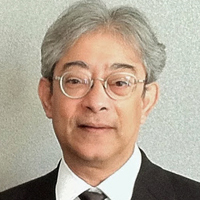
Sudip Chakravarty
· Distinguished ProfessorVerifiedUniversity of California, Los Angeles · Physics and Astronomy
Active 1965–2025
About
Julian Schwinger (12 February 1918 - 16 July 1994) was a towering giant in theoretical physics, whose ideas, discoveries, and techniques pervade all areas of the field. He made repeated and varied contributions, setting standards and priorities single-handedly, and is considered one of the finest physics scholars of the 20th century. His work significantly influenced quantum mechanics, quantum field theory, electrodynamics, nuclear physics, statistical mechanics, atomic physics, elementary particle physics, gravity, and mathematical physics. Schwinger shared the Nobel Prize in Physics in 1965 with Sin-Itiro Tomonaga and Richard P. Feynman for their fundamental work in quantum electrodynamics, which had deep and lasting consequences for the physics of elementary particles.
Research topics
- Quantum mechanics
- Physics
- Condensed matter physics
- Statistical physics
- Mathematical analysis
- Theoretical physics
- Pure mathematics
- Mathematics
- Thermodynamics
Selected publications
Kohn's theorem applied to quantum oscillations in cuprates
Physical review. B./Physical review. B · 2025-01-13
article1st authorCorrespondingIn this Letter I apply Kohn's theorem to quantum oscillations in cuprates. I show that when combined with Gell-Mann and Low theorem, there is rigorous justification of quantum oscillations as in a Fermi liquid for cuprates. For simplicity, understanding the lack of interaction effects in quantum oscillations can be addressed in the language of a fully translationally invariant system. The Gell-Mann and Low theorem is not perturbative, and applies more generally as long as the adiabatic evolution from an isolated nondegenerate state is the case. Oscillation frequencies are identical to the noninteracting problem. It is the cyclotron gap that justifies Fermi-liquid-based theory of quantum oscillations. This is not to imply that other properties of the cuprates that do not have a gap in the spectrum could not exhibit non-Fermi-liquid behavior, for example, angle-resolved photoemission spectroscopy.
Physica C Superconductivity · 2025-05-20
article1st authorCorrespondingQuantum critical fans from critical lines at zero temperature
arXiv (Cornell University) · 2023
Senior authorCorresponding- Physics
- Condensed matter physics
- Statistical physics
Quantum critical phenomena influences the finite temperature behavior of condensed matter systems through quantum critical fans whose extents are determined by the exponents of the zero temperature criticality. Here we emphasize the aspects of quantum critical lines, as discussed previously, and study an exactly solved model involving a transverse field Ising model with added three-spin interaction. This model has three critical lines. We compute the spin-spin correlation function and extract the correlation length, and identify the crossovers: quantum critical to quantum disordered, or renormalized classical regimes. We construct the quantum critical fans along one of the critical lines. In addition, we also construct finite temperature dynamic structure factors. We hope this model will become experimentally realizable in the future, and our results could stimulate studies in many similar models.
Quantum critical points, lines, and surfaces
Physical review. B./Physical review. B · 2023 · 5 citations
Senior authorCorresponding- Physics
- Statistical physics
- Quantum mechanics
In this paper we promote the idea of quantum critical lines (inter alia surfaces) as opposed to points. A quantum critical line is obtained when criticality at zero temperature is extended over a continuum in a one-dimensional line. We base our ideas on a simple but exactly solved model introduced by one of the authors involving a one-dimensional quantum transverse field Ising model with added three-spin interaction. While many of the ideas are quite general, there are other aspects that are not. In particular, a line of criticality with continuously varying exponents is not captured. However, the exact solvability of the model gives us considerable confidence in our results. Although the pure system is analytically exactly solved, the disorder case requires numerical analyses based on exact computation of the correlation function in the Pfaffian representation. The disorder case leads to a dynamic structure factor as a function of frequency and wave vector. We expect that the model is experimentally realizable and perhaps many other similar models will be found to explore quantum critical lines.
A theorem of Kohn applied to quantum oscillations in Cuprates
arXiv (Cornell University) · 2023-07-10
preprintOpen access1st authorCorrespondingIn this note I apply a theorem of Kohn to quantum oscillations in cuprates. I show that when combined with Gell-Mann and Low theorem, there is rigorous justification of quantum oscillations as in a Fermi liquid for cuprates. The Gell-Man-Low theorem is not perturbative, and applies more generally as long as the adiabatic evolution from an isolated non-degenerate state is the case. Oscillation frequencies are identical to the non-interacting problem. Thus, quantum oscillations protect the Fermi liquid and is in turn protected by it. This is not to imply that other properties of the cuprates that do not have a gap in the spectrum could not exhibit non-Fermi liquid behavior, for example, angle resolved photoemission spectroscopy.
Planckian dissipation and $c$-axis superfluid density in cuprate superconductors
arXiv (Cornell University) · 2023-06-22
preprintOpen access1st authorCorrespondingAn interesting concept in condensed matter physics is Planckian dissipation, in particular its manifestation in a remarkable phenomenology of superfluid density as a function of superconducting transition temperature. The concept was ontroduced for $ab$-plane properties. However, when suitably interpreted, it can also be applicable to the incoherent $c$-axis resistivity, which has not been adequately addressed previously. There are two results in this note: the first is a derivation using Kubo formula as to how Planckian dissipation could arise. It is aided by the fact that the $c$-axis tunneling matrix element is so small that a second order perturbation theory combined with presumed non-Fermi liquid behavior is sufficient to illuminate the phenomonon. In addition, the notion of quantum criticality plays an important role.
Quantum critical fans from critical lines at zero temperature
Physical review. B./Physical review. B · 2023-10-25 · 3 citations
articleSenior authorQuantum critical phenomena influence the finite temperature behavior of condensed matter systems through quantum critical fans whose extents are determined by the exponents of the zero temperature criticality. Here we emphasize the aspects of quantum critical lines, as discussed previously, and study an exactly solved model involving a transverse field Ising model with added three-spin interaction. This model has three critical lines. We compute the spin-spin correlation function and extract the correlation length, and identify the crossovers: quantum critical to quantum disordered, or renormalized classical regimes. We construct the quantum critical fans along one of the critical lines. In addition, we also construct finite temperature dynamic structure factors. We hope this model will become experimentally realizable in the future, and our results could stimulate studies in many similar models.
Quantum critical points, lines and surfaces
arXiv (Cornell University) · 2022-07-19
preprintOpen accessSenior authorIn this paper we promote the idea of quantum critical lines ({\em inter alia} surfaces) as opposed to points. A quantum critical line obtains when criticality at zero temperature is extended over a continuum in a one-dimensional line. We base our ideas on a simple but exactly solved model introduced by one of the authors involving a one-dimensional quantum transverse field Ising model with added 3-spin interaction. While many of the ideas are quite general, there are other aspects that are not. In particular, a line of criticality with continuously varying exponents is not captured. However, the exact solvability of the model gives us considerable confidence in our results. Although the pure system is analytically exactly solved, the disorder case requires numerical analyses based on exact computation of the correlation function in the Pfaffian representation. The disorder case leads to dynamic structure factor as a function of frequency and wave vector. We expect that the model is experientally realizable and perhaps many other similar models will be found to explore quantum critical lines.
Density wave mediated Dzyaloshinskii-Moriya interactions
Physical review. B./Physical review. B · 2021 · 1 citations
Senior authorCorresponding- Physics
- Condensed matter physics
- Quantum mechanics
Anomalous transport measurements have recently been observed through a wide doping range in the cuprates. Motivated by this, we investigate the effects of a state that shares many features consistent with those of the pseudogap, the mixed triplet-singlet $d$-density wave state, and examine whether its presence could help explain these observations. For a sufficiently doped system Li and Lee (arXiv:1905.04248.) showed that that these density wave states produce a nonzero thermal Hall effect. Through the effect that density waves have on the localized spins of a square lattice in a magnetically ordered phase, we find that the mixed triplet-singlet $d$-density wave state induces stable Dzyaloshinskii-Moriya (DM) interactions among the localized spins in the presence of an external magnetic field. As similar antisymmetric exchange couplings have yielded nonzero thermal Hall contributions, we examine this induced DM interaction by applying Holstein-Primakoff (HP) transformations to study the resulting magnon excitations of the spin models for both antiferromagnetic and ferromagnetic backgrounds, relevant to the near-half-filling and heavily overdoped regimes, respectively. Furthermore, because the triplet-singlet $d$-density wave is experimentally challenging to detect directly, we discuss the magnetic signatures that this state can possibly induce away from the pseudogap regime. We calculate the magnon dispersion for ${\mathrm{La}}_{2\ensuremath{-}x}{\mathrm{Sr}}_{x}\mathrm{Cu}{\mathrm{O}}_{4}$ and find that the density wave induces a weak ${d}_{{x}^{2}\ensuremath{-}{y}^{2}}$ anisotropy; upon calculating the non-Abelian Berry curvature for this magnon branch, we show explicitly that the magnon contribution to ${\ensuremath{\kappa}}_{xy}$ is zero. Finally, we calculate corrections to the magnetic ground state energy, spin canting angles, and the spin-wave dispersion due to the topological density wave for ferromagnetic backgrounds. We find that terms linear in the HP bosons can affect the critical behavior, a point previously overlooked in the literature.
Spectra of the Dissipative Spin Chain
arXiv (Cornell University) · 2019-03-01
preprintOpen accessSenior authorThis paper generalizes the (0+1)-dimensional spin-boson problem to the corresponding (1+1)-dimensional version. Monte Carlo simulation is used to find the phase diagram and imaginary time correlation function. The real frequency spectrum is recovered by the newly developed Páde regression analytic continuation method. We find that, as dissipation strength $α$ is increased, the sharp quasi-particle spectrum is broadened and the peak frequency is lower. According to the behavior of the low frequency spectrum, we classify the dynamical phase into three different regions: weakly damped, linear $k$-edge, and strongly damped.
Recent grants
Quantum Fluctuations and Broken Symmetries in Correlated Electron Systems
NSF · $381k · 2010–2014
Quantum Theory of Competing Orders
NSF · $345k · 2004–2007
Phases of Correlated Quantum Matter
NSF · $345k · 2007–2011
Frequent coauthors
- 40 shared
Steven A. Kivelson
Stanford University
- 23 shared
Pallab Goswami
Northwestern University
- 17 shared
Xun Jia
- 17 shared
Sumanta Tewari
Clemson University
- 15 shared
Rajiv R. P. Singh
- 15 shared
Chetan Nayak
- 13 shared
Hae‐Young Kee
- 13 shared
Lit-Deh Chang
University of California, Santa Barbara
Labs
Awards & honors
- Julian Schwinger Fellowship
- Resume-aware match score
- Save to shortlist
- AI-drafted outreach
See your match with Sudip Chakravarty
PhdFit ranks faculty by your research interests, methods, and publications — grounded in their actual work, not templates.
- Free to start
- No credit card
- 30-second signup