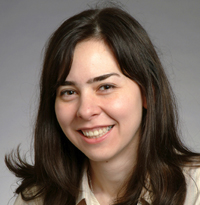
Dina Katabi
VerifiedMassachusetts Institute of Technology · Electrical Engineering & Computer Science
Active 2000–2026
About
Dina Katabi is a professor associated with the fields of Electrical Engineering and Computer Science at MIT. Her research focuses on developing techniques for the analysis and synthesis of systems that interact with the external world via perception, communication, and action, while also learning, making decisions, and adapting to changing environments. Her work combines intellectual traditions from computer science and electrical engineering to advance artificial intelligence and decision-making technologies. Her contributions include pioneering research in AI for healthcare and life sciences, biological and medical devices and systems, and the broader field of artificial intelligence and machine learning. She is involved in developing groundbreaking sensors, energy transducers, and physical substrates for computation, addressing shared challenges facing humanity through innovative system design and analysis.
Research topics
- Computer Science
- Machine Learning
- Artificial Intelligence
- Political Science
- Medicine
- Medical emergency
- Process management
- Embedded system
- Systems engineering
- Internal medicine
- Engineering
- Psychiatry
- Business
- Psychology
- Physical medicine and rehabilitation
Selected publications
Revisiting data imbalance in token-based self-supervised learning
Neurocomputing · 2026-03-25
articleEpilepsy & Behavior · 2026-05-23
articleCorrespondingArXiv.org · 2025-10-11
preprintOpen accessSenior authorAntidepressant nonadherence is pervasive, driving relapse, hospitalization, suicide risk, and billions in avoidable costs. Clinicians need tools that detect adherence lapses promptly, yet current methods are either invasive (serum assays, neuroimaging) or proxy-based and inaccurate (pill counts, pharmacy refills). We present the first noninvasive biomarker that detects antidepressant intake from a single night of sleep. A transformer-based model analyzes sleep data from a consumer wearable or contactless wireless sensor to infer antidepressant intake, enabling remote, effortless, daily adherence assessment at home. Across six datasets comprising 62,000 nights from >20,000 participants (1,800 antidepressant users), the biomarker achieved AUROC = 0.84, generalized across drug classes, scaled with dose, and remained robust to concomitant psychotropics. Longitudinal monitoring captured real-world initiation, tapering, and lapses. This approach offers objective, scalable adherence surveillance with potential to improve depression care and outcomes.
Artificial Intelligence Detects Antidepressant Use From Nocturnal Breathing
Biological Psychiatry · 2025-04-09
article1st authorCorrespondingLanguage-Guided Image Tokenization for Generation
2025-06-10 · 1 citations
articleImage tokenization, the process of transforming raw image pixels into a compact low-dimensional latent representation, has proven crucial for scalable and efficient image generation. However, mainstream image tokenization methods generally have limited compression rates, making high-resolution image generation computationally expensive. To address this challenge, we propose to leverage language for efficient image tokenization, and we call our method Text-Conditioned Image Tokenization (TexTok). TexTok is a simple yet effective tokenization framework that leverages language to provide a compact, high-level semantic representation. By conditioning the tokenization process on descriptive text captions, TexTok simplifies semantic learning, allowing more learning capacity and token space to be allocated to capture fine-grained visual details, leading to enhanced reconstruction quality and higher compression rates. Compared to the conventional tokenizer without text conditioning, TexTok achieves average reconstruction FID improvements of 29.2% and 48.1% on ImageNet-256 and -512 benchmarks respectively, across varying numbers of tokens. These tokenization improvements consistently translate to 16.3% and 34.3% average improvements in generation FID. By simply replacing the tokenizer in Diffusion Transformer (DiT) with TexTok, our system can achieve a 93.5× inference speedup while still outperforming the original DiT using only 32 tokens on ImageNet-512. TexTok with a vanilla DiT generator achieves state-of-the-art FID scores of 1.46 and 1.62 on ImageNet-256 and -512 respectively. Furthermore, we demonstrate TexTok’s superiority on the text-to-image generation task, effectively utilizing the off-the-shelf text captions in tokenization.
Quantifying Itch and its Impact on Sleep Using Machine Learning and Radio Signals
arXiv (Cornell University) · 2025-01-09 · 1 citations
preprintOpen accessSenior authorChronic itch affects 13% of the US population, is highly debilitating, and underlies many medical conditions. A major challenge in clinical care and new therapeutics development is the lack of an objective measure for quantifying itch, leading to reliance on subjective measures like patients' self-assessment of itch severity. In this paper, we show that a home radio device paired with artificial intelligence (AI) can concurrently capture scratching and evaluate its impact on sleep quality by analyzing radio signals bouncing in the environment. The device eliminates the need for wearable sensors or skin contact, enabling monitoring of chronic itch over extended periods at home without burdening patients or interfering with their skin condition. To validate the technology, we conducted an observational clinical study of chronic pruritus patients, monitored at home for one month using both the radio device and an infrared camera. Comparing the output of the device to ground truth data from the camera demonstrates its feasibility and accuracy (ROC AUC = 0.997, sensitivity = 0.825, specificity = 0.997). The results reveal a significant correlation between scratching and low sleep quality, manifested as a reduction in sleep efficiency (R = 0.6, p < 0.001) and an increase in sleep latency (R = 0.68, p < 0.001). Our study underscores the potential of passive, long-term, at-home monitoring of chronic scratching and its sleep implications, offering a valuable tool for both clinical care of chronic itch patients and pharmaceutical clinical trials.
Barriers to translating continuous monitoring technologies for preventative medicine
Nature Biomedical Engineering · 2025-11-14 · 7 citations
articleNeurology · 2025-04-07
articleTo investigate the changes in molecular and clinical disease biomarkers during the 8-week pretreatment run-in period of the VRG50635 amyotrophic lateral sclerosis (ALS) proof-of-concept study.
RL Tango: Reinforcing Generator and Verifier Together for Language Reasoning
ArXiv.org · 2025-05-21
preprintOpen accessSenior authorReinforcement learning (RL) has recently emerged as a compelling approach for enhancing the reasoning capabilities of large language models (LLMs), where an LLM generator serves as a policy guided by a verifier (reward model). However, current RL post-training methods for LLMs typically use verifiers that are fixed (rule-based or frozen pretrained) or trained discriminatively via supervised fine-tuning (SFT). Such designs are susceptible to reward hacking and generalize poorly beyond their training distributions. To overcome these limitations, we propose Tango, a novel framework that uses RL to concurrently train both an LLM generator and a verifier in an interleaved manner. A central innovation of Tango is its generative, process-level LLM verifier, which is trained via RL and co-evolves with the generator. Importantly, the verifier is trained solely based on outcome-level verification correctness rewards without requiring explicit process-level annotations. This generative RL-trained verifier exhibits improved robustness and superior generalization compared to deterministic or SFT-trained verifiers, fostering effective mutual reinforcement with the generator. Extensive experiments demonstrate that both components of Tango achieve state-of-the-art results among 7B/8B-scale models: the generator attains best-in-class performance across five competition-level math benchmarks and four challenging out-of-domain reasoning tasks, while the verifier leads on the ProcessBench dataset. Remarkably, both components exhibit particularly substantial improvements on the most difficult mathematical reasoning problems. Code is at: https://github.com/kaiwenzha/rl-tango.
SLEEP · 2025-02-13 · 3 citations
articleOpen accessThe National Center on Sleep Disorders Research of the National Heart, Lung, and Blood Institute at the National Institutes of Health hosted a 2-day virtual workshop titled Big Data Approaches for Novel Mechanistic Insights on Disorders of Sleep and Circadian Rhythms on May 2nd and 3rd, 2024. The goals of this workshop were to establish a comprehensive understanding of the current state of sleep and circadian rhythm disorders research to identify opportunities to advance the field by using approaches based on artificial intelligence and machine learning. The workshop showcased rapidly developing technologies for sensitive and comprehensive remote analysis of sleep and its disorders that can account for physiological, environmental, and social influences, potentially leading to novel insights on long-term health consequences of sleep disorders and disparities of these health problems in specific populations.
Recent grants
NeTS: Small: Encryption on the Air: Non-Invasive Security for Wireless Medical Devices
NSF · $400k · 2011–2014
NeTS-NBD: XORs in the Air: Practical Wireless Network Coding
NSF · $786k · 2006–2010
NeTS-ANET: One Video Multicast to Serve Diverse Wireless Receivers
NSF · $445k · 2008–2012
Realtime GHz-Wide Spectrum Sensing and Acquisition Using the Sparse FFT
NSF · $893k · 2013–2018
CAREER: Adaptive Reliable and Self-Managed Networks
NSF · $400k · 2005–2011
Frequent coauthors
- 38 shared
Hariharan Rahul
- 34 shared
Haitham Hassanieh
- 27 shared
Swarun Kumar
Carnegie Mellon University
- 27 shared
Sachin Katti
Stanford University
- 23 shared
Shyamnath Gollakota
University of Washington
- 22 shared
Zachary Kabelac
- 20 shared
Yuzhe Yang
Massachusetts Institute of Technology
- 19 shared
Piotr Indyk
Moscow Institute of Thermal Technology
Labs
Dina Katabi - MIT EECSPI
Education
PhD, Electrical Engineering and Computer Science
Massachusetts Institute of Technology
Awards & honors
- Five with MIT ties elected to National Academy of Medicine f…
- Resume-aware match score
- Save to shortlist
- AI-drafted outreach
See your match with Dina Katabi
PhdFit ranks faculty by your research interests, methods, and publications — grounded in their actual work, not templates.
- Free to start
- No credit card
- 30-second signup