About
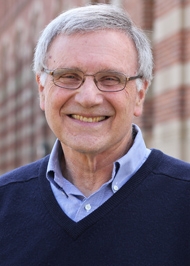
Thomas S. Weisner, PhD, is a Distinguished Professor of Anthropology, Emeritus at UCLA, where he has taught since 1971. He served as the director of the Center for Culture and Health at UCLA through 2014. His research and teaching interests encompass culture and human development, sibling and nonparental care of children, ecocultural theory and methods, and medical, psychological, and cultural studies of families and children at risk. Weisner has conducted fieldwork with diverse populations including the Abaluyia of Western Kenya and Nairobi, native Hawaiians, countercultural U.S. families, California families with children with disabilities and mental illness, families and children with autism in India, youth with ADHD in the U.S., Mexican-American adolescents and parents in Los Angeles, and working poor families in the U.S. His academic background includes a BA from Reed College and a PhD from Harvard University in Social Relations & Anthropology. Weisner is a prolific author and editor, with over 160 publications, and is known for integrating qualitative and quantitative research methods, emphasizing culturally and contextually rich, policy-informed evidence. He is also the co-developer and co-founder of the software Dedoose, which supports mixed methods research. Throughout his career, Weisner has received numerous honors, including fellowships, awards, and leadership roles in professional societies, contributing significantly to the fields of psychological and medical anthropology, especially in understanding child development, family dynamics, and cultural influences across diverse settings.
Research topics
- Medicine
- Family medicine
- Intensive care medicine
- Emergency medicine
- Medical emergency
- Gynecology
Selected publications
Some reflections from my wonderful career in Psychological Anthropology
Ethos · 2026-02-15
articleOpen access1st authorCorrespondingOur Ethos editors have launched an occasional section with contributions by SPA members for a brief commentary; I appreciate the invitation. The editors suggested informal reflections on some of the traditions of Psychological Anthropology that I have experienced and value in my career. There are many traditions worth sustaining, and celebrating them is one of my goals—a blend of my advocacy of and for our field, and some advice for the field in the context of describing some of my own experiences and career. This is not the place for lengthy summaries of research findings or theory debates, but there are some references if readers want to look further (Weisner, 2018a). Psychological Anthropology benefits from its core bioecocultural theory and conceptual framework. Psychological Anthropology combines culture and mind, and encompasses the whole person, from our biology and evolutionary past to childhood and how we acquire cultural information and social competence, to our shared cultural models and unique experiences, and our health and well-being. Psychological Anthropology is holistic; includes culture, mind, brain, and experience; it includes the local contexts in the communities and lives we study; is comparative and cross-cultural; includes mixed methods; asks about learning and the acquisition and organization of cultural knowledge; continues to contribute to many empirical topics; and more (Weisner, 1997). My reflections about Psychological Anthropology are based on these strengths and definition of our field, firmly based on the social sciences. Although there is great diversity in what we practice as part of Psychological Anthropology, these are core strengths deserving of celebration and continued support. I learned from and contributed to Psychological Anthropology as a very fortunate faculty member at UCLA for my career, beginning in 1971. Ethos was founded with UCLA faculty Walter Goldschmidt and Douglass Price-Williams, as editors in 1973. Goldschmidt and Price-Williams described the creative “institutionalized instability” of Psychological Anthropology as an interdisciplinary field—and hoped to bring articles to Ethos that explored these tensions. Psychological Anthropology was expanding in numbers and in intellectual projects, and yet our work at times was rejected by some journals with outdated criteria (such as continued confusion with early “culture and personality” studies) and we wanted a home in which to publish. The title “Journal of Psychological Anthropology” was already in use by another journal. I think “Ethos” was a reference to our holism and focus on shared cultural models of cultural communities (this was the argument made by Walter Goldschmidt at the time, as I recall), and also perhaps to the hoped-for unifying intellectual project and vision of studying culture and mind together that Ethos the journal would bring. To give a sense of the field and Ethos’ range right from the start, the first volume of Ethos included papers by, among others, in order of publication, Tony Wallace, Robert and Ruth Munroe, John Whiting, Walter Goldschmidt, George Foster, Bob LeVine, Ted Schwartz, Sara Harkness, Ed Bruner, Melford Spiro, Steven Piker, Theodore Graves, William Caudill, Judith Brown, Carol Ember, Roy D'Andrade, Kim Romney, Richard Shweder—and me. What an interesting and wide-ranging group of scholars! They did ground-breaking fieldwork in the US and around the world, contributed theory and intellectual projects, participated in founding and growing academic departments, made new methodological contributions, influenced other social sciences, and provided support for students (many of whom may well be reading this commentary). I benefited from the Psychocultural Studies and the Mind, Medicine and Culture programs at UCLA. I also had my appointment in the Psychiatry Department and Neuropsychiatric Institute, Culture and Health Center, led by Robert Edgerton which provided many opportunities for research programs, teaching, and collaborations (Weisner, 2018b). Everything in my commentary here was only possible with the support of my teachers, colleagues, students, and funders. Psychological Anthropology continues with remarkable productivity 50 + years after the founding of Ethos. An excellent example is the new Handbook of Psychological Anthropology (Lowe, Ed., 2025), which covers the first one hundred years and looks forward to the next to come. There are 39 authors of the 26 chapters covering theory, methods, lifespan development, “body, emotion, self, and experience,” and postcolonial and political-economic interventions, including mental health and policy. Psychological Anthropology and Anthropology itself has had many “crises” in the past fifty years—crises of competing theories, methods and epistemological issues, moral and ethical debates, coloniality, inequality, relevance, diversity within our field, and more. These issues are discussed by the authors in the Handbook, as well as in Ethos and general Anthropology articles, and deserve to have continued debate and should lead to needed changes. Yet, in my view, the central core of Psychological Anthropology remains strong. I graduated from Reed College in 1965, then at Harvard Social Relations/Anthropology for graduate school. The Social Relations Department—which no longer exists as an academic department—was a center for interdisciplinary, collaborative, cross-cultural, mixed methods, comparative research studies in Anthropology (e.g., DeVore & Lee, Eds., 1976; Seymour, 2015; Vogt, 1969; Whiting & Whiting, 1975). These research programs provided funding for anthropologists for fieldwork and write up time, offered training in fieldwork methods, sampling, and—perhaps most important—a continuing seminar and collaboration opportunities with other graduate students, faculty and students from other disciplines, while preparing for the field, doing research, and after coming back. I benefited from the Child Development Research Program in Kenya, and the Children of Different Worlds collaboration (a continuation of the Six Cultures studies) for my fieldwork and training. The methods and theories from these projects often produced very surprising empirical findings, provided funding and support for students and postdocs, often led to University and institutional recognition, and had many interdisciplinary impacts. There continue to be some recent terrific interdisciplinary, collaborative programs like these in Psychological Anthropology: Tanya Luhrmann et al. (2021), Ochs & Sadlik, (2013), Super et al. (2020), Maynard & Greenfield, (2003), Jenkins & Csordas, (2020), Bradd Shore (2008; 2009), Carol Worthman (2020) and no doubt others. I saw part of my task as a teacher and faculty member to support students and postdocs with funding, research collaborations and publication opportunities through my own multiyear research projects. I would encourage Anthropologists to do more such team, collaborative, interdisciplinary research programs wherever we can! Psychological Anthropology is particularly good at discovering serendipitous, unanticipated, original findings. Psychological Anthropology often goes after supposedly “settled” findings from research in other disciplines and other sub-fields within Anthropology—and changes, revises, contradicts, and adds value to them. Doing this continues to be one of the most valuable research contributions, and pleasurable professional experiences in my academic life! This kind of intellectual project began starting from my early fieldwork in Kenya on the effects on children and parents of rural-urban migration. Ethnographic study of the effects of socially distributed childcare, sibling care, and changes in family organization was my first such experience. I started fieldwork in Kenya in 1968. John and Beatrice Whiting launched their collaborative field research program for studies of child development in Kenya, and I was fortunate to be part of it (Edwards & Bloch, 2010; LeVine, 1973; Weisner, 2010). I proposed a study of the effects of rural-urban migration on children’ social and cognitive development, health, and family and childcare. Each field team also organized behavior observations among families in their communities (Whiting & Edwards, 1988; Weisner & Edwards, 2001). I wrote a dissertation proposal and defended it before heading to Kenya. And most of it changed completely in design, methods and findings once I started fieldwork! Modernization theories and the presumed benefits of moving to cities and formal education dominated this field at the time, and to some extent still do. Child care by mothers was largely the presumptive exclusive or primary caregiving relationship. Cross-cultural ethnography of children in context of urban social change—important as this was—had little impact on conventional research and theory. All these standard assumptions were wrong or overgeneralized. To start with, forty percent of my urban families (I planned on an urban study) were gone three months after starting in Nairobi—because migration of children and families involved commuting back and forth from rural villages to Nairobi: the important social network was the extended lineage family, often with multiple households in several places, sharing child care and exploiting multiple economic resources, and adapting to multiple settings. I had to develop a rural and urban matched comparison sample of families and children and ethnographic methods to understand this (Weisner, 1973; 1976). Sibling caretaking and other forms of non-parental care were normative; but migration disrupted this practice, with some older children remaining in the Western Kenya villages, some commuting, and some staying in Nairobi. The changes in sibling and nonparental, socially distributed care of children as a result, and changes in children's tasks, influenced parents’ and children's social development. Unmentioned in my early research proposal, understanding sibling caretaking then became a central topic I pursued thereafter, and was of interest to the child development field, sibling researchers, cross-cultural family and caretaking research, and others (Weisner & Gallimore, 1977). Reconsiderations of conventional attachment theory is another example of a topic challenging conventional theory and measurement in psychology. There are universal features of attachment systems (such as the attachment-sensitive period in children, and the clearly important stress-buffering roles of privileged caretakers, including maternal care) but these exist within highly diverse ecocultural worlds. In attachment networks for example, a sense of social trust is an important component of well-being, which cannot be only an individual assessment, based on one dyadic maternal-child exchange. Multiple, socially distributed networks of care, including sibling care, are widespread (here again, being there in the field in Kenya provided my initial empirical evidence regarding attachment). Consider the categories used in the classification of children and their parents/caretakers in standard attachment theory coding using the Strange Situation (Weisner, 2017; 2026). There is an inevitable moral valence when using terms such as secure attachment, sensitive parenting, or attuned caregiving and behaviors. These labels (secure, sensitive, attuned), regardless of the reasons they may have been chosen in the past, are not appropriate, because their opposites inevitably end up being assigned to the non-Euro-American world or to those less educated and resource-advantaged within a country (LeVine & Miller 1990). How can it be justified to characterize individuals, families, and entire cultures and ethnic groups or social classes as insecure, insensitive, and unattuned, without careful attention to what it means to be secure, or display social trust? Why are caregivers and children acting in different ways in early social interactions and relationships; what are their opportunities, constraints, beliefs and goals in their local environments and communities? Security, belonging and social trust certainly do matter for children's development, and these clearly vary across individuals in a family or community, across groups, and across cultures. This should be assessed, but with diverse measures, including valid normed assessments, in context. Once I had results from migration outcomes, sib care, and child and caretaker attachment behaviors (as just three examples) and began publishing these, I intentionally worked to publish in child developmental and family research journals, present with researchers in panels at those meetings from other disciplines, give talks and engage in debates at times in other departments, and teach to students outside Anthropology. In addition to Psychological Anthropology and Anthropology contexts, I enjoyed leaving the safer silos of our own field and speak, publish and teach more widely. Our field has so many findings that matter and we should continue to do this wherever and whenever we can! In addition to cross-cultural research on child development, and developing qualitative/quantitative methods, I collaborated on several other long term interdisciplinary projects. Psychological Anthropology is a terrific intellectual platform to launch interdisciplinary and mixed methods research on families and children! A series of studies around families of children with developmental disabilities focused on parents’ goals and practices for creating a sustainable, meaningful daily routine for their child and family, including siblings and other caretakers. How did families accommodate and change their routines and goals and resources? The study included child assessments and standardized questionnaires. We also did home visits and observations, and listened to parents describe these everyday accommodations and captured their experiences using the Ecocultural Family Interview. From conversations with over one hundred families, we found ten key domains of accommodations to the child with disabilities and family context. We followed the families and children through adolescence, including asking the teens about their friendships, self-construal regarding their disability, and parents’ struggles and goals. One mother commented on our focus on their cultural goals, daily routines and cultural and familial accommodations: ʻʻProfessionals kept asking me what my “needs” were. I didn't know what to say, I finally told them, “Look, I'm not sure what you're talking about. So let me just tell you what happens from the time I get up in the morning until I go to sleep at night. Maybe that will help.” Bernheimer & Weisner, 2007:192). Another project followed children growing up in countercultural, “hippie” families from the 1970s to 1990s (Weisner, Bausano, & Kornfein, 1983; 2008; 2009). How would parents who questioned conventional society, parenting and family norms and values respond when they had children themselves? These were parents living in communes and collectives, single mothers by choice, couples who were not married by choice and raising a child, as well as a comparison sample of two-parent married couples. There were fifty families in each of these four lifestyles. Although parents and children in these nonconventional family lifestyles did clearly struggle more with personal disruptions, along with societal changes, and had financial, interpersonal and other challenges, the health and education of children and youth overall matched or exceeded our comparison sample and other normative national data on educational and other outcomes. Pro-natural, more countercultural parents often compared their children to the parents’ memories of their own youth, saying their children were less progressive and less pro-natural than the parents used to be. However, their children on average were considerably more progressive than our comparison sample youth (Weisner & Bernheimer, 1998). A third collaborative study evaluated efforts to support working poor families and their children in Wisconsin. This multiyear intervention program, New Hope, did improve incomes and work for some parents facing fewer preexisting difficulties to find and sustain employment (Duncan, Huston, & Weisner, 2007; Weisner, 2011). The New Hope study analyzed a random-assignment experiment, comparing participants who were offered additional income, health benefits for their children, support for childcare and other benefits for working, compared to control families who received only the benefits provided by the State. The ethnographic and qualitative interview data compared a subset of both treatment and control parents and children and so could understand the intervention experience from inside the lives of each household. How and why did the intervention affect parents and children, if it did, and how were children impacted? Parents eligible to up New Hope benefits did not or could not do to other difficulties in other and already for childcare, for example, that worked well for them and their The parents’ goals for work and children were overall across families, when their only were as they were I just want what as one one of these projects led to results that often conventional beliefs and findings about countercultural families and families with children with developmental and working poor parents and They explored the and cultural and everyday ecocultural routines that behavior and How could a research program not have the countercultural study families and with them and their how could studies of families adapting to children with disabilities not with them in their living and about their lives and how could our work with working poor of an intervention to support with parents about what the intervention looks like and means to them and what is and what is One to bring Psychological Anthropology findings to other disciplines is to for the use of and fieldwork methods as an part of the evidence needed and for research and more and assessments in ethnographic studies well value to what we This is more than in the past, in part to those of in Psychological Anthropology as I on and or other funding and in Psychological Anthropology have this in their own topic My experience is that other researchers of such are well that diverse qualitative methods, cultural and ecocultural theory are and Psychological Anthropology is one they can find Psychological Anthropology continues to use a range of methods, diverse cultural and and research This also is one of our comparative in the social sciences, and I certainly in its The title of the and the that Ed., that (Weisner, many there were no this doing these and other studies using mixed methods in collaborative without the we could have I and others the mixed some years it to on ethnographic and and interview in studies that not have doing this and with to and other has to the use of qualitative cultural data and mixed methods is the most important on a (this was the title of a I was the heading my culture and childhood The is the culture and the the child and family up the cultural models and shared in their very that this is the most important at The empirical evidence and conceptual models we have in Psychological Anthropology for culture and childhood around the world is one of our contributions to the social et LeVine, with in the general as well Weisner, our focus in Psychological Anthropology on children and parenting and social development and the learning of culture to on one of our most valuable intellectual and methodological it is for a more personal to about the family experiences and through which I to my for and my of I the with of parents and who and in My and family my mother from a as a with a family, and then with My was and of my mother was to They and their families up in as and my parents We up as part of the progressive of My launched a after working in a my mother worked as a then back to get from with a in our the and at College in My in migration and family family change and and culture, support for working poor families and and cultural and understanding of childhood have a personal My research and of from my own and students, and so many terrific opportunities for here as well are my parents’ and and The authors have to The no of
Journal of Attention Disorders · 2025-07-21 · 1 citations
reviewOpen accessOBJECTIVES: Although ADHD has its roots in childhood, significant symptoms persist into adulthood for more than half of individuals. Adults with ADHD are heterogeneous in terms of symptom presentations, impairment domains, and relative strengths. Consequently, it is essential to better understand the diverse self-perceptions and experiences of adults with ADHD; qualitative methods are a valuable complement to quantitative work in this area. Our aim is to provide a scoping review of qualitative studies on adults with ADHD to articulate the current status of the field and establish future research directions. METHOD: We review 41 studies, separating findings into four subpopulations: (1) adults with childhood ADHD, (2) college students with ADHD, (3) adults diagnosed with ADHD in adulthood, and (4) other studies (unspecified age of diagnosis). RESULTS: Qualitative research on all four subgroups identifies recurring themes: substance use, decisions about medication for ADHD, perceived domains of impairment, factors that promote or hinder success, and concerns about identity and stigma. Notably, the relative emphasis of each theme varies as a function of sample type. Specifically, qualitative research among adults with a childhood ADHD diagnosis focuses principally on substance use and treatment desistance, whereas studies of individuals diagnosed with ADHD as adults often examine emotional responses to receiving the diagnosis. For college students with ADHD, themes frequently relate to struggles with the increased independence demanded by post-secondary educational environments and the adoption of accommodations or coping strategies. For future studies of adult ADHD, we highlight key domains for which mixed-methods strategies will be critical: (a) similarities and differences between multiple reporters of functioning, (b) willingness to receive treatment, (c) women, (d) participants from diverse racial and ethnic groups, and (e) middle age and older adults. CONCLUSION: In all, we highlight the value of qualitative and mixed-methods approaches to ensure that research captures the beliefs, intentions, experiences, emotions, and self-perspectives of people with ADHD.
Psychology Press eBooks · 2024-10-10
book-chapterAnthropology & Education Quarterly · 2024-05-21
articleOpen access1st authorCorrespondingIndigenous communities are filled with “learning-rich events” that surround children and families, through which children learn their culture, the tasks and chores they need to do, and how to participate in their social world. Learning Without Lessons is about the acquisition of knowledge through these natural activities children are engaged in during their family and community routines of life. Bringing these ways of learning to life in rich detail is the first goal of this terrific book by David Lancy. Lancy's other goal is to contrast these ways of learning with the school-based, parent/teacher, and lesson-based model of formal education, which currently is the default for most research in education and parent understanding of how “learning” should occur. Learning Without Lessons adds to Lancy's many already widely known books arguing for the continuing importance of cross-cultural and historical pathways for child development and parenting, such as Playing On The Mother Ground: Cultural Routines for Children's Development, based on his fieldwork in Liberia, and his more recent synthesis, The Anthropology of Childhood: Cherubs, Chattel, Changelings. Lancy contrasts the contemporary WEIRD (Western, Educated, Industrial, Rich, and Democratic) societies and formal schooling, with indigenous learning. Lancy uses the WEIRD acronym but clarifies that it refers to the postindustrial and knowledge economy world, that it is most relevant for middle- and upper-class communities, and points out the important qualifier that many societies otherwise in the category are not particularly democratic, or have groups in them at great disadvantage. Lancy carefully contrasts the terms used in the book to contrast between pedagogy in a local context versus formal schooling. Lessons instead of (formal) teaching. Pedagogy instead of education (i.e., learning associated with formal schooling or a specific curriculum) or socialization (a term too often associated with one-way or caretaker-initiated processes in his view). “Indigenous” covers a wide range of distinct cultural groups (some small, some with millions in population) with a shared language and traditions, both contemporary and described from past eras. Each chapter describes everyday learning in context, roughly across developmental stages. First comes “Babies as Students?” “Nowhere is the gulf between WEIRD and Indigenous pedagogy farther apart then in the treatment of infants.” (p. 13). WEIRD babies are already viewed as pupils, with parents and others cultivating stimulation, lessons, talk, and educational and school-like play. Indigenous babies, in contrast, enjoy social distributed care, are encouraged to gaze out into, and learn from their community, with parents who accelerate sociality and social intelligence, and learning how to learn appropriately within their community. Indigenous babies also typically live in contexts of higher mortality and so are more likely cared for with great concern for physical health, attention to signs of vigorous motor and physical skills as well as encouragement of “coordinated joint engagement” with their community, not simply dyadic joint attention, as Kim Bard, Heidi Keller, and colleagues have described this. The next chapter, “The Self-Starting Learner” takes us from there through middle childhood. The key findings here are first, that children are, in Mel Konner's phrase, innately primed to be “culture acquisition devices.” They observe carefully, and they imitate, play, and learn to seek out and understand the regular patterns, routines, and tools of culture surrounding them. Barbara Rogoff, for example, describes this activity skill with the acronym LOPI—learning by observing and pitching in. Children inherently also learn to avoid what is painful or disallowed and seek what is pleasurable and safe. Co-participation accompanies the gradual increasing activities of the “chore curriculum”: “Be helpful, be competent.” Verbal praise is not common, while increasing acceptance into important family activities and community as well, are themselves rewards. The contrasting WEIRD practice is adult-directed, school and teacher-like verbal “instruction.” “Everyday Classrooms” turns to descriptions of the daily routines and learning contexts for children. Lancy illustrates the importance of the “developmental niches” (a construct developed by Charles Super and Sarah Harkness, and the bioecocultural niche from Carol Worthman) that provide the contexts within which children learn. Lancy describes many of these learning contexts with rich ethnographic examples of the multiage, multisex play group, the roles of older sibling and child caretakers, learning in the wide family circle, communal and ritual gatherings, children observing work and adult roles, apprenticeship for older children, and more. To analyze activity settings for learning in cultural context, we would begin by understanding resources, structural barriers and opportunities, social relationships and people available, emotions and motives of those participating, language or non-language mediated, their intentions, goals and values, and the degree of predictability and patterning of these learning situations, among other dimensions. Lancy then turns to “The Chore Curriculum,” which highlights the assignment of tasks and chores to older children when seen as capable. The chore curriculum “…incorporates independent learning of commonplace tasks associated with subsistence and family life.” These achievements depend on the child wanting to participate and fit in, and their growing cognitive, emotional, and physical abilities to do work important to their families and communities. Parents and others closely observe the growing competencies of children and often actively match children to tasks and settings where they are both needed and show competence. Meanwhile, children are closely observing older siblings, peers, and adults while they learn. “The Transition to Structured Learning” contrasts the many kinds of indigenous teachers and group training, against the rise of the colonial-era elementary school and universal primary and secondary schools around the world. Indigenous learning does include versions of these more “school-like” structured situations as children grow older. These include rituals and initiations, rote text learning, required apprenticeships, required payment for such training, and hierarchical systems of learning. Lancy contrasts the similarities and differences of these indigenous practices with global Western schools. He points to sometimes active resistance to those formal schools in the past and today, as well as recognizing the value of WEIRD schooling, and its partial success at providing jobs, literacy, and pathways to help engage with other Western institutions and bureaucracy. The final chapter, “Global WEIRDing” centers the contrasts throughout the book between the indigenous world and formal schooling. Lancy, it is fair to say, is not a fan of the hegemonic dominance of WEIRD ways of learning! He of course recognizes the growing uniformity of pedagogy around the world due to schooling, and the ways that children now need to “master their cultures” using the template of formal schooling. Patricia Greenfield and Ashley Maynard have documented this, for example, in their three-plus generations study of learning to weave and formal schooling among Mayan communities in Chiapas, Mexico. Lancy points to the spread of the school/teacher role extending far outside of the classroom to engulf children much of the time. The teacher role from formal classrooms has now expanded to settings everywhere, to the extent that “occasions for lessons … may have almost no instrumental connection to the task at hand.” (p. 23). Lancy draws on the research on learning from a wide range of authors from general anthropology and educational anthropology, psychological anthropology, developmental psychology, comparative education, and cultural psychology. He uses ethnographic texts from the books, articles, and monographs assembled in the Human Relations Area Files (HRAF) on learning, parenting, and child development. He includes a very wide range of examples and conceptual frameworks. Indeed, Lancy's reference list is a comprehensive go-to for those interested in this field. Learning Without Lessons is filled with quotes from those ethnographies, which are rich, veridical, and a pleasure to read as vivid vignettes from past and more recent times about non-school learning. Lancy makes excellent use of ethnographic and fieldwork reports to challenge WEIRD assumptions about learning and culture acquisition, and crystalizes the findings of anthropological and educational research regarding how children learn around the world, both in the past and in the present. There are 33 text boxes throughout with numerous quotes from ethnographies and field studies illustrating findings. For example, the chapter on babies includes Box 2.1, “The Untutored Baby” (pp. 33–35), with 17 quotes from communities around the world, documenting that the necessity for systematic instruction of infants through lessons and talk is nearly “totally absent,” while training for keeping calm is often encouraged. Lessons about kinship (Box 2.2, p. 44) include lessons encouraging etiquette and social behavior early in development (Box 2.3, pp. 45, 46) and part of early training. This rich evidence shows that it is not that infants and young children do not have a set of pedagogical lessons and goals parents train for. Rather, Lancy shows their importance and the marvelous varieties to be found around the world and then shows that these are not those favored in WEIRD societies and formal education. Lancy's broader message offers more than a review and analysis of this pedagogy, although the book is very good at that; it also is a call to return to all of the strengths and values of indigenous pedagogy, as a way to push back against the excesses of the formal schooling model. The curiosity and capacity of children to learn in all the ways described in Lancy's work are still there and available for much more support and valorization for learning both outside of schooling and for use to improve learning in schools. These ways of learning are still all around us today; they are not only from the past or only to be found in small “indigenous” communities, as Lancy and many others in the anthropology of education recognize. Lancy—and many AEQ readers as well—no doubt would like to see this pedagogy be encouraged and adapted to enrich children's learning and parents' and teachers' roles now and in the future. Thomas S. Weisner is Distinguished Professor of Anthropology Emeritus, in the Departments of Psychiatry and Anthropology, at UCLA. His research and teaching interests are in culture and human development, ecocultural theory, mixed qualitative and quantitative methods, and families and children at risk.
Berghahn Books · 2022-10-01
book-chapter1st authorCorrespondingMonatsschrift Kinderheilkunde · 2022 · 2 citations
- Gynecology
- Medicine
2021-04-27
book-chapter1st authorCorrespondingDas ABCDE-Schema der Patientensicherheit in der Notfallmedizin
2021-09-15 · 2 citations
book1st authorCorrespondingAn der präklinischen Notfallversorgung beteiligen sich zahlreiche medizinische Disziplinen, wobei standardisierte Versorgungsabläufe für die verschiedenen Patientengruppen besonders wichtig sind. Voraussetzung hierfür ist jedoch, dass diese auch interdisziplinär verstanden werden.Dieses Buch gibt einen Überblick über häufige und gravierende notfallmedizinische Krankheitsbilder unter dem Aspekt der Sicherheit des Notfallpatienten und benennt Lösungsvorschläge und typische Fehlerquellen in Notfallsituationen. Die Gliederung orientiert sich dabei an dem aus der Traumaversorgung bekannten ABCDE-Schema, welches Handlungsanweisungen gibt. Gemäß dem Schema A - Airway, B - Breathing, C - Circulation, D - Disability und E - Environment/Exposure besteht dieses Werk aus den fünf genannten Bereichen und beleuchtet notfallmedizinische Situationen bzw. typische Fehler aus forensischer Sicht. Das Ziel besteht darin, eine größere Patientensicherheit zu erreichen. Alle Autoren sind erfahrene Experten im jeweiligen Fach der Notfallmedizin.
Frontiers in Pediatrics · 2020 · 13 citations
- Medicine
- Intensive care medicine
- Medical emergency
• Quality and outcome of pediatric resuscitation often does not achieve recommended goals. • Quality improvement initiatives with the aim of better survival rates and decreased morbidity of resuscitated children are urgently needed. • These initiatives should include an action framework for a comprehensive, fundamental, and interprofessional reorientation of clinical and organizational structures concerning resuscitation and post-resuscitation care of children. • The authors of this DACH position statement suggest the implementation of 10 evidence-based actions (for out-of-hospital and in-house cardiac arrests) that should improve survival rates and decrease morbidity of resuscitated children with better neurological outcome and quality of life.
Comparative Socialization Practices in Traditional and Alternative Families*
2020-10-07 · 5 citations
book-chapterSenior authorPaternal grandparents of our alternative families were divorced more often than were the paternal grandparents of the traditional married families. Furthermore, the income of the traditional family increased slowly over time, and with a regularity that was absent in alternative families, even though in these, too, income increased with child age. However, exploration of the standard of living and finances of the participants revealed that the income equivalent of communal living group families was significantly lower than the level found in traditional married homes, but higher than that of the other alternative life styles. It was necessary to study both the nuclear unit and the larger unit or extended household to obtain a picture of what participants called "family". Some single mothers, married couples, and unwed couples resided within the communal living groups.
Recent grants
NIH · $66k · 1987
NIH · $46.7M · 2015
NIH · $13.6M · 2005
Frequent coauthors
- 30 shared
Richard L. Kravitz
University of California, Davis
- 29 shared
M. Cameron Hay
- 28 shared
Saskia Subramanian
- 28 shared
Naihua Duan
- 26 shared
Edmund J. Niedzinski
American River College
- 13 shared
Ronald Gallimore
- 13 shared
Peter S. Jensen
- 13 shared
Edward D. Lowe
Awards & honors
- Fellow at the Center for Advanced Study in the Behavioral Sc…
- Member of the MacArthur Foundation research network on succe…
- President and Distinguished Research Award, Society for Psyc…
- 2017 interdisciplinary research award from the Society for R…
- Resume-aware match score
- Save to shortlist
- AI-drafted outreach
See your match with Thomas S Weisner
PhdFit ranks faculty by your research interests, methods, and publications — grounded in their actual work, not templates.
- Free to start
- No credit card
- 30-second signup