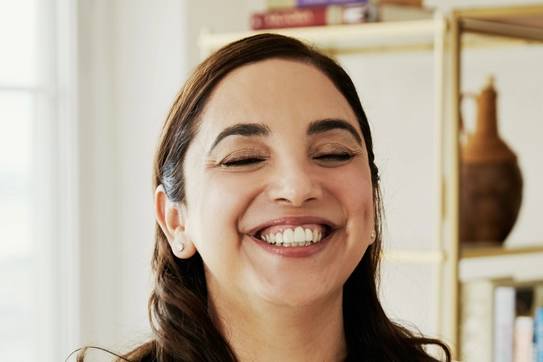
Sheena Iyengar
· S. T. Lee Professor of Business; Chair of Management DivisionColumbia University · Elementary Education
Active 1964–2025
Research topics
- Political Science
- Computer Science
- Social psychology
- Psychology
- Economics
- Geography
- Law
- Demographic economics
- World Wide Web
- Management
- Microeconomics
Selected publications
Perceptions of Creativity: Exploring the Dynamics of Recognition, Evaluation, and Bias
Academy of Management Proceedings · 2025-07-01
articleThis symposium explores these critical dimensions, examining how perceptions of creativity shape the recognition and valuation of creative work. Through four papers, this session addresses pressing questions, including how creativity and innovation are understood and communicated in organizational settings, the impact of creative processes on evaluation, the role of context in shaping creativity judgments, and how stereotypes influence perceptions of creative accomplishments. Together, these papers provide a comprehensive look at the factors that define, influence, and sometimes distort the recognition of creativity in professional and societal contexts. Lay Perceptions of Creativity and Innovation Author: Analexis Glaude; An Inductive Exploration of Creativity as Insight or Investment in Popular Music Author: Spencer Harrison; INSEAD Author: Shawn Chan; INSEAD Breaking Boundaries: How Categorical Expansion Shapes Creativity Judgments Author: Carl Blaine Horton; Author: Melanie Brucks; Author: Travis Tae Oh; Yeshiva University Author: Sheena S. Iyengar; Columbia University in the City of New York Creativity Is for the Young? People Underestimate the Age of Creative Achievers Author: Mary Ross; Author: Brian J. Lucas; Cornell University
Personality and Social Psychology Bulletin · 2025-03-29
articleAuthenticity is associated with numerous benefits, including well-being, relationship satisfaction, and workplace engagement, sparking interest in its antecedents. Previous research has primarily concentrated on intraindividual factors like self-knowledge, self-awareness, and self-esteem. Complementing this perspective, we suggest that interpersonal factors also influence authenticity. Specifically, we propose that social status, defined as the respect and admiration received from others, enhances authenticity. Study 1 confirmed that higher status correlated with authentic self-expression in 1,656 naturalistic conversations between strangers. Subsequent studies found that the positive link between status and authenticity (Study 2; N = 980) occurs, in part, through social acceptance (Studies 3–4; N = 1,372). Two additional experiments (Study 5a–b; N = 1,764) manipulated status and compared its causal impact on authenticity to power, another key aspect of social hierarchy, and a recognized antecedent of authenticity. Collectively, our findings support a social perspective in understanding authenticity: individuals feel more like themselves when they are respected and admired by others.
Minimally Invasive Injectable Cosmetic Procedures Increase Feelings of Authenticity
Dermatologic Surgery · 2024-07-29 · 1 citations
articleBACKGROUND: Minimally invasive cosmetic dermatology procedures continue to be increasingly popular; however, the extant literature has poorly documented the psychological antecedents of interest in cosmetic procedures and their psychological consequences. OBJECTIVE: To better inform dermatologists on their patients' motivations for cosmetic enhancement. MATERIALS AND METHODS: In a general population survey, an online representative sample of 984 Americans reported the extent to which they feel authentic using the validated authenticity scale and whether they were interested in undergoing a cosmetic procedure. In a prospective dermatology office survey, 102 participants reported their feelings of authenticity immediately before and 2 weeks after receiving a minimally invasive injectable cosmetic procedure. RESULTS: In the general population survey, participants interested in cosmetic procedures felt significantly less authentic than participants who were not interested ( p = .003). In the prospective dermatology office survey, participants felt significantly more authentic 2 weeks after their minimally invasive injectable cosmetic procedure than before ( p = .018). CONCLUSION: Lower feelings of authenticity are associated with interest in cosmetic procedures. Participants felt more authentic 2 weeks after receiving a minimally invasive injectable cosmetic procedure. Cosmetic procedures may present patients with an opportunity to feel more like their real, genuine selves.
Americans misperceive the frequency and format of political debate
Scientific Reports · 2024-03-06 · 2 citations
articleOpen accessDisagreement over divergent viewpoints seems like an ever-present feature of American life-but how common is debate and with whom do debates most often occur? In the present research, we theorize that the landscape of debate is distorted by social media and the salience of negativity present in high-profile spats. To understand the true landscape of debate, we conducted three studies (N = 2985) across online and lab samples. In contrast to the high-profile nature of negative debates with strangers, we found that people most commonly debate close contacts, namely family members and good friends. In addition, they often report feeling positive after engaging in debate. We then directly measured misperceptions regarding debate in a representative sample of Americans (N = 1991). We found that Americans systematically overestimated how often others engage in debate. This overestimation extended across debate partners (family members, good friends, acquaintances, coworkers, and strangers) and contexts (in-person and online; p's < 0.001, d's > 0.98), most strongly overestimating how often Americans debate strangers online. This misprediction may be psychologically costly: overestimating how often Americans debate strangers online significantly predicted greater hopelessness in the future of America. Together, our findings suggest that Americans may experience a false reality about the landscape of debate which can unnecessarily undermine their hope about the future.
Organizational Behavior and Human Decision Processes · 2024-01-01 · 16 citations
articleSenior authorPinning down state authenticity: defining and validating a state authenticity measure
Self and Identity · 2024-12-13 · 4 citations
articleSenior author51309 Authenticity Motivates Interest in Minimally Invasive Cosmetic Procedures
Journal of the American Academy of Dermatology · 2024-09-01
articleOpen accessAI-Made Art is Worth Less But Can Increase the Perception of Human Creativity
Academy of Management Proceedings · 2023-07-24
articleSenior authorThe rapid growth of AI programs capable of producing artwork on par with humans (dubbed “synthography”) raises new questions and concerns for artists and scientists alike. Will the value of human labor decrease, as has occurred during industrial revolutions of the past? Will lay persons evaluate AI-made art and human-made art differently? And how will collaborations (e.g., when human artists use AI tools) impact the creative value of both humans and technology? Taking a psychological perspective, the current research examines the bias against AI-made art on multiple dimensions (e.g., perceptions of creativity and skill as well as estimates of monetary value and labor). Using different experimental designs, we find this bias can be strengthened or weakened depending upon the salience of comparisons being made. What is more, by labeling a single piece of art as either human-made, AI-made, or collaboratively made in different conditions, we explore how perceptions of human creativity and labor are both increasing or decreasing as a function of these new technologies. That is, beyond documenting a robust bias against AI-made art across multiple dimensions and examining which dimensions this bias is stronger on, we demonstrate that the comparison of human and AI-made art can increase the perception of human creativity under select conditions.
Positive—More than unbiased—Self-perceptions increase subjective authenticity.
Journal of Personality and Social Psychology · 2023-10-19 · 19 citations
articleSenior author= 1,795) with two operationalizations of self-rated authenticity: attributed and state authenticity. We find that authenticity emerges from positive self-beliefs (Study 1), positive personality assessments (Study 2), and positive self-expressions (Study 3a and b). Further, we find that these effects are not driven only by positivity, but positive selves (Study 4), and mediated by the identity centrality (Study 5). Finally, Study 6 finds that this positivity bias does not extend to other-rated authenticity: People who present an overly positive self seem less authentic to others relative to a mixed or negative self-presentation. Taken together, these findings suggest that being "unreal" through positive self-illusions can, paradoxically, make one feel more real. (PsycInfo Database Record (c) 2023 APA, all rights reserved).
Will AI Art Devalue Human Creativity?
Research Square · 2023-06-05 · 3 citations
preprintOpen accessSenior author<title>Abstract</title> The contemporary art world is conservatively estimated to be a $65 billion USD market that employs millions of human artists, sellers, and collectors across the world. Yet recent attention paid to AI-made art in prestigious galleries, museums, and popular media has provoked debate around how these statistics will change. Unanswered questions fuel growing anxieties. Are AI-made and human-made art evaluated in the same ways? How will growing exposure to AI-made art impact evaluations of human creativity? Our research uses a psychological lens to explore these questions in the realm of visual art. We find that people devalue AI-made art across a variety of dimensions, even when they report it is indistinguishable from human-made art, and even when they believe it was produced collaboratively with a human. But we also find that comparing human and AI-made art increases perceptions of human creativity, an effect that can be leveraged to increase the value of human effort. Our results are robust across six experiments (<italic>N</italic> = 2,965) using a range of artistic stimuli and incorporating representative samples of the US population. Finally, we highlight conditions under which effects can be strengthened or weakened as well as dimensions where AI-devaluation effects are stronger.
Recent grants
Frequent coauthors
- 18 shared
Simona Botti
London Business School
- 12 shared
Erica R. Bailey
University of California, Berkeley
- 12 shared
Emir Kamenica
University of Chicago
- 12 shared
Raymond Fisman
- 11 shared
Sarah Lichtenstein
- 10 shared
Itamar Simonson
Universitat Ramon Llull
- 9 shared
Kristina Orfàli
- 9 shared
Mark R. Lepper
- Resume-aware match score
- Save to shortlist
- AI-drafted outreach
See your match with Sheena Iyengar
PhdFit ranks faculty by your research interests, methods, and publications — grounded in their actual work, not templates.
- Free to start
- No credit card
- 30-second signup