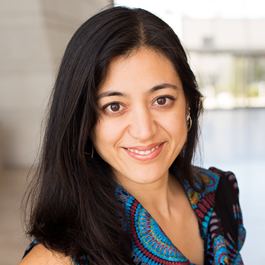
Shayna Silverstein
· Professor of Performance StudiesVerifiedNorthwestern University · Radio/Television/Film
Active 2008–2024
About
Shayna Silverstein is an Assistant Professor in the Department of Performance Studies at Northwestern University. Her research examines the politics and aesthetics of sound and movement in the contemporary Middle East, with a particular focus on Syrian popular culture. She is currently completing a book manuscript that explores the performance of masculinity in public life through Syrian dance music, highlighting the paradoxical dynamics of gender and nationhood within an authoritarian context. Additionally, she is developing a project on the performance and production of dignity in relation to Syrian experiences of war and displacement. Her teaching interests include embodiment, ethnographic methods, ethnomusicology, social theory, sound studies, and Middle Eastern studies. Silverstein has previously taught at Dartmouth College, Northwestern University’s Bienen School of Music, the University of Chicago, and the University of Pennsylvania. She also performs on ‘ud and violin.
Research topics
- Sociology
- Political Science
- Aesthetics
- Art
- Law
- Gender studies
- Literature
- Visual arts
- Anthropology
- Psychology
- Communication
Selected publications
Wesleyan University Press eBooks · 2024-01-01 · 1 citations
book1st authorCorrespondingMiddle East Journal of Culture and Communication · 2023 · 1 citations
1st authorCorresponding- Sociology
- Political Science
- Aesthetics
Abstract During the intensification of migration and border politics throughout Europe in the mid-2010s, displaced Syrians fleeing war to seek asylum and a livable life were simultaneously welcomed as vulnerable strangers who could contribute to European economies and societies and perceived as threats to the imaginaries of a homogenous Europe. This essay critiques the logic embedded in this narrative, namely that migrants are a social factor external and destabilizing to Europe, through a critical interpretation of Syrian choreographer Mithkal Alzghair’s work, Displacement (2016). This provocative dance work pivots on Alzghair’s reimagining of dabke , Syria’s celebrated folk dance, in which he deconstructs the social relations and embodied aesthetics of popular dabke practices to forge a political critique of Syrian authoritarianism and forced migration. By crafting a repertoire of movement that critiques the aesthetic and political ideologies on which it is based, Displacement arguably disrupts the postcolonial imaginaries of national identity and place that have historically ensconced folk dance in Syria and in Europe, respectively, and transforms the possibilities of what cultural heritage connotes, represents and signifies for Syrians and Europeans. Instead, the destabilizing work of embodied performance reveals how instability is endemic to European spaces and society. Through the convergence of performance theory and praxis, this essay demonstrates how Displacement stages live, perpetual, repetitive, and embodied motion in ways that open a space for artists and audiences to collectively engage with a fractious period and reconfigure the complex relations of power and representation situated between Syria and Europe.
Performance Matters · 2021-03-16 · 1 citations
articleOpen access1st authorCorrespondingGiven the salient role of embodied tactics in contemporary networked protests in performance, in this essay I listen for how the embodied sonic praxis of protests during the Arab revolutions translates into the audio, visual, and text modalities of digital media. I propose audibility, or the appearance and perceptibility of sound objects, as that which translates the “live” sound that occurs in physical spaces into representational spaces, and, in so doing, alters the temporality and spatiality of the sonic experience. Interrogating who and what are rendered audible as part of the political contestations that drive protest actions, I demonstrate how audibility is a technological condition, sensory force, and social process through which affective publics emerge in networked spaces. I begin with social media posts from the first months of non-violent protest actions in 2011, in Egypt and Syria, analyzing the translation of sonic objects into written texts that narrativize the subjects and spaces of the Arab revolutions. I then shift to the sonic praxis of revolutionary mourning in a discussion of the audibility of the crowd in footage of protest funerals that reclaimed martyrs of the Syrian revolution in 2018 and 2019, interrogating how the sounds of the crowd enable the mythologization of the martyrs’ bodies and help mobilize the cause for which they died. Both approaches to audibility – as expressing voice and documenting sounds – underscore how audibility, I argue, is crucial for understanding the affect-rich intensities that drive networked protest performances, and that forge political possibilities as imaginable, sensible, and perceptible.
Journal of Middle East Women s Studies · 2021 · 1 citations
1st authorCorresponding- Sociology
- Political Science
- Aesthetics
Abstract This essay analyzes how dance, gender, and state power function together as a significant node of critique in recent cultural production that addresses authoritarianism in Syria. Identifying the symbolic trope of dabke, a popular dance ubiquitous in Syrian life, selected films, literature, and choreography, this essay argues that the discussed works dislodge dabke from its feminized association with authenticity, folk culture, and nationhood to instead represent dabke as a form of hegemonic masculinity that perpetuates sovereignty, patriarchy, and autocracy. Through the rendering of embodied acts of dabke performance, hegemonic and resilient modes of masculinity are equated with spectacles of violence attached to the state, repressive tactics by the police state, and performative complicity with the regime. This essay argues that sovereign and autocratic forms of power are not universal abstractions but are embedded in the gendered structures of the society in which such power is performed.
Lateral · 2021-03-01
articleOpen access1st authorCorrespondingThis essay negotiates the critical tension between race as an analytic and social construct by examining how race becomes socialized in and through the production and presentation of Arab culture in two ethnographic case studies: how Syrian musicians negotiate musical multiculturalism as they integrate into German society and how independent musicians in Egypt navigate the racialized entanglements of national and international security logics that privilege Western foreigners. Both these case studies center the “foreigner” subject as one who embodies proximity to white power and delimits the boundaries of such power. We argue that the category of foreigner is thus a racialized construct that not only complicates the Black–white binary of race relations but strategically evades explicit discourses and practices of racecraft that are violent, discriminatory, and exclusionary. By provincializing critical race theory through the particularities of Arab lived experience, we illustrate how local social categories are entangled with historic legacies of empire and contemporary global logics of racialized difference while remaining sensitive to how conceptions of difference exceed Euro-American categories of race. Our work therefore directs attention towards alternative enactments of racialization within the Global South.
11 ] Disorienting Sounds: A Sensory Ethnography of Syrian Dance Music
Duke University Press eBooks · 2020 · 2 citations
1st authorCorresponding- Sociology
- Communication
- Art
2019-03-14 · 1 citations
book-chapter1st authorCorresponding[in]Transition · 2019-06-03
article1st authorCorrespondingMy audiography of the Syrian migrant crisis aims to disrupt expulsionary discourses in the West, particularly those that project Syrian bodies as undesirable. As Europe and the United States continue to contest the arrival of ‘others’ in spaces themselves contingent on the presence of out-of-place bodies, my audiographic work seeks to reorient our sensory relationship to the undesirable bodies that traverse and inhabit these spaces. The work is composed of three continuous movements: Revolution (Syria), Migration (transport hubs and routes), and Resettlement (Chicago). Together, these movements juxtapose field recordings of protests worldwide and public spaces crossed by migrants with sound media accessed by Syrian migrants via mobile phones. At once audio documentary and sound composition, my work makes audible the spatialized and embodied sensibilities of Syrian displacement in a work that critiques the resurgence of anti-immigrant sentiment and politics in the West.
2019-01-01 · 1 citations
book-chapter1st authorCorrespondingWomen’s March Colloquy - On Sirens and Lamp Posts: Sound, Space, and Affective Politics
Music and Politics · 2019-03-20 · 3 citations
articleOpen access1st authorCorrespondingThis essay considers how embodied tactics (re)distribute auditory power in political spaces in order to better understand the practices, subjects, and spaces implicated in protest. Focusing on how listening subjects move through and constitute protest spaces, it draws on participant ethnography at the 2017 Women's March to demonstrate that listening subjects are historically contingent in ways that amplify how protests happen under distinct political constraints. It situates the Women's March in relation to the Black Lives Matter movement in Ferguson and the revolution in Syria to suggest through comparison how political subjects are not universal but constructed in relation to the powers that they protest. The essay argues that the effects of listening, chanting, and marching on the distribution of power at protest events can be evidenced through the concealment or exercise of dissent as listening subjects move through and constitute political spaces. 7
Frequent coauthors
- 36 shared
Lee Donna
Stony Brook University
- 36 shared
Aaron Ziegel
University of Kentucky
- 36 shared
Philip Glass
Stony Brook University
- 36 shared
Maria Sonevytsky
- 36 shared
Noriko Manabe
- 36 shared
Benjamin J. Harbert
- 36 shared
Katherine Leo
Stony Brook University
- 36 shared
Chris Bacon
Stony Brook University
- Resume-aware match score
- Save to shortlist
- AI-drafted outreach
See your match with Shayna Silverstein
PhdFit ranks faculty by your research interests, methods, and publications — grounded in their actual work, not templates.
- Free to start
- No credit card
- 30-second signup