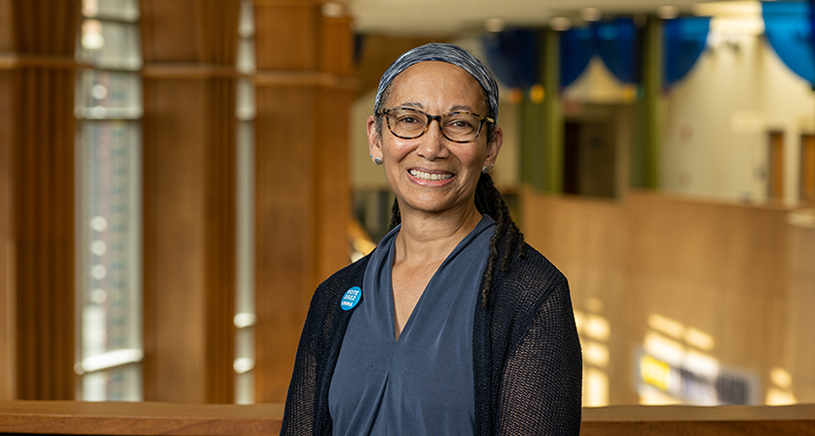
Linda M. Chatters
· Professor, Health Behavior and Health EquityVerifiedUniversity of Michigan · Health Behavior and Health Equity
Active 1982–2026
About
Linda M. Chatters, PhD, is a Professor of Health Behavior and Health Equity and a Paula Allen-Meares Collegiate Professor of Social Work at the University of Michigan School of Public Health. Her program of research focuses on the health and well-being of Black populations across the life course and within diverse social contexts, including family systems, religious communities, and peer networks. As a developmental psychologist and gerontologist, her work emphasizes how primary institutions such as family and religious communities provide psychosocial and material resources that support physical and mental health and social well-being. Her research investigates the impact of social discrimination on mental health and well-being, as well as the sociodemographic and social correlates of health and social behaviors within diverse Black populations, including African Americans and Black Caribbeans. She explores the role of family and religious involvement and networks in coping with stressful life circumstances, such as racial discrimination, and their function as protective factors for mental and physical health outcomes among Black populations.
Research topics
- Political Science
- Sociology
- Demography
- Medicine
- Psychology
- Gender studies
- Gerontology
- Social psychology
- Nursing
- Genealogy
- Public relations
- Economics
- Economic growth
- History
Selected publications
Ethnicity and Health · 2026-03-08
articleOpen accessOBJECTIVE: To examine associations between historical residential redlining, a form of institutional racism, and contemporary allostatic load (AL), an indicator of physiologic stress, examine differences by race, and whether associations are mediated by neighborhood deprivation. METHODS: We used data from Wave 4 (2013-2017) of the Healthy Aging in Neighborhoods of Diversity across the Life Span (HANDLS) study in Baltimore, MD, Home Owners Loan Corporation (HOLC) scores, and data from the American Community Survey (ACS). We conducted a multilevel analysis, controlling for individual demographic and behavioral characteristics. RESULTS: = 0.00), with African American residents showing greater reductions in allostatic load compared with whites. We also found evidence of a moderated mediation, with the indirect effect of living in a yellowlined area on AL through NDI varying by race. CONCLUSIONS: Contemporary residents of historically yellowlined, but not redlined, neighborhoods experienced heightened physiological deterioration. The strength of this association differed by race, and was substantially explained by the contemporary neighborhood deprivation index only for African Americans in yellowlined areas. Addressing health disparities requires attention to the long-lasting impacts of historical practices of institutional racism on contemporary health outcomes.
American Psychological Association eBooks · 2026-01-01
book-chapterSenior authorUNC Libraries · 2025-08-23
articleOpen accessUNC Libraries · 2025-07-29
articleOpen accessDecreasing the number of adolescents who have never had sexual intercourse is one way to address sexual health disparities. We used intersectionality to explore the joint effects of religiosity and racial identity on Black adolescent sexual initiation. Data originated from the National Survey of American Life-Adolescent (n = 1,170), a nationally representative study of Black adolescents. Latent profile analysis and survival analysis were used to evaluate study hypotheses. Results showed four distinct profiles of religiosity and racial identity. These profiles explained 19% of the variability in sexual initiation. Additional analyses revealed sociodemographic differences in profile membership. Findings contribute to understanding ethnic heterogeneity among Black adolescents and racial identity and religiosity as sociocultural factors that influence sexual initiation; and support reconceptualizing Black adolescent religiosity.
Everyday Discrimination Typologies Among Older African Americans: Gender and Socioeconomic Status
UNC Libraries · 2025-07-23
articleOpen accessOBJECTIVES: Discrimination is associated with several negative social, economic, and health consequences. Past research focuses on the impact of discrimination while less is known about both the type and correlates of discrimination, particularly among older adults. METHODS: Using the National Survey of American Life, we used latent class analysis to identify discrimination typologies (frequency and type) among African Americans aged 55 and older. We then used multinomial logistic regression to identify demographic correlates of discrimination types, including a statistical interaction between gender and educational attainment. RESULTS: We identified three discrimination typologies. Increasing age was associated with lower probability of belonging to the high discrimination and disrespect and condescension subtypes. Men and non-Southern residents were most likely to belong in the high discrimination subtype. Higher levels of education increased the probability of belonging in the high discrimination and disrespect and condescension subtypes for older men, but not women. DISCUSSION: Older African American men, particularly those with more education, are vulnerable to both high-frequency discrimination and discrimination characterized by disrespect and condescension. This finding suggests that, for men with more years of education, increased exposure to discrimination reflects efforts to maintain social hierarchies (male target hypothesis).
Spousal support and negative interactions among African Americans in long‐term marriages
Journal of Elder Policy · 2025-04-01
articleSenior authorAbstract As interventionists and policymakers aim to strengthen marriages and families, research on the nuances of romantic relationships, particularly among historically disadvantaged populations, grows more important. In its simplest form, the dynamics of a marriage consist of a combination of emotional highs and lows. Spousal support is generally a relational boon, capable of contributing to stability and happiness. On the other hand, negative interactions (e.g., criticism, unmet demands) can damage relationships and lead to instability or divorce. Although research has studied various correlates of spousal support and negative interactions, relatively little knowledge exists on these constructs among African Americans in long‐term marriages. To understand the correlates of spousal support and negative interactions among African Americans in long‐term (≥20 years) marriages, this study used data ( n = 200) from The National Survey of American Life Adult Reinterview (NSAL‐RIW). Our emphasis on long‐term marriages contributed to a sample that consists largely of older adults. Data analyses revealed that African Americans in long‐term marriages report high levels of emotional and instrumental spousal support and relatively low levels of negative interactions with their spouses. Gender, education, family income, and length of marriage were significantly associated with emotional and instrumental spousal support. Spousal negative interactions were associated with gender, family income, and marriage duration. Grounding policies and interventions in research that considers what strong couples have done well is an important first step toward building more strong, healthy relationships in underserved communities.
Social Work Research · 2025-12-10
articleAbstract Life satisfaction is a primary indicator of subjective well-being and is associated with positive psychological status and an overall sense of well-being. This study examined the association between life satisfaction and four dimensions of religion (i.e., organizational religion, nonorganizational religion, subjective religion, and religious coping). The sample consisted of 3,570 African Americans and 1,621 Blacks of Caribbean descent drawn from the National Survey of American Life (2001–2003). Separate linear regression models were constructed for each group to investigate the relationship between life satisfaction and eight measures of religion used to operationalize the four dimensions. All analyses controlled for demographic characteristics, family income, and number of chronic physical health problems. The results indicate organized religious involvement (i.e., service attendance) and subjective religiousness (i.e., self-rating of religiousness) are positively associated with life satisfaction for both groups, while nonorganizational religious activities and religious coping are unrelated to life satisfaction. The results underscore the significance of the organizational and subjective dimensions of religion for life satisfaction among both African Americans and Black Caribbeans. Accordingly, practitioners should conduct a spiritual assessment to identify the potential role that various religious dimensions may play in enhancing wellness in the lives of their Black clients.
The Intersection of Pain Outcomes and Social Isolation Among African Americans
UNC Libraries · 2025-06-07
articleOpen accessSenior authorFictive Kin Support Networks of African American and Black Caribbean Adolescents
Journal of Family Issues · 2025-09-15
articleWe examined fictive kin support networks of African American and Black Caribbean adolescents using data from a national sample. Roughly 90% of both groups indicated having a fictive kin relationship, with an average of 6.01 fictive kin for African American adolescents and 6.96 for Black Caribbean adolescents; 8 out of 10 of both groups reported frequent support from fictive kin. Regression analyses for African American youth indicated that closeness to both family and friends were positively associated with receiving support from fictive kin. For Black Caribbean youth, closeness to friends was positively associated with number of fictive kin and support from fictive kin, whereas closeness to family was negatively associated with fictive kin support. Although qualitative research has documented the importance of fictive kin, this is the first study to investigate fictive kin relationships among African American and Black Caribbean adolescents using a nationally representative sample.
Marriage & Family Review · 2025-11-07
article1st author
Recent grants
NIH · $11k
Promoting Ethnic Diversity in Public Health Training
NIH · $7.9M · 2000–2019
NIH · $1.5M · 2010
NIH · $428k · 1992
Frequent coauthors
- 210 shared
Robert Joseph Taylor
University of Michigan–Ann Arbor
- 54 shared
Ann W. Nguyen
Case Western Reserve University
- 39 shared
Karen D. Lincoln
University of California, Irvine
- 25 shared
James S. Jackson
University of Manchester
- 23 shared
Amanda Toler Woodward
University College London
- 20 shared
Harry Owen Taylor
University of Toronto
- 16 shared
Dawne M. Mouzon
Rutgers, The State University of New Jersey
- 13 shared
Jeffrey S. Levin
Education
PhD, Psychology
University of Michigan
- Resume-aware match score
- Save to shortlist
- AI-drafted outreach
See your match with Linda M. Chatters
PhdFit ranks faculty by your research interests, methods, and publications — grounded in their actual work, not templates.
- Free to start
- No credit card
- 30-second signup