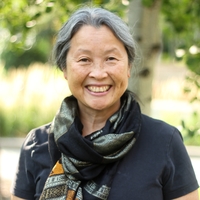
Josephine Lee
VerifiedUniversity of Minnesota · Theatre Arts and Dance
Active 1988–2026
About
Josephine Lee is a professor in the Department of English at the University of Minnesota. The provided page text does not include specific details about her research focus, background, or key contributions. Therefore, no further biographical information is available from the given content.
Research topics
- Sociology
- History
- Art history
- Gender studies
- Literature
- Art
- Anthropology
- Aesthetics
Selected publications
Nineteenth Century Theatre and Film · 2026-01-29
article1st authorCorrespondingTo Be an Actress: Labor and Performance in Anna May Wong’s Cross-Media World by Yiman Wang (review)
Journal of Asian American Studies · 2025-06-01
article1st authorCorrespondingThe Effect of Media Tone on Youth Trust in Government
Advances in Social Sciences Research Journal · 2025-09-29
articleOpen access1st authorCorrespondingPublic trust in U.S. democratic institutions is at historic lows, particularly among younger generations. This study examines how narrative framing of democracy influences adolescents’ coping strategies and civic engagement intentions. Ninety-three high school students in New Jersey were randomly assigned to read pessimistic, neutral, or optimistic passages about the state of U.S. democracy and completed survey measures adapted from the COPE Inventory. Factor analysis revealed three clusters of responses: active engagement, institutional confidence, and voting intention. Results showed that neutral frames paradoxically produced the lowest confidence in democracy, while pessimistic frames heightened concern and correlated with greater willingness to engage in protest or activism. These findings extend research on framing effects (Cappella & Jamieson, 1996) and youth political psychology (Oosterhoff et al., 2018) by highlighting the role of coping mechanisms in democratic resilience. Implications suggest that civic education and political communication strategies should account for the ways adolescents transform concern into constructive participation.
Civil War history · 2024-05-11
articleWhat's Love Got to Do with It?"A Roundtable on the Cultural Legacy of Eric W. Lott's Love and Theft: Blackface Minstrelsy and the American Working Class on Its Thirtieth Anniversary Rhae Lynn Barnes (bio), Daphne A. Brooks (bio), Elizabeth Maddock Dillon (bio), Scott Gac (bio), Matthew Frye Jacobson (bio), Josephine Lee (bio), and David R. Roediger (bio) In the heart of Woodstock, New York, amid the creative ferment of the 1960s, two collaborators—drummer and vocalist Levon Helm and singer Robbie Robertson of the acclaimed group The Band—embarked on a journey into the tumultuous annals of the American Civil War. Their quest for knowledge about the most cataclysmic event in American history led them to the local library, where they delved into the life and legacy of Confederate general Robert E. Lee for nearly eight months. From their deep dive, one of rock 'n' roll's most enduring antiwar anthems emerged using the limited history books they could access in 1968: "The Night They Drove Old Dixie Down." The song is set in 1865 and paints a poignant portrait of a war-ravaged Tennessean. Its narrator is an impoverished white man grappling with the fall of the Confederacy. The narrator recalls the destruction of Southern rail lines, the specter of mass hunger, and the agonizing loss of his eighteen-year-old brother, a casualty of the conflict he says came at the hands of a "Yankee." Despite its widespread acclaim and many covers, "The Night They Drove Old Dixie Down" has long been controversial. Journalist Ta-Nehisi Coates aptly described it as "another story about the blues of Pharaoh," in the Atlantic. Rock scholar Jack Hamilton (mentored by Lott) argues in Slate that the overwhelming shadow of the Lost Cause narrative obscures its true meaning. Hamilton offers a more nuanced interpretation, placing the song within the context of class-based Vietnam War protest music that emerged in post-Tet [End Page 11] Offensive 1969 America, highlighting the line "and the bells were ringing the night they drove old Dixie down," suggesting celebration over the Confederacy's demise or, at the very least, the symbolic end of America's most violent chapter. Both interpretations can be valid simultaneously. The enduring appeal of "The Night They Drove Old Dixie Down" lies in its ability to capture the complexities of war, the family and human dramas, and its long aftermath, offering multiple perspectives on a profoundly divisive chapter in American history. The song's lyrics, imbued with both sorrow and a glimmer of hope, resonate with listeners across generations as a gateway into the complex history of American culture from the Civil War. It is also a personification of rock 'n' roll's deep relationship with mass enslavement in the South and black-face minstrelsy born of antebellum America in the urban North. Bob Dylan's lead guitarist for much of the 1960s, Robbie Robertson, spent his summers on the Six Nations Reservation, in Ontario, Canada, learning guitar from First Nation musicians. His mother was of Mohawk descent, and this exposure to Indigenous culture profoundly influenced his musical sensibility. Levon Helm, raised on an Arkansas cotton farm by music-loving parents, was deeply immersed in the rich musical traditions of the South. Bob Dylan, born Robert Allen Zimmerman to Jewish parents, grew up in Hibbing, Minnesota. Despite their diverse backgrounds, they all listened to the radio, which exposed all three musicians to American folkways, blues, country, and rock. They also all encountered blackface minstrelsy in their youth, from amateur shows at county fairs perpetuated by white men in blackface to professional traveling Black troupes like F. S. Wolcott's Original Rabbit's Foot Minstrels, leaving indelible marks on their cultural understanding of American music, popular culture, and racial constructs coming out of the Civil War and its public memory. Blackface minstrelsy, with its grotesque caricatures and stereotypical portrayals of Black Americans, exerted a significant influence on their musical development. The long shadow of minstrelsy crops up throughout The Band's catalog. By the 1960s, "Dixie" had become synonymous with the American South, but its roots lay in the blackface minstrel shows of the North. Daniel Decatur Emmett, a founding...
Theatre Journal · 2023-09-01
article1st authorCorrespondingHolding the Memory and Asking the Hard Questions: An Interview with Katie Ka Vang, May Lee-Yang, and Saymoukda Duangphouxay Vongsay Josephine Lee (bio), May Lee-Yang (bio), Saymoukda Duangphouxay Vongsay (bio), and Katie Ka Vang (bio) Katie Ka Vang, May Lee-Yang, and Saymoukda Duangphouxay Vongsay are performers, writers, and activists in the Twin Cities Asian American community. I first became aware of Katie through her work with Pangea World Theater and Theater Mu, and Saymoukda and May are my former students at the University of Minnesota. I have followed their careers as artists and arts leaders with great interest and admiration. Each of them is committed to theatre work that speaks directly to local communities, especially communities that formed as large numbers of Southeast Asians relocated to the upper Midwest following the late twentieth-century U.S. military involvement in Vietnam, Laos, and Cambodia. The traumatic effects of the wars in Southeast Asia did not end with the Paris Peace Agreement of 1991. Rather, the migration and resettlement of refugees radically changed areas of the U.S. that had previously been predominately white. Not only has Minnesota’s Asian American population grown dramatically as a result, but it is also distinctive in terms of its ethnic and national identities, with [End Page E-33] well over half of Asian Minnesotans identifying as Southeast Asian, and Hmong as the largest group. Importantly, these three distinctive and powerful writers have found the Twin Cities to be not only a supportive artistic space but also a place of possibility that encourages innovative modes of story-telling and new audience members. This interview was conducted on February 23, 2023. It has been edited for clarity and length. Josephine Lee (JL): So what got you involved in theatre? May Lee-Yang (MLY): I got involved in theatre in a very funny way when I was a senior in high school. I was working at Taco Bell on the weekends and needed to earn money. One day I opened up the local Hmong newspaper and they had an ad that said they were looking for actors to be in a Hmong play. They were paying $200 a week, which was more than what I was making at Taco Bell. So I was like, I have no acting experience, but why not? I went to audition and—I didn’t know it at the time—but it was Pom Siab Hmoob Theatre, which is the first Hmong American theatre ever, which transitioned into the Center for Hmong Arts and Talent a couple of years later. I went to the Playwrights Center to audition. My mom dropped me off and I was 18. I was terrible. But Nkauj’lis Lyfoung1 was there and she hired me, I think, because they wanted to nurture young artists. So that was my first foray into theatre. In terms of writing, one day I was at the library and I kept seeing these ads for a fellowship at the Playwrights Center, the Many Voices Fellowship. I remember reading about how theatre was very white and so this was an opportunity to bring more writers of color into the fold. They knew that there were so few writers of color working in theatre that they accepted anything: stories, poems. At that time, I didn’t have any plays. So I submitted poetry and some stories and I got in. It was sort of accidental. It was more curiosity. And I kind of just stayed in. Saymoukda Duangphouxay Vongsay (SDV): My first leap into theatre happened in the fourth grade. Our teacher cast me as Casper the Friendly Ghost. It was great. Nobody was there to mentor us. It was just her just trying to get us to memorize lines. Much later on, Theater Mu’s Rick [Shiomi] wrote a piece that was based on my late aunt’s life.2 She was a royal dancer in the courts. A traditional dancer. I saw that and I thought it was amazing that this theatre company existed and that they wanted to tell her story. Our family was just so proud of her. Then in 2009 or 2010, I got really tired...
Race in American Musical Theater
Bloomsbury Publishing Plc eBooks · 2023-01-01
book1st authorCorresponding<JATS1:p>While most discussions of race in American theatre emphasize the representation of race mainly in terms of character, plot, and action, Race in American Musical Theatre highlights elements of theatrical production and reception that are particular to musical theatre. This introductory book examines how race functions not only through the recurrence of particular character types and storylines, but also in musical style and song lyrics, in the staging of the chorus line, and in the use of cross-racial casting.</JATS1:p> <JATS1:p>Each chapter identifies a particular set of questions that encourages readers to look at works of musical theatre more critically and place them in a broader historical and social context. Drawing on problematic examples such as Thoroughly Modern Millie and Miss Saigon through to integrated shows such as Dreamgirls, Bring in Da Noise, Bring in Da Funk and Hamilton, it serves as a critical survey and analysis of the topic within the American musical theatre canon.</JATS1:p> <JATS1:p>Published within the Topics in Musical Theatre series, this volume also includes an appendix that provides background information and plot summaries for its key examples and a list of additional readings related to the topic.</JATS1:p>
“Moving Through and Beyond ”: Asian American Theatre and Performance Studies
Theatre Journal · 2023-12-01 · 1 citations
article1st authorCorrespondingAbstract: For decades, Theatre Journal has deeply engaged with different aspects of Asian American theatre and performance. This essay surveys a range of Theatre Journal articles published from the 1990s in order to map out this distinctive area of theatre and performance studies. Key articles by James Moy, Karen Shimakawa, and Daphne Lei grapple with the legacy of racial stereotypes and the aesthetics and reception of contemporary Asian American performance. Essays by Angela Pao, Celine Parreñas Shimizu, Sean Metzger, and Ju Yon Kim emphasize the racialized bodies of actors and the history of yellowface and brownface acting, while Christopher Eng, Christine Mok, Megan Shea, and Dan Bacalzo emphasize the intersectional and transnational dimensions of Asian American expression. These and other scholars of Asian American theatre and performance continue to engage with new aspects of immigrant and refugee performance as well as gender and sexuality in Asian American theatre. At a time of changing demographics and cultural visibility, this essay helps us see how scholars have addressed the enormous diversity of Asian American experiences and perspectives as well as common preoccupations about visibility and representation, the persistence of orientalist typecasting, and the dynamic and complicated nature of Asian American identity.
2022-08-23
book-chapter1st authorCorrespondingAsian Americans make up a pan-ethnic, multi-generational, and culturally diverse racial category. This introduction surveys some of the major events of Asian American history as well as reflects upon how theatre is integral to Asian American culture and representation. It identifies the ten historical milestones, including early Asian performers in the late nineteenth century, exclusion laws, U.S. imperialism in the Philippines and Hawai’i, Japanese American WWII incarceration, Asian American theatre practices of the 1960s and 1970s, Southeast Asian refugees, activism and Asian American theatre, post 9/11 Islamophobia, and COVID-19 anti-Asian violence, that will be illuminated in the book. If history is particularly important in understanding Asian American experience and identity, then theatre produced by, for, and about Asian Americans has a foundational place in making this history come to life. Asian American theatre is as diverse and multifaceted as the histories and experiences of Asian Americans offstage, and reflects multiple and fraught tensions between conventional identity and radical thinking, as well as between commercial and artistic, political and aesthetic, representational and experimental theatre-making.
Milestones in Asian American Theatre
Routledge eBooks · 2022 · 1 citations
1st authorCorresponding- History
2022-08-23
book-chapter1st authorCorrespondingThis book’s chapters are organized around historical milestones that serve as important starting place for the appreciation and study of Asian American theatre, but also serve as a reminder that the very term “Asian American,” a product of the 1960s reimagining of race, remains a dynamic, porous, and sometimes contested category. People of Asian descent in the U.S. cannot be represented without acknowledging their many differences that define their histories and experiences. This conclusion looks at two plays that do not easily fit into the particular milestones given in earlier chapters. The inclusion of these two examples affirms that Asian American histories are also closely connected to those of other racial minorities in the U.S. and also must be examined in terms of the networks of culture, migration, and kinship that continue to connect Asia to the U.S. In Prince Gomolvilas’ The Brothers Paranormal, Thai American and African American characters share experiences of migration, loss, and loneliness. In May Lee-Yang’s A Korean Drama Addict’s Guide to Losing Your Virginity (2018), a Hmong American woman weaves her way toward romance not only as prompted by her impending fate as a shaman, but also through the unlikely plot twists of Korean television dramas. These plays thus do not fit neatly into a set of Asian American milestones but rather act as reminders that Asian Americans can also be deeply influenced by aspects of history and culture that are not necessarily seen as their own.
Frequent coauthors
- 16 shared
Alan Filewod
- 16 shared
Sue-Ellen Case
University of Guelph
- 16 shared
Loren Kruger
University of Toronto
- 16 shared
Shannon Jackson
- 16 shared
Elin Diamond
University of California, Berkeley
- 16 shared
Erika Fischer-Lichte
University of Queensland
- 16 shared
A. Jeyaratnam Wilson
Peter Doherty Institute
- 16 shared
Ric Knowles
University of Guelph
Awards & honors
- Arthur "Red" Motley Exemplary Teaching Award, CLA, 2021
- National Endowment for the Humanities Fellowship, 2019
- Association for Asian American Studies Lifetime Achievement…
- Ruth Christie Award for Excellence in Teaching, Department o…
- Outstanding Contributions to Postbaccalaureate, Graduate, an…
- Resume-aware match score
- Save to shortlist
- AI-drafted outreach
See your match with Josephine Lee
PhdFit ranks faculty by your research interests, methods, and publications — grounded in their actual work, not templates.
- Free to start
- No credit card
- 30-second signup