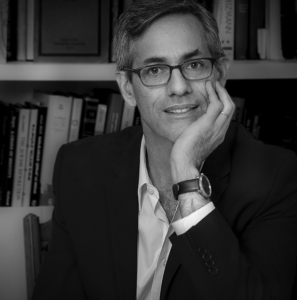
David Myers
· Distinguished Professor and holds the Sady and Ludwig Kahn Chair in Jewish HistoryUniversity of California, Los Angeles · History
Active 1939–2025
About
David N. Myers is a Distinguished Professor and holds the Sady and Ludwig Kahn Chair in Jewish History at UCLA. He serves as the director of the Luskin Center for History and Policy and the UCLA Initiative to Study Hate. Myers has previously served as chair of the UCLA History Department and as director of the UCLA Center for Jewish Studies. He received his A.B. from Yale College in 1982, undertook graduate studies at Tel-Aviv and Harvard Universities, and completed his doctorate at Columbia University in 1991. His scholarly work focuses extensively on modern Jewish intellectual and cultural history, with notable publications including six books such as 'Re-Inventing the Jewish Past,' 'Resisting History,' 'Between Jew and Arab,' 'Jewish History: A Very Short Introduction,' 'The Stakes of History,' and 'American Shtetl,' the latter of which won the 2022 National Jewish Book Award in American Jewish Studies. Myers has also edited or co-edited twelve books and has contributed to numerous articles and opinion pieces. He has taught at prestigious institutions including the École des hautes études en sciences sociales and the Russian State University for the Humanities, and has been a fellow at the Katz Center for Advanced Judaic Studies. An elected fellow of the American Academy for Jewish Research and the Los Angeles Institute for the Humanities, Myers is recognized for his extensive contributions to Jewish history and thought.
Research topics
- History
- Political Science
- Geology
- Genealogy
- Religious studies
- Theology
- Philosophy
- Oceanography
- Law
- Geography
Selected publications
26. Building Edifices of Jewish Knowledge: Michael Berenbaum and the Third Encyclopaedia Judaica
Academic Studies Press eBooks · 2025-05-15
book-chapter1st authorCorrespondingBuilding Edifices of Jewish Knowledge:
Academic Studies Press eBooks · 2025-07-01
book-chapter1st authorCorresponding2025-09-05
dissertationSenior authorContemporary Jewry · 2024-11-19
article1st authorCorrespondingPurdue University Press eBooks · 2024-11-23
book-chapter1st authorCorrespondingPolitics, National Identity, and Democracy:
Purdue University Press eBooks · 2024-11-23 · 1 citations
book-chapter2023-09-25
reference-entry1st authorCorrespondingHasidism was the powerful Jewish pietist movement that took rise in eastern Europe in the late 18th century and spread widely throughout the region in the 19th century. Among the places where Hasidism found a particularly receptive audience was Hungary, especially the northeast quadrant known as the Unterland. It was there that the Teitelbaum family of rabbis emerged as purveyors of a stringent form of religious Orthodoxy that came to be known as haredi. A scion of the family, Rabbi Joel Teitelbaum (b. 1887–d. 1979), was appointed rabbi of the city of Satu Mare, Romania (formerly Szatmár, Hungary) in 1928; after six years of opposition in the city, he assumed his new job in 1934, thereby inaugurating the Satmar movement of Hasidism. Unlike most of his followers (and for some, quite controversially), Teitelbaum survived World War II, and eventually made his way to the United States in 1946. There he settled in the Williamsburg neighborhood of Brooklyn and began the work of rebuilding the Satmar community. Over the course of the past seventy years, the Satmars have grown into the largest Hasidic group in the world with some 150,000 estimated members in North America, Europe, Israel, South America, and Australia. One of Rabbi Teitelbaum’s goals upon settling in the United States was to create, alongside the home base in Williamsburg, an enclave outside of the city where members of the Satmar flock could lead their traditional lives without interference. It took decades to find an appropriate site at a remove from New York City, but still close enough to commute for employment. In the early 1970s, Rabbi Teitelbaum’s advisors, to whom he entrusted the task of finding a venue, purchased land in the town of Monroe in Orange County, New York. In the summer of 1974, the first Satmar settlers began arriving from Brooklyn to the newly built neighborhood in Monroe that was called “Kiryas Joel,” the village of Joel. In 1977, after several years of conflict with town officials, the Satmar community was officially incorporated as the village of Kiryas Joel within the town of Monroe. The community has grown from the first hundred residents in 1974 to over thirty thousand residents today, almost all of whom are Satmar Hasidim. In 2019, Kiryas Joel residents ended decades of acrimony by exiting the town of Monroe altogether to create the new town of Palm Tree (the English for Teitelbaum).
Academic Studies Press eBooks · 2023-11-09
book-chapterOpen access1st authorCorrespondingPreface 1. The Life and Work of Steven M. Lowenstein z”l (1945–2020): “From Washington Heights to Skid Row—a Life of Learning and Doing” was published in The Population History of German Jewry 1815–1939 on page xi.
2022-03-29
book-chapter1st authorCorrespondingInundated estuaries resulting from sea level rise following glacial retreat are often characterized by having a high ratio of shoreline to water, creating a dramatically convoluted landscape and waters edge. Defined by numerous undulated peninsulas and inlets and high flood risk development, such as metropolitan areas like Baltimore, MD, USA, these landscapes are also places of work, home, and play. The peninsula where Fleming Park is located, in the community of Turner Station in eastern metropolitan Baltimore, is one such landscape. The site is representative of hundreds of small peninsulas throughout the Chesapeake Bay, developed with multiple land uses including industries, residences, and/or park spaces. Public spaces like Fleming Park not only provide essential infrastructural services to bay communities via ecological, recreational, social, and economic co-benefits, but also shape ideas and experiences of civic identity, shared ownership, and public stewardship. In historically underserved communities, the negative effects related to flood risk and sea level rise are often amplified by structural inequalities, which produce uneven benefits and risk profiles. This chapter explores the benefits and risks of innovative reuse and beneficial use (IRBU) of dredged material as one climate adaptation approach to mitigate risk, preserve cultural identity, and protect and enhance ecological, recreation, and economic benefits in the face of rising sea levels.
The Jewish Quarterly Review · 2022-09-01
article1st authorCorrespondingEditor’s Note David N. Myers The study of jewish law has deep roots in Jewish history. With due respect to philosophers and mystics, halakhists assumed a position of millennial dominance in Jewish intellectual culture from the destruction of the Second Temple to the Paris Sanhedrin in 1808. The study of Jewish law did not disappear but became a subsidiary field of the larger project of modern Jewish studies—from the Wissenschaft scholars Zecharias Frankel, I. H. Weiss, and D. Z. Hoffmann to the adepts of mishpat ‘ivri such as Asher Gulak and later Menachem Elon, to a diverse network of global scholars today, including Suzanne Stone and her charges at the Center for Jewish Law and Contemporary Civilization (who are amply represented in this forum). Meanwhile, the study of Jewish history became the central axis of modern Jewish scholarship, exemplified and enabled by the macrohistorians Jost, Graetz, Dubnow, and Baron—and enriched by the evolution of many subfields including intellectual, political, economic, social, gender, and global branches. While the study of Jewish law indeed had deep roots in Jewish history, its encounter with the modern discipline of history was episodic and unsystematic. Recent decades, however, have yielded a far more textured meeting of the subfields of Jewish law and Jewish history, in no small part instigated by the pathbreaking impetus of the late Yale legal theorist Robert Cover. The present JQR forum is the result of a collaboration between the Katz Center for Advanced Judaic Studies at the University of Pennsylvania and the Julis-Rabinowitz Program on Jewish and Israeli Law at the Harvard Law School. The Katz Center is in the midst of a two-year cycle of seminars devoted to Jewish legal cultures that brings together historians and legal scholars, among others. The Julis-Rabinowitz Program has burst onto the scene with great energy, hosting a wide range of events on themes in and around Jewish law; in January 2022, the Julis-Rabinowitz Program cosponsored with JQR and the Katz Center a symposium on the [End Page 599] encounter between Jewish legal theory and Jewish history. This forum draws on the ideas and participants of that symposium. We are grateful to Noah Feldman, director of the Julis-Rabinowitz Program, for providing an introduction. [End Page 600] Copyright © 2022 Herbert D. Katz Center for Advanced Judaic Studies
Frequent coauthors
- 7 shared
Nomi Maya Stolzenberg
- 4 shared
Geoffrey Symcox
- 4 shared
Peter Hanns Reill
- 4 shared
James Loeffler
- 3 shared
Massimo Ciavolella
- 2 shared
John Colwell
University of Westminster
- 2 shared
Shaul Seidler-Feller
- 2 shared
David Crookall
Université Côte d'Azur
Awards & honors
- 2022 National Jewish Book Award in American Jewish Studies
- Resume-aware match score
- Save to shortlist
- AI-drafted outreach
See your match with David Myers
PhdFit ranks faculty by your research interests, methods, and publications — grounded in their actual work, not templates.
- Free to start
- No credit card
- 30-second signup