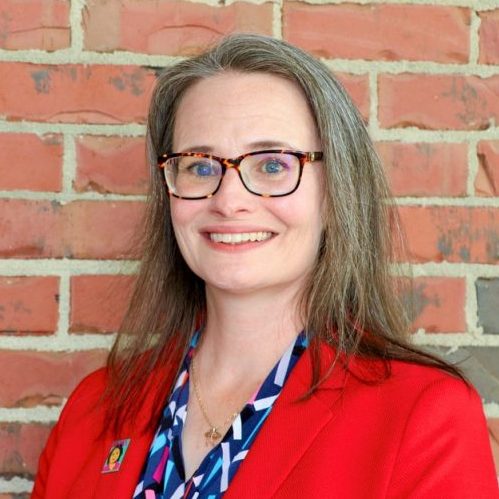
Katherine McKee
· Associate ProfessorVerifiedNorth Carolina State University · Human Development and Family Science
Active 1955–2025
About
Katherine McKee, PhD, is an Associate Professor and Co-Director of The Oaks Leadership Scholars at North Carolina State University in the College of Agriculture and Life Sciences, Agricultural and Human Sciences department. She received her PhD in Agricultural & Extension Education from Virginia Tech in 2011, where her studies focused on identity development, access to discourses, and pedagogy. Dr. McKee works in leadership education examining how to develop leadership capacities for transformative change. Her prior experience includes serving as a 4-H Youth Development Agent and a High School Agriculture Teacher. Dr. McKee is involved in developing identities aligned with transformative leadership to address justice and equity goals. She is the co-editor and co-author of 'Transformative Leadership in Action: Allyship, Advocacy, & Activism' and co-directs The Oaks Leadership Scholars program. She has developed and facilitates Agents for Change, a two-year program for early career Extension professionals aimed at developing leadership capacities to address complex community challenges and create more just and equitable outcomes. Her research and initiatives also include a NIFA-funded project called New Beginnings for Colleges of Agriculture, which aims to develop cultural competency among CALS faculty to support Indigenous youth success and build curriculum for similar work at other institutions. Additionally, she is a collaborator on the #PassTheMicYouth Curriculum to foster advocacy among youth. Her work emphasizes justice, equity, and leadership development within agricultural and extension education contexts, with a focus on developing transformative leadership capacities to address societal challenges.
Research topics
- Sociology
- Political Science
- Pedagogy
- Psychology
- Aesthetics
- Developmental psychology
- Social psychology
- Computer Science
- Medicine
- Art
- Public relations
- Multimedia
- World Wide Web
- Gastroenterology
- Medical education
- General surgery
- Philosophy
- Gender studies
- Internal medicine
Selected publications
Journal of International Agricultural and Extension Education · 2025-09-10
articleOpen accessThis study examined the effects of cultural norms and traditional beliefs on the lived experiences of women in agriculture in rural communities in Nigeria. Semi-structured interviews with rural Nigerian women and men yielded thematically examined qualitative data. The results revealed that cultural and traditional practices significantly impact the involvement, economic and social progress of women in agriculture in rural communities in Nigeria. Conservatism and patriarchy are central cultural norms and traditional beliefs in these communities. These norms and beliefs institutionalize discrimination against women, exclusion of women from decision-making, relegation of women to domestic duties, restriction of women's access to productive resources and economic opportunities, perpetuating their dependence on the menfolk, and subsistence farming. Women's groups act as a support system because they enable women to voice their concerns in various forums. The study recommends interventions that promote gender justice, education, and resource access to empower women and improve their livelihoods.
Exploring the role of positive emotions in leadership learning
Journal of Leadership Education · 2025-02-12 · 1 citations
articleOpen accessPurpose This project represents an exploratory qualitative investigation of the connection between undergraduate students’ experiences of positive emotions in academic leadership courses and their self-reports of leadership learning. Design/methodology/approach Our research team conducted a qualitative analysis of 298 post-course survey comments from students in academic courses focused on leader development over three academic years. These surveys included prompts inviting students to report dominant emotions they repeatedly felt within the classroom environment and how these salient emotions helped or hindered their learning over the course of the semester. Findings Our results suggest a complex interplay between the ways students’ self-reported experience of positive emotions during a leadership class influenced their leadership learning and course engagement. Overall, student responses revealed positive emotions through their course engagement, with interest, joy and serenity/contentment being the most frequently reported positive emotions. Participants attributed these emotions to influencing their willingness to attend class, participate in class activities, deepen their learning about leadership topics and apply their leadership learning beyond the class. Originality/value Educational research has long shown that emotions are relevant to specific learning processes. However, this research has not yet been applied to leadership-focused classrooms. Our novel study focused on the connections between emotional reactions to leadership courses and student learning and was designed to help unlock the primary mechanisms by which young people learn to lead through formal academic coursework.
Journal of Animal Science · 2025-05-01
articleOpen accessAbstract One of the greatest challenges in food animal production is a need to meet the dietary demand of an ever-growing population. According to a study conducted by Purdue University in 2015 (https://www.purdue.edu/usda/employment), US college graduates have good job opportunities if they first gain experience in food and agriculture through high impact experiences like internships and research. At NC State University, we have approximately 850 students pursuing a bachelor’s degree in Animal Science. Approximately 20% of our students come from under-represented groups, ~21% come from the most economically distressed North Carolina counties, with ~22% being Pell grant recipients. Upon entering the university, 96% of these students report career aspirations of veterinary medicine, but only about 10% pursue a doctorate in veterinary medicine, thus leaving a large number of these graduates to pursue alternative careers. This pool of undergraduates represents an enormous, untapped resource able to contribute to the betterment of US animal production. Our ASSURE (Animal Science Summer Undergraduate Research Experience) program targets sophomore and junior students that are under-resourced (i.e., underrepresented, disabled, economically disadvantaged, rural and first generation students), and aims to (1) to create an intensive 12-week hands-on experience in fundamental and applied research, (2) to develop and refine their essential workforce skills and enhance future employment, and (3) to strengthen and advance their understanding of the opportunities available in food animal-related careers and graduate programs. To date we have completed 3 cohorts of Scholars with two additional cohorts to be selected for 2025 and 2026. Since its inception, 28 ASSURE Scholars have completed the program. In this talk, we will discuss the various aspects of the ASSURE program and the impact the program has had on the career plans of these Scholars.
The Effects of Burnout in Female Higher Education Administrators
Advancing Women in Leadership Journal · 2024-02-07 · 5 citations
articleOpen accessThis research explored the phenomenon of femaleness and how it impacts the experiences of women in higher education administration, specifically in colleges of agriculture, and how these experiences contributed to burnout, compassion fatigue, and job satisfaction. Despite representing more than half of the college-educated workforce, women are not represented equally within leadership positions in higher education. In academia, women faculty numbers have improved over the past several decades, representing 52.9% of assistant professor positions (Women in Academia: Quick Take, 2020). Higher education was initially intended only for men (Bystydzienski & Bird, 2006) and therefore valued men in higher-level positions (Bird, 2011; Trower, 2012). This has led to the creation of a culture where women and minorities are underrepresented and face multiple barriers (Bird, 2011). Having an inequitable distribution of power not only in organizations but within society suggests that women will need to traverse a different, more challenging path than their male counterparts to arrive at the same tier of status. Keywords: burnout, compassion fatigue, higher education, women administrators, women leaders in agriculture, stress, gender roles, coping with stress
Journal of Leadership Education · 2024-04-14
articleOpen access1st authorCorrespondingPurpose Our goals were to explore the pedagogies applied by instructors that supported Black, Indigenous and People of Color (BIPOC) student learning in a leadership course and the leadership behaviors BIPOC students identified as being applicable after the course. Design/methodology/approach Through survey research and qualitative data analysis, three prominent themes emerged. Findings High-quality, purposeful pedagogy created opportunities for students to learn. Second, a supportive, interactive community engaged students with the instructor, each other and the course material to support participation in learning. As a result, students reported experiencing big shifts, new growth and increased confidence during their leadership courses. Originality/value We discuss our findings and offer specific recommendations for leadership educators to better support BIPOC students in their leadership courses and classrooms and for further research with BIPOC students.
Journal of Youth Development · 2024-03-19 · 6 citations
articleOpen accessJournal of Leadership Education · 2024-04-14 · 1 citations
articleOpen accessSenior authorCorrespondingPurpose The Agents of Change program is a two-year, project-based learning program to develop Extension Professionals’ capacity to engage in Adaptive and Transformative Leadership. Its primary goal is to develop the capacity of Extension Professionals to engage in leadership to create more diverse, equitable, inclusive and just Extension programs and community change initiatives. This manuscript describes the program and an initial evaluation and results. Findings Results of an evaluation of the first year of the program indicate that regular training sessions and support are appropriate for leadership development and that Extension Professionals are using the learning, awareness and tools from this program to address challenges with Adaptive and Transformative Leadership elements. Also, Extension professionals demonstrated commitment to personal growth, community engagement and understanding of their multifaceted roles as change agents. Originality/value Participants are sharing resources from the program with colleagues, leading meetings differently, questioning the status quo and pushing others to try new ways forward.
Strategies for Diversity & Inclusion
NACTA Journal · 2023
- Political Science
- Sociology
- Psychology
The diversity of undergraduate students on college campuses across the country is increasing (Pope et al., 2014). In conjunction with this increase in diversity has been a rise in negative responses to that diversity, which in turn, causes decreased student satisfaction in the campus experience for those diverse student populations (Evans & D'Augelli, 1996; Evans & Rankin, 1998; Huntt et al., 2012; Seymour & Hewitt, 1997; Tonso, 1999). This increase in student diversity and decrease in student satisfaction has challenged universities to not only to support students, but also to create programs, design policies and procedures, and implement strategies and interventions that are culturally sensitive. The purpose of this case study is to provide insight into HBCU College of Agriculture (CoA) faculty experiences with diversity with a particular focus on why those HBCU CoA faculty chose to become multiculturally competent or not.
Academic Prolfes of Students in a College of Agriculture
NACTA Journal · 2023-08-11
articleOpen access1st authorCorrespondingThis paper establishes a clearer picture of the demographics of a single cohort of undergraduate students that entered [State’s] College of Agriculture and Life Sciences (CALS) in the fall semester of 2013. We compared the demographics of the cohort with the overall population of [State] to determine how well the student population at CALS represents the state it serves. We found that female students, White students, and students from economically developed counties were over-represented in the cohort as compared to the general population of the state. Using descriptive statistics, we created academic profiles for student groups of interest. The comparisons we made between groups show evidence that male, Latinx, out-of-state, and nontraditional students have mean graduation rates which are troublingly low. This research can help to guide efforts at these institutions to more effectively develop resources to continue to facilitate success for student groups who are thriving and to better support those who are experiencing hardship.
Critical Competencies of 4-H Camp Staff for Achieving High Performance
Journal of Extension · 2023-08-28
articleOpen accessSenior authorCamps provide a substantial opportunity for youth to develop important life skills. Identifying and training staff on critical competencies are essential to achieving the desired outcomes for camp participants. The purpose of this study was to determine the most critical competencies of the 4-H residential camp staff for achieving high staff performance. The modified Delphi technique was used to achieve study objectives. The Delphi panel of this study consisted of 23 4-H camping experts from across the United States. This three-round Delphi study led to identify 15 critical competencies that will be useful in standardizing 4-H camp staff training programs.
Frequent coauthors
- 77 shared
Jacklyn Bruce
North Carolina State University
- 64 shared
Anna Louise Patton
Fort Hays State University
- 64 shared
Sek Ying Chair
Chinese University of Hong Kong
- 64 shared
G Max
Fort Hays State University
- 64 shared
Kristine F. Hoover
Eastern University
- 64 shared
Danielle Mitchell
Baylor College of Medicine
- 64 shared
James C. Mohr
- 64 shared
K. Jordan
Gonzaga University
Education
- 2011
Ph.D., Agricultural, Leadership, and Community Education
Virginia Tech
- 2004
M.S. Ed., Youth Development and Agricultural Education
Purdue University
- 2002
B.S., Agricultural Science
Rutgers University School of Environmental and Biological Sciences
Awards & honors
- 2021 – Association of Leadership Education Rising Star: Earl…
- 2021 – Department of Agricultural & Human Sciences Teacher o…
- 2020 – Association of Leadership Educators Outstanding Works…
- 2015 – Research Friend of North Carolina Extension
- 2011 – Honorary State FFA Degree, Virginia
- Resume-aware match score
- Save to shortlist
- AI-drafted outreach
See your match with Katherine McKee
PhdFit ranks faculty by your research interests, methods, and publications — grounded in their actual work, not templates.
- Free to start
- No credit card
- 30-second signup