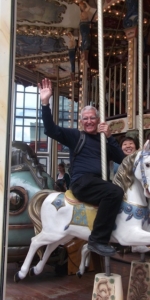
Teofilo Ruiz
· Teofilo RuizUniversity of California, Los Angeles · History
Active 1970–2025
About
My name is Teofilo F. Ruiz, but everybody calls me Teo. I was born in Cuba many (far too many) years ago. My family supported the Cuban revolution because the government that preceded Castro was a crude, violent, and terrible dictatorship. So I became a student representative of my municipality to the 26 of July movement, absolutely taken by this sense of the possibility of making changes in an unjust world. The reality, of course, is that at a certain age we should all think of transforming the world. Unfortunately, in most cases, the world changes us.
Research topics
- Political Science
- History
- Ancient history
- Sociology
- Computer Science
- Humanities
- Anthropology
- Ethnology
- Geology
- Library science
- Art
- Archaeology
- Chemistry
- Classics
- Law
- Genealogy
Selected publications
Mediterranea International Journal on the Transfer of Knowledge · 2025-04-30
articleOpen access1st authorCorrespondingReview of: Richard L. Kagan, The Inquisition’s Inquisitor. Henry Charles Lea of Philadelphia, University of Pennsylvania Press, Philadelphia 2025, viii, 364 pp., ISBN 9781512825985 (Hardcover), 9781512825992 (Ebook).
Oligarchy and Royal Power: The Castilian Cortes and the Castilian Crisis 1248–1350
2024-08-14
book-chapter1st authorCorrespondingThe City and the Realm: Burgos and Castile, 1080-1492
2024 · 8 citations
1st authorCorresponding- Humanities
- Humanities
- Political Science
The articles in the first part of this volume, two being a revised English version of an article originally in Spanish, examine the place of the city in the historical development of Castile. The focus is the social and economic history of Burgos, and the work is founded on detailed research in the archives of the area. Professor Ruiz also calls into question the long held belief in the democratic character of medieval Castilian municipal life. In the second section he opens the field of enquiry to deal with the controversial question of what impact the conquest of Seville and the subsequent settlement of al-Andalus had on the realm of Castile, looking in particular at demographic factors and the emergence of the latifundia. The following articles analyse the symbolism and ceremonial of royal power, arguing that the claims for a sacred monarchy so usual in the medieval West were absent during this period of Spanish history, and that the kings used popular secular ceremonies, not anointments or coronations, to legitimise their rule. The book then closes with a study of the origins of the Spanish Inquisition. Les travaux contenus dans la première partie de cet ouvrage examinent la place de la Cité dans le développement historique de la Castille. L’intérêt central porte sur l’histoire sociale et économique de Burgos et l’analyse est fondée sur une recherche détaillée dans les archives de cette région. Le professeur Ruiz remet aussi en question la croyance que l’on avait depuis longtemps quant au caractère démocratique de la vie municipale dans la Castille médiévale. Dans la seconde partie, l’auteur élargit le champs de l’enquête afin de traiter de la question controversée au sujet de l’impact de la conquête de Séville et l’occupation consécutive d’al-Andalus sur le royaume de Castille, s’intéressant en particulier aux facteurs démographiques et à l’émergence de latifundia. Les études suivantes analysent le symbol
The Transformation of the Castilian Municipalities: The Case of Burgos 1248–1350*
Routledge eBooks · 2024 · 3 citations
1st authorCorresponding- Political Science
- Political Science
- History
Burgos and the Council of 1080
2024-08-14
book-chapter1st authorCorrespondingLa Formazione Del Mercato Della Terra Nella Castiglia Del Basso Medioevo
2024-08-14 · 1 citations
book-chapter1st authorCorrespondingImages of Power in the Seals of the Castilian Monarchy: 1135–1469
2024-08-14
book-chapter1st authorCorrespondingThe Holy Office in Medieval France and in Late Medieval Castile: Origins and Contrasts
2024-08-14
book-chapter1st authorCorrespondingUna nota sobre la estructura y relaciones fiscales del Burgos bajomedieval
2024-08-14
book-chapterOpen access1st authorCorrespondingUna nota sobre la estructura y relaciones fiscales del Burgos bajomedievalEntre los problemas todava por estudiar con detalle en el amplio campo de la historia castellana en la baja Edad Media, ocupa un lugar importante el estimar los ingresos y gastos de la administracin real.Aunque existen una relacin de las Cuentas y gastos" para el reinado de Sancho IV, publicado por Mercedes Gaibrois de Ballesteros, y un padrn de encabezamientos y servicios de judos para el ao 1290, publicado por Amador de los Ros, estos documentos o no han sido examinados exhaustivamente> o no nos proporcionan toda la informacin necesaria ~.Es indudable que no sabemos con certeza a cuanto ascendan los ingresos reales, ni tenemos tampoco un presupuesto de la monarqua castellana para los siglos XIII y principios del XIV.Esta omisin es an ms penosa cuando la comparamos con la informacin fiscal con que contamos para otros reinos medievales de Europa occidental>.Tal
Festivités, Couleurs Et Symboles Du Pouvoir En Castille Au XVe Siècle Les CéLébrations De Mai 1428
2024-08-14 · 1 citations
book-chapter1st authorCorresponding
Frequent coauthors
- 7 shared
Howard Burton
University Hospitals Sussex NHS Foundation Trust
- 4 shared
Marta Bermúdez
Liberal Arts University
- 4 shared
Donato Ndongo-Bidyogo
- 4 shared
David Rojinsky
- 4 shared
Stanislao G. Pugliese
- 4 shared
Román de la Campa
Liberal Arts University
- 4 shared
Herman Berliner
- 4 shared
Mercedes Rodríguez
Liberal Arts University
Labs
Awards & honors
- National Humanities Medal
- Resume-aware match score
- Save to shortlist
- AI-drafted outreach
See your match with Teofilo Ruiz
PhdFit ranks faculty by your research interests, methods, and publications — grounded in their actual work, not templates.
- Free to start
- No credit card
- 30-second signup