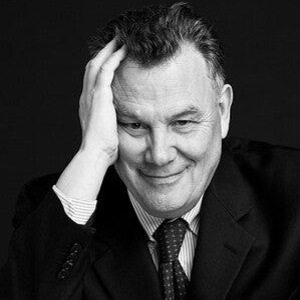
Francesco Casetti
· Sterling Professor of Humanities and Film and Media StudiesVerifiedYale University · Department of Film and Media Studies
Active 1979–2025
About
Francesco Casetti is the Sterling Professor of Humanities and Film and Media Studies at Yale University. His teaching encompasses courses on Semiotics, Film and Media Theories, Post-Cinema and Technical Images, and Media and Space. His research has historically focused on semiotics of film and television, with significant contributions to understanding genres, intertextuality, and enunciation. Casetti's notable work includes an extensive study on the implied spectator in film, exemplified by his book 'Inside the Gaze' (Indiana, 1999), and an edited volume on television audiences, 'Tra me e te' (1988). During the 1990s, he integrated ethnographic research with close analysis, introducing the concept of 'communicative negotiations' in media consumption. In the 2000s and 2010s, Casetti explored cinema's role in modernity and its transformation in the electronic age through award-winning books such as 'Eye of the Century. Film, Experience, Modernity' (Columbia, 2008) and 'The Lumière Galaxy: Seven Key Words for the Cinema to Come' (Columbia, 2015). His scholarship also includes significant writings on film theories, with works like 'Theories of Cinema. 1945-1995' and an anthology on early Italian film theories. Casetti's current project investigates the deep history of fears related to media and mediation, focusing on modern optical-spatial arrangements rooted in the Phantasmagoria of the 18th century. He has held academic positions in Italy and abroad, including visiting professorships at Université de Paris III - la Sorbonne Nouvelle, the University of Iowa, and Harvard, and has been recognized with fellowships at institutions such as the University of California-Berkeley, the University of Otago, Bauhaus University Weimar, and Freie University Berlin. Casetti is a member of several scholarly advisory boards and prestigious academies, and he co-founded the Permanent Seminar on Histories of Film Theories. His work is widely translated and he is an affiliated faculty member at the Yale School of Architecture.
Research topics
- Computer Science
- Art
- Sociology
- Political Science
- Social Science
- Aesthetics
- Visual arts
- Artificial Intelligence
- Epistemology
- Psychology
- Philosophy
- Physics
- World Wide Web
- Law
Selected publications
Beyond Subjectivity: The Film Experience
Subjectivity · 2025-10-01
book-chapter1st authorCorrespondingAnticipation and concentration, sensual excitement, craving for a habit, sudden astonishment: they are all part of watching film. Therefore, I shall attempt to consider the cinema as a locus of experience – an experience of a particular kind: the film experience. This is perhaps not a new endeavor, 2 but it now seems a necessary one for at least three reasons.
From paleo- to neo-television: A semio-pragmatic approach
Critical Studies in Television The International Journal of Television Studies · 2025-02-25 · 3 citations
article1st authorCorrespondingThis article is an English-language translation of ‘De la paléo- à la néo-télévision’ by Francesco Casetti and Roger Odin (1990), originally published in French. The article highlights transformations in the transition from paleo- to neo-television in France and Italy at the time when private television proliferated in Europe. From a semio-pragmatic perspective, it seeks to understand how the change in ‘ dispositif’ leads to changes in the spectator’s positioning. Paleo-television is described as an ‘institution’, founded on a project of cultural and popular education. Neo-television breaks with this pedagogical communication model through interactive processes. The article theorises the two models and points towards their intersections.
2024-07-10
book-chapterOpen access1st authorCorrespondingMany contemporary media function as filters that protect us against external dangers, rather than as tools that help appropriate the world. From surveillance cameras to plastic partitions in pandemic times, from domestic screens to Zoom conversations, all build a sort of safe harbor from which to better manage reality. Consequently, mediation is no longer an “extension of man,” as Marshall McLuhan put it, but a more complex process, in which contact with the world relies on some kind of distancing, and in which grasping reality also means recognizing the threats it may pose – threats that are, more often than not, the result of human action on the world. This chapter explores the widespread presence of protective media in our contemporary media landscape, with its philosophical implications and its political consequences.
Amsterdam University Press eBooks · 2024-04-12 · 1 citations
book-chapter1st authorCorrespondingPrinceton University Press eBooks · 2023-01-01 · 3 citations
book1st authorCorrespondingZone Books · 2023-08-15 · 1 citations
book1st authorCorrespondingThe Optical and the Environmental: From Screens to Screenscapes
Critical Inquiry · 2023 · 10 citations
1st authorCorresponding- Sociology
- Computer Science
- Aesthetics
The screen is not a pre established object: it becomes a screen—and that screen—when it interacts with a group of elements and relates to a set of practices that produce it as a screen. In this process of becoming screen, a crucial step is played by the space in which the screen is located and where spectators gather. The confluence of screen and space changes our perception of both: the screen displays the situatedness of its action, and the space its nature of medium. The landscape becomes a screenscape, in which individuals access images through which they negotiate with reality and others. Eventually, the insistence on becoming screen highlights the role of contingency and conjuncture in the process of mediation: screenscapes emerge according opportunities, conflicts, and potentialities. Hence a media archeology that, far from being linear and teleological, follows unpredicted paths and creates surprising links—a rhizomatic media archeology.
24. . . . Projection and Protection: On Cinemagoing as Playing Hide-and-Seek with Reality
2023-08-31 · 1 citations
book-chapter1st authorCorrespondingRethinking the Phantasmagoria: an enclosure and three worlds
Journal of Visual Culture · 2022-08-01 · 2 citations
article1st authorCorrespondingThe Phantasmagoria was not just a spectacle based on projections of images of ghosts and monsters. Relying upon new archival findings, this article claims that the Phantasmagoria was instead an optical–environmental dispositive that combined an enclosed space with the exploration of three worlds: the otherworld of the Dead, the physical world of Nature, and the inner world of spectators’ Interiority. While its ultimate goal was to provide an unconventional map of the three domains that were of the greatest interest at the time, its combined interest in a spatial arrangement and a visual address suggests the need for a new, rhizomatic archaeology in which to include the screen-based dispositives.
Amsterdam University Press eBooks · 2021 · 1 citations
- Computer Science
- Political Science
- Art
Contributing to the cinema death topic while focusing on national film institutes, Giovanna Fossati and Annie van den Oever observe that, while it can be said that processes of digitalization (which raise the question as to whether the notion of film is still relevant in this new technological context) have deeply affected the world of film and cinema, some of the film institutes remain – an index of the cinema persistence. Digitalization concerns reproduction and creation. The exchange of views between Fossati and Van den Oever provides a useful perspective on the issue of digital archiving. It also deeply enriches the idea of post-cinema, more precisely, the idea of “a new post-cinematic ecology.”
Frequent coauthors
- 70 shared
Dominique Château
- 65 shared
Gregory Currie
University of York
- 20 shared
Rüdiger Campe
Freie Universität Berlin
- 17 shared
Gundula Kreuzer
- 17 shared
Craig Buckley
- 16 shared
Thomas M. Donnelly
Cappagh National Orthopaedic Hospital
- 16 shared
Beatriz Colomina
Princeton University
- 16 shared
Rüdiger
University of Iowa
Awards & honors
- Chair of Italian Culture for a distinguished scholar at the…
- William P. Evans Fellow at the University of Otago (2011)
- Fellow at the IKKM, Bauhaus University at Weimar (2012)
- Fellow at the BildEvidenz research group, Freie University B…
- Resume-aware match score
- Save to shortlist
- AI-drafted outreach
See your match with Francesco Casetti
PhdFit ranks faculty by your research interests, methods, and publications — grounded in their actual work, not templates.
- Free to start
- No credit card
- 30-second signup