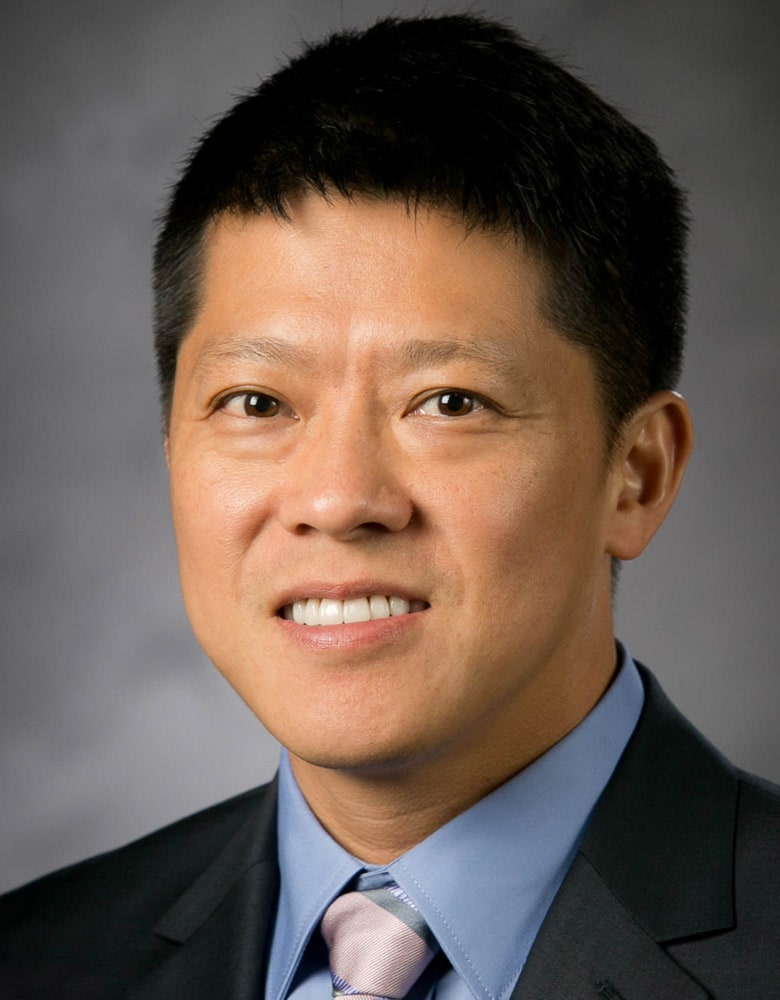
Qi Chen
· Clinical Professor of AccountingVerifiedDuke University · Operations Management
Active 2000–2025
About
Professor Qi Chen holds the L. Palmer Fox Distinguished Professorship of Business Administration at Duke University's Fuqua School of Business. His research interests lie in the intersections between economics, finance, and accounting, with a focus on the role of information and incentives in financial markets and within firms. His work examines how information influences firms’ investment decisions, the role of incentives in accounting systems, corporate governance, and the behaviors of security analysts. Recently, his research has concentrated on issues related to depositors' behaviors and banking stability. Professor Chen's scholarly contributions have been published in leading finance and accounting journals, including the Journal of Finance, Journal of Financial Economics, Review of Financial Studies, Journal of Accounting Research, Journal of Accounting and Economics, and The Accounting Review. He has taught courses such as Managerial Accounting, Financial Statement Analysis, and Accounting PhD seminars at Duke. He holds a PhD and an MBA from the Booth School of Business at the University of Chicago, an MA in economics from the University of Maryland at College Park, and a BA in economics from Wuhan University in China.
Research topics
- Environmental science
- Economics
- Business
- Environmental economics
- Electrical engineering
- Engineering
- Commerce
- Natural resource economics
- Public relations
- Industrial organization
- Meteorology
- Automotive engineering
- Marketing
Selected publications
Research Square · 2025-05-27
preprintOpen accessSSRN Electronic Journal · 2025-01-01 · 1 citations
preprintOpen accessSenior authorSurgical Endoscopy · 2025-10-15
articleBMC Medical Education · 2025-10-02
articleOpen accessINTRODUCTION: Surgical training effectiveness varies significantly worldwide. Understanding the key determinants of trainee confidence and career preference across diverse healthcare systems is crucial for optimizing educational strategies. This study examines surgical training experiences from trainees and surgeons across Kenya, Mali, and China that shape confidence and career preference identifying common associated challenges and potential solutions. METHODS: An anonymous 38-item questionnaire incorporating multiple response formats was distributed online to surgical trainees and professionals across Kenya, China, and Mali (n = 274) between December 2023 and March 2024. The survey assessed demographics, training duration, working patterns, operative experience, assessment methods, perceived pre-operative mastery, and confidence/preference regarding surgery. Data were analysed using descriptive statistics, univariate tests, binary logistic regression (for confidence), and mixed-effects logistic regression (for preference, accounting for country). This study adheres to CHERRIES guidelines. RESULTS: Analysis of 274 respondents revealed notable variations in professional composition and working patterns across countries. Only 28.8% reported confidence in performing gastrointestinal surgery independently after training. Multivariate analysis demonstrated that making a specialty decision (OR = 2.00, p = 0.035), experience as primary surgeon (OR = 3.07, p = 0.009), assessment during training (OR = 2.86, p = 0.011), and pre-operative mastery (OR = 3.43, p < 0.001) were key predictors of surgical confidence. Country-specific factors included professional status in Kenya, pre-operative mastery in China, and practical examinations in Mali. Regarding interest in surgery as a career, weekly participation in operations (OR = 1.94, p = 0.031), understanding procedures beforehand (OR = 2.13, p = 0.013), and effective team communication (OR = 2.15, p = 0.030) were significant factors. CONCLUSION: This multinational survey reveals that surgical training effectiveness is primarily determined by quality factors (pre-operative preparation, hands-on experience, and formal assessment) rather than training duration. Implementation of structured learning approaches emphasizing these elements could substantially improve surgical education, regardless of resource availability or regional differences.
Mutual fund style drift measured using higher moments and its cash flow incentive
The North American Journal of Economics and Finance · 2025-01-01
article1st authorPLoS ONE · 2025-05-19 · 1 citations
articleOpen accessThis paper presents a simple mathematical model and an associated physical device to predict (i) the risk that a woman's active labour will begin without a skilled birth attendant based on her parity and anticipated time to access skilled care; and (ii) the extent to which that risk may be reduced by moving to a maternity waiting home some time before her expected due date. This tool is designed to facilitate more systematic discussions and better-informed decisions about labour care access arrangements during antenatal consultations.
Materials Horizons · 2025-01-01 · 1 citations
articleA cardiac patch is a promising therapeutic graft for repairing infarcted myocardium and preventing irreversible ventricular remodeling. However, most existing patches lack perfusable microchannels and exhibit poor fatigue resistance, making it difficult to restore blood supply to the myocardial infarction (MI) region, thereby limiting their effectiveness in halting the disease progression. To overcome these challenges, we developed a cardiac patch featuring a hierarchical branched microchannel network using an arrayed radial freeze-casting technique. This innovative patch incorporates a dual-scale microchannel network, comprising interconnected primary microchannels (500 μm) and branched microchannels (<50 μm), which promotes cell perfusion and tissue integration by guiding cell growth and supporting microvascular reconstruction. Additionally, the patch is mechanically toughened through a salting-out process to maintain microchannel patency and provide critical structural support to the infarcted region. The arrayed radial freeze-casting enables the precise formation of capillary-sized microchannels, which promote revascularization, improving cardiac function. This perfusable and mechanically toughened patch, featuring a hierarchically branched microchannel network, serves a dual role by enabling microvascular reconstruction and providing essential mechanical support. Its innovative design offers a versatile and scalable protocol for developing microvascularized solutions, applicable to a wide range of tissue-engineered grafts.
Carbon Neutrality · 2025-10-20 · 2 citations
articleOpen accessAbstract Electric vehicles (EVs) with managed charging and discharging schedules have the potential to reduce costs, enhance grid resilience, and facilitate integration of renewable energy sources. However, the heterogeneity of consumer travel patterns and the variability of renewable energy generation present significant challenges to existing control strategies, often resulting in issues such as the “curse of dimensionality.” This study proposes a mobility-aware deep reinforcement learning-based charging control strategy using the Deep Q-Network (DQN) algorithm to minimize charging costs and maximize photovoltaic (PV) energy utilization. Leveraging real-time electricity prices, real-world EV travel data, and actual PV generation profiles, the proposed framework achieves low charging costs, high solar energy utilization, and reduced carbon emissions—approaching the performance of an ideal offline optimization algorithm with perfect foresight, and substantially outperforming baseline strategies such as random charging, Charge-As-Soon-As-Possible (CASAP), and greedy charging. Specifically, the RL-based approach reduces charging costs by 55% and lowers carbon emission by 11.6% compared to random charging, and achieves a PV utilization rate of 95%. Furthermore, the value of information regarding EV’s travel time and the building’s electricity demand is 2.4CNY/vehicle/day and $0.7/vehicle/day, respectively, underscoring the importance of addressing uncertainty in EV charging management. These findings demonstrate the feasibility and effectiveness of reinforcement learning in optimizing EV operations within integrated vehicle-grid-building-PV systems.
WHO CAN PROMOTE FIRM’S INNOVATION? EVIDENCE FROM THE INTERGENERATIONAL TRANSITION OF FAMILY BUSINESS
International Journal of Innovation Management · 2025-01-31
articleSenior authorChinese family business is experiencing a pivotal phase of succession. Although innovation can help family firms realise the goal of long-term development, it remains under-investigated whether and how the second generation influence family firms’ innovation. Based on the controversy on the successors’ behaviour, we explore the effect of the second generation on family firms’ innovation, both input and output included. We find that the engagement of the second generation can foster firm innovation, encompassing both the willingness and the high-quality outcomes of innovation. Also, this effect is more pronounced when family firms own greater competitiveness over their peers and exhibit higher level of financialisation. Path analysis indicates that the second generation may lead to reduced agency costs, minimised appropriation of receivables by large shareholders, and increased risk tolerance regarding innovation, thereby fostering a greater willingness to innovate and yield superior innovation outputs. We thus add to the literature on the succession in family firms and derive practical implications for family firms aiming to bring together family succession and innovative practices.
2025-05-21
peer-review
Frequent coauthors
- 72 shared
Qingqing Dai
Beijing Tsinghua Chang Gung Hospital
- 68 shared
Shujuan Li
Fu Wai Hospital
- 68 shared
Xiaofeng Wang
- 68 shared
Weijia Chen
Providence College
- 66 shared
Yajun Ma
Zhejiang University
- 66 shared
Xiaoyan Jiang
Tongji University
- 66 shared
Ruixue Zhao
Capital Medical University
- 64 shared
Chang Liu
Zhejiang University
- Resume-aware match score
- Save to shortlist
- AI-drafted outreach
See your match with Qi Chen
PhdFit ranks faculty by your research interests, methods, and publications — grounded in their actual work, not templates.
- Free to start
- No credit card
- 30-second signup