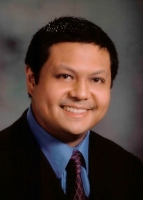
Rodney C. Diaz
· ProfessorUniversity of California, Davis · Otolaryngology
Active 2001–2026
About
Rodney C. Diaz, M.D., F.A.C.S., is a professor in the Department of Otolaryngology – Head and Neck Surgery at UC Davis Health, serving as the Residency Program Director. His clinical focus concerns the treatment of disorders of hearing and balance within the inner ear and skull base, including management of acoustic neuroma and other tumors of the cerebellopontine angle and lateral skull base. He specializes in the medical and surgical management of Ménière's Disease, sensorineural hearing loss—including cochlear implantation—and surgical management of superior semicircular canal dehiscence and other otic capsule anomalies. His practice also encompasses diseases of the middle ear, such as chronic otitis media, cholesteatoma, otosclerosis, and both acquired and congenital hearing loss, along with surgical repair of the tympanic membrane and ossicular chain. Dr. Diaz's scientific research has evolved to focus on developing techniques for repopulating the hair cell depleted cochlea with pragmatic and functional hair cell-like transplants. His broad clinical research interests include therapeutic trials of pharmacologic tinnitus suppression, innovative methods of cost-effective ossiculoplasty, and evaluating safety and risk factors in general otolaryngological procedures. Additionally, he is interested in assessing, managing, and reducing educational gaps in otolaryngological training and in the longitudinal evaluation of medical and surgical residency applicants. He holds a B.A. in Astrophysics from UC Berkeley and an M.D. from UC Davis School of Medicine, with extensive training including a fellowship in Otology, Neurotology, and Skull Base Surgery at the Michigan Ear Institute. Dr. Diaz has received multiple honors and awards, including recognition as one of Sacramento's Top Doctors and fellowships and awards from professional societies.
Research topics
- Political Science
- Medical education
- Medicine
- Surgery
- Family medicine
- Computer Science
- Public relations
- Psychology
- Management
- Demography
- Internal medicine
- Virology
- Environmental health
Selected publications
Middle Ear Neuroendocrine Tumors: A Case Series Highlighting Diagnostic and Management Challenges
Annals of Otology Rhinology & Laryngology · 2026-01-26
articleOBJECTIVE: Middle ear neuroendocrine tumors (MeNETs) are rare lesions that may mimic more common middle ear pathology. Although typically indolent, they have potential for local invasion and delayed recurrence. This study aims to expand understanding of MeNETs by characterizing their presentation, management, histopathology, and long-term outcomes. STUDY DESIGN: Retrospective case series. SETTING: Two tertiary, university-affiliated medical centers. METHODS: Five patients with histologically confirmed MeNETs were identified through retrospective chart review. Data collected included demographics, presenting symptoms, imaging, operative reports, pathology, and follow-up. Histological evaluation involved hematoxylin and eosin staining and immunohistochemistry. RESULTS: All patients presented with unilateral middle ear symptoms such as hearing loss, tinnitus, or otalgia. Imaging demonstrated soft tissue masses in the middle ear cavity, occasionally with ossicular erosion. All underwent tympanomastoidectomy, and each required at least 1 additional operation, either a second-look or revision for residual or recurrent disease. Histopathology confirmed low-grade neuroendocrine tumors with characteristic immunostaining, and no metastases were identified. Two patients developed delayed local recurrence years after initial surgery. CONCLUSION: MeNETs are uncommon, low-grade tumors that can be mistaken for other middle ear lesions. Management requires surgical excision, and revision surgery is frequently necessary. While overall prognosis is favorable, the potential for delayed recurrence underscores the importance of long-term follow-up and consideration of a planned second-look procedure. This case series contributes to the limited literature guiding diagnosis and treatment of these rare tumors.
Cochlear Implantation in Charcot-Marie-Tooth Patients: Speech Perception and Quality of Life
Annals of Otology Rhinology & Laryngology · 2024-02-15 · 1 citations
articleOpen accessOBJECTIVES: There is a limited understanding of the impact of cochlear implantation (CI) in patients with Charcot-Marie-Tooth disease (CMT), given the scarcity of reported cases. We aim to evaluate the audiological outcomes and quality of life (QoL) after CI in CMT. METHODS: Multi-institutional, university-affiliated, tertiary-referral centers, retrospective chart review.Our cohort includes 5 patients with CMT. Patients' charts were reviewed for demographic characteristics, operation notes, and pre- and post-implantation audiology evaluation. Patients completed the Cochlear Implant Quality of Life-10 (CIQOL-10) Global questionnaire. RESULTS: Pre-implantation, the mean pure tone average was 84.1 ± 7.2 dB, and the mean word recognition score was 2.4% in the implanted ear. AzBio sentence test was performed in quiet, revealing a mean of 4 ± 1.4% in the implanted ear. Post-implantation, PTA results were all within the mild hearing loss range (mean 33.0 ± 5.9 dB). Post-CI, AZ-Bio test results were 5%, 65%, and 74% (for 3 patients), and HINT scores were 55% and 58% (for 2 patients). The mean score of the CIQOL-10 questionnaire was 42.7 ± 10.47 (range 1-100). Patients were most satisfied with their ability to listen to the television or radio, have conversations in a quiet environment, and feel comfortable being themselves. CONCLUSION: To the best of our knowledge, this is the most extensive series of CI in CMT-associated sensorineural hearing loss and auditory neuropathy. Our cohort suggests that CI is a safe and reliable method for hearing rehabilitation that can achieve good speech performance and improve QoL in CMT patients.
Otology & Neurotology · 2023-01-18 · 6 citations
articleCorrespondingOBJECTIVE: The following research question was asked: In patients with vestibular schwannoma (VS) that underwent stereotactic radiosurgery (SRS) and cochlear implantation, were improvements in hearing function observed, and what was the cochlear implant (CI) failure rate of in these patients? DATA SOURCES: PubMed/Medline, CINAHL (EBSCOhost), and Web of Science articles without restrictions on publication dates were searched. STUDY SELECTION: Inclusion criteria required that the article was a report, a series, or a retrospective review with individual case data available. Non-English articles were excluded. Inclusion criteria required that patients were with VS and underwent subsequent SRS and cochlear implantation. Patients receiving microsurgery or stereotactic radiotherapy on the ipsilateral ear were excluded from this study. DATA EXTRACTION: Included studies were evaluated using full-text evaluation, and data on study characteristics (author names, gender), clinical data (syndromic information, SRS modality), hearing outcomes, and device failure were extracted. DATA SYNTHESIS: Means and averages were obtained for all continuous variables. Percentages were ascertained for all categorical variables. CONCLUSIONS: The majority of patients undergoing CI placement in VS treated with SRS achieved open-set speech perception (79.2%) or environmental sound awareness (6.8%). Twelve implants (20.3%) failed. Three patterns were associated with failure: 1) immediate-onset failure, 2) initial benefit with delayed failure, 3) poor local control with device explantation.
Journal of Neurological Surgery Part B Skull Base · 2023-02-01
articleObjective: Adhering to the PICOTs framework, the following research question was asked: In patients with VS that underwent SRS and cochlear implantation, were improvements in hearing function observed and what was the short-term and long-term failure rate in these patients?
Overemphasis of USMLE and Its Potential Impact on Diversity in Otolaryngology
OTO Open · 2021 · 33 citations
Senior authorCorresponding- Medicine
- Family medicine
- Demography
OBJECTIVE: Applicant demographics during the 2019-2020 residency cycle were evaluated to determine if strict utilization of United States Medical Licensing Examination (USMLE) scores in applicant selection could lead to a restriction in diversity. STUDY DESIGN: Cross-sectional study. SETTING: Otolaryngology residency applicants to a single institution. METHODS: A total of 381 applicants were analyzed by age, gender, applicant type, race/ethnicity, USMLE scores, permanent zip code, and graduating medical school. RESULTS: > .05). CONCLUSION: Our data suggest that in the pre-USMLE Step 1 pass/fail setting, strict adherence to USMLE scores may lead to disproportionally low recruitment of applicants who are women, ≥30 years of age, URMs, and from institutions without an otolaryngology residency program. We must implement measures against overemphasizing the absolute values of USMLE scores for a true holistic review of applicants, specifically to prevent an overemphasis on the USMLE Step 2 score.
Asymmetric sensorineural hearing loss and vestibular schwannoma: when to image?
Current Opinion in Otolaryngology & Head & Neck Surgery · 2020-08-24 · 5 citations
reviewSenior authorCorrespondingPURPOSE OF REVIEW: We review the literature on the use of audiometric protocols in the guidance of when to obtain MRI for detection of vestibular schwannoma. This discussion will focus on the sensitivity, specificity, and cost-effective analysis of audiometric criteria of asymmetric sensorineural hearing loss (ASNHL) when used to decide when MRI scans should be performed. RECENT FINDINGS: The sensitivity for detecting vestibular schwannomas when invoking published audiometric protocols for triggering MRI acquisition in ASNHL ranged from 50 to 100%. Specificity of these protocols ranged from 23 to 83%. Such audiometric protocols are efficient, achieving sensitivity and specificity at these rates while reducing the screening rate to 18 to 35%. The reduced procurement of MRI while using such audiometric protocols is associated with annual cost savings of between 23 and 82%. While no definitive recommendations can be made from this review, some audiometric protocols offer a better balance of sensitivity and specificity than others. SUMMARY: Audiometric protocols for triggering MRI acquisition in ASNHL for evaluation of vestibular schwannoma can be both sensitive and specific. These are competitive measures, and so no protocol is both 100% sensitive and specific. Such protocols become less effective in populations with increased incidence of noise-induced hearing loss. Invocation of such audiometric protocols can considerably reduce the annual cost of MRI evaluation for vestibular schwannomas.
State of the art regeneration of the tympanic membrane
Current Opinion in Otolaryngology & Head & Neck Surgery · 2020-08-11 · 8 citations
reviewPURPOSE OF REVIEW: One of the most common diseases of the tympanic membrane is a perforation, and tympanoplasty is one of the more common procedures in otolaryngology. Tympanic membrane regeneration and bioengineering aim to improve the success rate of the procedure, increase the availability of different scaffolds and provide innovative tools that will simplify the surgical technique and make it accessible for surgeons with varying expertise level. This review aims to raise awareness of current tissue engineering developments in tympanic membrane regeneration and how they may augment current clinical practices. We focus here on achievements in tympanic membrane cell cultures and on innovations in development of new scaffolds and growth factors that enhance regeneration of patient's native tympanic membranes. RECENT FINDINGS: In recent years, great achievements were reached in the field of tympanic membrane regeneration in the three hallmarks of bioengineering: cells, scaffolds and bioactive molecules. New techniques for modeling normal tympanic membrane proliferation were developed, as well as for isolation and expansion of normal tympanic membrane keratinocytes from miniature samples of scarred tissue. Ongoing clinical trials aim to seal the perforation by applying different scaffolds infiltrated by growth factors on the tympanic membrane. SUMMARY: Research efforts in tympanic membrane regeneration continue to seek the ideal single tissue-engineered substitute. Recent advances in tympanic membrane bioengineering include new types of scaffolds that may augment and provide a safe and effective alternative to the current gold-standard autograft. New bioactive molecules may simplify the surgical procedure and reduce surgical time by augmenting the native tympanic membrane regeneration. Several groups of bioengineering scientists and neurotologists are continuing to move forward and develop new strategies, seeking to create a fully functional tissue-engineered tympanic membrane.
Otolaryngology · 2020 · 31 citations
- Political Science
- Computer Science
- Medical education
Due to concerns surrounding travel during the COVID-19 pandemic, the 2020-2021 otolaryngology residency application cycle will be conducted virtually for the first time. Residency programs should consider the logistics of video interviews, drawing on experiences of other programs that have successfully performed virtual interviews in the past. The lack of in-person interviews will create challenges in assessing applicants, and we recommend that programs develop structured and targeted questions and even consider having candidates answer standardized questions prior to the virtual interview day. From an applicant perspective, gauging the intangibles of individual residency programs, such as resident camaraderie, program culture, and program location, will be difficult. To address this, programs should consider hosting informal virtual gatherings, create videos that highlight the resident experience, and ensure that program websites are up-to-date. Ultimately, adaptability, resilience, and innovation will allow residency programs to achieve a successful 2021 otolaryngology match.
Predicting complications of pediatric temporal bone fractures
International Journal of Pediatric Otorhinolaryngology · 2020-09-01 · 12 citations
articleApplicant-to-Residency Program Communication: Does It Matter?
Annals of Otology Rhinology & Laryngology · 2020-06-02 · 8 citations
articleSenior authorCorrespondingObjectives: To elucidate the frequency and types of pre- and post-interview communication that applicants engage with programs, to garner the perceptions of both applicants and program directors (PDs), and determine if communication influences outcomes. Subjects and Methods: Electronic surveys were distributed to otolaryngology residency applicants, and to PDs of ACGME-accredited otolaryngology programs after the 2018 to 2019 application cycle. Results: 93 of 324 applicants (28.7%) and 33 of 106 PDs (31.3%) responded. In the pre-interview period, 58.1% of applicants sent emails of interest, and 41.9% had a mentor initiate communication. In the post-interview period, the majority of applicants (82.8%) sent notes of intent to their number one choice, and 32.3% had a faculty mentor communicate this on their behalf. The majority of PDs (84.8%) were undecided or did not believe that emails of interest influence decisions to offer an interview, whereas 81.8% believed that communication initiated by an applicant’s mentor has an impact on interview offers. No PD agreed that declarations of intent from applicants have an impact on their rank lists, while only 33.3% of PDs believed that a mentor communicating this for an applicant has some impact. Our statistical findings are in agreement with these perceptions as neither applicant-initiated pre-interview ( P = .54), mentor-initiated pre-interview ( P = .62), applicant-initiated post-interview ( P = .11) nor mentor-initiated post-interview ( P = .78) communications influenced the number of interviews received or ultimate match outcome. Conclusion: Pre- and post-interview communication practices vary widely among otolaryngology applicants. Applicant-initiated communication has no impact on outcomes, while mentor-initiated communication is perceived to have more benefit, despite not impacting interview or match outcomes in this study.
Frequent coauthors
- 13 shared
Eric W. Sargent
Michigan Ear Institute
- 12 shared
Dennis I. Bojrab
Michigan Ear Institute
- 12 shared
John J. Zappia
Michigan Ear Institute
- 11 shared
Shannon Poti
University of Washington
- 11 shared
Wayne T. Shaia
Virginia Commonwealth University
- 8 shared
Hilary A. Brodie
University of California, Davis
- 7 shared
Michael LaRouere
Providence Hospital
- 6 shared
Michael J. LaRouere
Michigan Ear Institute
Awards & honors
- Sacramento's Top Doctors, Sacramento Magazine, 2011, 2012, 2…
- Award, American Academy of Otolaryngology - Head and Neck Su…
- Fellow, American College of Surgeons, ACS Clinical Congress,…
- Faculty Teaching Award-Resident Graduation, Department of Ot…
- Resident Research Award-Graduation Research Forum, Departmen…
- Resume-aware match score
- Save to shortlist
- AI-drafted outreach
See your match with Rodney C. Diaz
PhdFit ranks faculty by your research interests, methods, and publications — grounded in their actual work, not templates.
- Free to start
- No credit card
- 30-second signup