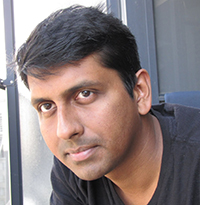
Vinod Vaikuntanathan
VerifiedMassachusetts Institute of Technology · Electrical Engineering & Computer Science
Active 2004–2024
Research topics
- Computer Science
- Business
- Biology
- Genetics
Selected publications
A system capable of verifiably and privately screening global DNA synthesis
arXiv (Cornell University) · 2024 · 7 citations
- Computer Science
- Business
- Computer Science
Printing custom DNA sequences is essential to scientific and biomedical research, but the technology can be used to manufacture plagues as well as cures. Just as ink printers recognize and reject attempts to counterfeit money, DNA synthesizers and assemblers should deny unauthorized requests to make viral DNA that could be misused. There are three complications. First, we don't need to quickly update printers to deal with newly discovered currencies, whereas we regularly learn of new potential pandemic viruses and other biological threats. Second, convincing counterfeit bills can't be printed in small pieces and taped together, while preventing the distributed synthesis and subsequent re-assembly of controlled sequences will require tracking which DNA fragments have been ordered across all providers and benchtop devices while protecting legitimate customer privacy. Finally, counterfeiting can at worst undermine faith in currency, whereas unauthorized DNA synthesis could be used to deliberately cause pandemics. Here we describe SecureDNA, a free, privacy-preserving, and fully automated system capable of verifiably screening all DNA synthesis orders of 30+ nucleotides against an up-to-date database of controlled sequences, and its operational performance and specificity when applied to 67 million nucleotides of DNA synthesized by providers in the United States, Europe, and China.
Recent grants
CAREER: Computing on Encrypted Data
NSF · $537k · 2014–2019
Collaborative Research: SaTC: CORE: Medium: Theoretical Foundations of Block Ciphers
NSF · $600k · 2022–2026
Frequent coauthors
- 53 shared
Nir Bitansky
- 43 shared
Zvika Brakerski
Weizmann Institute of Science
- 42 shared
Abhishek Jain
Johns Hopkins University
- 42 shared
Justin Holmgren
- 41 shared
Rafael Pass
- 37 shared
Hoeteck Wee
- 36 shared
Sanjam Garg
- 36 shared
Sidharth Telang
Johns Hopkins University
- Resume-aware match score
- Save to shortlist
- AI-drafted outreach
See your match with Vinod Vaikuntanathan
PhdFit ranks faculty by your research interests, methods, and publications — grounded in their actual work, not templates.
- Free to start
- No credit card
- 30-second signup