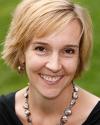
Angelina Godoy
· Professor, LSJ/International Studies; Helen H. Jackson Chair in Human Rights; Director, Center for Human RightsUniversity of Washington · Law, Societies & Justice
Active 1999–2023
About
Angelina Godoy is a Professor at the Law, Societies & Justice department and holds the Helen H. Jackson Chair in Human Rights. She is also the Director of the Center for Human Rights at the University of Washington. Her academic role involves a focus on human rights, and she is involved in international studies. Her research and contributions are centered around human rights issues, and she is recognized for her leadership in this field within the university community.
Research topics
- Political Science
- Law
- Sociology
- Geography
- Development economics
- Pharmacology
- Medicine
- Environmental science
- Market economy
- Economics
- Criminology
- Meteorology
- Business
- Environmental health
- Law and economics
Selected publications
Radical History Review · 2023-05-01
article1st authorCorrespondingAbstract This article shares insights from participatory research conducted with former political prisoners, all of whom survived torture during El Salvador’s armed conflict (1980–92). An analysis of declassified documents reveals that while US officials generally resisted efforts to examine abuses against guerrilla supporters, they advocated behind the scenes for international oversight of prisons, and, in doing so, helped save lives. However, former prisoners’ analyses of the documents shows that US advocacy perpetuated grave misrepresentations about the nature of state repression, further empowering the apparatus of institutional violence even as it spared selected actors. Participatory research projects like this one can offer victims of human rights abuses abetted by US foreign policy an opportunity to reckon with the records of empire. Not only does this process generate new knowledge, but it contributes to survivor-led processes of healing. This is important to counter the imperialist epistemologies that often characterize scholarship on US foreign policy.
2 America Doesn’t Stop at the Rio Grande: Democracy and the War on Crime
New York University Press eBooks · 2022
1st authorCorresponding- Political Science
- Political Science
- Sociology
Poder, política e penalidade – Punitividade como reação nas democracias americanas
Editora UnB eBooks · 2021-01-01
book-chapterSenior author2. A Primer on Pharmaceutical Intellectual Property
Stanford University Press eBooks · 2020-09-09
book-chapter1st authorCorresponding6. Writing Globalization’s Rule Book
Stanford University Press eBooks · 2020-09-09
book-chapter1st authorCorresponding4. Local Politics, Strange Bedfellows, and the Challenges of Human Rights Mobilization
Stanford University Press eBooks · 2020-09-09
book-chapter1st authorCorrespondingNACLA Report on the Americas · 2020-01-02
article1st authorCorrespondingThe Final Act: Deportation by ICE Air
SSRN Electronic Journal · 2020 · 3 citations
Senior authorCorresponding- Political Science
- Environmental science
- Meteorology
Stanford University Press eBooks · 2020 · 5 citations
1st authorCorresponding- Political Science
- Law and economics
- Business
Through an examination of the pharmaceutical industry and access to medicine in Central America, this book considers whether health is a human right or a commodity, and whether human rights advocacy is an antidote to the advance of neoliberal social policy or the very vehicle through which it now advances.
Finding El Salvador's Disappeared: What the US Files Reveal
Human Rights Quarterly · 2018-01-01 · 1 citations
article1st authorCorrespondingIn terms of accountability for the crimes of the past, El Salvador has long been a laggard in Latin America, effectively failing to hold anyone accountable for ordering crimes against humanity committed during its armed conflict from 1980 to 1992, or implementing any meaningful transitional justice process. Yet the victims' long struggle for truth, justice, and reparations has picked up steam in recent years, most notably through the 2016 overturn of the amnesty law which had blocked investigations or prosecutions of wartime crimes since 1993. In early 2017, in response to pressures from civil society in El Salvador and the United States, and at the urging of some members of the US Congress, the Salvadoran government committed to the creation of a commission to locate the remains of the estimated 5–10,000 Salvadorans forcibly disappeared during the war. The success of such efforts will rely upon access to government information, yet efforts to secure relevant files from Salvadoran government institutions have thus far been fruitless. In this context, due to extensive United States involvement in the Salvadoran conflict, US records may help fill the knowledge gap. This article assesses the extent to which relevant information has already been declassified by the US government, and the likely extent to which useful information remains unavailable. It finds that, contrary to the recent assertions of the US State Department, a great deal of information which could aid in these investigations remains classified, particularly in the files of military and intelligence agencies.
Frequent coauthors
- 5 shared
Alejandro Cerón
University of Denver
- 4 shared
Katherine Beckett
University of Washington
- 1 shared
Christopher Chase‐Dunn
- 1 shared
Susanne Jonas
- 1 shared
Nelson Amaro
- 1 shared
H. Warren Clark
- 1 shared
Amanda M. Fulmer
- 1 shared
Deborah M. Weissman
Labs
Law, Societies & JusticePI
Education
Ph.D.
UC Berkeley
M.A.
UC Berkeley
B.A.
Harvard
Awards & honors
- University of Washington’s 2014 Outstanding Public Service A…
- Resume-aware match score
- Save to shortlist
- AI-drafted outreach
See your match with Angelina Godoy
PhdFit ranks faculty by your research interests, methods, and publications — grounded in their actual work, not templates.
- Free to start
- No credit card
- 30-second signup