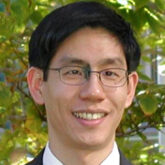
Isaac Chuang
· Julius A. Stratton Professor in Electrical Engineering and PhysicsMassachusetts Institute of Technology · Physics
Active 1987–2026
About
Isaac Chuang is the Julius A. Stratton Professor in Electrical Engineering and Physics at MIT. He is a pioneer in the field of quantum information science, with significant contributions including the experimental realization of two, three, five, and seven quantum bit quantum computers using nuclear spins in molecules. His work provided the first laboratory demonstrations of many important quantum algorithms, such as Shor's quantum factoring algorithm. Prof. Chuang's development of error correction, algorithmic cooling, and entanglement manipulation techniques has advanced the ability to control light and matter at the quantum level, laying a foundation for large-scale quantum information processing systems. Prof. Chuang joined MIT in 2000 from IBM, where he was a research staff member. He earned his doctorate in Electrical Engineering from Stanford University, where he was a Hertz Foundation Fellow. He also holds two bachelor's and one master's degrees in Physics and Electrical Engineering from MIT, and completed post-doctoral fellowships at Los Alamos National Laboratory and the University of California at Berkeley. He is co-author of the textbook 'Quantum Computation and Quantum Information' with Michael Nielsen. His research interests include how physical systems can represent and process information, understanding nature through information and computation, and developing architectures for quantum information systems.
Research topics
- Computer science
- Physics
- Quantum mechanics
- Materials science
- Algorithm
Selected publications
Integrated-photonics-based systems for polarization-gradient cooling of trapped ions
Light Science & Applications · 2026-01-15 · 2 citations
preprintOpen accessTrapped ions are a promising modality for quantum systems, with demonstrated utility as the basis for quantum processors and optical clocks. However, traditional trapped-ion systems are implemented using complex free-space optical configurations, whose large size and susceptibility to vibrations and drift inhibit scaling to large numbers of qubits. In recent years, integrated-photonics-based systems have been demonstrated as an avenue to address the challenge of scaling trapped-ion systems while maintaining high fidelities. While these previous demonstrations have implemented both Doppler and resolved-sideband cooling of trapped ions, these cooling techniques are fundamentally limited in efficiency. In contrast, polarization-gradient cooling can enable faster and more power-efficient cooling and, therefore, improved computational efficiencies in trapped-ion systems. While free-space implementations of polarization-gradient cooling have demonstrated advantages over other cooling mechanisms, polarization-gradient cooling has never previously been implemented using integrated photonics. In this paper, we design and experimentally demonstrate key polarization-diverse integrated-photonics devices and utilize them to implement a variety of integrated-photonics-based polarization-gradient-cooling systems, culminating in the first experimental demonstration of polarization-gradient cooling of a trapped ion by an integrated-photonics-based system. By demonstrating polarization-gradient cooling using an integrated-photonics-based system and, in general, opening up the field of polarization-diverse integrated-photonics-based devices and systems for trapped ions, this work facilitates new capabilities for integrated-photonics-based trapped-ion platforms.
Topological Invariance and Breakdown in Learning
ArXiv.org · 2025-10-03
preprintOpen accessWe prove that for a broad class of permutation-equivariant learning rules (including SGD, Adam, and others), the training process induces a bi-Lipschitz mapping between neurons and strongly constrains the topology of the neuron distribution during training. This result reveals a qualitative difference between small and large learning rates $η$. With a learning rate below a topological critical point $η^*$, the training is constrained to preserve all topological structure of the neurons. In contrast, above $η^*$, the learning process allows for topological simplification, making the neuron manifold progressively coarser and thereby reducing the model's expressivity. Viewed in combination with the recent discovery of the edge of stability phenomenon, the learning dynamics of neuron networks under gradient descent can be divided into two phases: first they undergo smooth optimization under topological constraints, and then enter a second phase where they learn through drastic topological simplifications. A key feature of our theory is that it is independent of specific architectures or loss functions, enabling the universal application of topological methods to the study of deep learning.
Long-lived metastable-qubit memory
Physical review. A/Physical review, A · 2025-02-18 · 9 citations
articleThe authors demonstrate an experimental realization of a long-lived quantum memory using the optical-frequency--metastable-state--ground-state architecture in a trapped ion, where the qubit is stored in the metastable states while an ancillary ion is used for sympathetic cooling. A dynamical decoupling sequence and leakage detection are employed to extend the coherence time to approximately four times the natural lifetime of the metastable state.
Proof of a perfect platonic representation hypothesis
ArXiv.org · 2025-07-01 · 1 citations
preprintOpen accessSenior authorIn this note, we elaborate on and explain in detail the proof given by Ziyin et al. (2025) of the ``perfect" Platonic Representation Hypothesis (PRH) for the embedded deep linear network model (EDLN). We show that if trained with the stochastic gradient descent (SGD), two EDLNs with different widths and depths and trained on different data will become Perfectly Platonic, meaning that every possible pair of layers will learn the same representation up to a rotation. Because most of the global minima of the loss function are not Platonic, that SGD only finds the perfectly Platonic solution is rather extraordinary. The proof also suggests at least six ways the PRH can be broken. We also show that in the EDLN model, the emergence of the Platonic representations is due to the same reason as the emergence of progressive sharpening. This implies that these two seemingly unrelated phenomena in deep learning can, surprisingly, have a common cause. Overall, the theory and proof highlight the importance of understanding emergent "entropic forces" due to the irreversibility of SGD training and their role in representation learning. The goal of this note is to be instructive while avoiding jargon and lengthy technical details.
Collection of fluorescence from an ion using trap-integrated photonics
ArXiv.org · 2025-05-02
preprintOpen accessSpontaneously emitted photons are entangled with the electronic and nuclear degrees of freedom of the emitting atom, so interference and measurement of these photons can entangle separate matter-based quantum systems as a resource for quantum information processing. However, the isotropic nature of spontaneous emission hinders the single-mode photonic operations required to generate entanglement. Current demonstrations rely on bulk photon-collection and manipulation optics that suffer from environment-induced phase instability, mode matching challenges, and system-to-system variability, factors that impede scaling to the large numbers of entangled pairs needed for quantum information processing. To address these limitations, we demonstrate a collection method that enables passive phase stability, straightforward photonic manipulation, and intrinsic reproducibility. Specifically, we engineer a waveguide-integrated grating to couple photons emitted from a trapped ion into a single optical mode within a microfabricated ion-trap chip. Using the integrated collection optic, we characterize the collection efficiency, image the ion, and detect the ion's quantum state. This proof-of-principle demonstration lays the foundation for leveraging the inherent stability and reproducibility of integrated photonics to efficiently create, manipulate, and measure multipartite quantum states in arrays of quantum emitters.
Quantum Computing Enhanced Sensing
ArXiv.org · 2025-01-13
preprintOpen accessQuantum computing and quantum sensing represent two distinct frontiers of quantum information science. In this work, we harness quantum computing to solve a fundamental and practically important sensing problem: the detection of weak oscillating fields with unknown strength and frequency. We present a quantum computing enhanced sensing protocol that outperforms all existing approaches. Furthermore, we prove our approach is optimal by establishing the Grover-Heisenberg limit -- a fundamental lower bound on the minimum sensing time. The key idea is to robustly digitize the continuous, analog signal into a discrete operation, which is then integrated into a quantum algorithm. Our metrological gain originates from quantum computation, distinguishing our protocol from conventional sensing approaches. Indeed, we prove that broad classes of protocols based on quantum Fisher information, finite-lifetime quantum memory, or classical signal processing are strictly less powerful. Our protocol is compatible with multiple experimental platforms. We propose and analyze a proof-of-principle experiment using nitrogen-vacancy centers, where meaningful improvements are achievable using current technology. This work establishes quantum computation as a powerful new resource for advancing sensing capabilities.
Spontaneous Raman scattering from metastable states of Ba$^+$
ArXiv.org · 2025-05-28
preprintOpen accessQuantum logic gates performed via two-photon stimulated-Raman transitions in ions and atoms are fundamentally limited by spontaneous scattering errors. Recent theoretical treatment of these scattering processes has predicted no lower bound on the error rate of such gates when implemented with far-detuned lasers, while also providing an extension to metastable qubits. To validate this theoretical model, we provide experimental measurements of Raman scattering rates due to near-, and far-detuned lasers for initial states in the metastable D$_{5/2}$ level of $^{137}$Ba$^+$. The measured spontaneous Raman scattering rate is consistent with the theoretical prediction and suggests that metastable-level two-qubit gates with an error rate $\approx10^{-4}$ are possible with laser excitation detuned by tens of terahertz or more.
IEEE Transactions on Signal Processing · 2025-01-01 · 5 citations
articleOpen accessSenior authorSignal processing stands as a pillar of classical computation and modern information technology, applicable to both analog and digital signals. Recently, advancements in quantum information science have suggested that quantum signal processing (QSP) can enable more powerful signal processing capabilities. However, the developments in QSP have primarily leveraged <italic xmlns:mml="http://www.w3.org/1998/Math/MathML" xmlns:xlink="http://www.w3.org/1999/xlink">digital</i> quantum resources, such as discrete-variable (DV) systems like qubits, rather than <italic xmlns:mml="http://www.w3.org/1998/Math/MathML" xmlns:xlink="http://www.w3.org/1999/xlink">analog</i> quantum resources, such as continuous-variable (CV) systems like quantum oscillators. Consequently, there remains a gap in understanding how signal processing can be performed on hybrid CV-DV quantum computers. Here we address this gap by developing a new paradigm of mixed analog-digital QSP. We demonstrate the utility of this paradigm by showcasing how it naturally enables analog-digital conversion of quantum signals— specifically, the transfer of states between DV and CV quantum systems. We then show that such quantum analog-digital conversion enables new implementations of quantum algorithms on CV-DV hardware. This is exemplified by realizing the quantum Fourier transform of a state encoded on qubits via the free-evolution of a quantum oscillator, albeit with a runtime exponential in the number of qubits due to information theoretic arguments. Collectively, this work marks a significant step forward in hybrid CV-DV quantum computation, providing a foundation for scalable analog-digital signal processing on quantum processors.
Modular quantum signal processing in many variables
Quantum · 2025-06-18 · 4 citations
articleOpen accessSenior authorDespite significant advances in quantum algorithms, quantum programs in practice are often expressed at the circuit level, forgoing helpful structural abstractions common to their classical counterparts. Consequently, as many quantum algorithms have been unified with the advent of quantum signal processing (QSP) and quantum singular value transformation (QSVT), an opportunity has appeared to cast these algorithms as modules that can be combined to constitute complex programs. Complicating this, however, is that while QSP/QSVT are often described by the polynomial transforms they apply to the singular values of large linear operators, and the algebraic manipulation of polynomials is simple, the QSP/QSVT protocols realizing analogous manipulations of their embedded polynomials are non-obvious. Here we provide a theory of modular multi-input-output QSP-based superoperators, the basic unit of which we call a <mml:math xmlns:mml="http://www.w3.org/1998/Math/MathML"><mml:mi>g</mml:mi><mml:mi>a</mml:mi><mml:mi>d</mml:mi><mml:mi>g</mml:mi><mml:mi>e</mml:mi><mml:mi>t</mml:mi></mml:math>, and show they can be snapped together with LEGO-like ease at the level of the functions they apply. To demonstrate this ease, we also provide a Python package for assembling gadgets and compiling them to circuits. Viewed alternately, gadgets both enable the efficient block encoding of large families of useful multivariable functions, and substantiate a functional-programming approach to quantum algorithm design in recasting QSP and QSVT as monadic types.
Machine Learning Decoding of Circuit-Level Noise for Bivariate Bicycle Codes
ArXiv.org · 2025-04-17
preprintOpen accessSenior authorFault-tolerant quantum computers will depend crucially on the performance of the classical decoding algorithm which takes in the results of measurements and outputs corrections to the errors inferred to have occurred. Machine learning models have shown great promise as decoders for the surface code; however, this promise has not yet been substantiated for the more challenging task of decoding quantum low-density parity-check (QLDPC) codes. In this paper, we present a recurrent, transformer-based neural network designed to decode circuit-level noise on Bivariate Bicycle (BB) codes, introduced recently by Bravyi et al (Nature 627, 778-782, 2024). For the $[[72,12,6]]$ BB code, at a physical error rate of $p=0.1\%$, our model achieves a logical error rate almost $5$ times lower than belief propagation with ordered statistics decoding (BP-OSD). Moreover, while BP-OSD has a wide distribution of runtimes with significant outliers, our model has a consistent runtime and is an order-of-magnitude faster than the worst-case times from a benchmark BP-OSD implementation. On the $[[144,12,12]]$ BB code, our model obtains worse logical error rates but maintains the speed advantage. These results demonstrate that machine learning decoders can out-perform conventional decoders on QLDPC codes, in regimes of current interest.
Recent grants
NSF · $714k · 2011–2017
NSF · $125k · 2007–2010
MRI-R2: Laser Acquisition and Modernization Program (LAMP) for Quantum Science and Engineering
NSF · $2.3M · 2010–2013
Frequent coauthors
- 60 shared
Andrew Ho
- 57 shared
Justin Reich
Massachusetts Institute of Technology
- 57 shared
Jaroslaw Labaziewicz
- 54 shared
Guang Hao Low
- 50 shared
Jim Waldo
- 47 shared
Peter F. Herskind
Novo Nordisk (Denmark)
- 46 shared
Yufei Ge
National University of Defense Technology
- 42 shared
John Chiaverini
Massachusetts Institute of Technology
Awards & honors
- 2010 // American Physical Society Fellow
- Resume-aware match score
- Save to shortlist
- AI-drafted outreach
See your match with Isaac Chuang
PhdFit ranks faculty by your research interests, methods, and publications — grounded in their actual work, not templates.
- Free to start
- No credit card
- 30-second signup