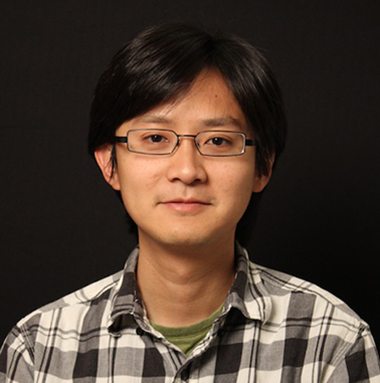
Tuan Do
· Associate Professor, Andrea M. Ghez Centennial Term Chair in Astronomy & AstrophysicsVerifiedUniversity of California, Los Angeles · Physics and Astronomy
Active 2002–2026
About
Professor Tuan Do is the Deputy Director of the Galactic Center Group at UCLA. He earned his B.A. in Physics and Astrophysics from the University of California, Berkeley in 2004 and his Ph.D. in Astronomy from UCLA in 2010. Following his doctoral studies, he was a TMT Fellow at UC Irvine and a Dunlap Fellow at the University of Toronto. Currently, he serves as an Assistant Research Scientist at UCLA and holds a position as an Assistant Professor. Dr. Do's research focuses on understanding the formation of the nuclei of galaxies, with particular emphasis on studying the composition and star formation history of the Milky Way nuclear star cluster and the interactions of these stars with the supermassive black hole at the Galactic center. His interests also extend to the dynamics of nearby Milky Way dwarf galaxies and their applications in cosmology. To conduct his research, Dr. Do utilizes both space-based telescopes such as the Hubble Space Telescope and adaptive optics on ground-based telescopes like the Keck Telescopes and Gemini to obtain precise photometry and kinematics. Additionally, he has contributed to the development of a data simulator and science cases for the Infrared Imaging Spectrograph (IRIS) for the future Thirty Meter Telescope (TMT).
Research topics
- Astrophysics
- Physics
- Astronomy
- Computational physics
- Quantum mechanics
- Classical mechanics
Selected publications
2026-05-24
articleSenior authorWe present a systematic methodology for identifying essential rule sets in agent-based models, demonstrated through tumor evolution under therapeutic pressure. Our framework addresses a critical challenge: determining which interaction rules are necessary for reproducing emergent spatiotemporal patterns versus those representing auxiliary complexity. We couple autonomous cancer cell agents with reaction-diffusion fields, then systematically ablate mechanisms including paracrine signaling, metabolic competition, phenotypic plasticity, and spatial interactions. Our approach establishes empirically-calibrated significance thresholds from baseline system stochasticity, providing principled criteria for mechanism classification. A key methodological insight distinguishes ablatable biological rules from non-ablatable framework requirements: removing spatial diffusion caused model failure, revealing it encodes physical constraints rather than testable hypotheses. We demonstrate that complex patterns emerge from minimal rule sets, with several commonly-modeled mechanisms contributing negligibly to tissue-scale behavior. This methodology advances multi-agent simulation by providing objective model reduction techniques that enhance mechanistic interpretability and facilitate parameter calibration.
MOSDEF-3D: Keck/OSIRIS Maps of the Ionized Interstellar Medium in <i>z</i> ∼ 2 Galaxies
The Astrophysical Journal · 2026-04-23
articleOpen accessAbstract We present spatially resolved rest-frame optical emission line maps of four galaxies at z ∼ 2 observed with the Keck/OH-Suppressing Infra-Red Imaging Spectrograph to study the physical conditions of the interstellar medium (ISM) at cosmic noon. Our analysis of strong emission line ratios in these galaxies reveals an offset from the local star-forming locus on the Baldwin–Phillips–Terlevich diagram but agrees with other star-forming galaxies at similar redshifts. Despite the offset toward higher [O iii ] λ 5008/H β and [N ii ] λ 6585/H α , these strong line ratios remain consistent with or below the maximum starburst threshold even in the inner ∼1 kpc region of the galaxies, providing no compelling evidence for central active galactic nucleus activity. The galaxies also exhibit flat radial gas-phase metallicity gradients, consistent with previous studies of z ∼ 2 galaxies and suggesting efficient radial mixing possibly driven by strong outflows from intense star formation. Overall, our results reveal the highly star-forming nature of these galaxies, with the potential to launch outflows that flatten metallicity gradients through significant radial gas mixing. Future observations with JWST/NIRSpec are crucial to detect fainter emission lines at higher spatial resolution to further constrain the physical processes and ionization mechanisms that shape the ISM during cosmic noon.
Proceedings of the AAAI Conference on Artificial Intelligence · 2026-03-14
articleOpen accessSenior authorWe present Graph Neural ODEs (GNODEs) for modeling tumor microenvironment dynamics with mathematically guaranteed stability and conservation properties. Unlike bulk ODEs that miss spatial heterogeneity or discrete GNNs that inadequately capture continuous biological processes, GNODEs provide continuous-time evolution with explicit adjacency-aware dynamics while maintaining provable trajectory bounds. Our framework ensures: (1) existence and uniqueness of solutions under dynamic graph topology, (2) Lyapunov stability preventing unphysical states like negative cell counts, and (3) exact conservation of biological invariants through architectural constraints. Benchmarking on synthetic tumor data demonstrates that GNODE accurately captures the dynamics of the resistant cell fraction (0.282 predicted vs 0.242 true), whereas graph-free alternatives fail completely (0.000), underscoring the importance of stability-constrained local interactions for modeling emergent resistance.
Photometric Constraints on Intermediate-mass Black Holes in the Galactic Centre
Publications of the Astronomical Society of the Pacific · 2025-11-01 · 1 citations
articleOpen accessCorrespondingAbstract JWST/MIRI observations can place photometric limits on the presence of an intermediate-mass black hole (IMBH) near the Galactic Centre. The stellar complex IRS 13E, a co-moving conglomerate of young and massive stars, is a prime location to study because it has been speculated to be bound by an IMBH. Assuming a standard radiatively inefficient accretion flow (RIAF) and a minimum fractional variability of 10% of the intrinsic luminosity, the wavelength of peak emission in the spectral energy distribution for an IMBH would lie in the mid-infrared (∼5–25 μ m), and the variability would be detectable in MIRI time-series observations. Monitoring fails to detect such variable emission (other than from Sgr A*) in and around the IRS 13E complex, and upper limits on a putative IMBH’s intrinsic variability on timescales of minutes to ∼1 hr are ≲ 1 mJy at 12 μ m and ≲2 mJy at 19 μ m. These translate to luminosities ≲ 25 × 10 32 erg s −1 . The resulting limits on the IMBH mass and accretion rate rule out any IMBH with mass ≳10 3 M ⊙ accreting at ≳10 −6 times Eddington rate at the location of IRS 13E. Further, the observations rule out an IMBH anywhere in the central 6″ × 6″ region that is more massive than ≈ 2 × 10 3 M ⊙ and accreting at ≥10 −6 of the Eddington rate. Assuming Bondi accretion scaled to typical RIAF-accretion efficiencies, albeit somewhat uncertain, also allows us to rule out IMBHs moving with typical velocities ∼200 km s −1 and masses ≳ 2 × 10 3 M ⊙ . These methods showcase the effectiveness of photometric variability measurements in constraining the presence of accreting black holes in Galactic centre-like environments.
The HST-Gaia Near-Infrared Astrometric Reference Frame near the Milky Way Galactic Center
ArXiv.org · 2025-06-24
preprintOpen accessWe present the first high-precision proper motion catalog, tied to the International Celestial Reference System (ICRS), of infrared astrometric reference stars within R $\leq$ 25" (1 pc) of the central supermassive black hole at the Galactic center (GC). This catalog contains $\sim$2,900 sources in a highly extinguished region that is inaccessible via Gaia. New astrometric measurements are extracted from HST observations (14 epochs, 2010 - 2023) and transformed into the ICRS using 40 stars in common with Gaia-DR3. We implement a new method for modeling proper motions via Gaussian Processes that accounts for systematic errors, greatly improving measurement accuracy. Proper motion and position measurements reach precisions of $\sim$0.03 mas/yr and $\sim$0.11 mas, respectively, representing a factor of $\sim$20x improvement over previous ICRS proper motion catalogs in the region. These measurements define a novel HST-Gaia reference frame that is consistent with Gaia-CRF3 to within 0.025 mas/yr in proper motion and 0.044 mas in position, making it the first ICRS-based reference frame precise enough to probe the distribution of extended mass within the orbits of stars near SgrA*. In addition, HST-Gaia provides an independent test of the radio measurements of stellar masers that form the basis of current GC reference frames. We find that the HST-Gaia and radio measurements are consistent to within 0.041 mas/yr in proper motion and 0.54 mas in position at 99.7% confidence. Gaia-DR4 is expected to reduce the HST-Gaia reference frame uncertainties by another factor of $\sim$2x, further improving the reference frame for dynamical studies.
First Mid-infrared Detection and Modeling of a Flare from Sgr A*
The Astrophysical Journal Letters · 2025-01-20 · 13 citations
articleOpen accessAbstract The time-variable emission from the accretion flow of Sgr A*, the supermassive black hole at the Galactic center, has long been examined in the radio-to-millimeter, near-infrared (NIR), and X-ray regimes of the electromagnetic spectrum. However, until now, sensitivity and angular resolution have been insufficient in the crucial mid-infrared (MIR) regime. The MIRI instrument on JWST has changed that, and we report the first MIR detection of Sgr A*. The detection was during a flare that lasted about 40 minutes, a duration similar to NIR and X-ray flares, and the source's spectral index steepened as the flare ended. The steepening suggests that synchrotron cooling is an important process for Sgr A*'s variability and implies magnetic fields strengths ~ 40–70 G in the emission zone. Observations at 1.3 mm with the Submillimeter Array revealed a counterpart flare lagging the MIR flare by ≈10 minutes. The observations can be self-consistently explained as synchrotron radiation from a single population of gradually cooling high-energy electrons accelerated through (a combination of) magnetic reconnection and/or magnetized turbulence.
Probing Axions via Spectroscopic Measurements of S-stars at the Galactic Center
ArXiv.org · 2025-07-10
preprintOpen accessAxions, encompassing both QCD axions and axion-like particles, can generate loop-induced quadratic couplings to electromagnetic field strength tensors, resulting in oscillatory shifts of the fine-structure constant. Near a Kerr black hole, an axion field with a Compton wavelength comparable to the event horizon can exponentially grow through the superradiance mechanism, potentially reaching a maximum amplitude near the decay constant, provided this scale is below approximately $10^{16}$ GeV. The saturated axion cloud formed around the black hole induces characteristic oscillations in the fine-structure constant, with a period of $10$-$40$ minutes determined by the axion mass, and a spatial profile governed by the axion wavefunction and its coupling strength. At lower axion masses, axion dark matter can form a soliton-like core characterized by a nearly constant amplitude, extending measurable variations of the fine-structure constant to greater distances. Precise spectroscopic measurements of S-stars orbiting the supermassive black hole Sgr A$^*$ provide a powerful probe of these predictions, potentially excluding substantial regions of parameter space for quadratic scalar couplings to photons, owing to the high boson density near the Galactic Center.
AquiLLM: a RAG Tool for Capturing Tacit Knowledge in Research Groups
ArXiv.org · 2025-07-25
preprintOpen accessSenior authorResearch groups face persistent challenges in capturing, storing, and retrieving knowledge that is distributed across team members. Although structured data intended for analysis and publication is often well managed, much of a group's collective knowledge remains informal, fragmented, or undocumented--often passed down orally through meetings, mentoring, and day-to-day collaboration. This includes private resources such as emails, meeting notes, training materials, and ad hoc documentation. Together, these reflect the group's tacit knowledge--the informal, experience-based expertise that underlies much of their work. Accessing this knowledge can be difficult, requiring significant time and insider understanding. Retrieval-augmented generation (RAG) systems offer promising solutions by enabling users to query and generate responses grounded in relevant source material. However, most current RAG-LLM systems are oriented toward public documents and overlook the privacy concerns of internal research materials. We introduce AquiLLM (pronounced ah-quill-em), a lightweight, modular RAG system designed to meet the needs of research groups. AquiLLM supports varied document types and configurable privacy settings, enabling more effective access to both formal and informal knowledge within scholarly groups.
bioRxiv (Cold Spring Harbor Laboratory) · 2025-07-26
preprintOpen access1st authorAbstract Inferring gene regulatory networks (GRN) poses a complex discrete-continuous, multi-objective optimization problem that requires the simultaneous discovery of both network topology and kinetic parameters. Current methods are often limited because they address these two challenges separately. We propose a novel co-evolutionary multi-objective framework that evolves topology and parameter populations in tandem to optimize three competing objectives: dynamic fidelity, network simplicity, and robustness. This algorithm utilizes biologically-inspired operators and is grounded in theoretical results on Pareto optimality for mixed discrete-continuous spaces. In computational experiments on synthetic benchmarks, our approach showed superior performance, attaining the lowest mean squared error in three of four test cases against single-objective and topology-fixed methods. The framework successfully discovers multiple functionally equivalent network configurations, a finding that highlights the degeneracy inherent in biological systems and offers practical insights for synthetic biology, where function is often prioritized over precise structural accuracy.
The HST–Gaia Near-infrared Astrometric Reference Frame Near the Milky Way Galactic Center
The Astrophysical Journal · 2025-08-05 · 1 citations
articleOpen accessCorrespondingAbstract We present the first high-precision proper-motion catalog, tied to the International Celestial Reference System (ICRS), of infrared astrometric reference stars within R ≤ 25″ (1 pc) of the central supermassive black hole at the Galactic center (GC). This catalog contains ∼2900 sources in a highly extinguished region that is inaccessible via Gaia. New astrometric measurements are extracted from Hubble Space Telescope (HST) observations (14 epochs, 2010–2023) and transformed into the ICRS using 40 stars in common with Gaia-DR3. We implement a new method for modeling proper motions via Gaussian processes that accounts for systematic errors, greatly improving measurement accuracy. Proper-motion and position measurements reach precisions of ∼0.03 mas yr −1 and ∼0.11 mas, respectively, representing a factor of ∼20 improvement over previous ICRS proper-motion catalogs in the region. These measurements define a novel HST–Gaia reference frame that is consistent with Gaia-CRF3 to within 0.025 mas yr −1 in proper motion and 0.044 mas in position, making it the first ICRS-based reference frame precise enough to probe the distribution of extended mass within the orbits of stars near SgrA*. In addition, HST-Gaia provides an independent test of the radio measurements of stellar masers that form the basis of current GC reference frames. We find that the HST–Gaia and radio measurements are consistent to within 0.041 mas yr −1 in proper motion and 0.54 mas in position at 99.7% confidence. Gaia-DR4 is expected to reduce the HST–Gaia reference-frame uncertainties by another factor of ∼2, further improving the reference frame for dynamical studies.
Frequent coauthors
- 182 shared
A. M. Ghez
- 155 shared
Jessica R. Lu
University of California, Berkeley
- 126 shared
M. Morris
- 74 shared
Aurélien Hees
Systèmes de Référence Temps-Espace
- 66 shared
Gunther Witzel
Max Planck Institute for Radio Astronomy
- 66 shared
S. Yelda
University of California, Los Angeles
- 57 shared
S. Wright
- 50 shared
Gregory D. Martinez
Labs
Galactic Center Group is headquartered at UCLA with additional members at University of Hawaii's Institute for Astronomy, California Institute of Technology, Keck Observatory and Thirty Meter Telescope.
Education
- 2004
B.S., Physics and Astrophysics
UC Berkeley
- 2010
Ph.D.
UCLA
Awards & honors
- Andrea M. Ghez Centennial Term Chair in Astronomy and Astrop…
- Resume-aware match score
- Save to shortlist
- AI-drafted outreach
See your match with Tuan Do
PhdFit ranks faculty by your research interests, methods, and publications — grounded in their actual work, not templates.
- Free to start
- No credit card
- 30-second signup