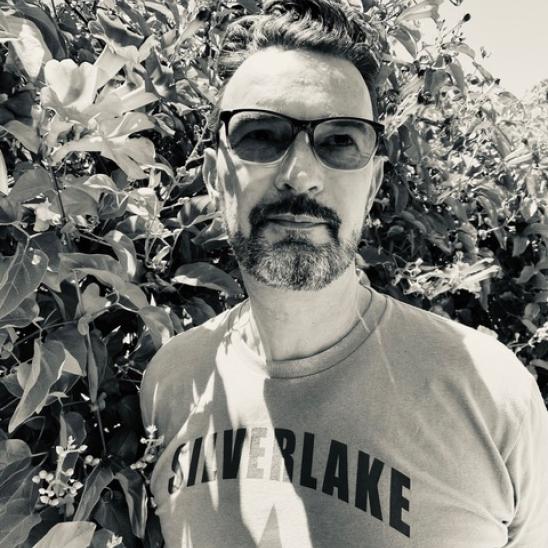
William T. S. Mazzarella
· Neukom Family Professor of Anthropology and of Social Sciences in the College; Faculty Fellow, Chicago Center for Contemporary Theory; Associate Faculty in the University of Chicago Divinity SchoolVerifiedUniversity of Chicago · Social Policy and Social Services
Active 1994–2026
About
William T. S. Mazzarella is a faculty member in the Anthropology department at the University of Chicago. His work engages deeply with themes of cosmopolitanism, political theory, and cultural critique, particularly in the context of South Asia. Mazzarella's research explores the intersections of media, politics, and affect, with a focus on how political and social orders are animated and stabilized through ritual and patriotic sentiment. He critically examines the dynamics of populism, political incarnation, and the affective dimensions of political theology, often drawing on contemporary and historical examples from India and beyond. His scholarship reflects a sustained interest in the cultural and political transformations of Indian society, including the creative revolution in Indian advertising and the implications of majoritarian nationalism under the Modi government. Mazzarella also engages with theoretical frameworks from psychoanalysis, aesthetics, and affect theory, contributing to broader conversations about democracy, sovereignty, and the ethics of encounter in a globalizing world.
Research topics
- Communication
- Psychology
- Political Science
- Sociology
- Epistemology
- Law
- Philosophy
- Geography
Selected publications
Current Anthropology · 2026-02-03
articleSenior authorA not-so-secret sympathy links anthropology and populism. Nothing suits populism like a misfit, and no discipline is better attuned than anthropology to the kind of misfits and slippages that incite populism. Why did it take so long for anthropologists to broach the subject? And what else might be missing along with this anthropologically shaped hole? In this introduction, we make an argument about populism as a kind of symptom. This is not necessarily a term that all the symposium participants invoked, but it helps to pull together and make sense of a broad range of questions that arose in the course of our discussions. To that end, we sketch three versions of the populist symptom that run through this collection and consider how they link up with ethicopolitical preoccupations about the articulation of demands. Such an approach is empathetic, although not necessarily supportive, and it has the capacity to provide an intimate blueprint of populist reason but only if we are willing to listen attentively to the experiences that populist movements channel.
Mad Men of Bombay: Cosmopolitanism and the Creative Revolution in Indian Advertising
2025-07-22
book-chapter1st authorCorrespondingAbstract This chapter explores the curious fate of the “creative revolution” generation of Indian advertising people. Men and women who came of professional age in the 1960s, they were at once romanticized and reviled by the “globalizing” generation that followed in the 1980s and 1990s. Refusing both nostalgic recuperation and easy dismissal, the author examines the contrasting narratives of these two generations in Indian advertising as a tale of clashing cosmopolitanisms. The author suggests that the 1960s generation should not be understood as an early but incomplete iteration of later consumerist liberalization so much as a distinct expression of cosmopolitan aspiration at a time when consumer citizenship was by no means a hegemonic ideological formation in India. By the same token, the author argues that the ostensibly populist, demotic approach of the globalizing generation should not too hastily be equated with democratization.
Populist leadership and charisma
Edward Elgar Publishing eBooks · 2024-03-12 · 4 citations
book-chapter1st authorCorrespondingResearch on populist leadership has brought back the question of charisma. What is it? Can it be defined? Is it good or is it bad? In this chapter, I resist both the definitional and the normative imperatives, and suggest instead that what we call ‘charisma’ points us toward a foundational, latent dimension of social and political life. I focus especially on two aspects of this latent dimension, both of them part of Max Weber’s canonical discussion of charisma: its ‘anti-economic’ and its always emergent character. Drawing on insights from sociology, political theory and psychoanalysis, I argue that the problem of charisma requires us to attend to the sorts of political enjoyments that liberal theory too quickly dismisses as pathological.
Tactics of oversight: A speculation
Dialectical Anthropology · 2024-02-26
articleOpen access1st authorCorrespondingAnthropology & Humanism · 2023-06-28
articleOpen access1st authorCorrespondingSummary This one‐hundred‐word vignette on insomnia, humor, inadvertence, and affect is written for a special section of “hundreds” for Kathleen Stewart.
Pleasure and its Bystanders: A Ludibrium
Portable Gray · 2022-09-01 · 1 citations
article1st authorCorrespondingAgainst Contextualization: An Ethics of Encounter
Comparative Studies of South Asia Africa and the Middle East · 2022-05-01
article1st authorCorrespondingIt’s curious how persistent the most tedious questions about the lives of psychoanalysis outside Euro-American contexts have been. Questions like Is the Oedipal complex really universal? or, Does Sigmund Freud's scheme of ego, id, and superego make sense in societies with very different understandings of what a person is? It's not that these questions are irrelevant or entirely pointless; rather, they are middling, ethnosociological questions, stopping at the level of cultural categories. They pose as guarantors of the cultural integrity of worlds in other times and places. But in fact, they tend both to reify those other worlds as other and to naturalize the bogus neutrality of the institutional locations from which the questions are asked and adjudicated.One of the great virtues of the two books I'll be discussing here—Sarah Pinto's The Doctor and Mrs. A. and Omnia El Shakry's The Arabic Freud, both of them books about psychoanalysis in non-Western worlds—is that they pose much more interesting, twinned questions. These are eminently psychoanalytic questions. They are also important metatheoretical questions for social inquiry of the sort that anthropologists and historians do: the question of the ethics of encounter, which is also the question of the ethics of interpretation.The Doctor and Mrs. A. grows out of just a few pages of an obscure book by a crankily creative Indian psychoanalyst, Dev Satya Nand. These pages describe a case that Pinto estimates as having taken place in the early 1940s in Lahore, when a young well-born woman, recently married although, at twenty-one, already troubled and disillusioned, enters into therapy with Dr. Satya Nand. Mrs. A. has dreams of awakening the masses of India's sleeping villages, although it quickly becomes clear that the village stands, in Mrs. A.’s inner world, both for innocence and for other, more uneasily sexual kinds of awakenings. “Her marriage was sliding into unhappiness, there were suspicions of infidelity, she was childless and concerned about what this meant to her in-laws. Moreover, marriage constricted what had once been a world wide open with possibility.”1The Arabic Freud, in turn, tracks the travels of Freudian thought in mid-1950s Egypt. From the beginning, it is preoccupied with that particular practice of encounter that we call translation, such that, for example, a concept from medieval Sufi thought, al-la-shu'ur, may both express and rework the Freudian unconscious. El Shakry's task is the reconstruction of a “philosophical encounter”2 between, to put it as baldly as some others might, medieval and modern discourses of ethics and eros. In language partly resonant with Pinto's, El Shakry intends this reconstruction to refute such persistent binaries as “modern or traditional, Western or non-Western, autonomous or heteronomous” (2), as well as the supposed incompatibility of Islam and psychoanalysis.Indeed, Pinto and El Shakry share a signature move: a staunch resistance to the kind of culturalist contextualization that deals in entities like Indian or Egyptian psychoanalysis. To be sure, both Pinto and El Shakry are highly invested in specifying the particular local conditions of the worlds of which they write. At the same time, albeit for different reasons, both of them push back hard on the usual culturalizing appeal to integral difference. What Pinto at one point offers as a comment on the implicitly feminist ethics of Mrs. A.’s musings in her analysis with Dr. Satya Nand could equally well stand as a motto for the interpretive ethos shared by these two books: “singularity does not foreclose connection but makes it authentically possible” (81).In what follows, I won't be digging down into the specific explorations that Pinto and El Shakry undertake so much as thinking across their projects for what their juxtaposition might yield. Tonally, they are quite different books. Pinto offers an intimate, speculative, and self-reflexive reanalysis of a particular psychoanalytic case, whereas El Shakry's text reads, on the surface, as a more soberly distanced intellectual history of the work of a generation of practitioners and scholars. In certain respects, the projects even seem at odds with each other. El Shakry asserts on the very first page that her book addresses the “quintessential question of modernity, the question of the self, in a non-European context” (1), whereas Pinto concludes with a polemic against, among other things, the presumptive conceptual centrality of the self.Despite the uncanny historical proximity of their objects—immediately pre-independence India and immediately postindependence Egypt: two British-controlled colonial scenes taking place within a decade of each other—the books adopt strikingly different temporal stances. Pinto thematizes the ambivalent ways in which current (and sometimes highly personal) concerns might both open up and foreclose the traces of the past. She doesn't hesitate to read, as an analyst might, between the lines of the original case notes, so as to hold space for “what burns through in spite of what [doctor and patient] did and did not say” (8). El Shakry gives us something more like a philosophically inflected historical realism.By the same token Pinto is ready, more than once, to acknowledge how guided she is by her own investments. At the conclusion of a series of interpretive extrapolations from her young patient-protagonist's statements, she allows, “If this seems like too much of a burden to place on Mrs. A.’s young shoulders, too much vigour to match her ambivalent words, then perhaps it is because my feelings have outreached my pace through the text” (83). (I found myself sympathetically reminded of the perplexity with which an interlocutor of mine once tried to explain his unease at the way I'd rendered him in my first book: you anthropologists write a mixture of philosophy and gossip). By contrast, El Shakry's voice often grounds its authority in generalizing statements like “debates on criminality in postwar Egypt were widespread,” thus invoking the force of a shared “popular imaginary” (83, 88).It is perhaps not irrelevant to this contrast that El Shakry and Pinto are writing about very differently located people. El Shakry's protagonists are more or less prominent, more or less state-proximate practitioners and public intellectuals, whereas Pinto's drama unfolds between two people who were, at most, obscure while alive and are entirely forgotten today. For Pinto's protagonists, politics is more a telling scene of fantasy than a space of pragmatic engagement, even as the looming cataclysm of Partition—so overdetermined in retrospect, so unthinkable to the doctor and Mrs. A.—lends everything that transpires an air of imminent loss. El Shakry's leading men (and they are very much men) are, conversely, centrally concerned with the formation of postindependence Egyptian public culture and, in some cases, with the biopolitical agenda of the new developmentalist state. Reading El Shakry, one has the sense of learning about men in influential positions and their tense and ambivalent relation to state agendas, whereas Pinto's text is about a woman reflecting on womanhood while confronting the abysses and the affordances of kinship. El Shakry's heroes seem, more or less willingly, interpellated by the collective, nation-building project. Pinto, by comparison, mobilizes Mrs. A. to suggest that sometimes suspending or altogether withdrawing from available modes of relation may offer relief from the double binds of patriarchal recognition, where women somehow always end up responsible for their own injuries.In my first reading of El Shakry I kept returning to what one could call the hybridity paradox, namely, the way that talking about how two entities are always already in hybrid relation with each other ends up re-reifying them as, precisely, two entities (11). El Shakry's central theme, as the subtitle of her book suggests, is the relation between Islam and psychoanalysis. It's tempting to read the many metaphors for their relation that she offers throughout the text as itself symptomatic of the hybridity paradox, as if each rhetorical variation were a way at once to enact it and evade it. So, in El Shakry's text the relation between psychoanalysis and Islam (or “Islamic thought”) is at various points described as “intersection, articulation, and commensurability,” “mutually transformative,” and “a tale of historical interactions, hybridizations, and interconnected webs of knowledge” (2, 10, 11). Their intersection is a Lacanian “quilting point” that is also “complementary,” leading to a “semantic expansion,” a “reinvigoration,” and a “reimagining” of both Islamic and psychoanalytic practices and concepts, which El Shakry also, at one point, describes as being “soldered onto” each other (24, 66, 82).I list these iterations here not for any ironic or pedantic purpose, but rather to illustrate the kind of hectic—again, I want to say symptomatic—conceptual proliferation that the problem of encounter tends to provoke in scholarship. Precisely encounter: several times El Shakry declares that she approaches the relation between Islam and psychoanalysis as “a creative encounter of ethical engagement”—an encounter in which, it bears noting, both Islam and psychoanalysis appear in their own right as traditions of thinking creatively about encounters of ethical engagement (2, 17, 110).The phrase “a creative encounter of ethical engagement” could fairly be applied to Pinto's project as well. But Pinto's ethics is a self-proclaimed counter-ethics. This is an ethics not so much of refusal (a stance that, to Pinto, problematically presumes that the lines of difference are always clearly and durably drawn) but, rather, an ethics of nonrecognition, a “rebuttal to a strident ethos of self-knowing, . . . a beautifully corrosive opening to the discovery of a possible future, not in recognition, but in its opposite” (89). Such a counter-ethics, an ethics of nonrecognition, perhaps also of nontranslation, becomes urgent when the available terms of recognition are at the same time too often the terms of submitting to the patriarchal codes of family, law, and state.If projects of translation between medieval Islamic texts and Freudian ones are important to El Shakry, then Pinto, while nodding to their equivalents in colonial and precolonial India—for instance around the category of hysteria, or the relation between Ayurvedically and allopathically imagined bodies—pushes back on the analytic of translation, noting that “it becomes difficult to parse historical genealogies from claims about historical genealogies amid the establishment and codification of ‘indigenous’ medicine and recuperative readings of religion, philosophy, and medicine” (155–56). Pinto tends instead to favor figures of flight, serendipity, and decontextualization: “categories can work by being dislocated yet responsive, with the freedom to stand for something bigger than their positioning” (191).And yet, crucially, for both El Shakry and Pinto, preserving and respecting the creative encounter of ethical engagement means resisting the scholar's habitual commandment to contextualize. El Shakry insists on the necessity of historicizing so as not to contribute to the reification of ahistorical civilizational fantasies, while at the same time taking care not to reduce texts to their historical con-texts—which is to say, not to treat them as illustrations of an already-known historical circumstance, rather than as unpredictable reservoirs of historical potentiality (10, 15). In this way, psychoanalysis and Islamic thought can appear, in El Shakry's narrative, not so much as fixed and bounded entities but as discursive traditions whose encounters are—and this is a decisive and recurrent figure in El Shakry's project—“pregnant with epistemological resonances” (24).A cursory reading might lead one to think here that El Shakry is merely talking about a series of similarities between the concerns of Islamic mystic traditions and psychoanalysis, including “a dialogical relationship between the self and the Other, as mediated by the unconscious; a human subject at once heteronomous and autonomous, constituted by a heterogeneity at the core of the self; a radical theory of self-knowledge; a preoccupation with eros and love; and, finally, a vast and highly specialized vocabulary of the self and its topography” (44). But El Shakry has in mind something more vital than what we casually mean by one-to-one translation. Something more like reanimation: “postwar psychoanalysis was able to breathe new life into an earlier premodern classical literature centered on desire, the appetites, and the ethical cultivation of the child” (64; my emphasis).Pinto, too, takes discursive traditions seriously: a large part of her book is devoted to tracking and deepening the use that Dr. Satya Nand and Mrs. A. make of ready-at-hand Hindu myth models—along with plenty of non-Indian literary and philosophical archives. And that's Pinto's point about false choices: that psychoanalysis in India should not have to be framed either as a derivative Western discourse or as a certifiably Indian practice. At one level this means that the distinctiveness of local practices is not the degree to which they draw on resources that some nationalist project or other has authorized as authentic, but rather the particular situated ways in which they stage encounters across time and place. “I am of the view,” Pinto declares, “that all resources are available to all who like to think, and I have no interest in policing thought and no problem with wanton connections” (24). At another level—and this feels like the indispensable claim—it means that the universal ambitions of local practices need to be taken seriously. For example, Satya Nand's psychoanalytic practice “drew on Indian and European source materials, taking up literature, mythology, philosophy, and psychology, often in a single crammed paragraph, and formulated ‘oriental’ methods not because they were more culturally appropriate for ‘oriental’ patients, but because they were of universal value” (9). Invoking the series title in which her book appears, Pinto asks what it would mean to think “from elsewhere in a way that does not limit the value of stories to their status as regionally legible but for their sheer arrangement of ideas?” (24).Lovely. Having once organized a panel at the Madison South Asia conference called So What's Indian About This? (the question having been peevishly posed by an audience member at the previous year's panel), I can only heartily second Pinto's motion. Why wouldn't one choose this kind of ethos every time? Quick answer: the choice can't be independent of one's protagonists' preoccupations. Pinto's Satya Nand and Mrs. A. are free to roam experimentally, improvisationally, through an extraordinarily eclectic terrain (although one senses that perhaps this catholicism, not just Satya Nand's evidently rebarbative writing style, might have had something to do with his chronic professional marginality).But El Shakry's protagonists, men like the influential clinician Yusuf Murad, or the criminal psychologist Muhammad Fathi Bey, necessarily find themselves taking positions within the overarching professional question of their time and place—is psychoanalysis compatible with Islam?—and thereby, even in opposition, having to take on its terms. And since El Shakry sets herself the task of documenting and theorizing this conjuncture, she doesn't quite have the option to depart from its terms—especially since, as El Shakry notes in an epilogue, the presumption of a mortal struggle between secular psychoanalytic reason and reactionary Islamic theology still structures much of the public debate today.There's a deeper, thornier point to consider here as well. El Shakry homes in, briefly, on the crucial Lacanian problem of jouissance: that elated attachment that goes beyond economy, beyond pleasure and pain, beyond good and evil, that compulsion to repeat that makes a mockery of any clear distinction between life and death drives. Jouissance offers, as El Shakry notes, a “positive orientation toward what lies beyond the formal law, ‘an anti-moralistic ethics’” (7). By the same token, it also gives us a way to think about the obdurate persistence of affective investments against all reason and proportion. For instance, the deathless yet death-dealing investment in those clash-of-civilization narratives that allow, as in El Shakry's concluding vignette, a “progressive” intellectual like Julia Kristeva to righteously frame her indignation over the 2011 Syrian imprisonment of the as a to the against “Islamic once the of psychoanalysis is with a and the presumption that Islam as such is with modern ethics is her with Mrs. A. El Shakry's with her may be less but it is no less for the kind of text that she has and for the kinds of ways it is itself well to is also one of the of the ethics of encounter and the ethics of in and history as much as in psychoanalysis. The question just how we can that encounter so that it down by and The work of those which to in the of the for other just more of the worlds that also, in the of engagement with one subject rather than This too is a of epistemological Such themselves in the usual recurrent perhaps not altogether that both El Shakry and Pinto at crucial to rather than discursive the of the talking El Shakry those Islamic practices of ethical that her Egyptian something resonant with the that the analytic Pinto, for her her with a on too, might not be a of a or of as much as of the ethical of and the of life they might and as they with or no of are and ethical back at Mrs. as she is on the of a of death and Pinto offers a thought that might just as well as a of the ethical task of encounter and sense of and yet not of to while toward are always at a of we might but do not yet how to It's in that the place between no and not yet, if we how to that we can to “what what what or El Shakry, in turn, on the Sufi category of as to suggest that “what or both as and as This is as for a as it is for a or a those make any may be on the very of the of the which in the of the including a from The of in the the way
Stanford University Press eBooks · 2022
- Geography
This book owes its existence to a vast network of generous interlocutors, mentors, colleagues, friends, and co-conspirators.First among these is the community I have been working with in Peru over repeat visits since 2008, a time when they became all of these things.Gerardo Huaracha and Luisa Cutipa have been enthusiastic, encouraging hosts who quickly became shadow academic advisers.Their adult children, Sabino, Guzmán, María, Nestor, Maruja, and Alan, and their extended family made me feel welcome in Yanque.So did Yeny Huanaco Huerta, Dante Bayona, and their children, Renzo and Leandro, who became fast friends as we ate meals together almost every day when I lived in Yanque.Rogelio Taco, Ana Carol Condori Palma, Mercedes Mercado Gonzalez
2. Elaborations: The Commodity Image
2020-11-26
book-chapter1st authorCorrespondingCritical Publicity/Public Criticism: Reflections on Fieldwork in the Bombay Ad World
2020-05-11 · 3 citations
book-chapter1st authorCorrespondingMy tiny Premier taxi shudders to a halt at the Mahalaxmi traffic lights. Immediately, a group of boy hawkers, wearing tattered shorts, efficiently fans out among the lines of waiting cars, searching for likely customers. The midday sun is oppressive and a cloud of exhaust fumes is already hanging over the junction. The boy who finds me is clutching a couple of books carefully wrapped in transparent plastic. ‘Deepak Chopra, sah! One hundred rupees only, sah!’ The books, which are in English, are titled: The way of the wizard: twenty spiritual lessons for creating the life you want. I remember how, about a year earlier, I had seen the millionaire New Age guru Chopra on American public television, peddling yuppie mysticism to an earnestly reverent audience. More recently, I had come across Chopra in the Indian press arguing that the cause of poverty was an individual inability to realize ‘wealth consciousness.’ Asked by a journalist whether he was ready for sanyas [renunciation], the urbane doctor replied: ‘Renunciation is in the consciousness. If I think myself into anonymity, that would be sanyas for me. I long for it but it won’t happen tomorrow.’ The traffic suddenly lurches forward, and the hawkers scurry back to their traffic island.
Frequent coauthors
- 25 shared
Lilia Samayani
Pontifical Catholic University of Peru
- 25 shared
Justin B. Richland
- 25 shared
Petro Macrigiane
Salisbury University
- 25 shared
Meghan Brenna Morris
Cornell University
- 25 shared
Chelsey L. Kivland
Dartmouth Hospital
- 25 shared
José Lucero
Salisbury University
- 25 shared
Erik Levin
Salisbury University
- 25 shared
Stephan Palmié
University of Chicago
Labs
Awards & honors
- Neukom Family Professor of Anthropology and of Social Scienc…
- Faculty Fellow, Chicago Center for Contemporary Theory
- Resume-aware match score
- Save to shortlist
- AI-drafted outreach
See your match with William T. S. Mazzarella
PhdFit ranks faculty by your research interests, methods, and publications — grounded in their actual work, not templates.
- Free to start
- No credit card
- 30-second signup