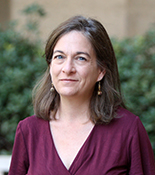
Kim Fortun
· ProfessorVerifiedUniversity of California, Irvine · Anthropology
Active 1997–2026
About
Kim Fortun is a professor at UC Irvine with a Ph.D. from Rice University obtained in 1993. Her research focuses on environmental problems and science, science and technology, environmental health, disaster, and India. She is involved in exploring the intersections of these areas through an anthropological lens, contributing to understanding complex environmental issues and technological impacts. As a faculty member in the Social and Behavioral Sciences Gateway, she is engaged in advancing knowledge in these fields and contributing to academic discourse on environmental and technological challenges.
Research topics
- Computer Science
- Sociology
- Political Science
- Knowledge management
- Anthropology
- Public relations
- World Wide Web
- Library science
- Geography
- Engineering ethics
- Engineering
- Environmental ethics
- History
Selected publications
Air Pollution: A Planning Problem
SSRN Electronic Journal · 2026-01-01
preprintOpen access2025-06-06
book-chapterSenior authorCase Study Pedagogy in Disaster Education
Science & Education · 2025-01-17 · 2 citations
articleOpen accessSenior authorAbstract Research in cultural anthropology and the interdisciplinary field of science and technology studies (STS) has demonstrated that environmental disasters are not only techno-scientifically and socio-politically complex but also epistemically complex -- involving perspectival diversity; multiple, often conflicting forms of evidence; data gaps and disinformation; and role transitions and confusions. Disasters, this research has demonstrated, are highly fraught knowledge problems that nevertheless call for pragmatic response. In this article, we describe an approach to disaster education that stems from this premise, mobilizing an Environmental Injustice Case Study Framework that draws out multiple dimensions of disaster, foregrounding the need for interdisciplinarity while immersing students in the challenges and paradoxes of disaster knowledge production. We offer both an instructional approach and a theoretical perspective on what case study pedagogy in disaster education accomplishes, and can contribute to science education writ large. Our argument is that critical approaches to case study pedagogy can scaffold many kinds of learning in both disaster and science education, helping students integrate diverse kinds of data, analysis, interpretation, and judgment, while building metacognition and epistemic reflexivity.
2025-04-30
book-chapterOpen accessSenior authorTo remoor is to configure things and relations differently when aware that current configurations no longer work. This chapter asks what epistemic decentering and decentralization look like in practice—as processes of remooring—across different geographies. It also introduces examples of novel academic infrastructures that are, by design, counterhegemonic. Based on our individual and collective experiences, we interrogate the everyday life of universities’ internationalization agendas, the contradictions of academic publishing, and the constraints of contract-based research. The chapter also offers insights into so-called peripheral academic infrastructures (in Ecuador, Turkey, and Kenya), highlighting emerging research spaces that aim to reconfigure the process of knowledge production otherwise. Our chapter argues for the need to remoor academia, persistently loosening ties to colonial logics and infrastructures while slowly weaving alternative connections. We argue that any talk about decolonizing academia will need to be tied to practice and supported with new infrastructure.
Six. Remooring Academia: Postcolonial and Infrastructural Challenges
2025-06-20
book-chapterSenior authorEdward Elgar Publishing eBooks · 2024-10-09
book-chapter1st authorCorrespondingLate Industrialism, Advocacy, and Law: Relays Toward Just Transition
East Asian Science Technology and Society An International Journal · 2023-10-02 · 4 citations
articleOpen accessSenior authorA landmark citizen's lawsuit against Formosa Plastics Corporation in Seadrift, Texas resulted in funds for environmental monitoring, clean-up, research, and education.$20 million is set aside for "creating a cooperative that will revitalize depleted marine ecosystems and develop sustainable fishing, shrimping, and oyster harvesting."It is an exciting project for many reasons, exemplifying what the work of "just transition" looks like on the ground.Work toward just transition in Seadrift will be multifaceted and extensive in both space and time.In what follows, we describe the contexts and contours of this work, highlighting developments before, within and after the Waterkeeper's historic legal win, and the different kinds of work required at each stage.These sequential labors of law, we argue, are usefully conceptualized as a far-from-straightforward relay, with many runners, and many detours.Our goal is to convey the especially complex challenge of environmental advocacy and just transition in late industrial contexts.
Duke University Press eBooks · 2023
- Geography
- History
Science & Technology Studies · 2021 · 19 citations
- Sociology
- Computer Science
- Sociology
In this article, we describe how our work at a particular nexus of STS, ethnography, and critical theory—informed by experimental sensibilities in both the arts and sciences—transformed as we built and learned to use collaborative workflows and supporting digital infrastructure. Responding to the call of this special issue to be “ethnographic about ethnography,” we describe what we have learned about our own methods and collaborative practices through building digital infrastructure to support them. Supporting and accounting for how experimental ethnographic projects move—through different points in a research workflow, with many switchbacks, with project designs constantly changing as the research develops—was a key challenge. Addressing it depended on understanding creative data practices and analytic workflows, redesigning and building technological infrastructure, and constant attention to collaboration ethics. We refer to this as the need for doubletakes on method. We focus on the development of The Asthma Files, a collaborative ethnography project to understand the cultural dimensions of environmental health, and on the Platform for Experimental Collaborative Ethnography, digital infrastructure first built to support The Asthma Files but now available as a community resource for archiving, analyzing, and publishing ethnographic data and writing. A key finding is that different traditions and practices of ethnography require different infrastructures.
Cultural Analysis in/of the Anthropocene
Zeitschriftenserver von Hamburg University Press (Hamburg University) · 2021-07-29 · 5 citations
articleOpen access1st authorCorrespondingRecalling George Marcus's influential writing "Ethnography In/Of the World System", this essay asks how cultural analysis needs to be conceptualized, practiced and infrastructured differently when it moves from a global to a planetary, late industrial frame. This contribution argues that "the Anthropocene" is usefully understood as a particular way of making environmental sense within late industrialism - what industrialism has become as it has cohered, aged, ossified, degraded and retrenched over time, in different ways in different settings. The essay calls for cultural analysis of the Anthropocene as a scientific concept, environmental dynamic, representational challenge and prompt to action in different settings. It also pleads for interdisciplinary collaboration (with cultural analysts in formative roles) and for investment in technical infrastructure to underpin the cultural analysis needed to go forward.
Recent grants
Frequent coauthors
- 18 shared
Mike Fortun
- 16 shared
Emily Yates‐Doerr
- 16 shared
Jamie Lorimer
Canadian Institute for Advanced Research
- 16 shared
Andrea F. Bohlman
University of North Carolina at Chapel Hill
- 16 shared
Lisa Cartwright
University of California, San Diego
- 16 shared
Cris Moore
University of Rochester
- 16 shared
Qianquian Liu
Durham University
- 16 shared
Hel- Ena Wittmann
Pacific Standard
Labs
Core FacultyPI
Education
- 1993
PhD, Anthropology
Rice University
- 1986
BA, History
Duke University
- Resume-aware match score
- Save to shortlist
- AI-drafted outreach
See your match with Kim Fortun
PhdFit ranks faculty by your research interests, methods, and publications — grounded in their actual work, not templates.
- Free to start
- No credit card
- 30-second signup