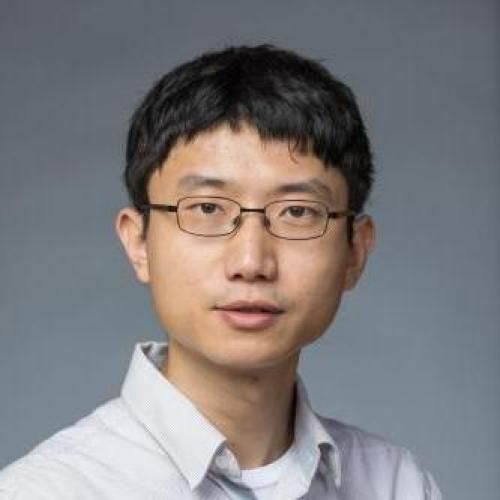
Yu Tong
· Assistant Professor of MathematicsVerifiedDuke University · Electrical and Computer Engineering
Active 2003–2025
About
Yu Tong is an Assistant Professor at Duke University, affiliated with both the Mathematics and Electrical and Computer Engineering departments. He earned his Bachelor of Science degree in Computational Mathematics from Peking University in 2017 and completed his Ph.D. in Applied Mathematics at the University of California, Berkeley in 2022 under the supervision of Lin Lin. Following his doctoral studies, he served as an IQIM Postdoctoral Scholar at the California Institute of Technology from 2022 to 2024, working with John Preskill and Garnet Chan. His research broadly focuses on quantum algorithms, quantum learning theory, and numerical and analytic methods for quantum many-body problems. Professor Tong's research interests include the development of quantum algorithms tailored to quantum chemistry problems, which are challenging for classical algorithms due to high computational costs and limited accuracy. He works on algorithms for estimating ground state energies and Green's functions, as well as addressing practical implementation challenges on near-term quantum devices. Additionally, he studies tensor network methods, which are fundamental tools for understanding quantum systems and provide computational techniques for quantum chemistry and physics. His work encompasses both theoretical analysis and the creation of new tensor network algorithms. He also investigates quantum embedding methods, which involve decomposing large quantum systems into smaller subsystems to manage computational complexity, focusing on the interactions between subsystems and their environments. In the area of quantum learning theory, Yu Tong explores scenarios where classical information is extracted from quantum systems, such as in quantum metrology and sensing, aiming to improve measurement precision and system characterization. He applies machine learning techniques to identify properties of quantum systems, including conservation laws and topological order, using limited measurement data. Beyond research, he has contributed to the academic community as a program committee member for several conferences including QCTIP and QSIM, and serves as an editor for Quantum Publications.
Research topics
- Geology
- Physics
- Oceanography
- Environmental science
- Meteorology
- Atmospheric sciences
- Climatology
- Mechanics
- Mechanical engineering
- Engineering
- Structural engineering
Selected publications
Labdane-type diterpenoids from Hypoestes phyllostachya inhibit pancreatic cancer stem cells
Phytochemistry · 2025-08-21
article1st authorPhytopathology · 2025-04-15 · 2 citations
articleFusarium head blight (FHB) is a serious disease that severely decreases the yield and quality of wheat. Planting wheat cultivars with FHB resistance is one of the most effective ways to control FHB epidemics. Introducing chromosome fragments from wheat-related species with FHB resistance into the wheat genome through chromosome translocation is an important way to improve wheat FHB resistance. In this study, 178 new wheat–rye ( Secale cereale) T1RS.1BL translocation lines were developed from the crosses of common wheat and three Chinese rye landraces: Weining, Baili, and Aigan. The wheat parents Mianyang11 (MY11) and A42912 were susceptible to FHB, and the percentage of diseased spikelets (PDS) values of MY11 and A42912 were 63.41 and 50.52% at 30 days postinoculation (DPI), respectively. The PDSs of the translocation lines developed from the MY11 × Aigan, MY11 × Baili, MY11 × Weining, A42912 × Baili, and A42912 × Weining crosses ranged from 14.32 to 37.68%, 20.21 to 35.38%, 13.58 to 45.28%, 12.93 to 32.87%, and 20.18 to 31.14% at 30 DPI, respectively. The increasing PDS per day in the translocation lines was lower than those in the wheat parents from 20 to 30 DPI. All the results showed that the 1RS translocations of the three Chinese rye strains effectively improved FHB resistance when introduced into the wheat genome. The FHB-resistant germplasm resources evaluated in this study are important materials for future FHB-resistant wheat breeding.
Construction and Building Materials · 2025-02-08 · 5 citations
articleEffects of Ni-Ti Content on Mechanical Properties of Laser Cladding A100-(Ni-Ti) Coatings
Coatings · 2025-02-02 · 1 citations
articleOpen accessAmong many methods to enhance the crack resistance of laser cladding coatings, adjusting the composition of laser cladding material is the most simple, feasible, and effective method. To improve the plastic toughness and crack resistance of A100 laser cladding coating, Ni and Ti powders of an equal molar ratio were added to A100 powder as laser cladding powder. Laser cladding technology prepared A100-(Ni-Ti) coatings without crack defects. The cladding coatings’ phase composition and microstructure were analyzed using XRD and SEM, respectively. A ring-block friction and wear tester tested the wear resistance of the A100-(Ni-Ti) cladding coatings. A100-(Ni-Ti) cladding coatings mainly contain martensite and austenite. The elements Ni and Ti are distributed primarily in the austenitic phase region. The results show that adding Ni and Ti elements can reduce the microhardness of A100 cladding coatings. The average microhardness of the A100-0%(Ni-Ti) cladding coating is 532.50 HV, and the average microhardness of the A100-10%(Ni-Ti) cladding coating is 430.99 HV, while the average microhardness of the A100-30%(Ni-Ti) cladding coating is only 307.49 HV. The wear surface of the A100-10%(Ni-Ti) cladding mainly shows pits and a small amount of adhesive wear. The A100-20%(Ni-Ti) and A100-30%(Ni-Ti) cladding coatings show severe adhesive wear. The A100-10%(Ni-Ti) cladding with high microhardness and good run-in performance exhibits the best wear resistance.
SSRN Electronic Journal · 2024-01-01
preprintOpen accessAnalysis of corrosion failure causes of hongjing line crude oil pipeline
Journal of Physics Conference Series · 2024-08-01 · 2 citations
articleOpen accessAbstract Pipeline corrosion occurred somewhere in the Hongjing Line crude oil transmission pipeline. In order to investigate the cause of pitting perforation, the corrosion perforation of pipeline was analyzed by optical microscope, scanning electron microscope, fluorescence quantitative PCR and X-ray diffraction analysis, combined with the corrosion simulation experiment of weightloss method. Results On the surface, the pipeline material (L360) met the requirements of API5L standard, and the corrosion form was perforation caused by pitting on the inner wall. The main corrosion products are Fe 2 O 3 , FeCO 3 and FeS. It is found that the concentration of Cl − in the sedimentary water is as high as 30363.8 ppm, which indicates that the main reason for the corrosion of the crude oil pipeline is the pitting corrosion caused by Cl − .
Mechanical Design of a Compliant Spine using Series Elastic Actuator for Quadruped Robot
2024-07-08 · 1 citations
articleQuadruped robots can complete tasks such as exploration, transportation and rescue in complex environments. However, most current quadruped robots focus on the structural design of legs, little considering the role of the spine in movement. This paper presents a compliant spine using series elastic actuator (SEA) for a quadruped robot. Based on the D-H parameter method, a kinematics model of the quadruped robot with 2-DoFs discrete spine was established, and the motion stride of the quadruped robot was analyzed. The experiments were carried out to verify the performance of the developed spine configuration. It shows that in the bound gait, the stride length of the quadruped robot including the spine mechanism increased by $\mathbf{7 3. 7 2 \%}$. Compared with the rigid trunk, the SEA spinal joint can reduce the peak torque of each motor of the legs and feet during the jumping process, and the mean and standard deviation of the output torque of each joint motor are significantly reduced.
Phytopathology · 2024-05-09 · 4 citations
articleStripe rust and powdery mildew are serious diseases that severely decrease the yield of wheat. Planting wheat cultivars with powdery mildew and stripe rust resistance genes is the most effective way to control these two diseases. Introducing disease resistance genes from related species into the wheat genome via chromosome translocation is an important way to improve wheat disease resistance. In this study, nine novel T1RS.1AL translocation lines were developed from the cross of wheat cultivar Chuannong25 (CN25) and a Chinese rye Qinling. The results of non-denaturing fluorescence in situ hybridization and PCR showed that all new lines were homozygous for the T1RS.1AL translocation. These new T1RS.1AL translocation lines exhibited strong resistance to stripe rust and powdery mildew. The cytogenetics results indicated that the resistance of the new lines was conferred by the 1RS chromosome arms, which came from Qinling rye. The genetic analysis indicated that there were new dominant resistance genes on the 1RS chromosome arm resistant to stripe rust and powdery mildew, and their resistance patterns were different from those of Yr9, Pm8, and Pm17 genes. In addition, the T1RS.1AL translocation lines generally exhibited better agronomic traits in the field relative to CN25. These T1RS.1AL translocations have great potential in wheat-breeding programs in the future.
Research Square · 2023-12-22
preprintOpen accessAbstract Objective To address the inadequacy of practical work skills among graduates in Public Health and Preventive Medicine, this study implemented an innovative "open collaborative practice teaching model integrating medicine, teaching, and research." It analyzed the changes in student satisfaction before and after three years of practical teaching reform, offering strategic suggestions aimed at strengthening the vocational skills of future public health workers through reform in practical teaching. Methods A cross-sectional study was conducted from 2020 to 2023 to survey student satisfaction with practical teaching. The subjects were 312 undergraduate students of Preventive Medicine from a medical university in Yunnan Province, China. Satisfaction scores, satisfaction indices, complaint indices, and methods such as cluster analysis, factor analysis, and SWOT analysis were used to assess changes in student satisfaction since the implementation of practical teaching reforms and to propose more targeted practical teaching reform strategies. Results The survey was divided into baseline, mid-term, and end-term assessments. The average satisfaction scores over three years were 4.30, 4.29, and 4.36, respectively. Cluster analysis revealed that students with lower satisfaction were mainly dissatisfied with the content and methods of teaching. Factor analysis indicated that teaching content, methods, and effectiveness were the three most influential factors on student satisfaction. SWOT analysis suggested that student expectations for practical teaching might increase over time, necessitating continuous updates and improvements in teaching strategies to meet their needs. Conclusion The study shows that teaching content, methods, and effectiveness are key drivers of student satisfaction. Although the current open collaborative practice teaching strategy integrating medicine, teaching, and research is effective, it requires continuous adjustment to meet student needs more comprehensively. Educators should consider integrating new technologies, continuously explore pathways for collaborative education in medicine, teaching, and research, and continually assess and adjust teaching strategies to ensure alignment with technological advancements and student needs, thereby enhancing the effectiveness of practical teaching and student satisfaction.
Building and Environment · 2023-01-19 · 20 citations
articleSenior author
Frequent coauthors
- 27 shared
Shuqun Cai
Institute of Oceanology
- 26 shared
Zhiyou Jing
- 22 shared
Michael C. Fitzgerald
Duke University
- 12 shared
Juan Li
Zhejiang A & F University
- 10 shared
Dongxiao Wang
Sun Yat-sen University
- 9 shared
Junliang Liu
- 9 shared
K.V. Rajagopalan
Bhabha Atomic Research Centre
- 9 shared
Yinghui He
- Resume-aware match score
- Save to shortlist
- AI-drafted outreach
See your match with Yu Tong
PhdFit ranks faculty by your research interests, methods, and publications — grounded in their actual work, not templates.
- Free to start
- No credit card
- 30-second signup