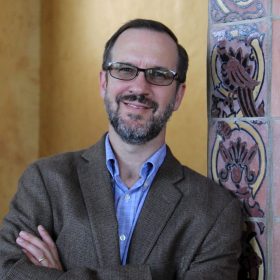
Aaron A. Burke
· Professor of the Archaeology of Ancient Israel and the Levant, Department of Near Eastern Languages and Cultures, Member of the Cotsen Institute of ArchaeologyVerifiedUniversity of California, Los Angeles · Classics
Active 1997–2025
About
Aaron A. Burke is a Professor of the Archaeology of Ancient Israel and the Levant in the Near Eastern Languages and Cultures Department at UCLA. He is also a member of the Cotsen Institute of Archaeology at the University of California, Los Angeles. His research interests include warfare, migration, environmental change, and social change in the ancient Near East during the Bronze and Iron Ages. He is the co-director of the Jaffa Cultural Heritage Project and has been involved in excavations of the New Kingdom fortress on the mound of ancient Jaffa, particularly between 2011 and 2014 with Martin Peilstöcker. Burke is the author of “Walled Up to Heaven”: The Evolution of Middle Bronze Age Fortification Strategies in the Levant (Eisenbrauns, 2008), and has co-edited several volumes on the history and archaeology of Jaffa.
Research signals
Five dimensions sourced from public faculty / publication signals. Sign in to compare against your own profile and see your match score.
Research topics
- Geography
- Archaeology
- Ancient history
- Political Science
- Sociology
- History
- Art
- Oceanography
- Demography
- Geomorphology
- Genealogy
- Law
- Literature
- Geology
- Classics
- Ethnology
Selected publications
Music Educators Journal · 2025-08-17
article1st authorCorrespondingNew Kingdom Egypt and Early Israel
2022-09-30 · 1 citations
book-chapter1st authorCorrespondingNew Kingdom Egyptian influence can be identified among a range of material culture and traditions in Iron Age Israel and Judah. This essay explores specific outcomes resulting from Egyptian imperial intervention in Canaan and the social entanglements of its personnel that would have contributed to the shaping of Iron Age identities, like that of Israel. It is suggested that New Kingdom involvement was sufficiently protracted and intensive in nature to constitute an essential component of early Israelite tribal identities, giving rise to cultural memories in biblical tradition that relate directly to a period under Egyptian rule before Israel’s emergence.
Automatic Inspection of Green Concrete Quality Using Machine Learning and Cobot
International Journal of Mechanical Engineering and Robotics Research · 2022-01-01 · 4 citations
articleOpen access1st authorCorrespondingThe International Journal of Nautical Archaeology · 2022 · 2 citations
- Archaeology
- Oceanography
- Geography
Recent excavations of Tel Yafo (Jaffa), Israel, underscore its role as an historically important Mediterranean port. In 2014, the Ioppa Maritima Project conducted a geological investigation determining that from ca. 5000–2000 years BP, a small estuarine system existed east and north of Tel Yafo that could have served as a harbour. The marine re-entrant formed through sea-level rise and flooding of a small valley, and the stream mouth was probably also partially blocked by coastal sands. Sediment aggradation, wetland development, and anthropogenic activity largely filled the embayment leaving only a depression east of Tel Yafo in the area of Bloomfield Stadium and Groningen Park.
Routledge eBooks · 2022 · 27 citations
1st authorCorresponding- Sociology
- Ancient history
- History
The Hebrew Bible by and large preserves a late Iron Age Judean cultural memory of Canaan’s inhabitants before Israel’s appearance in the 13th century BCE. For this reason, questions persist concerning the cultural or historical accuracy of biblical portrayals of groups like the Amorites and Canaanites, and how these relate to wider ancient Near Eastern traditions. Various lines of evidence point to the use of the frequently used term Canaanite in the Hebrew Bible as a demonym, referencing Canaan’s population as a whole and its limited utility as a term for a specific group and their customs. Alternatively, the term Amorite, like Hittite, was employed more specifically to reference one group among several that inhabited Canaan before Israel. The persistence of a number of cultural traditions associated with Amorites in Mesopotamia during the first millennium suggests a wider prevalence of traditions in the Near East associated with Amorites that offer a significant way by which biblical traditions involving them were shaped. Alongside this is increasing evidence of the cultural influence of second-millennium Amorite traditions upon the formation of first-millennium Levantine traditions, as evidenced among Israel, Judah, and their neighbors.
Appendix 1: A Gazetteer for Jaffa: Excavation Areas, Places, and Historical Monuments
2021-01-01
datasetOpen access1st authorCorrespondingGazetteer of excavation areas, places, and historical monuments in Jaffa
Toward the Reconstruction of a Sacred Landscape of the Judean Highlands
Journal of Ancient Near Eastern Religions · 2021-09-06 · 1 citations
article1st authorCorrespondingAbstract At least a dozen biblical toponyms for sites and landscape features in ancient Judah’s highlands bear divine name elements that were most common during the Middle and Late Bronze Ages. In light of archaeological evidence from many of these sites, it is suggested that they were first settled as part of a settlement influx in the highlands during the Middle Bronze Age (ca. 2000–1550 BCE ), following a reemergence of urbanism and a return of economic development that occurred under Amorite aegis. The cultic orientation of these sites may be suggested by reference to ritual traditions at Mari during the Middle Bronze Age but especially Ugarit during the Late Bronze Age. Such evidence may also serve to elucidate the various enduring cultic associations that persisted in connection with these locations during the Iron Age, as preserved in various biblical traditions.
Appendix 2: Excavations in Jaffa and Abu Kabir, 1985‒2015
2021-01-01
datasetOpen access1st authorCorrespondingExcavations in Jaffa and Abu Kabir from 1985 to 2015.
Appendix 3: Bibliography for Jaffa, Abu Kabir, and Environs
2021-01-01
datasetOpen access1st authorCorrespondingBibliography for Jaffa, Abu Kabir, and Environs
Appendix 4: Collections of Excavated Artifacts from Jaffa and Abu Kabir
2021-01-01
datasetOpen access1st authorCorrespondingCollections of excavated artifacts from Jaffa and Abu Kabir
Frequent coauthors
- 22 shared
Martin Peilstöcker
- 5 shared
Simona Avnaim‐Katav
Israel Oceanographic and Limnological Research
- 4 shared
George A. Pierce
- 3 shared
Richard K. Dunn
Norwich University
- 3 shared
Brett Kaufman
- 3 shared
Shelley Wachsmann
Texas A&M University
- 3 shared
Katherine Strange Burke
- 3 shared
Jess F. Adkins
California Institute of Technology
Education
- 2004
PhD, Near Eastern Archaeology, Near Eastern Languages and Civilizations
University of Chicago
- Resume-aware match score
- Save to shortlist
- AI-drafted outreach
See your match with Aaron A. Burke
PhdFit ranks faculty by your research interests, methods, and publications — grounded in their actual work, not templates.
- Free to start
- No credit card
- 30-second signup