Resume-aware faculty matching

Find professors who actually fit you

Upload your resume. Four AI agents analyze your background, rank the faculty who fit, inspect their recent research, and help you draft outreach — grounded in their actual work, not templates.

Free to startNo credit cardCancel anytime
Top matches Balanced preset
Dr. Sarah Chen
Stanford · Interpretability · NLP
91
Dr. Marcus Holloway
MIT · Robotics · RL
84
Dr. Aisha Okonkwo
CMU · Fairness · HCI
82
Nova · Professor Researcher · re-ranking top 20…
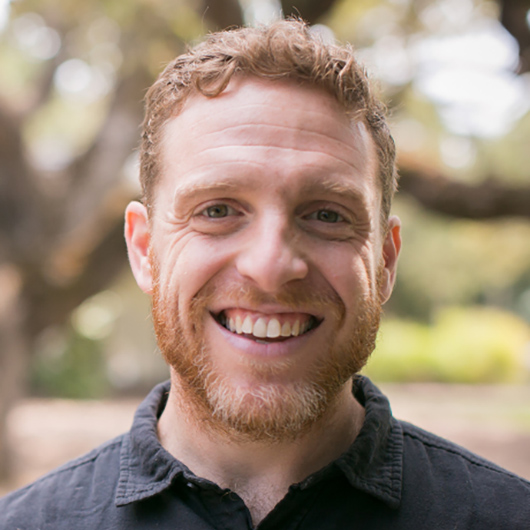
Aaron Shaw

Aaron Shaw

· Associate ProfessorVerified

Northwestern University · Communication Studies

Active 2002–2026

h-index25
Citations3.9k
Papers7320 last 5y
Funding$202k
See your match with Aaron Shaw — sign in to PhdFit.Sign in

About

Aaron Shaw is an Associate Professor of Communication Studies and Sociology (by courtesy) at Northwestern University. He studies collaboration, governance, and inclusion in participatory organizations, with a focus on online communities that create public information resources such as Wikipedia. Shaw is affiliated with the Center for Human-Computer Interaction + Design, the Institute for Policy Research, and the Buffett Institute for Global Affairs at Northwestern. He is also a Faculty Associate of the Berkman-Klein Center for Internet & Society at Harvard University and is a co-founder of the Community Data Science Collective. Shaw has held a fellowship at the Center for Advanced Study in the Behavioral Sciences at Stanford University and served as Scholar in Residence in King County, Washington during the 2022-2023 academic year. He holds degrees from Stanford University and the University of California, Berkeley, including a PhD in Sociology. His research has received awards from scholarly associations such as the American Sociological Association, the Association for Computing Machinery, and the American Political Science Association.

Research signals

Five dimensions sourced from public faculty / publication signals. Sign in to compare against your own profile and see your match score.

Research topics

  • Computer Science
  • World Wide Web
  • Social Science
  • Knowledge management
  • Political Science
  • Engineering
  • Sociology
  • Microeconomics
  • Geography
  • Public relations
  • Economy
  • Economics
  • Environmental health
  • Psychology
  • Social psychology
  • Demographic economics
  • Applied psychology
  • Linguistics
  • Medicine
  • Business

Selected publications

  • This human study did not involve human subjects: Validating LLM simulations as behavioral evidence

    arXiv (Cornell University) · 2026-02-17

    articleOpen accessSenior author

    A growing literature uses large language models (LLMs) as synthetic participants to generate cost-effective and nearly instantaneous responses in social science experiments. However, there is limited guidance on when such simulations support valid inference about human behavior. We contrast two strategies for obtaining valid estimates of causal effects and clarify the assumptions under which each is suitable for exploratory versus confirmatory research. Heuristic approaches seek to establish that simulated and observed human behavior are interchangeable through prompt engineering, model fine-tuning, and other repair strategies designed to reduce LLM-induced inaccuracies. While useful for many exploratory tasks, heuristic approaches lack the formal statistical guarantees typically required for confirmatory research. In contrast, statistical calibration combines auxiliary human data with statistical adjustments to account for discrepancies between observed and simulated responses. Under explicit assumptions, statistical calibration preserves validity and provides more precise estimates of causal effects at lower cost than experiments that rely solely on human participants. Yet the potential of both approaches depends on how well LLMs approximate the relevant populations. We consider what opportunities are overlooked when researchers focus myopically on substituting LLMs for human participants in a study.

  • SMART: A Social Movement Analysis & Reasoning Tool with Case Studies on #MeToo and #BlackLivesMatter

    Open MIND · 2026-01-28

    preprint

    Social movements supporting the UN's Sustainable Development Goals (SDGs) play a vital role in improving human lives. If journalists were aware of the relationship between social movements and external events, they could provide more precise, time-sensitive reporting about movement issues and SDGs. Our SMART system achieves this goal by collecting data from multiple sources, extracting emotions on various themes, and then using a transformer-based forecasting engine (DEEP) to predict quantity and intensity of emotions in future posts. This paper demonstrates SMART's Retrospective capabilities required by journalists via case studies analyzing social media discussions of the #MeToo and #BlackLivesMatter before and after the 2024 U.S. election. We create a novel 1-year dataset which we will release upon publication. It contains over 2.7M Reddit posts and over 1M news articles. We show that SMART enables early detection of discourse shifts around key political events, providing journalists with actionable insights to inform editorial planning. SMART was developed through multiple interactions with a panel of over 20 journalists from a variety of news organizations over a 2-year period, including an author of this paper.

  • Algorithmic News Content Personalization and Readers’ Attitudes

    Digital Journalism · 2026-02-25 · 1 citations

    article
  • DEEP: A Discourse Evolution Engine for Predictions About Social Movements

    Proceedings of the AAAI Conference on Artificial Intelligence · 2026-03-14

    articleOpen access

    Numerous social movements (SMs) around the world help support the UN's Sustainable Development Goals (SDGs). Understanding how key events shape SMs is key to the achievement of the SDGs. We have developed SMART (Social Media Analysis & Reasoning Tool) to track social movements related to the SDGs. SMART was designed by a multidisciplinary team of AI researchers, journalists, communications scholars and legal experts. This paper describes SMART's transformer-based multivariate time series Discourse Evolution Engine for Predictions about Social Movements (DEEP) to predict the volume of future articles/posts and the emotions expressed. DEEP outputs probabilistic forecasts with uncertainty estimates, providing critical support for editorial planning and strategic decision-making. We evaluate DEEP with a case study of the #MeToo movement by creating a novel longitudinal dataset (433K Reddit posts and 121K news articles) from September 2024 to June 2025, which is publicly available for research purposes.

  • This human study did not involve human subjects: Validating LLM simulations as behavioral evidence

    arXiv (Cornell University) · 2026-02-17

    preprintOpen accessSenior author

    A growing literature uses large language models (LLMs) as synthetic participants to generate cost-effective and nearly instantaneous responses in social science experiments. However, there is limited guidance on when such simulations support valid inference about human behavior. We contrast two strategies for obtaining valid estimates of causal effects and clarify the assumptions under which each is suitable for exploratory versus confirmatory research. Heuristic approaches seek to establish that simulated and observed human behavior are interchangeable through prompt engineering, model fine-tuning, and other repair strategies designed to reduce LLM-induced inaccuracies. While useful for many exploratory tasks, heuristic approaches lack the formal statistical guarantees typically required for confirmatory research. In contrast, statistical calibration combines auxiliary human data with statistical adjustments to account for discrepancies between observed and simulated responses. Under explicit assumptions, statistical calibration preserves validity and provides more precise estimates of causal effects at lower cost than experiments that rely solely on human participants. Yet the potential of both approaches depends on how well LLMs approximate the relevant populations. We consider what opportunities are overlooked when researchers focus myopically on substituting LLMs for human participants in a study.

  • SMART: A Social Movement Analysis & Reasoning Tool with Case Studies on #MeToo and #BlackLivesMatter

    ArXiv.org · 2026-01-28

    articleOpen access

    Social movements supporting the UN's Sustainable Development Goals (SDGs) play a vital role in improving human lives. If journalists were aware of the relationship between social movements and external events, they could provide more precise, time-sensitive reporting about movement issues and SDGs. Our SMART system achieves this goal by collecting data from multiple sources, extracting emotions on various themes, and then using a transformer-based forecasting engine (DEEP) to predict quantity and intensity of emotions in future posts. This paper demonstrates SMART's Retrospective capabilities required by journalists via case studies analyzing social media discussions of the #MeToo and #BlackLivesMatter before and after the 2024 U.S. election. We create a novel 1-year dataset which we will release upon publication. It contains over 2.7M Reddit posts and over 1M news articles. We show that SMART enables early detection of discourse shifts around key political events, providing journalists with actionable insights to inform editorial planning. SMART was developed through multiple interactions with a panel of over 20 journalists from a variety of news organizations over a 2-year period, including an author of this paper.

  • In Science Journals

    Science · 2026-03-12

    article

    Highlights from the Science family of journals

  • Replication materials for "Communication and Collaboration in Stewarded Open Source Software Development"

    Harvard Dataverse · 2026-04-23

    datasetOpen access

    Replication materials for the DIIF report "Communication and Collaboration in Stewarded Open Source Software Development"

  • Governing Together: Toward Infrastructure for Community-Run Social Media

    2026-04-13 · 1 citations

    articleOpen access

    Decentralizing the governance of social computing systems to communities promises to empower them to make independent decisions, with nuance and in context. Yet, communities do not govern in isolation. Many problems communities face are common, or move across their boundaries. We propose designing for inter-community governance: mechanisms that support relationships between communities toward coordinating on governance issues. Drawing from workshops with 24 individuals on decentralized, community-run social media, we present six challenges in designing for inter-community governance surfaced through ideas discussed in workshops. These ideas come together as an ecosystem of resources and tools that highlight three key principles for design: modularity, forkability, and polycentricity. We end with a discussion of how workshop ideas might be implemented in future work aiming to support community governance in social computing more broadly.

  • DEEP: A Discourse Evolution Engine for Predictions about Social Movements

    ArXiv.org · 2025-11-03

    preprintOpen access

    Numerous social movements (SMs) around the world help support the UN's Sustainable Development Goals (SDGs). Understanding how key events shape SMs is key to the achievement of the SDGs. We have developed SMART (Social Media Analysis & Reasoning Tool) to track social movements related to the SDGs. SMART was designed by a multidisciplinary team of AI researchers, journalists, communications scholars and legal experts. This paper describes SMART's transformer-based multivariate time series Discourse Evolution Engine for Predictions about Social Movements (DEEP) to predict the volume of future articles/posts and the emotions expressed. DEEP outputs probabilistic forecasts with uncertainty estimates, providing critical support for editorial planning and strategic decision-making. We evaluate DEEP with a case study of the #MeToo movement by creating a novel longitudinal dataset (433K Reddit posts and 121K news articles) from September 2024 to June 2025 that will be publicly released for research purposes upon publication of this paper.

Recent grants

Frequent coauthors

Labs

Awards & honors

  • Scholar in Residence, King County, Washington, 2022-2023
  • Visiting Professor, Communication, University of Washington,…
  • Faculty and Administrator Honor Roll, Northwestern Universit…
  • Co-PI, National Science Foundation, IIS:CHS: Modeling the Ec…
  • Lenore Annenberg and Wallis Annenberg Fellow in Communicatio…
  • Resume-aware match score
  • Save to shortlist
  • AI-drafted outreach

See your match with Aaron Shaw

PhdFit ranks faculty by your research interests, methods, and publications — grounded in their actual work, not templates.

  • Free to start
  • No credit card
  • 30-second signup