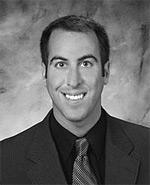
Aaron Zimmerman
· Professor, Department ChairVerifiedUniversity of California, Santa Barbara · Philosophy
Active 2004–2026
About
Aaron Zimmerman is a Professor and Department Chair in the Department of Philosophy at the University of California, Santa Barbara. His specialization includes the philosophy of mind, with a particular focus on moral psychology and moral epistemology. Zimmerman has an extensive research background working on self-knowledge, the nature of belief, and the origins of pragmatism. He has authored several books, including 'Belief: A Pragmatic Picture' and 'Moral Epistemology,' and is in the process of publishing a book titled 'Alexander Bain: Philosopher of Mind.' His scholarly work also encompasses editing volumes such as the Routledge Handbook of Moral Epistemology and contributing articles to various philosophical journals and anthologies. Zimmerman’s research contributes significantly to understanding the intersection of belief, truth, and moral knowledge within the broader landscape of philosophical inquiry.
Research signals
Five dimensions sourced from public faculty / publication signals. Sign in to compare against your own profile and see your match score.
Research topics
- Epistemology
- Sociology
- Philosophy
- Positive economics
- Economics
- Environmental ethics
- Social psychology
- Psychology
Selected publications
2026-04-23
book1st authorCorrespondingAbstract Alexander Bain (1818–1903) was once Britain’s greatest philosopher of mind. Author of The Senses and the Intellect (1855) and The Emotions and the Will (1859), Bain articulated a comprehensive theory of the human mind, integrating cognitive, developmental, and evolutionary psychology with neuroscience and philosophy. Mill utilized Bain’s theory of moral judgment to defend utilitarianism. Darwin leaned on Bain’s theory of conscience to explain the evolution of morality. James used Bain’s texts to teach philosophy of mind at Harvard, launching psychology as an independent department of inquiry. Peirce said Bain’s theory of belief was the axiom of pragmatism. And Bain founded the journal Mind, launching the cognitive sciences into the field it has become. Mill is still celebrated for his analyses of liberalism and utilitarianism. Darwin remains famous for his theory of natural selection. And James is well known as the father of both pragmatism and empirical psychology in America. Bain stands behind these accomplishments, his role unacknowledged. Alexander Bain: Philosopher of Mind seeks to rectify the oversight. After introducing the reader to Bain’s early work, Zimmerman analyzes Bain’s solution to the mind–body problem, describes Bain’s contributions to logic and his disagreement with Mill over proper names, engages with Bain’s theories of freewill, conscience, and moral responsibility, and explains Bain’s theory of belief and its role in the genesis of pragmatism. Bain’s philosophy will engage philosophers of mind, cognitive scientists, historians of philosophy, and anyone interested in the “Darwinian revolution” in our understanding of life on Earth.
2026-04-23
book-chapter1st authorCorrespondingAbstract Bain was a materialist in some sense, rejecting substance dualism and providing neurological explanations for many psychological phenomena. But he denied the mind location or extension in space. This chapter critically explores Bain’s metaphysics and epistemology of mind and the arguments that kept him from identifying each mind with the brain or nervous system of an animal. Bain’s neurological accounts of consciousness and memory are described in detail and the intuitions that drove him to deny the mind extension are subjected to critical analysis. Bain’s methodological views on how to best study the mind, and how we can know when we have arrived at a fully satisfying explanation of mental phenomena, were crafted to make sense of an inconsistent metaphysics, but they have a value that has outlasted Bain’s ontological confusions.
Bain’s Early Life and an Overview of His Work
2026-04-23
book-chapter1st authorCorrespondingAbstract The son of a weaver, Bain had to leave school to work at age eleven. But he taught himself mathematics, science, and philosophy at the local library and won scholarships to study at Marischal College. By the time he graduated, Bain had already made significant contributions to Mill’s Logic and published scientific articles in the Westminster Review. This chapter provides an overview of Bain’s philosophical career and explores his early (pre-1855) work in some depth. Bain introduced the “stream of consciousness” into philosophy of mind along with “trial and error” and a host of other important concepts. His psychology was founded in theories of relativity in perception and spontaneity in movement that remain valid today. His methods of inquiry, and the psycho-functional model of the mind that animated him, are now standard. Bain was especially prescient in assigning action (and the discovery of novel means to innate ends) a foundational role in his developmental and evolutionary accounts of mind and consciousness.
The Role of Bain’s Theory of Moral Judgment in the Development of Mill’s Utilitarianism
2026-04-23
book-chapter1st authorCorrespondingAbstract In Utilitarianism, Mill defers to Bain’s expertise on moral judgment to answer a standard criticism. We do not commonly require people to maximize utility. First, it is only in special contexts that we expect neutrality. People are allowed to favor loved ones over strangers in greater need of assistance. Second, we commonly distinguish between meeting obligations and going beyond them to exceed expectations. Is the utilitarian saying we ought to reject these attitudes and require the maximization of happiness? In response, Mill followed Bain in using punitive practices to distinguish judgments of immorality from awareness of mere infelicity. This chapter describes the psycho-social analyses of morality advanced by Mill and Bain and the role they played in the construction of a highly “indirect” form of utilitarian moral theory, grounded in a shared estimate of the limited utility of moralization. Bain’s criticisms of Mill’s Utilitarianism are also discussed, including Bain’s reasons for rejecting Mill’s psychological hedonism.
2026-04-23
book-chapter1st authorCorrespondingAbstract Bain’s first job upon graduating from Marischal in 1840, was Mill’s Logic (1843), as Mill recruited Bain to supply him with examples of “real reasoning” to contrast with empty speech. Bain would go on to write his own Logic (1870), and in subsequent editions of Mill’s Logic, Mill engages with Bain’s criticisms. This chapter analyzes Mill’s epistemological theories of formal logic and deduction, Bain’s somewhat different theories, and their differing views on the meaning of proper names. Famously, Mill defends the “Millian theory” of proper names, recently championed by Saul Kripke, according to which names are mere “marks,” denoting things without any associated meaning or connotation. In contrast, Bain suggests that every attribute associated with the bearer of a name is included in a speaker’s understanding of that name and so the “meaning” she assigns to it. But Bain and Mill were united in their critique of a priorist or rationalist philosophies of logic. In fact, Mill cites Bain’s famous analysis of belief in defense of his deflationary analyses of formal inference.
2026-04-23
other1st authorCorrespondingFree-Will and Moral Responsibility
2026-04-23
book-chapter1st authorCorrespondingAbstract Though he advanced a substantive theory of moral agency and rejected accounts on which all human action is “necessitated” by factors over which we lack control, Bain did not believe in free-will. Instead, he maintained, with Locke, that the term “free-will” suffers from an incoherent presupposition. But Bain believed in moral responsibility and thought “conscience” an important component of “moral ability” or liability for punishment. This chapter analyzes the theories of free-will and moral responsibility advanced by Bain and Mill, their debate with the libertarian philosophers of the day, and their philosophy of psychology, which posited lawful explanation of all human action in terms of human motives. According to Bain, the psychological requirements for responsibility are best described as “conscience.” And while Darwin would go on to criticize Bain’s theory of conscience as overly empiricist, the allegation arose from misinterpretations. Bain and Darwin agreed that conscience is not itself the uncaused cause of anything, nor the mark of an agent who is free from the kinds of motivational determination of choice and action we justly invoke to explain the behavior of the other animals.
Australasian Journal of Philosophy · 2023 · 12 citations
1st authorCorresponding- Epistemology
- Philosophy
- Environmental ethics
Bain's Theory of Moral Judgment and the Development of Mill's Utilitarianism
Utilitas · 2022
1st authorCorresponding- Sociology
- Epistemology
- Philosophy
Abstract In Utilitarianism , Mill defers to Alexander Bain's expertise on the subject of moral judgment to answer common criticisms of the creed. First, we do not blame people or label them immoral when they are less than ideal. Judgments of immorality are commonly reserved for substandard behavior, not suboptimal comportment. Second, we do not commonly insist on full neutrality in benevolence. Indeed, some philosophers argue that we are obliged to exhibit partiality, insofar as it is demanded by our roles as friends, parents, or children. My primary aim in this essay is to explicate Bain's theory of moral judgment and explain how Mill used Bain's psychological doctrines to inform his development of an indirect utilitarian moral philosophy, immune to the criticisms described above.
In defense of a pragmatic picture of belief
Philosophical Studies · 2019-12-12
article1st authorCorresponding
Frequent coauthors
- 5 shared
Joshua May
- 5 shared
Walter Sinnott‐Armstrong
Duke University
- 5 shared
Jay G. Hull
Dartmouth College
- 1 shared
Mark Timmons
University of Arizona
- 1 shared
ByJoRmi Fernandez
- 1 shared
Karen Jones
University of Melbourne
- Resume-aware match score
- Save to shortlist
- AI-drafted outreach
See your match with Aaron Zimmerman
PhdFit ranks faculty by your research interests, methods, and publications — grounded in their actual work, not templates.
- Free to start
- No credit card
- 30-second signup