Resume-aware faculty matching

Find professors who actually fit you

Upload your resume. Four AI agents analyze your background, rank the faculty who fit, inspect their recent research, and help you draft outreach — grounded in their actual work, not templates.

Free to startNo credit cardCancel anytime
Top matches Balanced preset
Dr. Sarah Chen
Stanford · Interpretability · NLP
91
Dr. Marcus Holloway
MIT · Robotics · RL
84
Dr. Aisha Okonkwo
CMU · Fairness · HCI
82
Nova · Professor Researcher · re-ranking top 20…
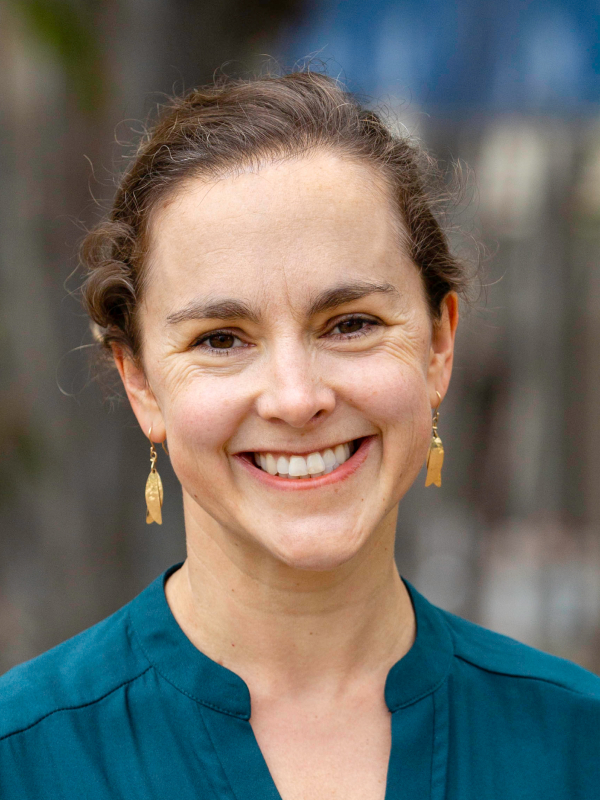
Abigail Andrews

Abigail Andrews

· Professor, Urban Studies and PlanningVerified

University of California, San Diego · Urban Studies and Planning

Active 2008–2024

h-index10
Citations328
Papers5028 last 5y
Funding
See your match with Abigail Andrews — sign in to PhdFit.Sign in

About

Abigail L. Andrews is a Professor of Urban Studies and Planning at the University of California San Diego, where she also serves as the Director of the Center for Comparative Immigration Studies and the Migration Field Research Program. She is affiliated with the Sociology department and is recognized as a leader in community-action research on migration and immigrants. Her work involves running collective field projects with large teams of students at the US-Mexico border and focusing on issues such as state violence, gender, grassroots advocacy among migrants from Mexico and Central America, and nurturing collective care amid state violence and climate crisis. Her research includes leading numerous community-action projects, such as partnerships with organizations like Imperial Valley Equity and Justice Coalition, Comite Cívico del Valle, United Farm Workers, Al Otro Lado, and others, addressing topics from farm labor organizing and climate transition to documenting Mexican state violence and mapping anti-black racism in Mexico's borderlands. She has also collaborated with Innovation Law Lab on tracking communication barriers in ICE detention facilities, which contributed to an ACLU lawsuit. Andrews is an award-winning teacher who integrates students into collaborative, applied, and trauma-informed research to promote justice for migrants. Her notable publications include the books "Banished Men: How Migrants Endure the Violence of Deportation" and "Undocumented Politics: Place, Gender, and the Pathways of Mexican Migrants," both of which explore the experiences of migrants, incarceration, exile, and the intersection of gender and state power from feminist and decolonial perspectives.

Research signals

Five dimensions sourced from public faculty / publication signals. Sign in to compare against your own profile and see your match score.

Research topics

  • Sociology
  • Political Science
  • Psychology
  • Social Science
  • Computer Science
  • Criminology
  • Medicine
  • Gender studies
  • Environmental health
  • Law

Selected publications

  • Imperial policing: weaponized data in carceral Chicago

    Ethnic and Racial Studies · 2024-10-15 · 1 citations

    article1st authorCorresponding
  • <i>#ResisteGozando</i> (joy as resistance): On the healing power of dance at the US–Mexico border

    Security Dialogue · 2024-05-10 · 1 citations

    articleOpen accessCorresponding

    Abstract This article explores the personal and political significance of dancing for migrants trapped at the US–Mexico border, waiting to apply for asylum in the United States. Past research has often framed waiting as empty, static, boring, or even violent. Nevertheless, an emergent literature shows how people in contexts of violence also exercise creativity and care as embodied paths to collective healing. Drawing on nearly three years of patchwork ethnography at Comunidades, a cultural center and migrant shelter in Tijuana, Mexico, including participant observation in person and over Zoom as well as in-depth interviews with migrants and staff, we explore how dance affects migrants’ relationships to trauma and offers its own mode of politics. We show how forced waiting was affectively complex. On one hand, being stranded at the border left migrants vulnerable to state and cartel abuse. At the same time, dancing helped people ‘come home’ to themselves, practice solidarity, and refuse dominant narratives of their suffering. In short, migrants can use creative practices – including but not limited to dance – for embodied healing, community building, and resistance to larger regimes of violence.

  • Introduction

    2023-08-29

    book-chapterOpen access1st authorCorresponding

    Luminos is University of California Press’ Open Access publishing program for monographs. With the same high standards for selection, peer review, production and marketing as our traditional program, Luminos is a transformative model, built as a partnership where costs and benefits are shared.

  • Locked Up and Broken Down

    2023-08-29

    book-chapterOpen access1st authorCorresponding

    Luminos is University of California Press’ Open Access publishing program for monographs. With the same high standards for selection, peer review, production and marketing as our traditional program, Luminos is a transformative model, built as a partnership where costs and benefits are shared.

  • Reclaiming Removal

    2023-08-29

    book-chapterOpen access1st authorCorresponding

    Luminos is University of California Press’ Open Access publishing program for monographs. With the same high standards for selection, peer review, production and marketing as our traditional program, Luminos is a transformative model, built as a partnership where costs and benefits are shared.

  • Policed

    2023-08-29

    book-chapterOpen access1st authorCorresponding

    Luminos is University of California Press’ Open Access publishing program for monographs. With the same high standards for selection, peer review, production and marketing as our traditional program, Luminos is a transformative model, built as a partnership where costs and benefits are shared.

  • No Place Called Home

    2023-08-29

    book-chapterOpen access1st authorCorresponding

    Luminos is University of California Press’ Open Access publishing program for monographs. With the same high standards for selection, peer review, production and marketing as our traditional program, Luminos is a transformative model, built as a partnership where costs and benefits are shared.

  • Banished Men: How Migrants Endure the Violence of Deportation

    2023-05-23 · 3 citations

    bookOpen access1st authorCorresponding

    What becomes of men the U.S. locks up and kicks out? From 2009 to 2020, the U.S. deported more than five million people—over 90 percent of them men. In Banished Men, Abigail Andrews and her students tell 186 of their stories. How, they ask, does expulsion shape men’s lives and sense of themselves? The book uncovers a harrowing carceral system that weaves together policing, prison, detention, removal, and border militarization to undermine migrants as men. Guards and gangs beat them down, till they feel like cockroaches, pigs, or dogs. Many lose ties with family. They do not go “home.” Instead, they end up in limbo: stripped of their very humanity. Against the odds, they fight for new ways to belong. At once devastating and humane, Banished Men offers a clear-eyed critique of the violence of deportation.

  • Conclusion: The Opposite of Banishment Is Care

    2023-08-29 · 1 citations

    book-chapterOpen access1st authorCorresponding

    Luminos is University of California Press’ Open Access publishing program for monographs. With the same high standards for selection, peer review, production and marketing as our traditional program, Luminos is a transformative model, built as a partnership where costs and benefits are shared.

  • Banished Men

    University of California Press eBooks · 2023 · 10 citations

    1st authorCorresponding
    • Computer Science
    • Computer Science

    A free ebook version of this title is available through Luminos, University of California Press’s Open Access publishing program. Visit www.luminosoa.org to learn more . What becomes of men the US locks up and kicks out? From 2009 to 2020, the US deported more than five million people—over 90 percent of them men. Banished Men tells 186 of their stories. How, it asks, does forced expulsion shape men's lives and sense of themselves? In this book, a team of thirty-one Latinx students and an award-winning scholar of gender and migrant exclusion uncover a harrowing system that weaves together policing, prison, detention, removal, and border militarization—and overwhelmingly targets men. Guards and gangs beat them down, both literally and metaphorically, as if they are no more than vermin or livestock. Their ties with family are severed. In Mexico, they end up banished: in limbo and stripped of humanity. They do not go "home." Their fight for new ways of belonging, as people of both "here" and "there," forms a devastating, humane, and clear-eyed critique of the violence of deportation.

Frequent coauthors

  • Gowri Vijayakumar

    Brandeis University

    65 shared
  • Sarah Minkin

    Columbia University

    65 shared
  • Michael Burawoy

    University of California, Berkeley

    65 shared
  • Cihan Tuğal

    University of California, Berkeley

    64 shared
  • Tim Gill

    Tulane University

    64 shared
  • Johana Londoño

    64 shared
  • Mara Loveman

    Skidmore College

    64 shared
  • Fred Block

    64 shared

Education

  • PhD, Sociology

    University of California-Berkeley

    2014
  • BA, American Studies

    Amherst College

    2004

Awards & honors

  • University of California Press
  • Sage, 2017
  • Resume-aware match score
  • Save to shortlist
  • AI-drafted outreach

See your match with Abigail Andrews

PhdFit ranks faculty by your research interests, methods, and publications — grounded in their actual work, not templates.

  • Free to start
  • No credit card
  • 30-second signup