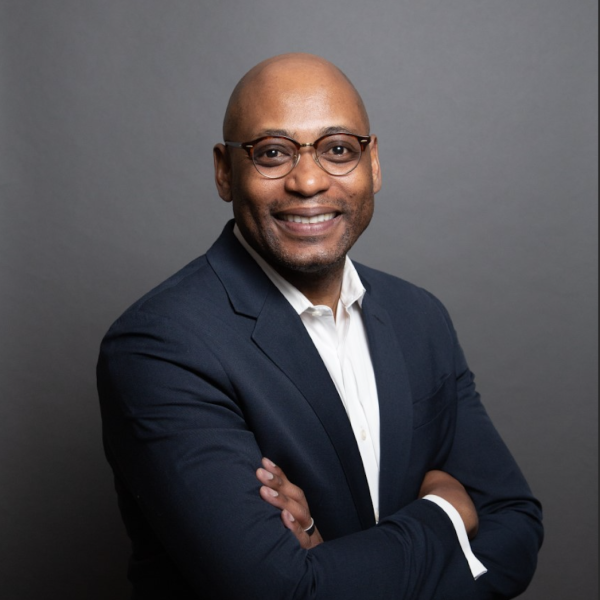
Patrice Rankine
· Professor in the Department of Classics and the CollegeVerifiedUniversity of Chicago · Classics
Active 1984–2024
About
Patrice Rankine is a Professor in the Department of Classics at the University of Chicago. He earned his BA in Ancient Greek magna cum laude from Brooklyn College, City University of New York, and his Ph.D. in classical languages and literatures from Yale University. His research interests include race and its performance through time, classical reception, and the afterlife of Greco-Roman classics, particularly as they pertain to literature, theater, and the history and performance of race. Rankine has authored notable works such as 'Ulysses in Black: Ralph Ellison, Classicism, and African American Literature' and 'Aristotle and Black Drama: A Theater of Civil Disobedience,' and coauthored 'The Oxford Handbook of Greek Drama in the Americas.' He is engaged in ongoing projects exploring themes of myth, memory, racial reckoning, and slavery, including research on slavery in Brazil and organizing international symposia. In addition to his scholarship, Rankine has served in significant administrative roles, including as dean for the School of Arts & Sciences at the University of Richmond, and has been recognized for his teaching excellence with awards such as the Excellence in Teaching Award at Purdue University.
Research topics
- Art
- Sociology
- Literature
- History
- Classics
- Gender studies
Selected publications
Racializing Antiquity, Post-Diversity
TAPA · 2024-03-01 · 3 citations
article1st authorCorrespondingRacializing Antiquity, Post-Diversity Patrice Rankine at cambridge university in 1965, James Baldwin debated William F. Buckley Jr. whether "The American Dream Is at the Expense of the American Negro."1 These men could not have been further apart on the matter and took positions already weatherworn by the mid-twentieth century.2 Whereas Baldwin had become a well-known and outspoken advocate for the civil rights movement in the United States, Buckley opposed what he saw as federal imposition on Southern states in such legislation as the forced integration of public schools (e.g., Brown v. Board of Education [1954]). Baldwin, who was raised in poverty in Harlem and educated only as far as high school, understood his unlikely status as a sought-after public intellectual. Buckley (although also born in New York) came from a wealthy and established Southern family and held a Yale University degree. The aspiration of the Cambridge Debates had been to highlight just such divergent perspectives, with the aim of getting at the truth or at least opening minds to viewpoints they might not have considered before. Realizing his native disadvantage, Baldwin fashioned his argument for the majority culture, the European descendants who primarily filled his audience at Cambridge and would listen across the airwaves, especially in the United States. He takes an ethical position in his appeal, stating that "it is a terrible thing for an entire population to surrender to the notion that one-ninth of its population is beneath them."3 Grounding his argument [End Page 1] in lineage, he offers that his ancestors, although the minority, were also (like the Founding Fathers) "trying to forge a new identity for which we need each other" (Baldwin and Buckley 1965). Baldwin, it might be said, was a "race man," a person whose words and actions would advance the cause of Black Americans.4 He understood his own truth as tied to the question that the debate posed. Buckley saw himself as an individual speaking on his own behalf. The subject of race (and racism) permeates this special issue, which is unusual for a journal dedicated to the philological study of Greek and Roman antiquity. As such, the Baldwinian heuristic is a useful countermove to the status quo, a tool that can serve readers seeking truth and understanding as opposed to simply reenforcing disciplinary commonplaces, in at least three ways: it can help surface our positionality, center race as a spectacular secret, and consider the evidence of this proposition in good faith. Regarding the first countermove, Baldwin offers that positionality contributes to shaping worldviews. By contrast, Buckley hardly mentions his own background or upbringing when advancing his ideas (Buccola 2019). Positionality, although not itself the end of the story, informs the questions researchers ask and even the answers proposed. Whether in contemporary settings or as it pertains to antiquity, positionality informs how researchers approach the question of race. Taking up this Baldwinian countermove of foregrounding positionality, my introduction to these essays deploys a personal voice, the use of I and crystal clarity on my own relationship to these concerns. I, moreover, assume collectives: on the one hand, an assortment of individuals who might share similar experiences, perspectives, or worldviews as my own (in some cases, as racial minorities); and on the other, the broader readership of TAPA, who have been trained in the professional disciplines of Classical Studies and do not center race in their work. These collectives infrequently overlap, and when they do, our perspectives are often not the same, owing to our different vantage points. With regard to the broader collective of classicists, I make explicit what the data tells us, as Arum Park's essay in this volume dissects: namely, that although we share a profession, the overwhelming majority of classicists do not identify—and would not be identified on sight—as racial minorities (see the TAPA volume online to view Park's informative charts in color). Although our training tells us that racial designations have nothing to do with Classical Studies, the essays in this volume methodically and meticulously [End Page 2] reveal a "spectacular secret," a term that Jaqueline Goldsby used to describe one of the darkest facts...
Lever Press eBooks · 2024-01-01
bookOpen access1st authorCorresponding<b>Demonstrates how myth, literature, and theater are part of and respond to public or political events</b> <br>Racial reckoning was a recurrent theme throughout the summer of 2020, a response to George Floyd’s murder and the unprecedented impact of COVID on marginalized groups. Theater and Crisis proposes a literary and theatrical study of how Floyd's killing could possibly happen in the aftermath of the Civil Rights era, and in the supposedly post-racial era following the election of Barack Obama. In the days and months following Floyd's death, there were nightly protests in streets across the United States and broader world. At the same time, theater performances were forced to shift online to video conferencing platforms and to find new ways to engage audiences. In each case, groups made shared meaning through storytelling and narrative, a liberatory process of myth-making and reverence that author Patrice D. Rankine calls “epiphanic encoding.” Rather than approaching the problem of racial reckoning through history, where periodization and progress are dominant narratives, Theater and Crisis argues that myth and memory allow for better theorization about recurring events from the past, their haunting, and what these apparent ghosts ask of us. Building on the study of myth as active, processual storytelling, Rankine acknowledges that it grounds and orients groups toward significant events. Theater and Crisis aligns narratives about Emmett Till, Trayvon Martin, and George Floyd, among others, with ancient, mythic figures such as Christ, Dionysus, Oedipus, and Moses. As living and verbal visitations, these stories performed on stage encode the past through their epiphanies in the present, urging audiences toward shared meaning. Rankine traces the cyclical hauntings of race through the refiguring of mythic stories across the past 75 years in the plays of James Baldwin, Ntozake Shange, Antoinette Nwandu, and many more, and in response to flashpoints in US racial history, such as the 1955 lynching of Emmett Till, the upheavals of the 1960s and 1970s, the wars on drugs and crime, and the continued violence against and disenfranchisement of Black people into the twenty-first century. Theater and Crisis explores the appearance of myth on the American stage and showcases the ongoing response by the theatrical establishment to transform the stage into a space for racial reckoning. This timely book is essential reading for scholars of theater studies, classics, and American studies. <br><b>About the Author</b> Patrice Rankine is Professor in the Department of Classics and the College at the University of Chicago. He is author of <i>Ulysses in Black: Ralph Ellison, Classicism, and African American Literature</i> (The University of Wisconsin Press, 2006), <i>Aristotle and Black Drama: A Theater of Civil Disobedience</i> (Baylor University Press, 2013), and co-author of <i>The Oxford Handbook of Greek Drama in the Americas.</i>
Images and the Discipline of the Classics
American book review/The American book review · 2023-09-01
article1st authorCorrespondingImages and the Discipline of the Classics Patrice D. Rankine (bio) No one in the Global North alive in 2016 can forget the haunting image of the young boy with disheveled, dusty hair, his hollow stare into the camera as blood obscures half his face. The boy was five-year-old Omran Daqneesh, a Syrian caught in a Russian air strike on the al-Qatarji neighborhood of Aleppo during the Syrian Civil War. The picture had been staged, a gesture of grand significance, given the realities of mass media Guy Debord described long ago in The Society of Spectacle (1967). Anthropologist Rania Sweis (Paradoxes of Care: Children and Global Medical Aid in Egypt [2021]) sets the viral image within a global obsession with humanitarian aid, which belies the paradoxes of the industry, the questions of who the recipients of such care are and whether these (mostly children) are getting the resources they truly need. Half a century earlier, the leaders of the civil rights movement in the United States seized upon the spectacular truth of images (worth thousands of words) in the promulgation of the 1955 photograph of Emmett Till's open casket, revealing a face so disfigured that anyone seeing it would have to consider the horrendous violence enacted upon Black people in America during segregated times and beyond. Those committed to academic disciplines, in my case the Classics, can learn about relevance and impact from the ubiquity of these images. Within a society of spectacle, control of the image is a specialty, to whatever extent the Kim Kardashians of the world are self-conscious about the power they wield (although Kim undeniably is). The compulsion to compose and promulgate pictures propelled Darnella Frazier to fame in 2020. At seventeen years old, she captured the horrendous murder of George Floyd on her cellphone camera, an act that uncannily enclosed her trauma: the continuous recall of the event, and later, her recital at the 2021 trial of Floyd's murderer (former police officer Derek Chauvin) of what she saw the previous year. For the use of her cellphone camera as a craft, Frazier has received several commendations, including a Pulitzer special award in 2021, kudos somewhat countervailing to her grim experiences. Frazer's ubiquity is one lesson, and the personal impact of her tool is an even more intimate reminder of the purpose of a discipline. [End Page 42] Although there is little internet trace of Frazer after 2021, from her Instagram page, she loves photography, it brings her joy, and it provides a window from herself to the world, or a bridge "between the world and me," as James Baldwin might put it. As a tool, the camera has immediate relevance, and its control and deployment are meaningful from a variety of standpoints: evoking emotion, prompting actions or reactions across the social and political spectrum. Would it ever be possible for young people to engage with the Classics in this way, for it to be ubiquitous, casually picked up, and impactful emotionally? What shifts in the discipline would it take? How would it change its image? The mastery of images (even deepfake or falsely generated ones) is among the foremost technologies of our time, although mastery itself can be problematic. Classicists often use technical knowledge as gatekeeping. Lack of expertise does not hinder access to the world of images, to the beaten and bruised back of Peter, an enslaved man of African descent whose image the Union army used to show the horrors of slavery. With the proliferation of images, it has become hard to distinguish between the novice and the professional, as praise of Frazier demonstrates. The tools behind appearances are rendered invisible in photographs or film, but mastery is always possible. Although Frazier used her cellphone camera in the casual way that most people do, the fact that it served the pursuit of justice cannot be lost on her, any more than it was on Omran's photographer, Mahmoud Raslan, who said he wished every photograph of a suffering child would go viral. From the example of images, we see that a discipline can serve several purposes at once. First, craft completes the human being. Novelist Ralph...
2023-03-21
book-chapter1st authorCorrespondingRoutledge eBooks · 2023
1st authorCorresponding- Sociology
- Art
- Gender studies
This essay uses posthumanism to discuss the gendered and racialized subject. It does so tentatively and inconclusively but in ways that the author believes properly interrogate what we might mean by queer and the classical, and he urges us not to inquire into these without consideration of race as manifest in the Black[ened] person, a modern subject. While it is commonly recognized that humanism constitutes the subject, the author locates in classical texts the structure of alterity most evidently manifest in Black[ened] being. Gender and sexuality were constitutive of humanism in Cicero’s pro Archia poeta and questioned in Seneca’s Natural Questions. In pro Archia poeta, Cicero presents the norms of humanism. In Seneca’s case, posthumanism is already operative in Natural Questions and Epistulae Morales 114, in the technologies of rhetoric and gender. The author’s recourse to Black[ened] being is affiliative, affirming the modernity of the enmeshed relationship between race and the queer (along with the antiquity of the production of gender), as a kind of counterhegemonic association with its own genealogy and embeddedness in discourse.
The Classical Tradition in Modern American Fiction by Tessa Roynon (review)
African American Review · 2023
1st authorCorresponding- Literature
- Art
- History
Reviewed by: The Classical Tradition in Modern American Fiction by Tessa Roynon Patrice Rankine Tessa Roynon. The Classical Tradition in Modern American Fiction. Edinburgh: Edinburgh UP, 2021. 296 pp. $35.95. The quest for the Great American Novel was a constant literary trope and a heroic personal pursuit for many writers across the twentieth century. In the twenty-first century, perhaps only avid readers of fiction wonder about the novel’s galvanizing role in culture, its ability to make a nation, as Benedict Anderson (1983) had it. The imagined community now consumes on the big screen literary masterpieces of our own and bygone eras, like Homer’s Iliad or Toni Morrison’s Beloved. Titles like The Great Gatsby become blockbuster movies or television miniseries. For the more perspicacious student and scholar willing to diverge from the beaten path to understand points of origination and particular nuances, Tessa Roynon offers a roadmap, a comprehensive treatment of classics and classical reception in some of the most important American novels of the twentieth and twenty-first centuries. The study navigates through nineteen Great Books (a category the author dates to 1943 and the Britannica series), the one outlier being the unfinished, posthumous work of Ralph Ellison, Three Days Before the Shooting. .., which Roynon rightly hesitates to call a novel. The seven Great American writers included in the study (a chapter dedicated to each) are: Willa Cather, F. Scott Fitzgerald, William Faulkner, Ralph Ellison, Toni Morrison, Philip Roth, and Marilynne Robinson. Classical myth, literature (preferably in the Greek and Latin original), and the artifacts of ancient Greece and Rome amount to a kind of Holy Grail on the journey to the Great American Novel, promised ends for readers and writers alike. Roynon asks “why so much modern, postmodern, and/or contemporary US fiction, occupying every position on the realist-toexperimentalist spectrum, makes such varied and extensive use of classical Greek and Roman tradition” (1-2). Since the writers hold fast to the classics and their reception—Greek and Roman, and secondarily, those within the broader Great Books framework—Roynon does as well. Her approach, however, is in notable ways different from her forebears’. One of the new and improved sensibilities in Roynon’s book is her heightened attention to efforts within the United States and across the professional field of Classical [End Page 248] Reception studies, globally, to diversify the canon of literary authors. For example, alongside the well-trodden theoretical study of classics and classical reception, owing to decades of research in the field, Roynon can now conscript into her array of critical tools such subdisciplines as “black classicism” (11), the Encyclopedia Africana appellation that classicist Michele Ronnick gave in the mid-2000s to an emerging spectrum of writers, artists, and scholars interested in African, transatlantic approaches the field and its influences. In full disclosure, I am one of those scholars. To this array, Roynon adds her own nuanced understanding throughout, coupling academic discipline and subdiscipline with deep readings of the writers and their worlds. The range of novelists that Roynon covers is a strength of the book. For example, she pairs Paradise as a travel companion to Faulkner’s Go Down, Moses and Absalom, Absalom!, with Morrison’s novels alluding to and benefiting from an understanding of her forebear. Roynon’s wide berth is fitting for survey classes in secondary and tertiary settings, particularly but not exclusively in the American context. As with other political considerations during the period of production that Roynon covers, race is always a factor, given its salience in cultural discourse within the United States, but certainly also given its robustness beyond its borders. This is the case whether the writers know it or not, as Morrison postulated in Playing in the Dark: Whiteness and the Literary Imagination (1992). These foci of race and the classics are ones that Roynon understands well, even if she pans out studiously to be inclusive of broader concerns. Roynon’s careful navigation of the terrain brings much success. Although, as she recognizes from the outset, there is no “unifying formula or paradigm” for her book (4), several themes and commitments consolidate toward a comprehensive contribution to the field of study. She...
A Loss of Faith Brings Vertigo
2023-12-12
book-chapterOpen access1st authorCorrespondingThis chapter contemplates failure as a reorienting experience through a number of interactions relevant to Black experience. First, the sculptural art of Michael Richards provides a focal point for a failed interaction between the West and Black bodies, namely, the Icarus myth. Icarus provides Richards with a generative trope, but not in any customary terms of classical reception. Rather, the accidental and continuous failure of Icarus is read in terms of Afropessimism, wherein suffering and loss are purposeless and irredeemable. Instead of a productive relationship between a classical Western symbol and a Black Atlantic artist, Icarus provides Richards a means by which to iterate loss. Taking Richards’ art as a worthwhile provocation, the essay turns to three sites of classical or ancient failure as significant for contemplation: Carthage, Kush and West Africa.
Classics by Design: <i>H of H Playbook</i> and <i>The Trojan Women: A Comic</i> in Art and Commerce
Classical Antiquity · 2023-10-01
articleOpen access1st authorCorrespondingThis essay investigates the linguistic, artistic, and typographical dimensions of Anne Carson’s H of H Playbook and Trojan Women by Euripides: A Comedy. I argue that graphic design and design-thinking principles provide a useful and unexplored theoretical framework for deciphering these books, given the often-complex relationship in them between image and words, and sometimes even words presented in different typeface and handwriting. Carson worked in graphic design for a time, and as a poet, words – and metaphor, specifically – are her primary design tool. Language works in tandem with image and form to create broader artistic meaning.
Myth, Formalism, and Black Expression: The Case of Icarus
2023-01-01
other1st authorCorrespondingBloomsbury Academic eBooks · 2022-01-01
book-chapter1st authorCorresponding
Frequent coauthors
- 51 shared
Justine McConnell
- 49 shared
Kathryn Bosher
Northwestern University
- 46 shared
Fiona Macintosh
- 2 shared
Fiona Macintosh
- 2 shared
Daniel Banks
- 1 shared
Dorota Dutsch
University of California, Santa Barbara
- 1 shared
Lorna Hardwick
- 1 shared
Hallie Marshall
Awards & honors
- Excellence in Teaching Award in the School of Languages and…
- Resume-aware match score
- Save to shortlist
- AI-drafted outreach
See your match with Patrice Rankine
PhdFit ranks faculty by your research interests, methods, and publications — grounded in their actual work, not templates.
- Free to start
- No credit card
- 30-second signup