Resume-aware faculty matching

Find professors who actually fit you

Upload your resume. Four AI agents analyze your background, rank the faculty who fit, inspect their recent research, and help you draft outreach — grounded in their actual work, not templates.

Free to startNo credit cardCancel anytime
Top matches Balanced preset
Dr. Sarah Chen
Stanford · Interpretability · NLP
91
Dr. Marcus Holloway
MIT · Robotics · RL
84
Dr. Aisha Okonkwo
CMU · Fairness · HCI
82
Nova · Professor Researcher · re-ranking top 20…
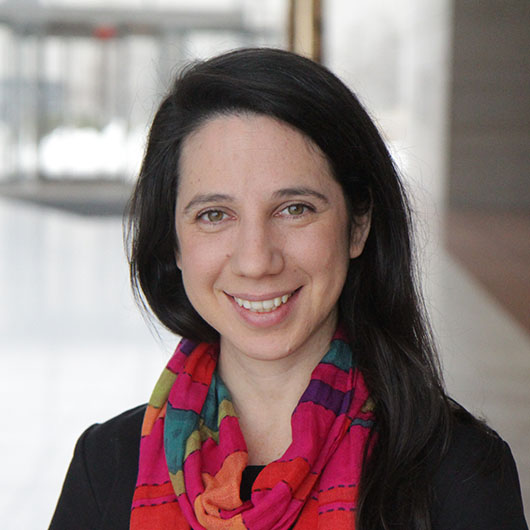
Adriana Weisleder

Adriana Weisleder

· Assistant Professor; Director of Undergraduate Studies in Communication Sciences & DisordersVerified

Northwestern University · Theatre

Active 2007–2026

h-index28
Citations4.3k
Papers7632 last 5y
Funding
See your match with Adriana Weisleder — sign in to PhdFit.Sign in

About

Adriana Weisleder is an assistant professor in the Department of Communication Sciences and Disorders at Northwestern University and serves as the Director of the Child Language Lab. Her research focuses on understanding the learning mechanisms and contexts that support language development in children from diverse sociocultural backgrounds, with a particular emphasis on dual language learners. She investigates early language development and processing in young children, including bilingual toddlers, using methodologies such as eye-tracking, naturalistic recordings, and studies of real-world interventions. Her work aims to contribute to a more robust understanding of typical and atypical language development across various contexts and to reduce inequities in the identification and treatment of child language and communication disorders. Dr. Weisleder is a Costa Rican and Spanish-English bilingual, and her research seeks to inform practices that support language development in diverse populations.

Research signals

Five dimensions sourced from public faculty / publication signals. Sign in to compare against your own profile and see your match score.

Research topics

  • Computer Science
  • Psychology
  • Developmental psychology
  • Medicine
  • Cognitive psychology
  • Clinical psychology
  • Pediatrics
  • Nursing
  • Family medicine
  • Demography
  • Psychiatry
  • Internet privacy
  • Geography
  • Data science
  • Cognitive science
  • Pedagogy
  • Mathematics education

Selected publications

  • Infrequent Child-Directed Speech Is Bursty and May Draw Infant Vocalizations

    arXiv (Cornell University) · 2026-03-25

    preprintOpen accessSenior author

    Children in many parts of the world hear relatively little speech directed to them, yet still reach major language development milestones. What differs about the speech input that infants learn from when directed input is rare? Using longform, infant-centered audio recordings taken in rural Bolivia and the urban U.S., we examined temporal patterns of infants' speech input and their pre-linguistic vocal behavior. We find that child-directed speech in Bolivia, though less frequent, was just as temporally clustered as speech input in the U.S, arriving in concentrated bursts rather than spread across the day. In both communities, infants were most likely to produce speech-like vocalizations during periods of speech directed to them, with the probability of infants' speech-like vocalizations during target child-directed speech nearly double that during silence. In Bolivia, infants' speech-like vocalizations were also more likely to occur during bouts of directed speech from older children than from adults. Together, these findings suggest that the developmental impact of child-directed speech may depend not only on quantity, but on temporal concentration and source, with older children serving as an important source of input in some communities, including where adult speech to infants is less frequent.

  • Parenting Intervention in Pediatric Primary Care Promotes Child Mental Health: Evidence from a Randomized Controlled Trial of PlayReadVIP

    The Journal of Pediatrics · 2026-02-14

    articleOpen access
  • Infrequent Child-Directed Speech Is Bursty and May Draw Infant Vocalizations

    arXiv (Cornell University) · 2026-03-25

    articleOpen accessSenior author

    Children in many parts of the world hear relatively little speech directed to them, yet still reach major language development milestones. What differs about the speech input that infants learn from when directed input is rare? Using longform, infant-centered audio recordings taken in rural Bolivia and the urban U.S., we examined temporal patterns of infants' speech input and their pre-linguistic vocal behavior. We find that child-directed speech in Bolivia, though less frequent, was just as temporally clustered as speech input in the U.S, arriving in concentrated bursts rather than spread across the day. In both communities, infants were most likely to produce speech-like vocalizations during periods of speech directed to them, with the probability of infants' speech-like vocalizations during target child-directed speech nearly double that during silence. In Bolivia, infants' speech-like vocalizations were also more likely to occur during bouts of directed speech from older children than from adults. Together, these findings suggest that the developmental impact of child-directed speech may depend not only on quantity, but on temporal concentration and source, with older children serving as an important source of input in some communities, including where adult speech to infants is less frequent.

  • Bilingual Language Input to Infants in Bolivia and the United States

    Infancy · 2025-03-01 · 2 citations

    articleOpen accessSenior author

    Characterizing dual language input in children's environments is critical to understand how early language experiences influence bilingual language development. However, little is known about how dual language exposure is distributed across factors known to influence the kinds of input children receive. This study examined how infants' exposure to each of their languages is distributed across different speakers (adults vs. other children) and speech registers (child- versus adult-directed speech). We examined daylong audio recordings of infants' language environments in two bilingual communities: an indigenous Quechua- and Spanish-speaking community in Bolivia (n = 10, age = 5.7-23.4 months, five females, five males) and an immigrant Spanish- and English-speaking community in the United States (n = 10, age = 6.4-12.6, four females, six males). Infants in both communities were more likely to hear the societal language from older children than from adult caregivers. Infants were also more likely to hear the societal language in child-directed speech, and more of the minoritized language in adult-directed speech, by a factor of more than 4 to 1. These findings shed light on how bilingual infants' language exposure is distributed across social contexts, which may have implications for bilingual language development and maintenance, as distinct social contexts afford different opportunities for engagement and interaction over the course of learning two languages in infancy.

  • Pediatricians' Knowledge of Bilingualism and Provision of Culturally Responsive Care for Latine Dual Language Learners: A Pilot Study

    American Journal of Speech-Language Pathology · 2025-09-02

    article1st authorCorresponding

    PURPOSE: Pediatricians are the first professionals to provide guidance about language development to families with young children and referrals for those who may have a language or communication disorder. One-quarter of children in the United States are dual language learners (DLLs), yet there is little information about pediatrician's readiness to provide culturally and linguistically responsive care for these children. This pilot study sought to examine pediatricians' knowledge of bilingual language development and its relation to the provision of language and literacy promotion and developmental surveillance for Latine DLLs. METHOD: Sixty-seven pediatricians at two academic pediatric clinics completed a survey asking about their knowledge about bilingual language development, Spanish proficiency, and provision of culturally effective health care to Latine DLLs. Analyses examined mean levels of these variables as well as relationships between knowledge, proficiency, and practices. RESULTS: On average, pediatricians' responses to the knowledge-based questions agreed with the evidence 69% of the time. Only 29% of pediatricians said they felt comfortable counseling Latine parents on bilingual language development, and 75% indicated they had difficulty recognizing signs of a language or communication disorders in Latine children from Spanish-speaking homes. Multiple regressions showed that pediatricians with higher Spanish proficiency and those with greater knowledge of bilingual language development provided more culturally and linguistically responsive care to Latine DLLs. CONCLUSIONS: We identified significant gaps in pediatricians' knowledge about bilingual language development that were associated with their practice patterns. Results highlight the need for incorporating training about bilingual language development into pediatric education and increasing the number of providers that speak languages other than English. SUPPLEMENTAL MATERIAL: https://doi.org/10.23641/asha.29954468.

  • Leamos Juntos! Bilingual books support Latine parents’ Spanish language use during book-sharing interactions

    Journal of Child Language · 2025-05-21 · 2 citations

    articleOpen accessSenior authorCorresponding

    Book-sharing interactions expose children to diverse language input, yet most research on parent-child book-sharing has focused on monolingual parents reading monolingual books. This study investigated how Latine bilingual parents in the U.S. share different types of books with their children. Twenty-four Latine parents and their three- to five-year-old children shared a monolingual English-only book and a bilingual English-Spanish book. Parents used a higher proportion of total words and different words in Spanish when sharing the bilingual book than the monolingual book. They also engaged in more code-switching with the bilingual book than the English monolingual book. There were no differences in the number or diversity of words in English between book types. These findings show that bilingual books increase parents' use of the home language (in this case Spanish) relative to books in the societal language, and suggest they may be one way of supporting children's dual language development.

  • Child-directed speech and infant vocal development in rural, highland Bolivia and immigrant families in urban United States

    Child Development · 2025-11-30

    articleOpen accessSenior author

    Decades of research have established links between speech input and children's vocabulary growth. However, it is unclear if input also facilitates phonological development. Phonology has a strong biological component-implicating fine motor development-so language socialization factors like speech input may matter less. Further complicating matters, children in many cultures are exposed to vastly different amounts of speech input, and yet these children still reach many major language development milestones on age-appropriate timelines. How does speech input relate to infant phonological development in the first years of life? We estimated infants' (1) speech input and (2) vocal maturity using daylong audio recordings taken in an Indigenous Quechua- and Spanish-speaking community in Bolivia (n = 10, M age = 12 months, 5 females, 5 males) and an immigrant Spanish- and English-speaking community in the United States (n = 10, M age = 9 months, 4 females, 6 males; all Hispanic or Latino). Although we found no differences in the overall amount of speech input to adults and children between communities, infants in the United States were 2.5× more likely to hear speech directed to them than the infants in Bolivia. When child-directed speech (CDS) was instead characterized to include all speech directed to any child within the infants' vicinity, there were no differences between communities. When employing these different definitions of CDS, we found positive relationships between quantity of speech input and different metrics of the Bolivian infants' vocal maturity. These results paint a nuanced picture showing that directed speech input, even when less common, is related to early phonological development, and that by expanding the definition of speech input to accommodate diverse cultural settings we can understand how infants' language development is resilient to differences in speech input.

  • A Glass Half Full: Limitations in ChiLDES Point to Ways Forward for a More Representative Developmental Science. Commentary on Scaff et al. (2025)

    Developmental Science · 2025-08-24 · 1 citations

    articleSenior author

    The authors declare no conflicts of interest. Data sharing is not applicable to this article as no datasets were generated or analysed during the current study.

  • Leamos Juntos! Bilingual books support Latine parents’ Spanish language use during book-sharing interactions

    2025-04-07

    preprintOpen accessSenior author

    Book-sharing interactions expose children to diverse language input, yet most research on parent-child book-sharing has focused on monolingual parents reading monolingual books. This study investigated how Latine bilingual parents in the U.S. share different types of books with their children. Twenty-four Latine parents and their three- to five-year-old children shared a monolingual English-only book and a bilingual English-Spanish book. Parents used a higher proportion of total words and different words in Spanish when sharing the bilingual book than the monolingual book. They also engaged in more code-switching with the bilingual book than the English monolingual book. There were no differences in the number or diversity of words in English between book types. These findings show that bilingual books increase parents’ use of the home language (in this case Spanish) relative to books in the societal language only, and suggest they may be one way of supporting children’s dual language development.

  • Leamos Juntos! Bilingual books support Latine parents’ Spanish language use during book-sharing interactions

    2024-08-15

    preprintOpen accessSenior authorCorresponding

    Book-sharing interactions expose children to more diverse language input than caregiver speech in other contexts. Yet most research on caregiver-child book sharing has focused on monolingual parents reading monolingual books. This study investigated how Spanish-English bilingual caregivers in the United States share different types of books with their children. Twenty-four Latine parents and their three- to five-year-old children shared a monolingual English-only book and a bilingual English-Spanish book. Caregivers used more total words and more different words in Spanish when sharing the bilingual book than the monolingual book. There were no differences in the number or diversity of words in English, or in caregivers’ code-switching, between book types. These findings show that bilingual books increase caregivers’ use of the home language (in this case Spanish) relative to books in the societal language only, and suggest bilingual children’s books may be one way of supporting children’s dual language development.

Frequent coauthors

  • Carolyn Brockmeyer Cates

    52 shared
  • Alan L. Mendelsohn

    New York University

    48 shared
  • Benard P. Dreyer

    New York University

    38 shared
  • Samantha Berkule Johnson

    New York University

    33 shared
  • Caitlin F. Canfield

    New York University

    29 shared
  • Anne M. Seery

    New York University

    25 shared
  • Harris S. Huberman

    SUNY Downstate Health Sciences University

    22 shared
  • Alejandrina Cristià

    Université Paris Sciences et Lettres

    9 shared

Labs

  • Resume-aware match score
  • Save to shortlist
  • AI-drafted outreach

See your match with Adriana Weisleder

PhdFit ranks faculty by your research interests, methods, and publications — grounded in their actual work, not templates.

  • Free to start
  • No credit card
  • 30-second signup