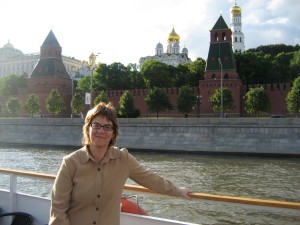
Adrienne Edgar
· ProfessorUniversity of California, Santa Barbara · History
Active 1993–2025
About
Adrienne Edgar is a Professor in the Department of History at the University of California, Santa Barbara. She earned her Ph.D. from the University of California Berkeley in 1999. Her area of expertise is the history of the Soviet Union, with a particular focus on Central Asia during the Soviet period. Her research has concentrated on the making of nations in early Soviet Central Asia, as well as issues related to nationality, race, and intermarriage in the postwar USSR. Edgar has contributed to the understanding of ethnic mixing, identity, and belonging through her work on intermarriage and ethnic relations in Soviet Central Asia. She is involved in current projects such as editing the Oxford Handbook of the History of Race in Eurasia and researching the descendants of Benjamin Franklin and the American interest in genealogy. Her notable publications include the book 'Intermarriage and the Friendship of Peoples: Ethnic Mixing in Soviet Central Asia,' which has received multiple awards and recognition. Edgar also teaches courses related to European, Russian, and Central Asian history, and actively participates in professional organizations, serving on editorial boards and holding leadership roles in associations focused on Slavic, East European, and Eurasian studies.
Research signals
Five dimensions sourced from public faculty / publication signals. Sign in to compare against your own profile and see your match score.
Research topics
- Political Science
- Sociology
- Law
- History
- Gender studies
- Economic history
- Psychology
- Linguistics
- Pedagogy
- Ethnology
- Ancient history
- Philosophy
- Epistemology
- Social psychology
Selected publications
The Russian Review · 2025-10-28
articleOpen access1st authorCorrespondingOral history plays a crucial role in investigating life in the former Soviet Union, where censorship meant that many topics were never discussed in print. Interviews are especially important in capturing the memories of the oldest generations of Soviet citizens before they pass from the scene. Marianne Kamp’s new monograph provides a marvelous example of the value of such research in Central Asia, where collectivization, like Soviet history more broadly, is understudied compared to other regions. It is astonishing that a book published in 2025 would contain interviews with people who actually remember collectivization, which occurred nearly a century earlier. This is partly thanks to the fact that this long-term oral history project was first launched around 2000. Even so, it must have been hard to find octogenarians with unimpaired memories who could recall details regarding their youth in the 1920s and early 1930s. Kamp’s respondents have almost all passed away by now, making this book a rare treasure trove of irreplaceable information. This information is doubly valuable because the people interviewed are those whose voices are most often lost to history—peasants and rural dwellers, who leave few written records about their lives. Their recollections provide a complement and a contrast to histories of collectivization based on archival documents. The contrast with archivally based histories provides the basis for some of Kamp’s most important conclusions. Kamp’s oral history interlocutors call into question several aspects of conventional scholarly wisdom about this period. These have to do with how collectivization was received by Uzbek rural society, class conflict in the Uzbek countryside, and the Bosmachi rebel movement. The central argument of the book is that collectivization was not as uniformly negative for peasants in Uzbekistan as the documentary record suggests. Most works of history represent collectivization as a period of unremitting misery and chaos. Kamp’s interviewees often recalled the period quite differently. Many joined the kolkhoz voluntarily, due to incentives and promised benefits, and took pride in their work there. Kamp speculates that people remembering collectivization years later may focus on the ultimate outcome rather than on the violent ups and downs of the process itself. Eventually, life on the kolkhoz came to seem normal and remains so in people’s memories. Of course, recollections of collectivization also depend on one’s social class at the time. Kamp argues that class distinctions were not simply imposed by the Soviet regime but had real resonance with the Uzbek peasantry. Historians have tended to emphasize the invented and arbitrary nature of Soviet categories such as “kulak” and “poor peasant.” Kamp’s interviewees, by contrast, recalled prerevolutionary social classes as very real. Many of them came from poor or landless families and had worked as servants or sharecroppers to the rich, whom they resented. The poor gained land through Soviet land reform and benefitted by joining the kolkhoz. Those who had grown up in affluent families had very different memories—of exile, losing their land, and seeing their fathers imprisoned or worse. Kamp’s interviews also challenge existing narratives about the Bosmachi, armed groups that fought against Soviet rule in the 1920s. Views of the Bosmachi have shifted over time, with the Soviet image of counterrevolutionary bandits giving way to post-Soviet portrayals of heroic independence fighters. In contemporary Uzbekistan, descendants of the Bosmachi prefer to remember their ancestors as freedom fighters who never hurt ordinary people. However, Kamp’s interviews belie these sanitized memories. Nearly half of her respondents vividly recalled Bosmachi violence during their childhood, not all of which was targeted at communist officials. There were major gender differences, with women much more likely to recall fear, violence, and rape. Overall, Kamp finds that collectivization was less disruptive in Uzbekistan than in neighboring Soviet republics. Uzbeks were not relocated or forced to grow new and unfamiliar crops. Soviet class categories seemed to fit the settled rural regions of Uzbekistan better than they did nomadic societies, which generally featured a rough form of tribal democracy and collective land ownership. Certainly, the distressing accounts of Kazakhstan and Turkmenistan in this period, which include mass flight, armed rebellion, and severe famine (especially in Kazakhstan), are quite different from the stories Kamp tells. With historians today insisting on the need to transcend the “national” in Central Asia, perhaps future researchers will analyze Uzbekistan more systematically within the context of the region as a whole. Sadly, they will be unlikely to have access to oral history evidence from other countries like that collected in this remarkable book.
Central Asia: Ever More Central?
Kritika · 2025-01-01
article1st authorCorrespondingSlavic Review · 2024-01-01
article1st authorCorresponding:<i>Racism in Modern Russia: From the Romanovs to Putin</i>
The Journal of Modern History · 2024-03-01
article1st authorCorrespondingMixed Families and the Russian Language
Cornell University Press eBooks · 2022 · 1 citations
1st authorCorresponding- Political Science
- Sociology
- Political Science
This chapter reviews the language used among mixed families, who were more likely than monoethnic families to use Russian, the Soviet lingua franca, as their primary language. The result was a frequent disconnect between official nationality and language use for many ethnically mixed children. It talks about the tendency of families to use Russian as their primary language, which was one of the characteristics that caused them to be portrayed in glowing terms as the most Soviet of all Soviet families. The chapter examines the policy of <italic>korenizatsiia</italic>, or nativization, first formulated in the 1920s, which insisted on the importance of indigenous languages for all Soviet nationalities. It explores the strong incentives for people to acquire Russian-language proficiency in non-Russian republics and the promotion of Russian as the Soviet lingua franca had intensified over time.
Cornell University Press eBooks · 2022-05-15
book-chapter1st authorCorrespondingThis chapter discusses the naming of children in mixed families, who had to decide whether children should be given names from the mother's nationality, the father's nationality, both, or neither. It mentions Rustam Iskandarov, a man of mixed Tajik and Russian descent living in Tajikistan, who thought carefully about what to name his son who was born in 1984. Rustam's story illustrates the challenges faced by ethnically mixed couples in Soviet Central Asia as they chose names for their children. The chapter investigates the process of choosing names for children in Soviet-era mixed families in order to gain insight into the motivations for bestowing particular names and the experiences of the people who bear these names. A first name can be an important signal of the future identity and community the parents envision for their child in multi-ethnic societies.
Intermarriage after the Soviet Collapse
Cornell University Press eBooks · 2022-05-15
book-chapter1st authorCorrespondingThis chapter examines the changing situation of mixed families in independent Kazakhstan and Tajikistan after 1991, when the growth of exclusionary nationalism and renewed emphasis on tradition made life more difficult for those who married across ethnic lines. The chapter discusses how new forms of intermarriage have appeared as Central Asian countries have become more open to the outside world. One sign of the globalization of the past two decades is that citizens of Kazakhstan and Tajikistan may intermarry not just with other former Soviet nationalities but also with citizens of foreign countries such as Turks, Afghans, Iranians, Chinese, Americans, and Western Europeans. The chapter describes the Soviet view of mixed marriage as a union between individuals of two Soviet-defined nationalities that is no longer sufficient. Expressions of hostility toward ethnic mixing are widespread among government officials, scholars, and the broader population, for whom “ethnic purity” has become a valued attribute.
1. Intermarriage and Soviet Social Science
Cornell University Press eBooks · 2022 · 1 citations
1st authorCorresponding- Political Science
- Political Science
- Economic history
Cornell University Press eBooks · 2022-05-15
book-chapter1st authorCorrespondingExtract For Amai and Ben, the youngest Edgars And in memory of Adil Alexandrovich Ualiyev (1993–2015)
Intermarriage and the Friendship of Peoples
Cornell University Press eBooks · 2022-05-15 · 3 citations
book1st authorCorrespondingThis book examines the racialization of identities and its impact on mixed couples and families in Soviet Central Asia. In marked contrast to its Cold War rivals, the Soviet Union celebrated mixed marriages among its diverse ethnic groups as a sign of the unbreakable friendship of peoples and the imminent emergence of a single “Soviet people.” Yet the official Soviet view of ethnic nationality became increasingly primordial and even racialized in the USSR's final decades. In this context, the book argues, mixed families and individuals found it impossible to transcend ethnicity, fully embrace their complex identities, and become simply “Soviet.” Looking back on their lives in the Soviet Union, ethnically mixed people often reported that the “official” nationality in their identity documents did not match their subjective feelings of identity, that they were unable to speak “their own” native language, and that their ambiguous physical appearance prevented them from claiming the nationality with which they most identified. In all these ways, mixed couples and families were acutely and painfully affected by the growth of ethnic primordialism and by the tensions between the national and supranational projects in the Soviet Union. The book is based on more than eighty in-depth oral history interviews with members of mixed families in Kazakhstan and Tajikistan, along with published and unpublished Soviet documents, scholarly and popular articles from the Soviet press, memoirs and films, and interviews with Soviet-era sociologists and ethnographers.
Frequent coauthors
- 2 shared
Benjamin Frommer
- 1 shared
Елена Гапова
- 1 shared
Stephen Pattison
- 1 shared
Valerie A. Kivelson
- 1 shared
Richard Lim
- 1 shared
С. Глебов
- 1 shared
Lhamsuren Munkh-Erdene
- 1 shared
Т. Д. Скрынникова
Awards & honors
- 2023 AWSS Heldt Prize
- 2023 ASN Joseph Rothschild Prize
- CESS Book Prize in History and Humanities
- Foreign Affairs 'best books of 2023'
- Berkshire Conference Article Prize (2006)
- Resume-aware match score
- Save to shortlist
- AI-drafted outreach
See your match with Adrienne Edgar
PhdFit ranks faculty by your research interests, methods, and publications — grounded in their actual work, not templates.
- Free to start
- No credit card
- 30-second signup