Resume-aware faculty matching

Find professors who actually fit you

Upload your resume. Four AI agents analyze your background, rank the faculty who fit, inspect their recent research, and help you draft outreach — grounded in their actual work, not templates.

Free to startNo credit cardCancel anytime
Top matches Balanced preset
Dr. Sarah Chen
Stanford · Interpretability · NLP
91
Dr. Marcus Holloway
MIT · Robotics · RL
84
Dr. Aisha Okonkwo
CMU · Fairness · HCI
82
Nova · Professor Researcher · re-ranking top 20…
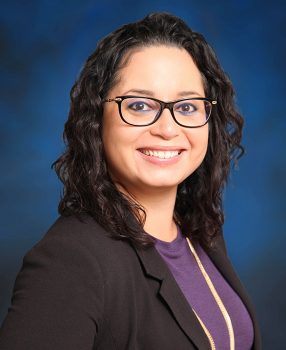
Alana LeBrón

Alana LeBrón

· Associate Professor of Health, Society, & Behavior, Associate Professor, Chicano/Latino Studies, Affiliated, Environmental & Occupational Health, Equity AdvisorVerified

University of California, Irvine · Department of Health, Society, and Behavior

Active 2013–2025

h-index19
Citations1.1k
Papers6937 last 5y
Funding
See your match with Alana LeBrón — sign in to PhdFit.Sign in

About

Alana LeBrón, MS, PhD, is an Associate Professor of Health, Society, & Behavior at UC Irvine and also serves as an Associate Professor in Chicano/Latino Studies. Her research interests include structural racism and health, the health of Latino/a communities, and community-based participatory research. She holds a Ph.D. from the University of Michigan, School of Public Health, earned in 2015 with a focus on Health Behavior and Health Education. Her work emphasizes understanding barriers to health and promoting health equity through community engagement and research.

Research signals

Five dimensions sourced from public faculty / publication signals. Sign in to compare against your own profile and see your match score.

Research topics

  • Medicine
  • Environmental health
  • Political Science
  • Environmental science
  • Public relations
  • Demography
  • Gerontology
  • Psychology
  • Environmental planning
  • Internal medicine
  • Environmental protection
  • Nursing
  • Geography
  • Psychiatry
  • Biology
  • Ecology

Selected publications

  • Why Building Power Is Key to Protecting Academic Public Health and Advancing Health Equity

    American Journal of Public Health · 2025-10-08 · 3 citations

    editorialOpen access
  • “Each one of us did the best we could for the community, while also supporting each other”: community residents’ perspectives on community health worker (CHW) response during the COVID-19 pandemic - a community science worker-led qualitative study

    BMC Public Health · 2025-04-04 · 2 citations

    articleOpen accessSenior author

    BACKGROUND: The COVID-19 pandemic significantly disrupted the health and social wellbeing of the United States population, disproportionately affecting low-income, immigrant communities of color. In Orange County, California, community health workers (CHWs) were essential to addressing multilevel community needs among impacted communities. However, little is known about how communities and CHWs responded to meet their needs amid pressing challenges. METHODS: CHWs completed a popular education qualitative methods program under a Community Science Worker (CSW) model to design and facilitate four semi-structured focus groups and three interviews with 32 residents in Orange County, California, to understand their pandemic experiences and interactions with CHWs. Sessions were recorded, transcribed, and analyzed using an adapted flexible coding approach to derive data-driven themes. RESULTS: Residents described how they supported one another, advocated for their communities, and fostered livelihood and resilience. Four main themes detail the community's response: (1) facing a chain of interconnected challenges; (2) connecting with CHWs and accessing the services they facilitated; (3) fostering a community of care, a mutuality often inspired by interactions with CHWs; and (4) reinforcing foundations through a whole-of-community approach, including strengthening social policies. CONCLUSIONS: Engaging community members is crucial for comprehensively understanding the CHW model. Given the enormous ongoing community challenges post-pandemic, these findings call for increased CHW presence, additional support and resources for health and socioeconomic needs, and improved information dissemination to bolster community resilience. Findings center mutual aid, emphasizing the importance of supporting communities in this crucial work. Additionally, engaging with residents who CHWs supported is vital for understanding the full impact of CHW models.

  • Reflecting on the Backstage and Frontstage of Community-Based Participatory Research: Ethics and Collaboration in the CATALYST Study

    International Journal of Qualitative Methods · 2025-09-01 · 1 citations

    articleOpen access

    Community-based participatory research (CBPR) is critical for promoting health equity through the incorporation of equitable decision-making and participatory processes into health equity research. Yet, research processes often fail to align with community realities. Drawing on Goffman’s frontstage–backstage framework, this paper examines how a community–academic partnership navigated and negotiated processes to support ethical inclusion of community researchers and participants in a CBPR qualitative study conducted in Orange County, California, focused on the roles of Community Health Workers (CHWs) during the COVID-19 pandemic. We share how backstage processes of trust-building and negotiation directly informed frontstage strategies to strengthen ethical research practices with community participants. We explore considerations for key components of qualitative research processes that have consequences for participatory research approaches: (a) partnership formation (b) inclusive consent processes, (c) inclusive recruitment processes, (d) facilitating direct community participation in qualitative research methods, and (e) full integration of community members as researchers across all stages through, for example, allocating resources to support equitable decision-making processes that center community expertise. Barriers including bureaucratic processes (e.g., complex consent requirements, language accessibility, cumbersome processes, and budget constraints) and power imbalances in research roles are discussed. Strategies to address these challenges include relationship-centered and community-focused ethical review processes to improve the potential for informed consent and authentic participation, and structural support for sustained participation of community researchers throughout the research process, which often extends beyond the lifecycle of the research grant. Recommendations are provided to enhance future research practices to prioritize equity, accessibility, and community leadership, such as integrating community members into IRB oversight processes, discussing risks of research participation that may extend beyond the methods or substance of the project, and reducing academic barriers to supporting community researchers.

  • A Community-Based Assessment of Attitudes, Health Impacts and Protective Actions During the 24-Day Hangar Fire in Tustin, California

    International Journal of Environmental Research and Public Health · 2025-06-26

    articleOpen access

    Fire events can impact physical and mental health through smoke exposure, evacuation, property loss, and/or other environmental stressors. In this study, we developed community-driven, cross-sectional online surveys to assess public attitudes, health impacts, and protective actions of residents affected by the Tustin hangar fire that burned for 24 days in southern California. Results showed the most frequently reported fire-related exposure concerns (93%) to be asbestos and general air pollution and the most commonly reported mental health impacts to be anxiety (41%), physical fatigue (37%), headaches (33%), and stress (26%). Nose/sinus irritation was the most commonly reported (26.0%) respiratory symptom, while skin- and eye-related conditions were reported by 63.0% and 72.2% of the survey population, respectively. The most commonly reported health-protective actions taken by residents included staying indoors and/or closing doors and windows (67%), followed by wearing face masks (37%) and the indoor use of air purifiers (35%). A higher proportion of low-income residents had to spend money on remediation or other health-protective actions compared to high-income residents. Participants overwhelmingly reported disapproval of their city's and/or government's response to the fire disaster. Findings from this study underscore the potential impacts of major pollution events on neighboring communities and offer critical insights to better position government agencies to respond during future disasters while effectively communicating with the public and addressing community needs.

  • Racial/ethnic disparities in time from diagnosis to surgical treatment for type I and type II endometrial carcinomas

    Gynecologic Oncology · 2025-07-15 · 1 citations

    articleOpen accessSenior author
  • From the Ground Up: Community-Based Participatory Research Reclaiming the Science of Lead

    Environmental Justice · 2025-04-29

    articleOpen access

    For decades, the dominant approach to lead poisoning has been to focus on homes affected by lead paint and to treat children who are already suffering from lead poisoning. This individualizing approach developed in the context of the defunding and deregulation of government agencies in the 1980s. In recent years, however, community–academic partnerships have reframed lead as an environmental issue produced by the development of the lead industry in the twentieth century and connected to overlapping histories of exploitation, discrimination, and inaction. These community-based projects have contributed to shifting research agendas (by emphasizing historical analysis and the study of the soil and dust), achieved policy changes (with a focus on community-level solutions), and built networks and solidarity with groups advocating for climate justice, tenant organizing, and food security.

  • Language justice as an antiracism institutional transformation: Institutional facilitators and barriers for community-engaged cardiometabolic health promotion research

    Journal of Clinical and Translational Science · 2025-01-01 · 2 citations

    articleOpen access1st authorCorresponding

    This article describes lessons learned from the incorporation of language justice as an antiracism praxis for an academic Center addressing cardiometabolic inequities. Drawing from a thematic analysis of notes and discussions from the Center's community engagement core, we present lessons learned from three examples of language justice: inclusion of bilingual team members, community mini-grants, and centering community in community-academic meetings. Facilitating strategies included preparing and reviewing materials in advance for interpretation/translation, live simultaneous interpretation for bilingual spaces, and in-language documents. Barriers included: time commitment and expenses, slow organizational shifts to collectively practice language justice, and institutional-level administrative hurdles beyond the community engagement core's influence. Strengthening language justice means integrating language justice institutionally and into all research processes; dedicating time and processes to learn about and practice language justice; equitably funding language justice within research budgets; equitably engaging bilingual, bicultural staff and language justice practitioners; and creating processes for language justice in written and oral research and collaborative activities. Language justice is not optional and necessitates buy-in, leadership, and support of community engagement cores, Center leadership, university administrators, and funders. We discuss implications for systems and policy change to advance language justice in research to promote health equity.

  • People Versus Product: Conditions for Success for Community Health Workers as Sustainable Members of the Public Health Workforce

    Milbank Quarterly · 2025-07-26 · 1 citations

    articleSenior author

    Policy Points Community health workers (CHWs) recognize that health care and public health institutions and representatives value their roles, but these institutions are often unaware of the labor required to obtain the expertise that CHWs leverage. Despite a recognition of the value of the CHW role, CHWs feel their roles are not properly compensated or acknowledged, and they face other structural barriers that perpetuate the precarity of the role. As the CHW landscape for compensation and certification changes, these conditions need to be considered to better support and sustain this workforce. CONTEXT: Community health workers (CHWs) are frontline public health workers who support the well-being and capacity building of residents disproportionately affected by health inequities. The purpose of this study is to examine diverse perspectives on the conditions for CHW success as CHWs were engaged in rapidly implemented, highly responsive education, vaccination, and recovery efforts during the COVID-19 pandemic in a large county in Southern California. METHODS: The Community Activation to Transform Local Systems (CATALYST) study leveraged a community-based participatory research approach to conduct a case study of CHW COVID-19 responses in Orange County, California. From 2023 to 2024, we conducted 16 semistructured, in-depth interviews and eight focus group discussions with CHWs (n = 60). Interviews and focus group discussions were recorded, transcribed, and analyzed following an adapted flexible coding approach, including inductive and deductive codes. FINDINGS: Findings highlight three key themes: 1) CHWs recognize that institutions value their expertise and capacity to build connections with community members, 2) CHWs' labor to build their expertise often goes unacknowledged, and 3) CHWs face financial and structural constraints that undermine the value ascribed to their contributions. Despite this, CHWs stress the importance of proper recognition and fair compensation to reflect the critical role CHWs serve in advancing community health. CONCLUSIONS: Institutions recognize CHWs' impact; however, CHWs feel that the aspects of their work that build their expertise often go unnoticed and undervalued. To sustain CHWs as integral members of the public health workforce, especially during crises and recovery, institutions need to recognize the full extent of CHW roles and provide adequate financial and structural support essential to preserve the model's viability and impact. Findings from this case study may inform policies and practices for governmental and health care systems that rely upon and contract with CHWs to mitigate health inequities. Such practices include evolving CHW accreditation and reimbursement policies and initiatives.

  • Tribute to Dra. Edna Viruell-Fuentes: A Giant in the Field of Latiné Health Gone Too Soon

    American Public Health Association eBooks · 2025-01-01

    book-chapter1st authorCorresponding
  • Developing Strategic and Collaborative Community–Academic Partnerships to Improve Community Health, From Moving Upstream to Getting at the Root

    American Journal of Public Health · 2025-06-25 · 1 citations

    articleOpen access

    Community partners have experienced inequity and lack of transparency in funding practices. Funding for community partners is a critical component of community-engaged research, as it influences community trust and opportunities. We compared contextual and site-specific factors at 2 centers (in New York City; Los Angeles and Orange Counties, CA) with different community-funding approaches, which influence institutional capacity to partner with and support community-based organizations. We describe community participatory and engaged research activities in two centers in a National Institute on Minority Health and Health Disparities–funded national consortium, describing each center’s process for funding community-based organizations. We present lessons learned from ongoing collaborative efforts between community-based organizations, community action boards, and research institutions. We discuss successes and opportunities for growth in our efforts to support community-based organization partners, resources to help sustain their health equity programs, the importance of long-term institutional investment to sustain this type of support, and the potential for institutional-level changes that increase trustworthiness and sustainable outcomes. We advocate for systemic changes in institutional focus and resource investment to better respond to community needs. ( Am J Public Health. 2025;115(S2):S152–S163. https://doi.org/10.2105/AJPH.2025.308092 )

Frequent coauthors

  • William D. Lopez

    16 shared
  • Nicole L. Novak

    University of Iowa

    14 shared
  • Nolan Kline

    Florida College

    12 shared
  • Edith C. Kieffer

    University of Michigan–Ann Arbor

    11 shared
  • Abigail Reyes

    University of California, Irvine

    11 shared
  • Maria–Elena De Trinidad Young

    University of California, Merced

    10 shared
  • Michael D. Logue

    10 shared
  • Jun Wu

    10 shared

Labs

Education

  • Postdoctoral Research Fellow, National Center for Institutional Diversity, School of Social Work

    University of Michigan

    2016
  • PhD, Health Behavior & Health Education

    University of Michigan School of Public Health

    2015
  • M.S. in Public Health, Society, Human Development, & Health

    Harvard University School of Public Health

    2010
  • B.A., Gender & Women's Studies (major); Biology (minor)

    Bowdoin College

    2006

Awards & honors

  • UC Irvine-community partnership honored for environmental ju…
  • Robert Wood Johnson funds study on lead exposure in disadvan…
  • Study finds that community health workers were vital to the…
  • Resume-aware match score
  • Save to shortlist
  • AI-drafted outreach

See your match with Alana LeBrón

PhdFit ranks faculty by your research interests, methods, and publications — grounded in their actual work, not templates.

  • Free to start
  • No credit card
  • 30-second signup