Resume-aware faculty matching

Find professors who actually fit you

Upload your resume. Four AI agents analyze your background, rank the faculty who fit, inspect their recent research, and help you draft outreach — grounded in their actual work, not templates.

Free to startNo credit cardCancel anytime
Top matches Balanced preset
Dr. Sarah Chen
Stanford · Interpretability · NLP
91
Dr. Marcus Holloway
MIT · Robotics · RL
84
Dr. Aisha Okonkwo
CMU · Fairness · HCI
82
Nova · Professor Researcher · re-ranking top 20…
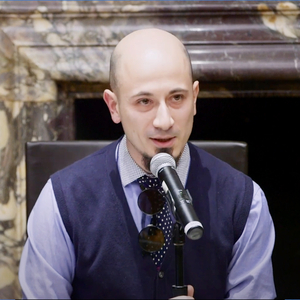
Alessandro Giammei

Alessandro Giammei

· Assistant ProfessorVerified

Yale University · Department of Italian Language and Literature

Active 2012–2025

h-index1
Citations5
Papers2212 last 5y
Funding
See your match with Alessandro Giammei — sign in to PhdFit.Sign in

About

Alessandro Giammei is an Assistant Professor of Italian Studies at Yale University. As a cultural philologist, he investigates how modern and contemporary literature and art imagine genealogical roots in Renaissance, chivalric, and classical traditions. His scholarship queers these fantasies, critically examining the politics of origin and originality, authorship and authenticity, as well as identity and heritage. Giammei is the author of several books, including Ariosto in the Machine Age (University of Toronto Press 2024), which received both the Howard R. Marraro Prize of the Modern Language Association and the AAIS Book Prize in Literary and Cultural Studies. He was trained in literary history and modern philology at the University of Rome La Sapienza and the Scuola Normale Superiore in Pisa. Prior to joining Yale's Department of Italian Studies, he was a Cotsen Fellow in the Society of Fellows in the Liberal Arts at Princeton University, an Assistant Professor of Transnational Italian Studies at Bryn Mawr College, and a volunteer teacher and director of the Humanities curriculum in the Prison Teaching Initiative. In addition to numerous academic publications, his writings and translations have appeared in The Paris Review, The Nation, Vanity Fair, Esquire, The Brooklyn Rail, il manifesto, Domani, and la Repubblica.

Research signals

Five dimensions sourced from public faculty / publication signals. Sign in to compare against your own profile and see your match score.

Research topics

  • History
  • Sociology
  • Humanities
  • Political Science
  • Philosophy
  • Linguistics
  • Genetics
  • Biology
  • Art
  • Law

Selected publications

  • Sordid mysticism, decadent poverty: On two episodes of Franciscan aesthetics in Italy’s modernism (Savinio 1946; D’Annunzio 1926)

    Journal of Italian Cinema and Media Studies · 2025-04-08

    article1st authorCorresponding

    Fascism cultivated the myth of Saint Francis as an icon of nationalism, heroism and Italianness. Such a myth was informed by Gabriele D’Annunzio’s earlier uses of Francis as a model for his own art and life. After the Second World War, Francis was reclaimed by anti-fascist intellectuals such as Alberto Savinio, who worked on a pacifist film about the Saint’s life that was never completed. In this article, I examine two understudied episodes of D’Annunzio’s and Savinio’s supposedly opposed receptions of Saint Francis, showing that they actually converge on a shared rejection of euphemistic, palatable and ultimately bourgeois images of sainthood. I discuss, in particular, an ekphrastic article in which Savinio, in 1946, explains the Franciscan aesthetics of ‘sordid’ sainthood through Leonor Fini’s sensual paintings. I then show how D’Annunzio constructed a similar visual Franciscanism in the cell of pure dreams, his death chamber in the mansion/monument of the Vittoriale degli Italiani. This room, advertised in Vanity Fair in 1926, uses colours, inscriptions and a painting of D’Annunzio and Saint Francis by Guido Cadorin to establish a paradoxically decadent (and, indeed, ‘sordid’) aesthetics of Franciscan mystic poverty.

  • Chapter Four. Theatrical Ghosts: Not Adapting the Orlando Furioso in Late Modernity

    University of Toronto Press eBooks · 2023-12-31

    book-chapter1st authorCorresponding
  • Chapter Two. Ludovico’s Gifts: The Ariostean Spirit of Magical Realism

    University of Toronto Press eBooks · 2023-12-31

    book-chapter1st authorCorresponding
  • (It)aliens on the fence

    Forum Italicum A Journal of Italian Studies · 2023-05-30

    article1st authorCorresponding
  • A Violent Peace: Media, Truth, and Power at the League of Nations by Carolyn N. Biltoft (review)

    Modernism/modernity · 2023

    1st authorCorresponding
    • Sociology
    • Political Science
    • Sociology

    Reviewed by: A Violent Peace: Media, Truth, and Power at the League of Nations by Carolyn N. Biltoft Alessandro Giammei A Violent Peace: Media, Truth, and Power at the League of Nations. Carolyn N. Biltoft. Chicago, IL: University of Chicago Press, 2021. Pp. 202. $95.00 (cloth); $35.00 (paper); $34.99 (eBook). The title of this swift, powerfully written monograph on the archives of the League of Nations in Geneva offers a prodigious portrait of its real object of study: the so-called “interwar” period in European culture. Rather than a mere history of the League itself, A Violent Peace reads like a humanistic treatise on the most magmatic chronotope of western late-modernity: the ironically utopian, painfully bureaucratic, Freudianly fascist years that put into question, arguably for good, earlier concepts of reality, opinion, State, and world. Through the philosophical aspirations and material remains of a quintessentially stateless, translingual, and transnational institution, this book retraces the cultural genealogies of some of the most influential myths of modernity, still alive in current conceptions of globalism, populism, “fake news,” and “alternative facts.” Biltoft’s main argument is that uniforming impulses to solve conflicts and regulate chaos tend to emerge from (and, more importantly, lead back to) illiberal suffocating structures. As she puts it in her preface, “sometimes urges to ‘fix’ things . . . grow from or lead to rigid desires for ‘fixity’” (xi). Looking back, from the vantage point of the current recrudescence of authoritarianism in western democracies, to the supposed primordial soup of totalitarianism in Europe, A Violent Peace stigmatizes apparently benevolent aspirations to order and stability across history. It shows us the regulatory and mass-media counterpart of what we call, in the study of literature and high art, rappel à l’ordre, mobilizing the destiny of languages, currencies, and newsprint at the birth of a truly international “public opinion.” The way the League built and maintained its reputation—its symbolic capital, its “brand” even—during such a shift of paradigm for global history (a shift that, we learn from this book, was in large part conjured by the League itself) reveals that reason, truth, and unity are not necessarily antidotes to fascism. Counterintuitively, as Biltoft proposes by convoking Arendt and other witnesses of the brief but consequential spell of troubled peace in between the World Wars, such rational values can be the very substance (and justification) of illiberalism and destruction. [End Page 433] The book starts from Carl Gustav Jung’s The Spiritual Problem of Modern Man, which connects the League of Nations with cinema, jazz music, capitalism, and, after its 1935 edition, totalitarianism. Biltoft invites her reader to “think of the League as a global planetarium” (3): a site of contemplation against whose metaphoric dome archival and public documents project the constellations that emerged from the proverbial galaxy evoked by McLuhan to define media theory. Recurring to Eco’s notion of “Ur-fascism,” Biltoft argues that an interdisciplinary investigation of such an astronomy offers insight into the irreducible structures of absolutism. Throughout the first chapter, which works like an introduction, she clarifies how the history of the League of Nations is, in her study, more a tool to illuminate its cultural context than an object of investigation in itself. Conceived as an instrument for peace, this experimental institution is not to be exposed, per se, as a failure, or a betrayal of its own mission. More fruitfully, Biltoft uses it as a macroscopic example to warn posthumous readers against the ubiquitous, enduring threats of what Michel Foucault called the “fascism within,” and Susan Sontag dubbed “fascinating fascism.” The chapter in which the book’s methodological premise is manifested most effectively is the fifth, titled “Fiat Lux?”. In it, Biltoft unearths the League’s efforts to discipline and govern the international reactions to the shocking suicide of Slovak Jewish intellectual Stefan Lux. In 1936, Lux shot himself on the Assembly floor to protest the antisemitic and imperialist violence of Hitler’s Germany. The League was then investing its cultural and political power in a condemnation of falsehood and dissimulation in public media, and specifically in the press. Ironically, the cover-up of the tragic scandal employed the very same practical and...

  • Chapter One. The Great Metaphysician: Ariosto’s Encounters with Ferrara’s Avant-Garde

    University of Toronto Press eBooks · 2023-12-31

    book-chapter1st authorCorresponding
  • Ariosto in the Machine Age

    University of Toronto Press eBooks · 2023-12-31 · 1 citations

    book1st authorCorresponding

    "Ariosto in the Machine Age reveals how the most influential poet of the Renaissance was conjured or appropriated to shape magical realism, avant-garde painting, Fascist cultural propaganda, and cinema in modern Italy between the birth of Futurism and the end of World War II. Based on substantial archival findings, bold iconographic hypotheses, and novel interpretations of literary texts, the book proposes a new account of Italy's twentieth-century culture through a unique take on Ludovico Ariosto's early modern poetics and legacy. Starting from the unexpected passéism of Futurists visiting Ferrara on the eve of World War I, it re-reads the development of Giorgio de Chirico's Metaphysical Art and Massimo Bontempelli's Realismo Magico. The book reconstructs the multimedia archive of the Fascist initiatives for the centennial anniversary of Ariosto's death in 1933, and then focuses on the passage between Fascist cinema and the birth of Neorealism, unearthing unfinished adaptations of the Orlando Furioso by Luchino Visconti and Alessandro Blasetti. Questioning the very concept of reception, this radically interdisciplinary book warns twenty-first-century readers about the risks of monumentalizing the "great authors" of the past."--

  • Chapter Three. Eternal Renaissance: Ariosto’s Presence in Fascist Ferrara

    University of Toronto Press eBooks · 2023-12-31

    book-chapter1st authorCorresponding
  • Accendere, Pier Davide, and Stefano U. Baldassarri, eds. Collectanea manutiana. Studi critici su Aldo Manuzio

    Renaissance and Reformation · 2022-12-01

    articleOpen access1st authorCorresponding

    Accendere, Pier Davide, and Stefano U. Baldassarri, eds. Collectanea manutiana. Studi critici su Aldo Manuzio. An article from journal Renaissance and Reformation / Renaissance et Réforme (Special issue: Interpoetics in Renaissance Poetry), on Érudit.

  • Quoting the “Orlando Innamorato” to Mussolini: Alfredo Panzini and Fascist Re-uses of Boiardo

    DOAJ (DOAJ: Directory of Open Access Journals) · 2021

    1st authorCorresponding
    • Humanities
    • Humanities
    • History

    Mussolini donated the oldest surviving edition of the Orlando Innamorato to the Marciana Library in 1933, after receiving it as a gift. Starting from the possible meanings of this gift, the article shows how Boiardo’s main supporter in fascist culture, Alfredo Panzini, used quotations to revive and correct the legacy of the Innamorato as a novelist, essayist, and lexicographer. While Panzini initially adopted an anti-pedantic form of generative quotation, the surrounding hostility towards Boiardo – and the very nature of fascist culture – turned his quotations into overwhelming (and even fraudulent) rhetorical weapons.

Frequent coauthors

  • Giovanna Rizzarelli

    1 shared
  • Fabrizio Bondi

    Università degli Studi Suor Orsola Benincasa

    1 shared
  • Andrea Torre

    Scuola Normale Superiore

    1 shared
  • Taylor Yoonji Kang

    Yale University

    1 shared

Education

  • Perfezionamento in Discipline Letterarie e Filologiche Moderne, Classe di Lettere

    Scuola Normale Superiore

    2015
  • Laurea Magistrale in Letteratura e Lingua. Studi Italiani e Europei, Studi Greco Latini, Italiani, Scenico Musicali

    Università degli Studi di Roma La Sapienza

    2011
  • Laurea in Studi Italiani, Italianistica e Spettacolo

    Università degli Studi di Roma La Sapienza

    2009

Awards & honors

  • Howard R. Marraro Prize of the MLA
  • AAIS Book Prize
  • Edinburgh Gadda Prize
  • Resume-aware match score
  • Save to shortlist
  • AI-drafted outreach

See your match with Alessandro Giammei

PhdFit ranks faculty by your research interests, methods, and publications — grounded in their actual work, not templates.

  • Free to start
  • No credit card
  • 30-second signup