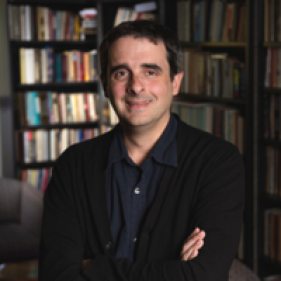
Alex Borucki
· Professor of HistoryUniversity of California, Irvine · History
Active 1986–2026
About
Alex Borucki is a Professor of History at the University of California, Irvine, affiliated with the School of Humanities. He earned his Ph.D. from Emory University in 2011 and specializes in the African Diaspora, the Early Modern Atlantic World, and Colonial Latin America. His research focuses on the impact of mutual experiences and social networks on identity formation among Africans and their descendants, particularly in the Río de la Plata region. Borucki's work explores how black identities emerged from shared slave routes, ethnic boundary reshaping, and participation in organizations such as Catholic brotherhoods, colonial militias, and black military service, emphasizing the interconnectedness of these fields. He has contributed to interdisciplinary research in the Black Atlantic, including editing manuscripts of Jacinto Ventura de Molina and co-creating the Intra-American Slave Trade Database. His ongoing projects examine the connections between slave arrivals in Spanish America, the remittances of silver, and Spanish imperial expansion, analyzing the broader context of Atlantic empires and the people involved in these historical processes.
Research signals
Five dimensions sourced from public faculty / publication signals. Sign in to compare against your own profile and see your match score.
Research topics
- Humanities
- Art
- Political Science
- History
- Ancient history
- Law
- Ethnology
- Economic history
Selected publications
Los enterramientos en el Caserío de los Filipinos, o Caserío de los Negros, de Montevideo
LA Referencia (Red Federada de Repositorios Institucionales de Publicaciones Científicas) · 2026-01-01
articleOpen access1st authorCorrespondingForo Interdisciplinario
Claves Revista de Historia · 2026-01-20
articleOpen access1st authorCorrespondingLas reflexiones que siguen en esta nota intentan relacionar narrativamente lo que sabemos sobre el referido caserío a partir de documentos producidos cuando este sitio funcionaba como hospital, prisión, y lugar de enterramiento, con la investigación arqueológica reciente y el análisis de ADN producidos tras los hallazgos logrados por el equipo liderado por los arqueólogos Camilo Collazo, José López Mazz, y Octavio Nadal en 2024. Estos han sido removedores para las personas que, desde antes, y más ahora, han visitado el sitio del caserío, conocen su historia y la de la trata esclavista, o incluso viven allí, dado que los restos humanos fueron hallados en el patio de la casa de una vecina, que generosamente permitió al equipo arqueológico excavar en su predio. Es una de las contribuciones más importantes de la arqueología moderna uruguaya, y presenta una serie de desafíos inéditos en lo concerniente a la producción comunitaria del conocimiento, involucrando a las comunidades organizadas y a los vecinos. El intercambio de ideas sobre el destino de los restos óseos de ese joven del África Centro-Occidental es parte de estos desafíos sobre los legados de la esclavitud en la región y su integración a las formas patrimoniales de la memoria.
Trayectorias Afro: The Movement of Enslaved and Free Afro-descendants in New Spain, 1500–1750
Harvard Dataverse · 2026-05-12
datasetOpen access<em>Trayectorias Afro</em> is a relational database documenting the spatial and social mobility of enslaved and free people of African ancestry in colonial New Spain (present-day Mexico and parts of the southwestern United States), ca. 1500–1750. The dataset is derived from notarial records — bills of slave sale, manumission letters, wills, property inventories, and donations — held in twelve archives across Mexico. The 2026 version includes 3,917 enslaved individuals, 4,957 non-enslaved persons (buyers, sellers, witnesses, and other associated individuals), 31 slaveholding institutions, 3,339 source documents, and 339 geographic places. The dataset captures individual-level data including personal names, physical descriptions, socioethnic classifications (<em>calidades</em>), ethnonyms, marital status, occupations, body marks, and behavioral and health records, as well as the spatial trajectories of persons across colonial territories and their relationships to one another and to institutions. The deposit includes nine core data tables, ten controlled vocabulary tables, and a machine-readable schema. This project complements existing slavery studies databases such as SlaveVoyages.org and Enslaved.org by emphasizing overland movement within colonial Mexico and centering the individual as the unit of record.
Africa · 2025-05-01
article1st authorCorrespondingMariana P. Candido, Wealth, Land, and Property in Angola: A History of Dispossession, Slavery, and Inequality. Cambridge: Cambridge University Press (hb £85 – 978 1 3165 1150 3; pb £26.99 – 978 1 0090 5598 7). 2022, 288 pp. - Volume 95 Issue 2
Paths to Deregulating the Slave Trade in the Spanish Empire, 1748–1789
The Americas A Quarterly Review of Latin American History · 2025-10-01
articleOpen access1st authorCorrespondingAbstract The War of Jenkins’ Ear (from 1739 to 1748), more accurately known in Spanish as the “Guerra del Asiento,” marked the end of the Spanish Crown’s authorization of the British monopoly of the South Sea Company to deliver captive Africans to the Spanish Americas. The end of the British Asiento led to four decades of experimentation by various actors within the Spanish Empire trying to reestablish and expand the slave trade, which many Spanish political economy leaders increasingly saw as vital to the future of both the metropolis and the colonies. This article examines certain currents, undercurrents, and countercurrents of the deregulation of the slave trade, linking these debates to the evolving policies on colonial commerce within the Spanish Empire, as authorities in Iberia and the Americas recognized the interconnectedness of these issues and their relationship to the actual slave trading in the colonies. Besides focusing on colonial elites and reforms in colonial governance, this article demonstrates that the timelines of reforms in overall trade policy and measures regarding the slave trade were closely connected.
The Americas A Quarterly Review of Latin American History · 2025-02-03
article1st authorCorrespondingBreve historia sobre la propiedad privada de la tierra en el Uruguay (1754-1912). Nicolás Duffau. (Montevideo, Uruguay: Ediciones Banda Oriental, 2022). Pp. 295. $16 Cloth. ISBN: 9789974112667. - Volume 82 Issue 2
Slave Subjectivities in the Iberian Worlds (16th–20th Centuries)
Hispanic American Historical Review · 2025-06-30 · 1 citations
article1st authorCorrespondingThe American Historical Review · 2024-09-01
article1st authorCorrespondingJournal of Maritime Archaeology · 2024-08-20
article1st authorCorrespondingThe Americas A Quarterly Review of Latin American History · 2023-07-01
article1st authorCorrespondingSlavery and Emancipation in Argentina - Una historia de la emancipación negra. Esclavitud y abolición en la Argentina. By Magdalena Candioti. Buenos Aires: Siglo XXI Editores, 2021. Pp. 272. $18.60 paper. - Volume 80 Issue 3
Frequent coauthors
- 5 shared
Fabrício Prado
- 4 shared
David Eltis
- 4 shared
Gregory E. O’Malley
- 3 shared
A. Jordan
Akademia Łomżyńska
- 3 shared
M. Benmouna
University of Abou Bekr Belkaïd
- 2 shared
Paul Lachance
National Research Council Canada
- 2 shared
Viviana L. Grieco
- 2 shared
David Wheat
Michigan State University
Education
- 2011
Ph.D.
Emory University
Awards & honors
- Routes of Enslavement in the Americas, UC Multicampus Resear…
- Resume-aware match score
- Save to shortlist
- AI-drafted outreach
See your match with Alex Borucki
PhdFit ranks faculty by your research interests, methods, and publications — grounded in their actual work, not templates.
- Free to start
- No credit card
- 30-second signup